
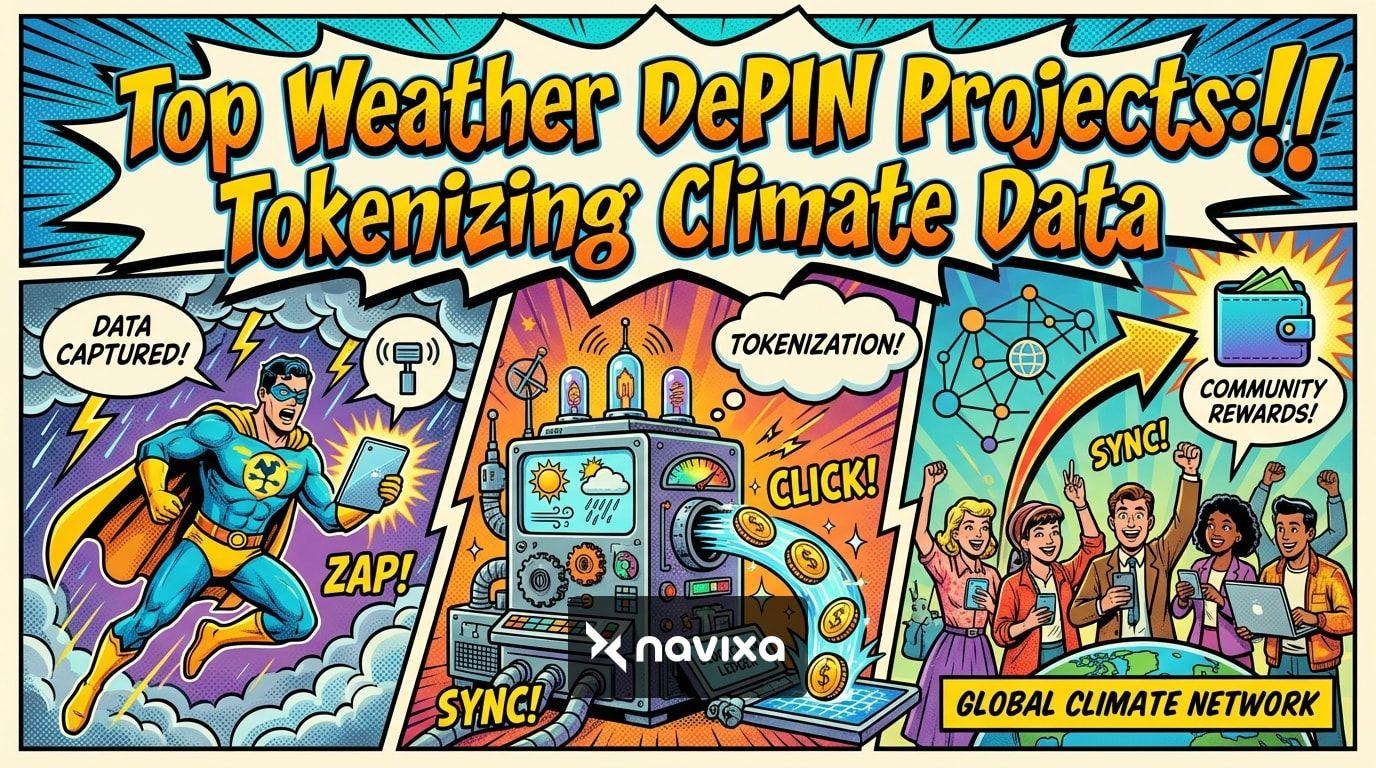
The intersection of blockchain technology and physical infrastructure has birthed one of the most compelling narratives in Web3: Decentralized Physical Infrastructure Networks (DePIN). While much of the early DePIN hype focused on decentralized wireless networks and GPU compute power for artificial intelligence, a new niche is rapidly taking center stage. Weather DePIN projects are fundamentally reshaping how we collect, verify, and monetize climate data.
For decades, meteorological data has been monopolized by government agencies relying on macro-level radar systems and expensive satellites. While effective for broad forecasting, this centralized approach leaves massive blind spots in hyper-local weather tracking. Weather DePIN projects solve this by crowdsourcing data collection. By incentivizing everyday users to deploy localized weather stations in their backyards, these networks aggregate real-time, high-resolution microclimate data, rewarding contributors with cryptocurrency.
In this comprehensive guide, we will explore the leading weather DePIN projects, dive into the tokenomics of climate data, and outline a clear trading strategy, complete with technical analysis and risk management tailored for this emerging sector.
The Mechanics Behind Weather DePIN Projects
At its core, a weather DePIN relies on a symbiotic relationship between hardware operators and data consumers.
1. Hardware Deployment: Participants purchase and install IoT-enabled weather stations. These devices measure metrics like temperature, humidity, wind speed, barometric pressure, and precipitation. 2. Data Transmission: The sensors transmit this localized data to a decentralized network, utilizing blockchain for immutability and transparent verification. 3. Tokenized Incentives: In exchange for providing consistent and accurate data, hardware operators are rewarded with native utility tokens. 4. Data Monetization: Industries dependent on weather intelligence—such as agriculture, aviation, insurance, logistics, and AI predictive modeling—purchase access to this hyper-local data, driving demand for the network's token.
"Decentralized Physical Infrastructure Networks bridge the gap between digital scarcity and real-world utility. When it comes to weather forecasting, crowdsourced data provides a level of granularity that legacy models simply cannot match."
By leveraging Solana, Arbitrum, and other high-throughput blockchains, these networks can process millions of micropayments to hardware hosts effortlessly.
Top Weather DePIN Projects to Watch
As of the second quarter of 2026, the weather DePIN sector is transitioning from its experimental phase into widespread commercial utility. Here are the standout networks driving the industry forward.
WeatherXM (WXM)
WeatherXM is currently the most recognized name in the weather DePIN space. Operating on Arbitrum and Ethereum, WeatherXM boasts thousands of active stations deployed globally. The network provides real-time data designed to outcompete standard forecasting models through pure density.
The native token, WXM, is used to reward station owners and license data to B2B clients. In early 2026, WXM's circulating supply dynamics have stabilized, with the token trading in the $0.016 to $0.017 range. WeatherXM's aggressive expansion into enterprise partnerships makes it a bellwether for the broader climate DePIN market.
SkyX Network
SkyX is an emerging powerhouse that focuses heavily on disaster management and emergency response APIs. Unlike networks that accept generic data, SkyX emphasizes professional-grade meteorological sensors.
Anticipating its Token Generation Event (TGE) on the Peaq blockchain in 2026, SkyX has already garnered significant attention following its successful seed funding rounds involving EV3 and Waterdrip Capital. The network uses edge computing—where data is pre-verified at the node before being anchored on-chain—drastically reducing blockchain bloat.
WiHi (The People's Weather Network)
WiHi takes a distinctly different approach by being hardware-agnostic. Rather than forcing users to buy proprietary equipment, WiHi allows open-hardware integrations. The network's most notable innovation is its "Proof-of-Model-Improvement" consensus. WiHi does not reward raw data dumps; it only distributes its WIHI tokens when a user's data mathematically improves open-source machine learning weather models.
Ambient
While leaning slightly more toward broader environmental metrics, Ambient is a massive player in the Solana DePIN ecosystem. Ambient focuses on real-time air quality, pollution metrics, and climate tracking. Having secured substantial funding from entities like Borderless Capital, Ambient combines weather tracking with critical health data, opening monetization avenues in public health and urban planning.
Trading Strategy for DePIN Tokens
Trading tokens within the DePIN sector requires a different framework than trading meme coins or Layer-1 networks. The value of a weather DePIN token is intrinsically tied to hardware deployment scaling, real-world data demand, and token emission schedules.
Technical Analysis (TA)
When applying technical analysis to weather DePIN projects, traders must monitor specific on-chain and off-chain metrics:
* Circulating Supply vs. FDV: Because DePIN tokens are continuously minted to reward hardware operators, there is inherent sell pressure. Traders should look for tokens where the Fully Diluted Valuation (FDV) is not disproportionately larger than the market cap, which limits future dilution shocks. * Support and Resistance Mapping: Using tokens like WXM as an example, analyzing long-term support levels around $0.014–$0.015 helps identify accumulation zones. Traders should utilize Moving Averages (50-day and 200-day) to spot macroeconomic shifts in the DePIN narrative. * Hardware Growth Correlation: Use platforms like DePINscan to track the growth of active nodes. A breakout in token price is often preceded by a parabolic increase in active weather stations, indicating a growing network effect.
Actionable Steps for Investors
To capitalize on the growth of weather DePIN projects, consider these actionable approaches:
1. Hardware Mining (Yield Generation): The most direct way to accumulate tokens is by purchasing a certified weather station and contributing data. Calculate the Return on Investment (ROI) by factoring in the hardware cost, electricity, internet usage, and the current token yield. 2. Secondary Market Accumulation: If you prefer not to manage hardware, tokens can be purchased on centralized exchanges. Look for market corrections to build a spot position. 3. Staking and Liquidity Provision: Many networks offer staking rewards for users who lock their tokens to secure the network, providing passive income that compounds over time.
Risk Management
No trading strategy is complete without strict risk management protocols.
* Inflationary Tokenomics: Be acutely aware of the token emission schedule. If hardware adoption outpaces B2B data demand, the market will flood with tokens, suppressing the price. * Hardware Obsolescence: IoT devices have a limited lifespan. Ensure that the project you invest in has a clear roadmap for hardware upgrades without demanding exorbitant capital from miners. * Regulatory Scrutiny: Because DePIN tokens involve real-world sensors, they may face regulatory challenges regarding data privacy and geographic mapping laws.
Comparison of Leading Networks
To better understand the landscape, here is a breakdown of the leading weather DePIN projects in 2026.
| Project | Token | Blockchain Ecosystem | Core Focus | Hardware Required |
|---|---|---|---|---|
| WeatherXM | WXM | Arbitrum / Ethereum | Hyper-local forecasting | Proprietary & 3rd Party |
| SkyX | SKY (Upcoming) | Peaq | Disaster & Emergency Data | Professional Sensors |
| WiHi | WIHI | Hardware Agnostic | Proof-of-Model-Improvement | Open Hardware |
| Ambient | AMBIENT | Solana | Environmental & Air Quality | Specific Sensor Deployment |
Practical Takeaways
* Dual-Pronged Utility: Weather DePINs offer unique dual-sided value—they provide lucrative hardware mining opportunities for retail users and vital climate intelligence for enterprise businesses. * Quality Over Quantity: The trend is shifting from simply having the most sensors to having the *best* data. Projects like WiHi implementing AI-driven "Proof-of-Model-Improvement" highlight the demand for actionable intelligence. * Tokenomics are Key: Always evaluate the buy-side pressure of a DePIN token. For long-term sustainability, external businesses must be actively purchasing the token to access the network's data APIs.
Conclusion
The tokenization of climate data represents one of the most pragmatic and universally beneficial use cases for blockchain technology to date. Weather DePIN projects are democratizing meteorological infrastructure, shifting power away from centralized entities and placing it in the hands of global communities. Whether you decide to deploy a weather station in your backyard or trade these tokens on secondary markets, the transition to decentralized environmental tracking presents a massive financial and technological opportunity.
If you want to stay ahead of the curve, start exploring the ecosystems mentioned above, research hardware compatibility for your region, and consider diversifying your crypto portfolio with real-world infrastructure assets today.
Frequently Asked Questions
What exactly is a weather DePIN?
A weather DePIN (Decentralized Physical Infrastructure Network) is a blockchain-based ecosystem where individuals deploy physical weather stations. These stations collect hyper-local climate data, and the operators are rewarded with the network's native cryptocurrency in exchange for maintaining the hardware and providing accurate data.
Can I make a profit running a decentralized weather station?
Yes, it is possible to make a profit, but it depends heavily on the initial cost of the hardware, the token reward rate, and the current market price of the token. ROI varies by network; users should calculate hardware depreciation and monitor the token's trading volume to ensure liquidity when they wish to sell their rewards.
Why would businesses buy decentralized weather data instead of using traditional sources?
Traditional weather sources rely on macro-level satellites and scattered government radar stations, which often lack hyper-local accuracy. Decentralized networks offer dense, micro-climate data that updates in real-time. This is highly valuable for precision agriculture, drone logistics, AI weather modeling, and event planning.
Which blockchain is best for DePIN projects?
Historically, Solana has dominated the DePIN space due to its high transaction throughput and fractional penny fees, making it ideal for micro-transactions. However, networks like Arbitrum (used by WeatherXM) and Peaq (a blockchain specifically optimized for DePIN and IoT, used by SkyX) are also heavily utilized in 2026.
Are weather DePIN tokens a safe investment?
Like all cryptocurrencies, DePIN tokens carry volatility risks. Furthermore, they are subject to specific risks such as hardware inflation—where too many miners dilute the token reward pool without enough enterprise demand to buy the data. Proper risk management and tokenomics analysis are essential before investing.