
The intersection of mainstream entertainment and decentralized technology has arrived. Sony Group Corporation, a global titan in gaming, music, and consumer electronics, has officially entered the blockchain arena with Soneium. This strategic move marks one of the most significant bridges between traditional Web2 infrastructure and the emerging Web3 economy.
Soneium is not just another blockchain project; it is an Ethereum Layer 2 solution built to leverage Sony's massive intellectual property portfolio—spanning PlayStation, Sony Music, and Sony Pictures—to drive mass adoption. By focusing on "realizing the open internet," Soneium aims to create a scalable, creator-focused ecosystem where digital ownership is as seamless as streaming a song or downloading a game.
For investors, developers, and gamers, understanding the technical architecture and strategic vision behind the Sony Soneium blockchain is critical. This guide explores how Soneium works, its integration with the Optimism Superchain, and why it poses a serious challenge to existing networks like Base and Polygon.
What is the Sony Soneium Blockchain?
Soneium is a public Ethereum Layer 2 (L2) blockchain designed to offer high scalability, low transaction fees, and full Ethereum Virtual Machine (EVM) compatibility. Developed by Sony Block Solutions Labs—a joint venture between Sony Group and Startale Labs—it serves as the foundational infrastructure for Sony's Web3 applications.
Built on the OP Stack
Technically, Soneium is built using the OP Stack, the same open-source development framework that powers Coinbase's Base network and Worldcoin's World Chain. By utilizing optimistic rollup technology, Soneium bundles transactions off-chain and settles them on the Ethereum mainnet. This inherits Ethereum's robust security while reducing gas costs by up to 100x compared to Layer 1.
Being part of the Optimism Superchain allows Soneium to interoperate seamlessly with other OP Stack chains. Assets and data can theoretically move between Base, Optimism, and Soneium without the security risks associated with traditional third-party bridges. This interoperability is vital for Sony's vision of a connected entertainment economy.
The Strategic Ecosystem: Gaming, Music, and Creators
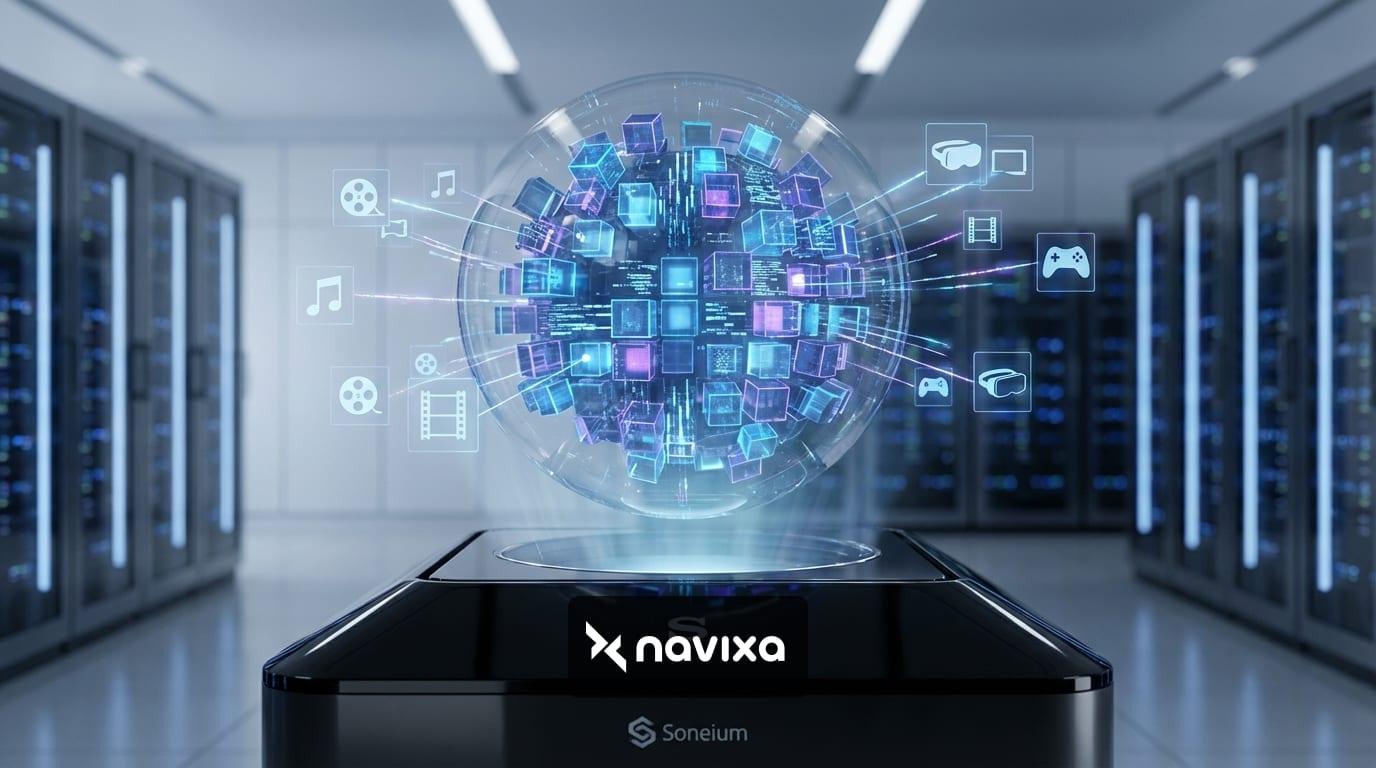
Unlike financial-focused blockchains that prioritize DeFi (Decentralized Finance), Soneium's "Go Mainstream" strategy targets consumer engagement and emotional connection through content. The network is tailored to handle the high throughput required for gaming and social applications.
PlayStation and Web3 Gaming
The most anticipated use case for the Sony Soneium blockchain is its integration with the PlayStation ecosystem. Sony has filed multiple patents related to transferring digital assets between devices and using NFTs to represent in-game items. Soneium provides the infrastructure to make "play-and-own" a reality, allowing gamers to truly own skins, weapons, and avatars as interoperable NFTs rather than licensed data locked on a single server.
Protecting Creator Rights
Through Sony Music and Sony Pictures, the Soneium blockchain can address longstanding issues in digital rights management (DRM). Smart contracts can automate royalty payments for musicians and filmmakers, ensuring they are compensated instantly whenever their work is streamed or resold. This capability creates a direct financial relationship between fans and artists, bypassing traditional intermediaries.
Soneium vs. The Competition
Soneium enters a crowded Layer 2 market. Its primary rival is Base (backed by Coinbase), which also uses the OP Stack. However, while Base leverages a massive user database from its exchange, Soneium leverages a massive intellectual property database. The table below outlines how Soneium compares to other major players in the consumer blockchain space.
| Feature | Soneium (Sony) | Base (Coinbase) | Ronin (Sky Mavis) |
|---|---|---|---|
| Primary Focus | Entertainment, IP, & Gaming | DeFi, Onboarding, & Social | Web3 Gaming Specific |
| Architecture | Optimism (OP Stack) L2 | Optimism (OP Stack) L2 | EVM Sidechain |
| Gas Token | ETH | ETH | RON |
| Key Advantage | Global IP (PlayStation/Sony Music) | Exchange Liquidity & Users | Proven Gaming Community (Axie) |
Soneium Spark: Funding the Next Generation
To bootstrap its ecosystem, Sony launched Soneium Spark, an incubation program offering up to $100,000 in funding for developers building on the network. This initiative provides more than just capital; it grants selected projects direct access to Sony's internal teams, distribution channels, and enterprise partnerships.
The program has attracted developers from DeFi, NFT, and gaming sectors, ensuring that when users arrive on Soneium, there are robust applications ready to use. This mirrors the strategy used by successful console launches—hardware is useless without excellent software.
Technical Details & Minato Testnet
Before the mainnet launch, Sony deployed the Minato Testnet. This testing environment allowed developers to experiment with smart contracts without risking real funds. It served as a proving ground for the network's capacity to handle high transaction volumes.
Is There a Soneium Token?
Currently, there is no official Soneium token. Like Base and Arbitrum (initially), Soneium uses ETH (Ethereum) for gas fees. Users should be wary of scams claiming to sell "SONY" or "SONEIUM" tokens. However, the ecosystem is closely tied to the Astar Network. Astar is transitioning its zkEVM assets and community to Soneium, meaning the ASTR token may play a significant utility role within the Soneium ecosystem, potentially for governance or exclusive staking rewards.
How to Connect to Soneium
Connecting to the Soneium blockchain requires a Web3 wallet like MetaMask or Rabby. Since Soneium is EVM-compatible, you can add it as a custom network using standard RPC details. To bridge assets, users can utilize the official Soneium bridge or third-party bridges like Across and Stargate that have integrated the network.
For the latest documentation and RPC endpoints, developers should consult the official Soneium documentation to ensure they are using the correct and most secure parameters.
Challenges and Future Outlook
While the potential is immense, Sony faces hurdles. The traditional gaming community has been historically hostile toward NFTs, often viewing them as cash grabs. Soneium's success depends on obfuscating the "crypto" elements—making the blockchain layer invisible so that users experience the benefits of ownership without the friction of wallets and seed phrases.
Furthermore, regulatory compliance in Japan and globally will dictate how fast Soneium can scale. However, with partners like Chainlink, The Graph, and Alchemy already onboard, the infrastructure is undoubtedly world-class.
Conclusion
The Sony Soneium blockchain represents a pivotal moment for Web3. It is one of the first instances of a major consumer electronics conglomerate building a public, decentralized network rather than a private, permissioned one. By leveraging the OP Stack and focusing on entertainment, Soneium is positioned to bring the next billion users on-chain. Whether through owning a piece of a song or trading a PlayStation trophy as an NFT, Soneium is building the digital infrastructure for the future of entertainment.