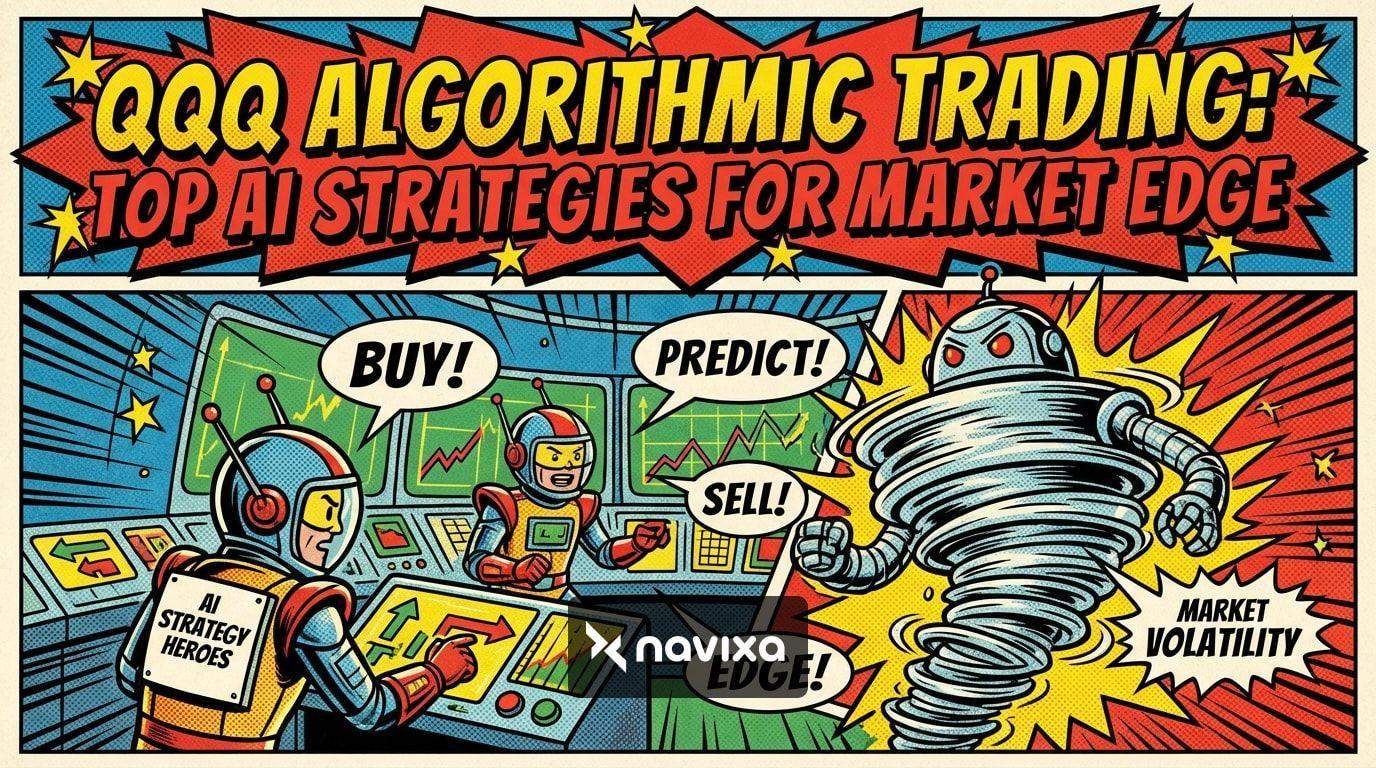
The Invesco QQQ Trust (QQQ) is one of the most heavily traded exchange-traded funds (ETFs) in the global financial ecosystem, offering investors direct exposure to the Nasdaq-100 Index. Because this index is heavily weighted toward high-growth technology, biotechnology, and telecommunications companies, it naturally exhibits high liquidity and significant intraday volatility. For quantitative traders and developers, these characteristics make QQQ an ideal candidate for automated systems.
QQQ algorithmic trading involves using computer programs to execute buy and sell orders based on predefined mathematical criteria. However, as modern financial markets become increasingly complex and data-heavy, traditional rule-based algorithms are being rapidly upgraded. Today, Artificial Intelligence (AI) and Machine Learning (ML) are at the forefront of quantitative finance. By integrating AI, modern trading bots can continuously learn from new market data, adapt to changing regimes, and uncover hidden statistical patterns that human analysts might easily miss.
Whether you are aiming to capture short-term intraday momentum or looking for mean-reverting opportunities over a swing-trading horizon, an AI-powered quantitative strategy can provide a significant statistical edge. In this comprehensive guide, we will explore the most effective AI strategies for trading QQQ, how to implement them, and the crucial risk management protocols required to protect your capital.
Why Apply AI to QQQ Algorithmic Trading?
The Nasdaq-100 is notoriously sensitive to macroeconomic data, Federal Reserve interest rate decisions, and individual tech earnings reports. Navigating this landscape manually can be emotionally taxing and highly inefficient. Applying AI to your QQQ trading strategy offers several profound advantages:
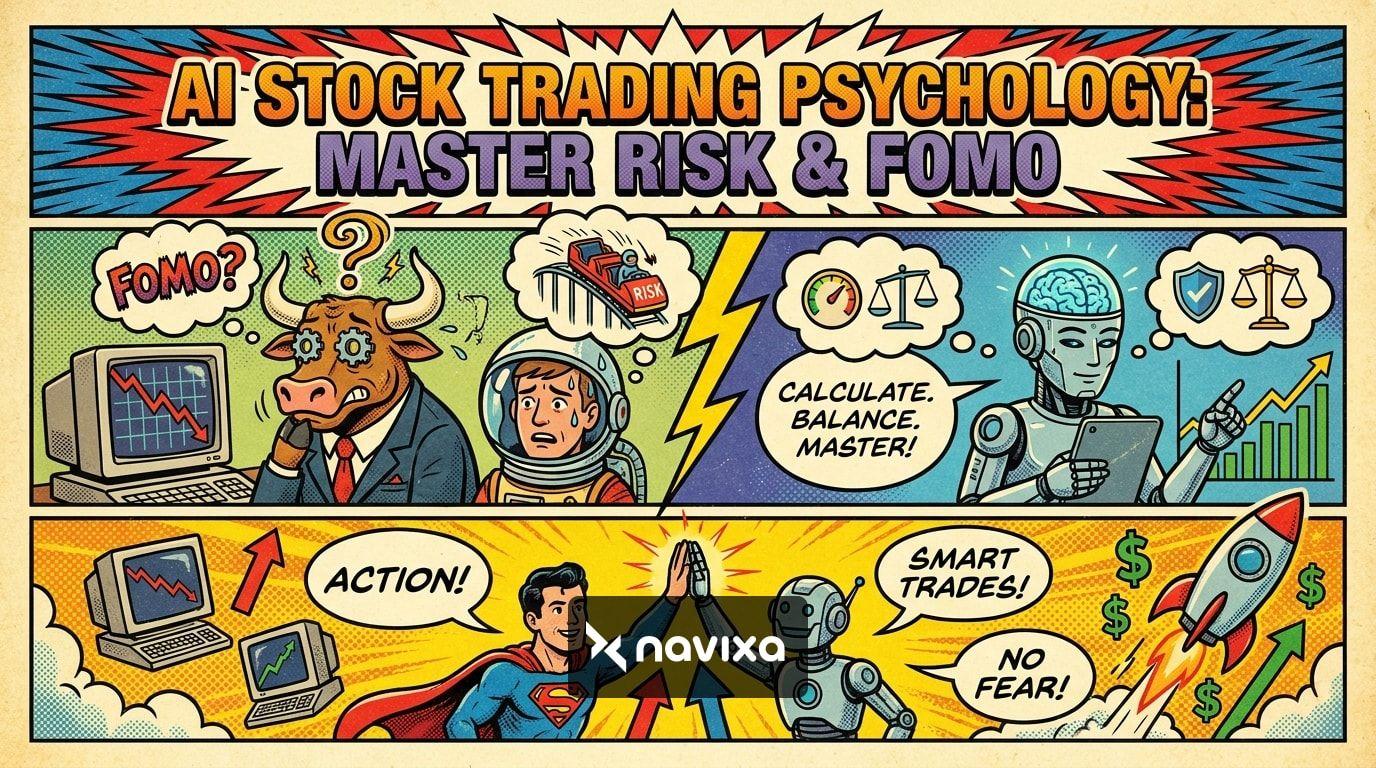
1. Emotionless Execution: Human traders often fall victim to panic selling during sudden tech sell-offs or FOMO (Fear Of Missing Out) during massive rallies. Algorithms execute trades purely based on data, entirely removing emotional bias. 2. Unmatched Processing Speed: AI systems can analyze order book depth, process historical price action, and execute trades in milliseconds—long before a human could even open their brokerage app. 3. Dynamic Adaptability: Traditional algorithms rely on static parameters (e.g., "Buy when the 50-day moving average crosses the 200-day moving average"). AI models, particularly those utilizing reinforcement learning, dynamically adjust their parameters as market volatility expands or contracts. 4. Alternative Data Processing: Advanced AI can ingest alternative datasets, such as social media sentiment, global news headlines, and complex macroeconomic indicators, to forecast QQQ price movements accurately.
Top AI-Powered Strategies for QQQ
Developing a profitable algorithmic trading bot requires choosing a core strategy that aligns with your risk tolerance and technological capabilities. Here are the top AI-driven strategies currently dominating the QQQ landscape.
1. AI-Enhanced Trend Following
Trend following is a foundational quantitative strategy that aims to capture sustained directional moves in the market. While traditional trend following relies on simple indicators like Moving Average Convergence Divergence (MACD) or the Average Directional Index (ADX), AI elevates this strategy through regime detection.
Machine learning models, such as Random Forests or Support Vector Machines (SVM), are trained on decades of historical Nasdaq-100 data to classify the current market environment into distinct regimes: Strong Bull, Weak Bull, Sideways, Weak Bear, or Strong Bear.
"By utilizing machine learning for regime detection, algorithms can aggressively scale into QQQ during a confirmed tech boom, and automatically shift to cash or defensive assets when the AI detects early signs of distribution."
2. Deep Learning Mean Reversion
Mean reversion operates on the statistical assumption that extreme price movements will eventually revert to their historical average. In highly volatile tech markets, QQQ frequently experiences rapid, overextended sell-offs followed by sharp "V-shaped" recoveries.
AI significantly improves mean reversion by utilizing Deep Neural Networks (DNNs) to calculate dynamic standard deviations. Instead of relying on a static Relative Strength Index (RSI) threshold, a deep learning algorithm will analyze volatility, volume, and sector correlations to determine exactly when QQQ is statistically overbought or oversold. This prevents the bot from "catching a falling knife" during a prolonged market crash.
3. NLP-Driven Sentiment Analysis
Because QQQ is deeply tied to massive tech conglomerates like Apple, Microsoft, and Nvidia, news headlines and earnings reports dramatically impact its price. Natural Language Processing (NLP) is an AI technology that reads and interprets human language.
An NLP-driven algorithm can instantly scrape financial news sites, SEC filings, and X (formerly Twitter) feeds. The AI scores the sentiment of these texts as positive, negative, or neutral. If a major tech earnings report drops and the NLP model detects overwhelmingly positive forward guidance, the algorithm can execute a long position on QQQ fractions of a second after the press release is published.
Essential Technical Indicators for AI Integration
Even the most sophisticated AI models require structured, high-quality data to function. Quantitative analysts typically feed specific technical indicators into their machine learning models as "features." For QQQ algorithmic trading, the most effective indicators include:
* Volume Weighted Average Price (VWAP): Institutional traders use VWAP heavily to gauge the true average price of an asset based on volume. AI models use VWAP to identify institutional accumulation or distribution zones. * Average True Range (ATR): ATR measures market volatility. AI algorithms use ATR to automatically calculate dynamic position sizing and intelligent stop-loss placements, ensuring trades are given enough room to breathe during choppy tech sessions. * Bollinger Bands: These bands measure standard deviations from a moving average. AI utilizes them to confirm mean reversion setups and identify volatility squeezes before explosive breakouts.
To learn more about how these indicators form the bedrock of quantitative finance, you can explore comprehensive resources on Investopedia.
How to Build Your First QQQ Algorithm
Transitioning from a manual trader to an algorithmic trader requires a structured, step-by-step approach. Here is how you can begin building and deploying your own QQQ AI strategy.
Step 1: Secure High-Quality Historical Data
An AI model is only as good as the data it learns from. You need clean, tick-by-tick, or minute-by-minute historical data for QQQ, free of survivorship bias and split-adjusted errors. Providers like Polygon.io or Alpaca offer excellent APIs for fetching robust historical datasets.
Step 2: Choose Your Tech Stack and Platform
If you possess programming skills, Python is the undisputed king of algorithmic trading, boasting powerful libraries like Pandas, Scikit-Learn, and TensorFlow.
If you do not know how to code, the landscape has democratized significantly. Platforms like Composer, Tickeron, and Vestinda offer "no-code" environments where you can drag and drop logic blocks, integrate AI sentiment analysis, and backtest complex strategies without writing a single line of Python.
Step 3: Rigorous Backtesting and Out-of-Sample Testing
Once your AI model is built, you must backtest it against historical data to see how it would have performed. However, the biggest trap in AI trading is overfitting (curve-fitting)—creating an algorithm that looks perfect in past data but fails miserably in live markets.
To avoid this, always utilize out-of-sample testing. Train your AI on data from 2015 to 2022, and then test its predictive power on data from 2023 to the present. If the performance remains stable, your model is robust.
Step 4: Paper Trading and Live Execution
Before risking real capital, connect your algorithm to a paper trading account. Let it run on live market data for several weeks to ensure the API connections are stable, the execution latency is low, and the logic functions exactly as intended. Once validated, you can scale into real capital.
Strategy Comparison Table
Below is a breakdown of how the top AI-enhanced strategies compare when applied to the QQQ ETF.
| Strategy | Core Mechanism | AI Application | Best Market Condition |
|---|---|---|---|
| Trend Following | Moving Averages, MACD | Regime detection via Machine Learning | Sustained Bull or Bear Markets |
| Mean Reversion | RSI, Bollinger Bands | Deep Learning for standard deviation | Ranging or Sideways Markets |
| Sentiment Analysis | News and Earnings Data | NLP algorithms scanning headlines | High Volatility / Earnings Season |
| Statistical Arbitrage | Co-integration | Neural Networks finding pricing gaps | Complex, Multi-asset Markets |
Risk Management in AI Trading
A highly optimized entry strategy is useless without ironclad risk management. The Nasdaq-100 can gap down heavily overnight due to macroeconomic shocks, meaning your automated systems must be prepared for worst-case scenarios.
First, always implement automated stop-losses. Your AI should dynamically calculate risk based on the ATR indicator, cutting losses quickly if the market regime unexpectedly shifts.
Second, prioritize position sizing. No single trade should risk more than 1% to 2% of your total account equity. Advanced algorithms utilize the Kelly Criterion to optimize trade size based on the model's historical win rate and risk-reward ratio.
Finally, monitor the broader ecosystem. While you may be trading QQQ, keeping an eye on the broader market health via platforms like the Nasdaq official index portal can provide contextual data that your bot might need as an overarching filter.
Frequently Asked Questions
Is QQQ good for algorithmic trading?
Yes, QQQ is highly liquid, features incredibly tight bid-ask spreads, and exhibits significant intraday volatility. These factors make it an excellent instrument for automated strategies, ensuring minimal slippage during execution and providing ample daily trading opportunities.
What is the best timeframe for QQQ algorithmic trading?
The ideal timeframe depends entirely on your specific strategy. High-frequency trading (HFT) algorithms operate on tick or one-minute charts to capture micro-movements and arbitrage opportunities. Conversely, swing trading AI algorithms may rely on hourly or daily charts to capture broader tech trends over several days or weeks.
Can AI predict QQQ market crashes?
While no algorithm can predict the future with absolute certainty, AI models are excellent at identifying early structural warning signs. By analyzing rising volatility, bearish momentum divergences, and negative news sentiment at scale, AI can detect regime shifts and automatically adjust your portfolio to cash or defensive assets before a full-blown crash occurs.
How do leveraged ETFs like TQQQ and SQQQ fit into these strategies?
TQQQ (a 3x leveraged long ETF) and SQQQ (a 3x leveraged short ETF) are designed to amplify the daily returns of the Nasdaq-100. They are frequently used by quantitative traders to maximize short-term gains during powerful trend-following setups. However, due to the mathematical drag of volatility decay, algorithms typically hold these leveraged instruments for very short durations rather than utilizing them as long-term investments.
Do I need to know how to code to start algorithmic trading?
No. While knowing Python gives you the ultimate flexibility to build proprietary AI models, the rise of no-code automated platforms allows everyday investors to build, backtest, and deploy sophisticated logic-based strategies simply by connecting visual blocks and pre-trained AI sentiment tools.
Conclusion
QQQ algorithmic trading is no longer restricted to institutional hedge funds operating out of Wall Street data centers. Thanks to the democratization of Artificial Intelligence, retail investors now have the tools to build sophisticated, data-driven systems that can navigate the volatility of the Nasdaq-100 with precision.
By leveraging machine learning for regime detection, deep learning for mean reversion, and NLP for sentiment analysis, you can build a robust trading system that operates without emotion and capitalizes on market inefficiencies. Remember, the key to longevity in quantitative finance is not finding a "holy grail" indicator, but rather implementing rigorous backtesting and strict risk management. Start small, test your algorithms in a simulated environment, and gradually unleash the power of AI on your QQQ portfolio.