
Introduction
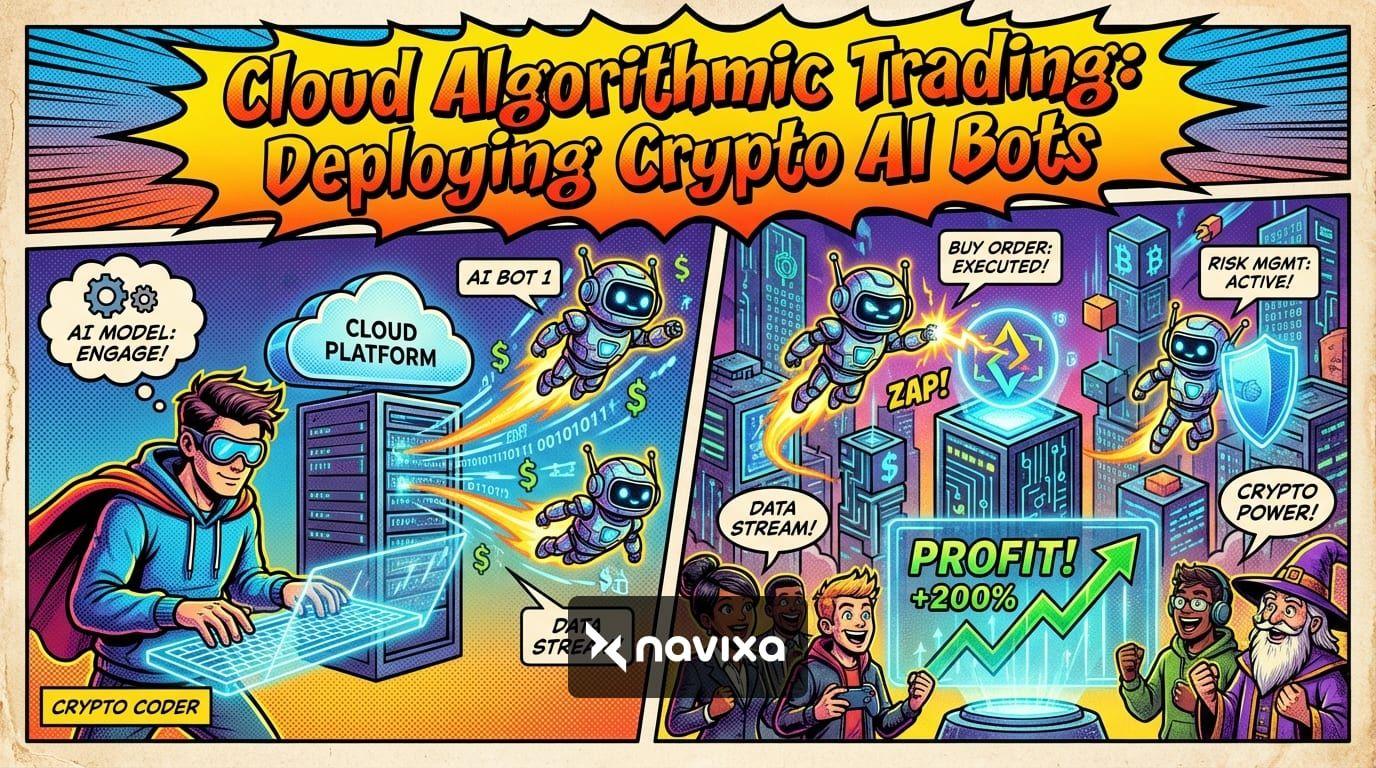
Cryptocurrency markets never sleep. Unlike traditional stock exchanges that ring a closing bell, digital asset markets operate 24 hours a day, 365 days a year. For traders looking to capitalize on the relentless volatility of assets like Bitcoin and Ethereum, staying awake constantly is physically impossible. Enter cloud algorithmic trading, the modern solution for deploying sophisticated crypto AI bots that monitor, analyze, and execute trades around the clock.
In a market landscape where Bitcoin commands massive institutional volume via spot ETFs and consistently trades in high-value ranges, retail and professional traders alike need advanced tooling to remain competitive. Relying on manual execution in an arena dominated by high-frequency trading firms is a recipe for missed opportunities and emotional trading errors. By leveraging cloud computing combined with artificial intelligence, traders can bridge the gap, deploying automated systems with institutional-grade speed and reliability.
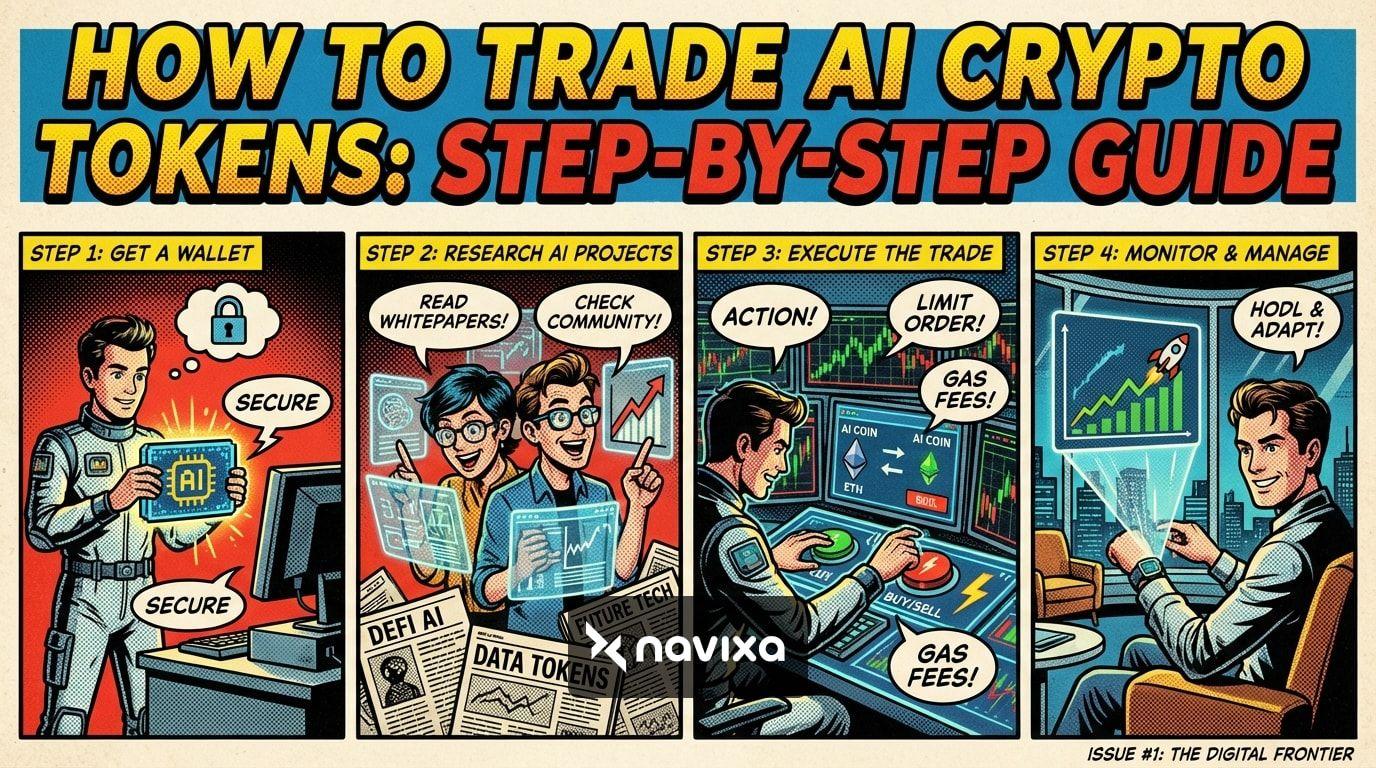
This comprehensive guide will explore the mechanics of cloud algorithmic trading, dissect how AI bots are transforming cryptocurrency markets, and provide actionable steps to build, test, and deploy your own automated trading strategies.
Understanding Cloud Algorithmic Trading
At its core, cloud algorithmic trading involves running programmatic trading strategies on remote servers (the cloud) rather than on local hardware. Traditionally, algorithmic traders had to maintain expensive physical servers, worry about internet outages, and deal with hardware failures. If your power went out while you held a highly leveraged position, the results could be catastrophic.
By migrating these operations to cloud providers or specialized cloud trading platforms, traders gain unprecedented reliability. Cloud servers offer incredible uptime guarantees, ultra-low latency connections to major cryptocurrency exchange servers, and scalable computing power.
"The true power of cloud algorithmic trading lies in its ability to execute emotionless, data-driven decisions at speeds no human could ever achieve."
When you combine cloud infrastructure with cryptocurrency APIs, you create a seamless pipeline. The exchange sends real-time market data to your cloud-hosted algorithm; your algorithm processes this data, identifies a profitable setup, and instantly fires an order back to the exchange. This entire loop happens in milliseconds.
The Role of AI Bots in Modern Crypto Markets
While basic algorithmic trading relies on static rules (e.g., "Buy if the 50-day moving average crosses above the 200-day moving average"), the introduction of Artificial Intelligence (AI) has revolutionized the space. Crypto AI bots use machine learning models to adapt to changing market conditions dynamically.
Machine Learning and Predictive Analytics
Standard algorithms often fail when market regimes shift from trending to ranging. AI bots, however, utilize machine learning and predictive analytics to detect these shifts in real-time. By analyzing vast datasets—including historical price action, order book depth, and trading volume—machine learning models can adjust their risk parameters and strategy logic autonomously. For example, if an AI model detects a sudden drop in liquidity, it can temporarily widen its spread requirements or pause trading entirely to avoid heavy slippage.
Sentiment Analysis and Natural Language Processing
One of the most powerful applications of AI in crypto trading is Natural Language Processing (NLP). Cryptocurrency prices are notoriously susceptible to news, regulatory announcements, and social media trends. Advanced cloud AI bots are programmed to scrape social feeds and major financial news outlets in real-time. Using NLP, the bot can gauge market sentiment (bullish, bearish, or neutral) and execute trades before the broader retail market has time to react.
Core Trading Strategies for Crypto Bots
When deploying cloud algorithmic trading systems, your bot is only as good as the strategy it executes. Here are the most prominent strategies utilized by automated crypto traders today:
Arbitrage Strategies
Arbitrage involves exploiting price discrepancies for the same asset across different exchanges. For instance, Bitcoin might be trading slightly lower on one exchange and slightly higher on another. An arbitrage bot can simultaneously buy the cheaper asset and sell the more expensive one, capturing the spread risk-free. Because these opportunities exist only for fractions of a second, cloud algorithmic trading is an absolute necessity for minimizing latency.
Mean Reversion and Trend Following
Mean reversion strategies operate on the statistical assumption that an asset's price will eventually return to its historical average. When a cryptocurrency becomes drastically overbought or oversold, a mean reversion bot will take a contrarian position, expecting the price to snap back.
Conversely, trend-following bots use momentum indicators to ride massive crypto waves. If a major asset breaks out of a multi-month resistance level, a trend-following AI bot will automatically enter a long position, utilizing trailing stop-losses to maximize the profit run without guessing the exact top.
Market Making
Market making bots provide liquidity to the market by simultaneously placing limit buy and sell orders. The bot profits from the spread between the bid and the ask. This strategy is highly effective in sideways markets but requires highly reliable cloud infrastructure, as sudden, violent price movements can lead to severe losses if the bot does not cancel and replace its orders fast enough.
Actionable Steps to Deploy Your First Crypto AI Bot
Transitioning from a manual trader to a quantitative algorithmic trader may seem daunting, but modern platforms have democratized the process. Follow these actionable steps to deploy your first cloud AI bot.
Step 1: Select the Right Cloud Platform
Your first decision is whether to build your infrastructure from scratch using raw cloud services or use a specialized cloud algorithmic trading platform. Unless you are an experienced software engineer, specialized platforms are highly recommended. They provide built-in data feeds, backtesting engines, and direct API integrations with major exchanges.
Step 2: Choose or Build Your Strategy
Decide on the logic your bot will follow. Many platforms offer drag-and-drop strategy builders or pre-configured templates (like Dollar Cost Averaging or Grid bots) for beginners. Advanced users can write bespoke code in Python or C# to implement custom machine learning models.
Step 3: Backtest Rigorously
Never deploy a bot without rigorous backtesting. Backtesting involves running your algorithmic strategy against historical market data to see how it would have performed. Look for crucial metrics such as the maximum drawdown, the win rate, and the Sharpe ratio. Ensure your backtesting accounts for trading fees and slippage; a strategy that looks profitable on paper can quickly become a losing one if exchange fees eat up your margins.
Step 4: Paper Trading and Live Deployment
Once backtesting is successful, move to paper trading. Paper trading simulates live market conditions using simulated capital. This step is critical to verify that your cloud bot is receiving live data correctly and that there are no bugs in your execution logic. Finally, generate your exchange API keys—ensuring you disable withdrawal permissions—and connect them to your cloud bot for live deployment with a small initial capital allocation. For robust technical references on endpoint configurations, you can explore the Binance API Documentation to understand how live order routing functions.
Comparing Top Cloud Algorithmic Trading Platforms
To help you choose the right environment for your crypto AI bots, here is a comparison of some of the industry's leading platforms:
| Platform | Primary Focus | Best For | Pricing Model |
|---|---|---|---|
| QuantConnect | C#/Python Algorithmic Trading | Quants & Developers | Free tier / Pay-as-you-go |
| 3Commas | Pre-built DCA & Grid Bots | Retail Traders | Monthly Subscription |
| Cryptohopper | Cloud-based Strategy Builder | Beginners to Intermediate | Monthly Subscription |
| TradeSanta | Simplified Automated Trading | Casual Crypto Investors | Monthly Subscription |
If you are looking to deploy highly complex AI models and code from scratch, QuantConnect provides an open-source, cloud-based lean engine that is preferred by institutional quants. For standard crypto-native strategies that require less coding, platforms like 3Commas and Cryptohopper remain excellent starting points.
Risk Management in Automated Crypto Trading
The most common misconception about cloud algorithmic trading is that it guarantees passive income. In reality, a poorly configured bot can drain your account balance faster than humanly possible. Risk management is the ultimate key to survival in the digital asset space.
1. Strict Stop-Losses: Every automated strategy must have hard stop-loss mechanisms built into the code. If the market experiences a flash crash, the bot should instantly cut losses rather than holding a depreciating asset in hopes of a rebound.
2. Position Sizing: Never allocate your entire portfolio to a single bot or strategy. Use algorithmic position sizing based on account equity and current market volatility. A standard quantitative rule is to risk no more than 1% to 2% of your total capital per automated trade.
3. API Security: Your API keys are the bridge between your cloud bot and your exchange funds. Always use IP whitelisting so that your exchange only accepts commands originating from your specific cloud server's IP address. Under absolutely no circumstances should you grant withdrawal permissions to an API key used for automated trading.
Practical Takeaways
- Eliminate Emotion: Cloud algorithmic trading removes the psychological stress of manual trading, enforcing strict discipline through automated code execution. - Capitalize on Uptime: By hosting your bots in the cloud, you ensure 24/7 market participation without the risks of local hardware failures or connectivity loss. - Leverage AI Carefully: Machine learning and NLP offer massive edge potential, but they must be extensively backtested across different market cycles to avoid overfitting data. - Prioritize Security: Treat your API keys like bank passwords. Use IP whitelisting, rotate your keys regularly, and disable all exchange withdrawal permissions.
Conclusion
Cloud algorithmic trading has leveled the playing field, allowing everyday investors to deploy crypto AI bots that rival the sophistication of institutional trading desks. By understanding the core strategies, selecting the right cloud platform, and enforcing ironclad risk management protocols, you can automate your crypto portfolio to capitalize on market inefficiencies around the clock. The future of cryptocurrency trading is heavily automated—take the time to build your technical skills today, and your future self will be well-equipped for the evolving financial landscape.
Frequently Asked Questions
What is cloud algorithmic trading?
Cloud algorithmic trading is the process of hosting automated trading algorithms (bots) on remote cloud servers rather than on local computers. This guarantees maximum uptime, ultra-fast execution speeds, and the ability to trade cryptocurrency markets continuously without internet or power interruptions.
Are crypto AI bots actually profitable?
Yes, crypto AI bots can be highly profitable, but they are not foolproof. Their profitability depends entirely on the quality of the underlying strategy, rigorous historical backtesting, and strict risk management. Market conditions change, and bots must be periodically updated or recalibrated to maintain their edge.
Do I need to know how to code to use trading bots?
No. While coding knowledge (especially in Python or C#) is required for building highly customized machine learning models from scratch, there are many cloud platforms that offer intuitive drag-and-drop interfaces. These platforms allow beginners to deploy proven algorithmic strategies without writing a single line of code.
Is it safe to connect an AI bot to my crypto exchange?
It is safe provided you follow strict security protocols. When generating API keys on your exchange, you must disable "withdrawal" permissions so the bot can only execute trades, not transfer funds out of your account. Additionally, you should whitelist your cloud server's IP address to prevent unauthorized access.
How much money do I need to start algorithmic trading?
You can start with very little capital, often as low as $100, especially since most exchanges support fractional cryptocurrency purchases. However, it is highly recommended to start with "paper trading" (simulated trading with fake money) to ensure your cloud bot functions correctly before risking real capital.