
The financial markets have always been a battleground of human emotion. With the S&P 500 hovering near the 6,780 mark and showcasing massive year-over-year growth, market volatility is keeping traders on edge. High intraday volatility, proxied by elevated VIX readings, creates a landscape ripe for profit but riddled with execution risk. This environment amplifies traditional psychological traps: fear, greed, and the ever-present Fear Of Missing Out (FOMO). Enter the era of artificial intelligence. Understanding AI stock trading psychology is no longer just a niche topic; it is an essential survival skill for modern investors.
By integrating AI into your trading strategy, you can outsource the heavy lifting of data analysis and, more importantly, mitigate the emotional turmoil that leads to catastrophic losses. In this comprehensive guide, we will explore how AI is rewiring the psychological framework of trading, how you can leverage it to master risk, and why the ultimate holy grail of trading is the synergy between machine precision and human intuition.
The Core of AI Stock Trading Psychology
At its foundation, trading psychology refers to the emotional state and mental framework that dictate an investor's decisions. For decades, retail and institutional traders alike have struggled to separate their logical strategies from their emotional impulses. When a stock suddenly spikes, greed takes over. When a portfolio dips, panic selling ensues.
Artificial intelligence disrupts this cycle. AI models analyze market data without being influenced by fear, greed, or fatigue. According to industry data, AI agents now manage over $1 trillion in assets globally, with adoption rates among institutional investors reaching unprecedented levels. The rapid adoption of AI is largely due to its psychological neutrality.
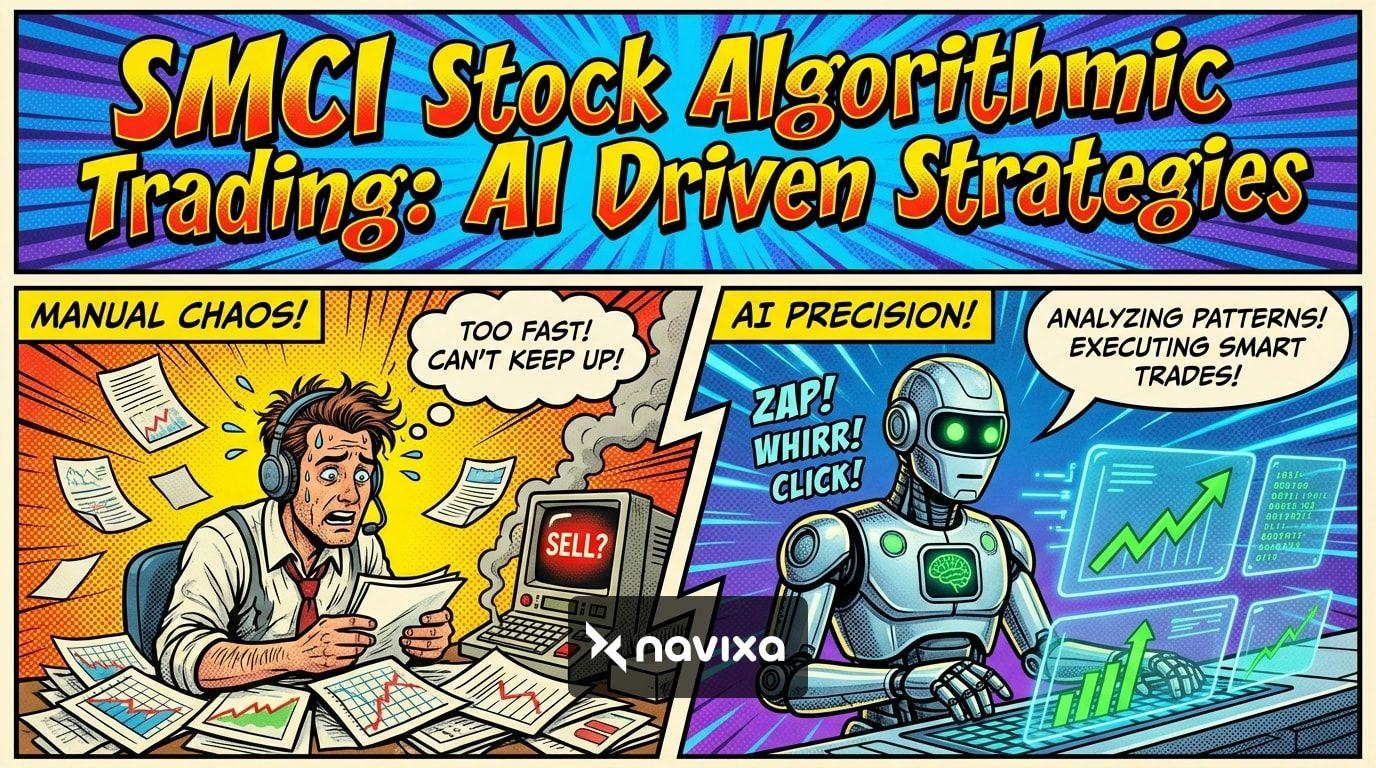
When you introduce AI into your trading routine, you are effectively hiring a ruthless, unemotional co-pilot. A machine learning algorithm does not care if you are on a winning streak, nor does it feel despair during a market correction. It operates strictly on probability, historical data, and pre-defined risk parameters. This dynamic shift allows human traders to step back from the glowing red and green candles and make high-level decisions based on logic rather than adrenaline.
How AI Manages Emotional Trading Biases
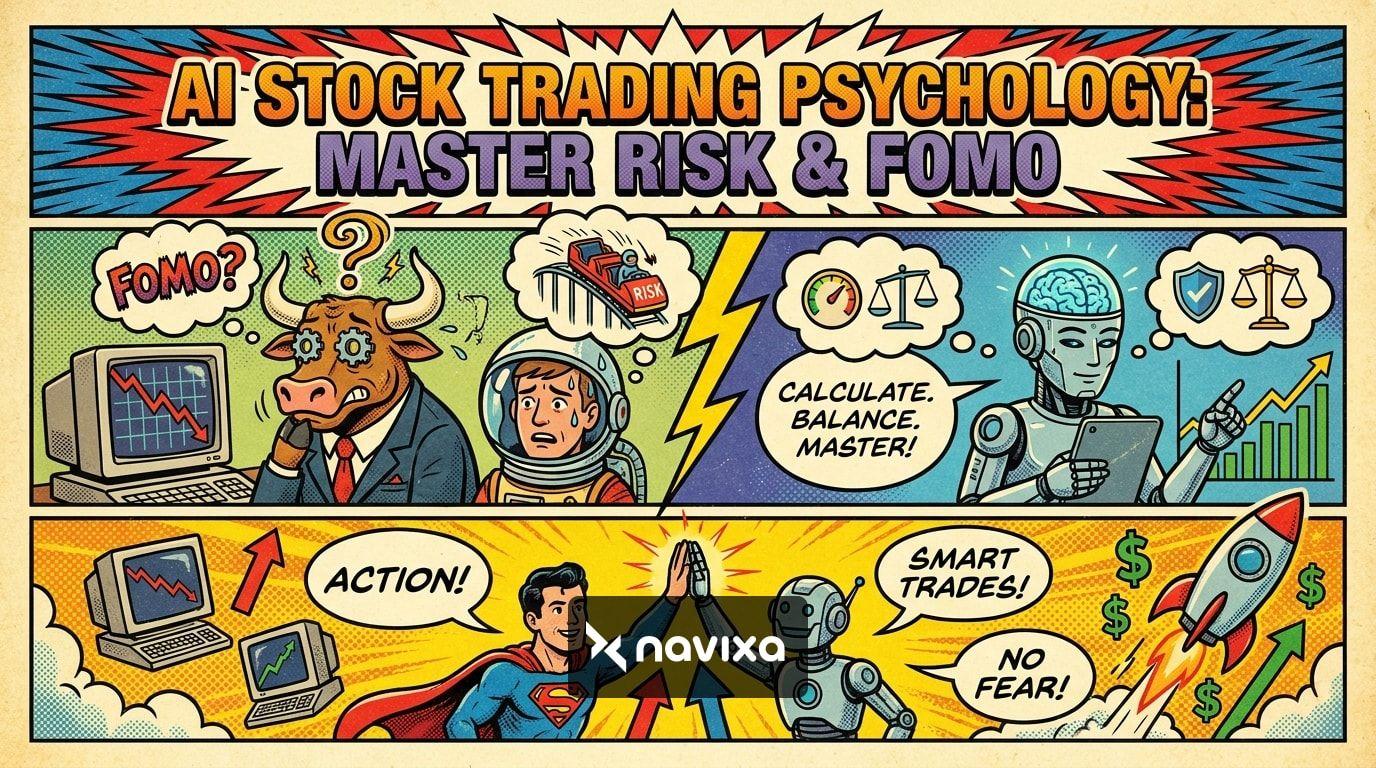
Human brains are wired to identify patterns, but we are deeply flawed when those patterns conflict with our survival instincts. AI excels where human psychology falters. Let us break down how AI mitigates the two most destructive trading biases: FOMO and loss aversion.
Conquering FOMO (Fear Of Missing Out)
FOMO is a powerful psychological trigger that compels traders to buy into a soaring asset long after the optimal entry point has passed. You see a stock printing massive green candles, read the hype on social media, and jump in—often right before the price corrects.
AI-driven trading systems counter FOMO through strict, rules-based execution. Advanced algorithms process millions of data points, including technical indicators, order book depth, and market sentiment, to determine if an asset is genuinely breaking out or simply overbought. If a stock's Relative Strength Index (RSI) is screaming "overvalued," the AI will refuse to execute a buy order, regardless of how much hype the stock is generating online. By relying on AI signals, traders can anchor their decisions in quantitative reality rather than social contagion.
Overcoming Panic and Loss Aversion
Loss aversion is the psychological phenomenon where the pain of losing money feels twice as intense as the joy of making the same amount. This cognitive bias leads traders to hold onto losing positions too long (hoping they will bounce back) and sell winning positions too early (fearing the profits will vanish).
AI tools calculate risk far more accurately than human intuition. By automatically suggesting position sizes and dynamically trailing stop-loss levels based on market volatility, AI removes the emotional burden of closing a trade. Platforms like Tickeron and various AI trading mentors act as automated journals, analyzing your historical patterns to surface blind spots and flagging emotional decisions in real-time,. When the market plunges, the AI seamlessly executes a pre-planned exit strategy, protecting your capital without hesitation or regret.
The Synergy: Combining Human Intuition with AI
A common misconception is that AI will completely replace human traders. In reality, the most successful market participants treat AI as a collaborative tool rather than a substitute for human judgment.
While AI excels at processing vast amounts of data in milliseconds and identifying microscopic price inefficiencies, it lacks contextual understanding. An AI model might misinterpret news about a subtle government policy shift or a geopolitical event that a human trader can instantly contextualize.
"The best approach blends AI agents' data analysis with human insight, using them as tools to support—not replace—market understanding and risk management."
The optimal AI stock trading psychology involves a symbiotic relationship: 1. AI handles the micro: Pattern recognition, high-frequency backtesting, real-time sentiment analysis, and precise trade execution. 2. Humans handle the macro: Adapting to unprecedented global events, defining overarching risk tolerance, and shifting strategies when market regimes change fundamentally.
By trusting the AI to execute the details, you free up your mental bandwidth to focus on the big picture, drastically reducing decision fatigue.
Actionable Steps to Improve Your Trading Strategy
Integrating AI into your workflow requires a deliberate shift in your trading psychology. Here are practical steps to harmonize your mindset with algorithmic tools.
1. Audit Your Trading History with AI
Use AI-powered trading journals to analyze your past trades. These tools can identify exactly when and why you deviate from your trading plan. If the AI shows you consistently lose money on Fridays due to overtrading, you can establish a hard rule to reduce your Friday position sizes.
2. Automate Your Risk Management
Never rely on mental stop-losses. Use AI platforms to automatically set trailing stops based on the asset's Average True Range (ATR). Let the algorithm handle the exit so you don't have to wrestle with the anxiety of a plunging chart.
3. Treat AI as a Second Opinion
If your intuition screams "buy," run the setup through your AI screener. If the algorithm flags multiple bearish indicators, take a step back. Use AI to validate or challenge your instincts with hard data.
4. Monitor for Model Drift
AI models are only as good as their training data. When broader market conditions change rapidly, algorithms can suffer from "model drift," leading to subpar performance. Your job as the human overseer is to monitor the AI's success rate and adjust its parameters when market regimes shift from bullish to bearish.
Human vs. AI Trading Psychology
To truly understand the paradigm shift, we must compare the traditional human approach to an AI-augmented strategy.
| Feature | Human Trader | AI Trading System |
|---|---|---|
| Emotional State | Vulnerable to fear, greed, and FOMO | 100% objective; immune to emotions |
| Data Processing | Limited by cognitive capacity and fatigue | Processes millions of data points instantly |
| Risk Management | Often rationalizes breaking rules | Executes stop-losses without hesitation |
| Pattern Recognition | Prone to seeing non-existent patterns | Mathematically validates historical trends |
| Contextual Awareness | High (understands geopolitical nuance) | Low (relies strictly on quantifiable data) |
Risk Management in the Age of AI Automation
While AI can solve many psychological hurdles, relying too heavily on automation introduces new risks. Handing over the keys to a black-box algorithm can lead to a dangerous psychological detachment from your capital. If an AI agent enters a losing streak, an overly detached trader might ignore the bleeding, assuming the machine "knows best."
Furthermore, as AI-powered auto-trading sees renewed interest in high-volatility environments, there is a systemic risk of "crowded trades." If thousands of AI bots analyze the same datasets and generate the exact same buy/sell signals, it can lead to sudden market flash crashes or exaggerated price swings.
Therefore, mastering AI stock trading psychology means maintaining ultimate accountability. You are the portfolio manager; the AI is merely your analyst and executor. Robust backtesting, realistic transaction-cost modeling, and firm-level risk controls are mandatory. Never allocate 100% of your capital to a single algorithmic strategy. Diversification remains the cornerstone of wealth preservation.
Conclusion
The evolution of financial markets demands a corresponding evolution in how we think about investing. AI stock trading psychology is not about surrendering your autonomy to a machine; it is about leveraging technology to overcome the innate cognitive biases that sabotage profitability.
By allowing AI to manage the granular data analysis and emotional execution, you can conquer FOMO, eliminate panic selling, and focus on high-level strategy. As we navigate the complex and volatile modern markets, the traders who thrive will be those who seamlessly blend the computational brilliance of artificial intelligence with the nuanced wisdom of human intuition. Embrace the algorithms, refine your mindset, and take control of your financial future.
Frequently Asked Questions
What is AI stock trading psychology?
AI stock trading psychology refers to the mental framework where traders use artificial intelligence to remove emotional biases—like fear, greed, and FOMO—from their decision-making process. It involves trusting algorithmic data over impulsive human emotions.
Can AI completely eliminate trading losses?
No. While AI can significantly improve risk management and pattern recognition, no system can predict the future with 100% accuracy. AI helps manage risk and optimize entry/exit points, but market unpredictability guarantees that losses will still occur.
How does AI prevent FOMO in trading?
AI prevents FOMO by strictly adhering to pre-programmed, data-driven rules. When a stock pumps irrationally due to social media hype, an AI system will analyze technical indicators (like RSI and volume) and refuse to buy if the asset is mathematically overvalued.
Do I still need to understand the market if I use AI bots?
Absolutely. Relying entirely on AI without understanding market fundamentals can lead to severe losses, especially during unprecedented economic events (like sudden geopolitical conflicts) where historical data models may fail. Human oversight is essential to adjust AI parameters.
Are AI trading platforms suitable for retail investors?
Yes. Technological advancements have democratized access to AI trading tools. Many modern platforms offer user-friendly interfaces, automated risk management, and personalized algorithmic mentoring specifically designed for retail traders looking to improve their discipline.