

The integration of artificial intelligence into financial markets has moved beyond simple algorithmic execution. Today, OpenAI crypto trading represents a paradigm shift for retail and institutional investors alike. With the advent of multimodal models like GPT-4o, traders are no longer just automating buy and sell orders based on rigid rules; they are deploying semantic agents capable of reading whitepapers, analyzing market sentiment from news feeds, and even interpreting technical chart patterns in real-time.
For years, high-frequency trading firms held the monopoly on automated strategies. Now, accessible APIs from OpenAI allow developers and tech-savvy traders to build custom trading assistants. These AI agents can process vast amounts of unstructured data—social media posts, regulatory updates, and earnings reports—to identify alpha that traditional indicators might miss. This article explores how to leverage OpenAI's technology for cryptocurrency trading, the technical implementation of these strategies, and the critical risks involved.
Core Strategies for AI-Driven Crypto Trading
Utilizing Large Language Models (LLMs) in the volatile crypto market requires a multifaceted approach. Unlike standard bots that rely solely on price action, OpenAI models can synthesize qualitative data to inform quantitative decisions.
Sentiment Analysis and News Trading
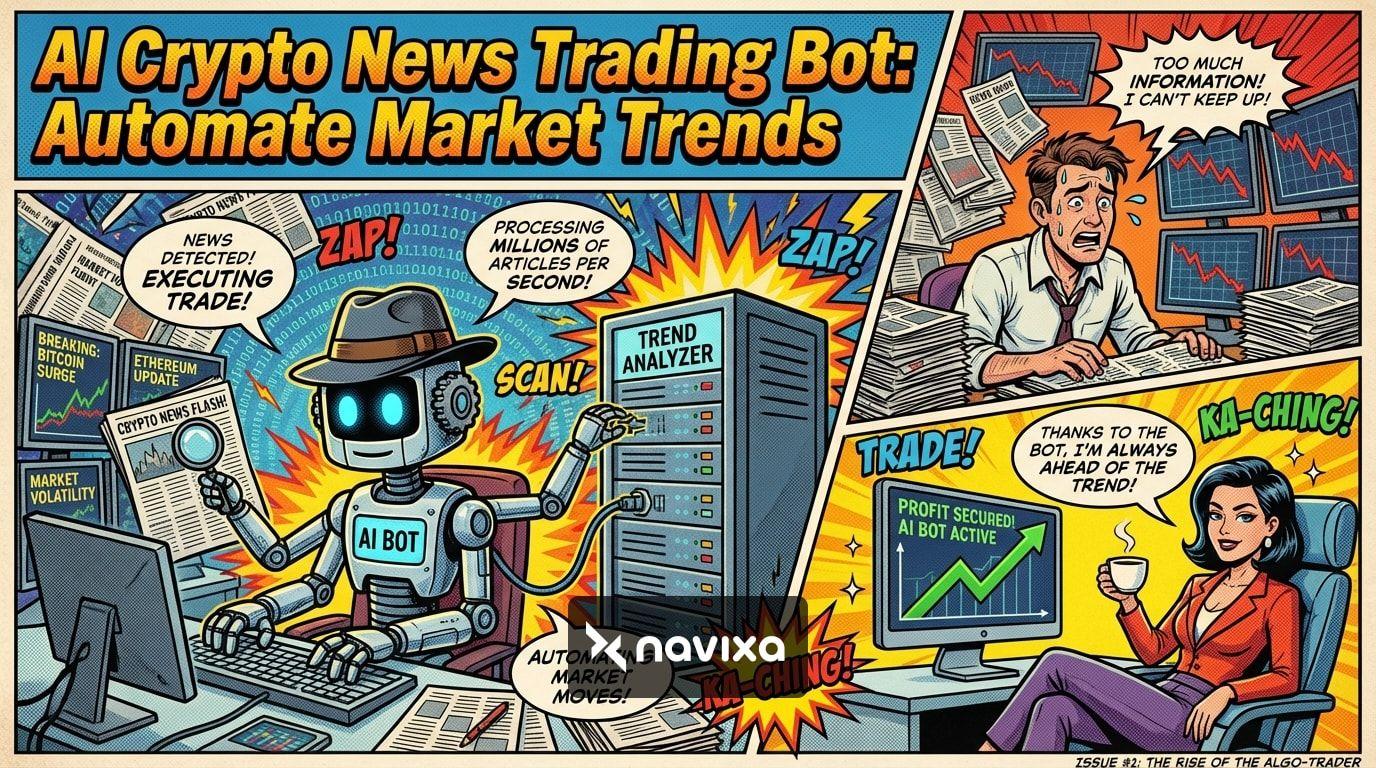
One of the most potent applications of OpenAI's API is sentiment analysis. Cryptocurrency prices are heavily influenced by public perception and breaking news. By connecting a Python script to the OpenAI API, traders can feed headlines from major crypto news aggregators or tweets from influential figures into the model. The AI can then score the sentiment (bullish, bearish, or neutral) on a scale, triggering immediate trade execution if a specific threshold is crossed.
Automated Technical Analysis with Vision Models
With the vision capabilities of GPT-4o, traders can now upload screenshots of price charts directly to the AI. The model can identify classic patterns—such as head-and-shoulders, wedges, or flags—and support resistance levels. While this should not replace standard indicators, it serves as a powerful "second opinion" tool, allowing traders to validate their manual analysis instantly.
Technical Implementation: Building a Custom Bot
Creating a fully autonomous agent involves linking OpenAI's reasoning capabilities with a crypto exchange's execution engine. This is typically achieved using Python and the "Function Calling" feature of the OpenAI API.
Step 1: The Function Calling Framework
Function calling allows the AI to output structured JSON data instead of conversational text. For example, you can define a function called execute_trade(ticker, side, amount). When the AI analyzes a market condition that meets your strategy criteria (e.g., "Bitcoin RSI is below 30 and sentiment is positive"), it will output the precise JSON arguments needed to trigger that function. Your Python script then receives this JSON and executes the trade via the exchange API.
Step 2: Connecting to Exchange APIs
To finalize the loop, you need a reliable connection to an exchange. Platforms like Binance or Coinbase provide robust APIs. For further reading on API integration best practices, resources like CCXT Library Documentation are invaluable for handling the connectivity layer securely.
Comparing AI Trading Approaches
Not all AI trading methods are created equal. Traders must decide between building a custom solution using OpenAI or using pre-packaged AI bots. The table below outlines the critical differences.
| Feature | OpenAI Custom API Bot | Traditional Algo Bots (Grid/DCA) |
|---|---|---|
| Decision Logic | Semantic understanding (News, Sentiment, Context) | Mathematical rules (Price < Moving Average) |
| Flexibility | High: Can adapt to new unseen market events | Low: Restricted to pre-programmed logic |
| Setup Difficulty | High: Requires coding (Python) & API management | Low: Plug-and-play via user interface |
| Cost | Pay-per-token (API usage) | Monthly subscription or fee |
| Risk | Hallucination (AI making up data) | Strategy failure in ranging markets |
Risks and Limitations of AI in Crypto
While powerful, OpenAI crypto trading is not without significant risks. Understanding these pitfalls is essential for protecting capital.
The Hallucination Problem
LLMs can sometimes generate plausible-sounding but factually incorrect information. In a trading context, an AI might hallucinate a "bullish divergence" on a chart where none exists or misinterpret a sarcasm-laden tweet as positive market news. Implementing strict validation layers—where code double-checks the AI's logic against hard data—is non-negotiable.
Latency and Execution Speed
API calls to OpenAI take time—often hundreds of milliseconds to several seconds. In the high-frequency world of crypto scalping, this latency is unacceptable. Therefore, OpenAI-driven strategies are best suited for swing trading or longer-term trend analysis rather than millisecond arbitrage.
Tip: Always use a 'human-in-the-loop' system when first deploying your AI bot. Allow the AI to draft the trade, but require manual confirmation before execution until confidence is established.
Future Outlook: Autonomous Agents
The industry is moving quickly toward "agentic" workflows, where multiple AI models collaborate. One agent might specialize in researching macroeconomics, another in analyzing on-chain whale movements, and a third in risk management. These agents would debate the merits of a trade before the final execution agent pulls the trigger. This collaborative AI approach is currently being explored by advanced quantitative funds.
For more insights on the evolution of AI in financial technology, reliable industry reports can be found on OpenAI's official blog, which often discusses enterprise applications of their models.
Conclusion
OpenAI crypto trading is not a magic money printer, but it is a sophisticated toolset that can significantly enhance a trader's edge. By automating the ingestion of complex data and maintaining disciplined execution strategies, traders can navigate the chaotic crypto markets with greater clarity. Whether you are building a custom Python bot or using AI-assisted analysis tools, the key to success lies in rigorous backtesting and robust risk management.