
Nvidia Corporation (NVDA) has undeniably cemented itself as the backbone of the global artificial intelligence revolution. As of early 2026, NVDA continues to break financial records, recently reporting a staggering $215.9 billion in full-year revenue for fiscal 2026, representing a 65% increase from the previous year. Following the highly anticipated GTC 2026 conference in San Jose, where CEO Jensen Huang highlighted an estimated $1 trillion in expected orders through 2027 for the revolutionary Blackwell and upcoming Vera Rubin GPU platforms, market enthusiasm remains historically high.
With the stock experiencing dynamic price action—frequently trading in the $180 to $190 range—institutional and retail investors alike are increasingly turning to NVDA algorithmic trading to capture profits and manage risk.
Algorithmic trading (or "algo trading") utilizes pre-programmed computer software to execute trades based on a strict set of rules, technical indicators, and mathematical models. For a mega-cap stock like Nvidia, which is highly responsive to AI industry news, quarterly earnings beats, and macroeconomic shifts, automated trading provides a significant edge over traditional manual investing.
This comprehensive guide will explore the mechanics of NVDA algorithmic trading, detail the most effective automated strategies, highlight essential technical indicators, and provide actionable steps for building your own Nvidia trading bot.
Why Algorithmic Trading is Ideal for NVDA Stock
Nvidia's immense market capitalization and robust daily trading volume make it one of the most liquid assets in the global financial markets. High liquidity means tighter spreads and minimal slippage—two critical factors for the success of any automated trading system. Furthermore, NVDA stock is notoriously volatile, driven by a constant influx of news regarding sovereign AI infrastructure spending, strategic partnerships, and supply chain updates.
"Algorithmic trading removes the emotional burden of investing, allowing data and logic to capitalize on Nvidia's immense market volatility."
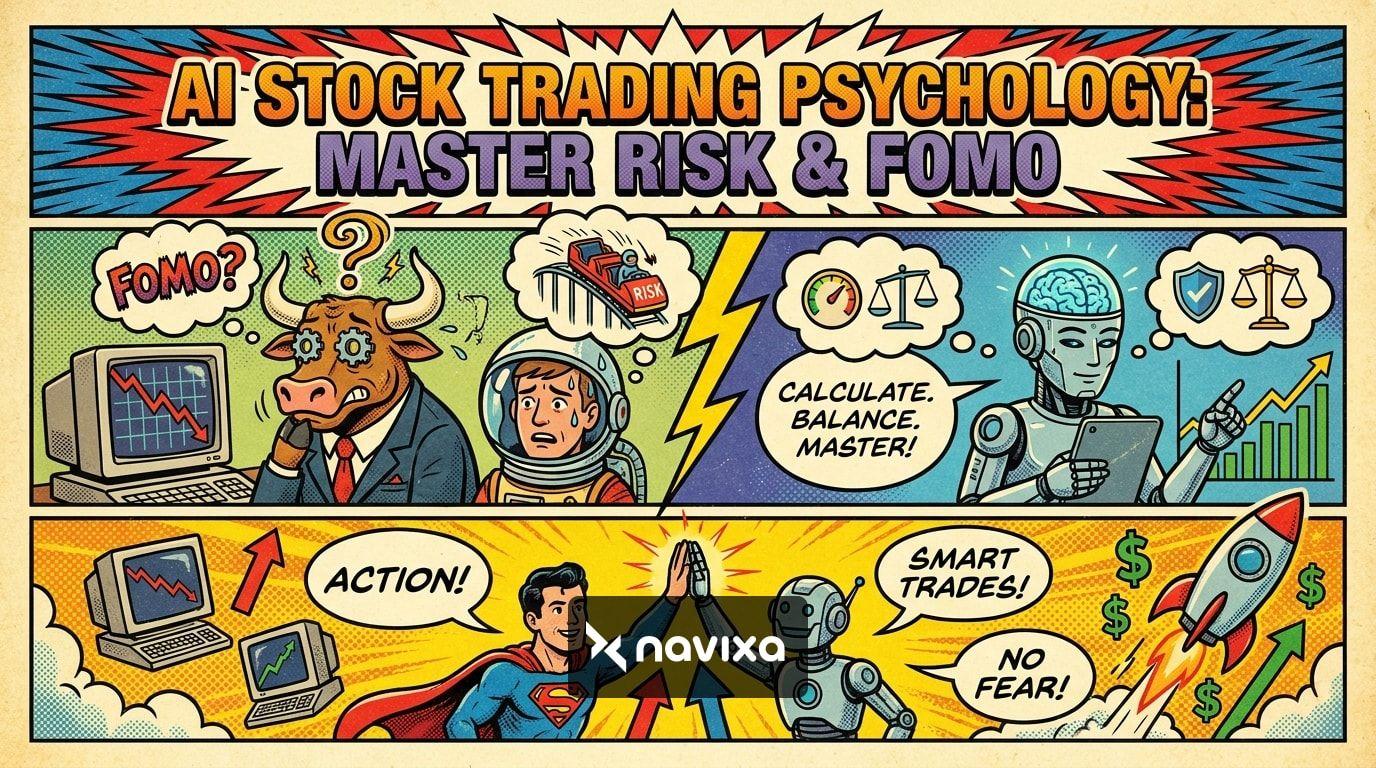
Human traders often struggle to process the sheer volume of data surrounding Nvidia in real-time. By the time a news headline breaks about a new deployment of Vera Rubin chips or a massive sovereign AI data center contract, an algorithmic system has already parsed the data, calculated the optimal entry point, and executed a trade. Bots do not experience fear of missing out (FOMO) or panic during sudden market corrections; they simply execute their programmed logic flawlessly.
Core NVDA Algorithmic Trading Strategies
To succeed in NVDA algorithmic trading, your automated system must rely on tested, robust strategies. Here are four of the most prominent frameworks utilized by both institutional quants and sophisticated retail traders in 2026.
1. Momentum Breakout and Trend Following
Nvidia frequently experiences extended trend phases, especially following major product announcements or earnings reports. A momentum breakout strategy programs the bot to buy NVDA shares when the price breaks above a significant resistance level with above-average trading volume.
For instance, if NVDA has been consolidating between $180 and $185, an algorithm can be set to execute a long position the moment the price crosses $186, provided that the trading volume is at least 1.5 times the 20-day average. The bot will then ride the upward trend, using a dynamic trailing stop-loss to lock in profits as the price climbs toward $190 or higher.
2. Mean Reversion Using Donchian Channels
While trend following capitalizes on momentum, mean reversion strategies assume that extreme price movements will eventually revert to their historical averages. One highly effective method for NVDA algorithmic trading involves the use of Donchian Channels.
Donchian Channels identify bullish and bearish extremes by plotting the highest high and lowest low over a specified period. When Nvidia's stock price hits the upper band of the channel, indicating it is mathematically overbought, the algorithm may execute a short position or sell existing holdings, anticipating a pullback to the middle band. Conversely, if the price drops to the lower band due to a temporary market overreaction, the bot triggers a buy order, capturing the inevitable bounce back to the mean.
3. NLP and Sentiment-Based Algorithms
In the modern era of AI, trading bots can now read and interpret human language. Natural Language Processing (NLP) algorithms scan financial news websites, social media platforms, and official Nvidia Investor Relations press releases in real-time.
If the algorithm detects an influx of highly positive keywords—such as "record revenue," "multiyear strategic partnership," or "$1 trillion demand"—it can instantly execute a buy order. Furthermore, since GTC 2026 confirmed that AI usage is shifting toward "Agentic AI" and inference scaling, algorithms are now specifically programmed to scan for these emerging sub-sector keywords. Conversely, if geopolitical tensions trigger negative sentiment, the bot can automatically hedge the portfolio before human traders even read the headline.
4. Risk Hedging via Multi-Timeframe Analysis
Advanced algorithmic models utilize multi-timeframe signal analysis to balance near-term volatility with long-term trends. For example, if short-term (1-5 days) signals indicate strong resistance near $186.45, but long-term (20+ days) signals show underlying strength, the bot might execute a short-term risk hedging strategy. It will temporarily short NVDA or buy put options to protect the core long position, automatically covering the short once the price hits a predefined support level, such as $181.15.
Essential Technical Indicators for NVDA Algos
A successful trading bot is only as good as the technical data it processes. When configuring your NVDA algorithmic trading system, integrating the right mix of indicators is paramount.
Moving Averages (SMA and EMA)
Moving averages smooth out price data to identify the overarching trend. In early 2026, NVDA's 20-day, 50-day, 100-day, and 200-day Simple Moving Averages (SMAs) have often clustered in the low-to-mid $180s, creating a broadly supportive longer-term base. Algorithms frequently use Exponential Moving Averages (EMAs) because they react more quickly to recent price changes. A classic algorithmic trigger is the "Golden Cross," where the 50-day EMA crosses above the 200-day EMA, signaling a sustained bullish trend.
Relative Strength Index (RSI) and Average Directional Index (ADX)
The Relative Strength Index (RSI) measures the speed and change of price movements on a scale of 0 to 100. Algorithms typically view an RSI above 70 as overbought and below 30 as oversold. When combined with the Average Directional Index (ADX), which measures the strength of a trend regardless of its direction, bots can successfully filter out false signals. For example, if NVDA's ADX is below 20 (indicating a weak, non-directional trend), the algorithm might switch from a breakout strategy to a mean-reversion strategy to capitalize on ranging price action.
Actionable Steps to Build Your NVDA Trading Bot
Building an automated trading system for Nvidia requires a blend of financial knowledge and technical proficiency. Here is a step-by-step blueprint to get started.
Step 1: Secure Reliable Market Data
Your algorithm needs high-quality, real-time data to make accurate decisions. Retail traders can utilize APIs from providers like Alpha Vantage or IEX Cloud to fetch historical and live pricing data for NVDA. For institutional-grade accuracy, accessing sub-100-millisecond latency feeds from premium brokers is absolutely essential, as delayed quotes can mislead bots during volatile sessions.
Step 2: Backtesting Your Strategy
Before risking real capital, you must test your strategy against historical data. Using programming languages like Python alongside libraries such as Pandas and `yfinance`, you can simulate how your bot would have performed during past NVDA market cycles. Ensure you account for major events, such as historical earnings gaps, the launch of the Blackwell architecture, and the recent GTC 2026 announcements. Be extremely cautious of "overfitting"—tweaking your parameters so perfectly to past data that the bot fails in live, unpredictable market conditions.
Step 3: Paper Trading and Live Execution
Once your backtests show a consistent profit factor and an acceptable maximum drawdown, transition to "paper trading." This involves running the algorithm in real-time with simulated money. If the bot performs well over several weeks, you can seamlessly connect it to your brokerage account via an API bridge for live execution.
Risk Management in AI Stock Trading
Even the most sophisticated algorithms can experience catastrophic failures if proper risk management protocols are not in place. Algorithmic trading amplifies both execution speed and potential losses, making strict safety nets non-negotiable.
Position Sizing: Never risk more than 1% to 2% of your total trading capital on a single NVDA trade. Algorithms should dynamically calculate position sizes based on the current volatility of the stock, shrinking position sizes when the Average True Range (ATR) spikes.
Dynamic Stop-Losses: Implement trailing stop-losses that move up as the stock price rises, locking in profits while protecting against sudden flash crashes driven by geopolitical semiconductor news.
Circuit Breakers: Program a hard "kill switch" into your bot that halts all trading activity if a certain daily loss threshold is reached. This prevents the algorithm from revenge trading or glitching during highly erratic market sessions.
Comparing Top Platforms for NVDA Algo Trading
Selecting the right brokerage platform is crucial for the seamless execution of your algorithmic strategies. Below is a comparison of top platforms suitable for trading NVDA stock.
| Platform | Target User | Key Features for NVDA | API Access |
|---|---|---|---|
| [Interactive Brokers](https://www.interactivebrokers.com/) | Institutional & Advanced Retail | SmartRouting, direct market access, low latency execution | Yes (Comprehensive REST & FIX) |
| eToro | Retail & Social Traders | CopyTrader, social sentiment tracking, user-friendly UI | Limited |
| Bitget | Multi-Asset Traders | Tokenized stock offerings, seamless crypto-to-stock integration | Yes (REST & WebSocket) |
Practical Takeaways
* Adaptability is Key: NVDA is a highly dynamic asset. Ensure your algorithm can seamlessly switch between trend-following and mean-reversion strategies depending on the ADX and market volume. * Leverage AI News: Integrate NLP tools to track major Nvidia announcements, such as new enterprise AI software, Vera Rubin chip deployments, and sovereign AI infrastructure deals. * Prioritize Execution Speed: In algorithmic trading, milliseconds matter. Utilize brokers with SmartRouting technology to secure the best possible fill prices. * Never Skip Backtesting: Rigorously backtest your strategies across multiple timeframes and market conditions before deploying real capital.
Frequently Asked Questions
What is NVDA algorithmic trading?
NVDA algorithmic trading involves using pre-programmed software and mathematical models to automatically buy and sell Nvidia stock based on specific technical indicators, price movements, and market data without human intervention.
Do I need to know how to code to use algorithmic trading for NVDA?
While knowing Python or C++ is highly beneficial for building custom bots from scratch, it is not strictly required. Many modern platforms now offer "no-code" or drag-and-drop strategy builders, and social trading platforms allow you to automatically copy the trades of successful algorithmic investors.
How does algorithmic trading manage the volatility of AI stocks?
Algorithms manage volatility by operating strictly on data, eliminating human emotion entirely. They utilize automated stop-loss orders, dynamic position sizing, and rapid execution speeds to protect capital during sudden market swings, effectively capturing profits that human traders might miss.
What are the best technical indicators for NVDA stock?
The most effective technical indicators depend on the specific strategy, but universally popular choices include Moving Averages (SMA and EMA) for trend identification, the Relative Strength Index (RSI) for overbought/oversold conditions, and Donchian Channels for breakout and mean-reversion signals.
Conclusion
As Nvidia continues to lead the global AI infrastructure buildout with its cutting-edge Blackwell and Vera Rubin platforms, NVDA stock remains a prime candidate for automated trading. By implementing a robust NVDA algorithmic trading system, you can strip emotion from your investment process, capitalize on massive intraday volatility, and execute trades with unparalleled mathematical precision. Whether you are building a custom Python script or leveraging advanced brokerage APIs, mastering automated strategies is your ultimate key to securing a competitive edge in today's rapid-fire financial markets.