
The artificial intelligence gold rush has shifted from a battle of algorithms to a war for infrastructure. While NVIDIA provides the pickaxes (GPUs), the mines where the gold is dug are the compute providers. For nearly two years, the market has obsessed over hyperscalers like Microsoft and Google. However, the CoreWeave IPO marked a turning point, validating the "neocloud" model—specialized, GPU-first data centers designed exclusively for AI workloads.
But for aggressive traders and forward-looking investors, the conversation doesn't end with CoreWeave stock (CRWV). A parallel economy is emerging in the cryptocurrency sector: Decentralized Physical Infrastructure Networks, or DePIN. These protocols utilize blockchain technology to aggregate idle GPU power from around the globe, creating a permissionless, decentralized alternative to centralized entities like CoreWeave.
This article breaks down the trade setup: the institutional reliability of CoreWeave versus the asymmetric upside (and risk) of DePIN tokens like Render (RENDER) and Akash Network (AKT).
The Case for CoreWeave (CRWV): The Centralized Juggernaut
CoreWeave has successfully positioned itself as the premium choice for AI training. Unlike AWS or Azure, which juggle general-purpose cloud computing with AI needs, CoreWeave's architecture is purpose-built for massive parallel processing. Their tight partnership with NVIDIA ensures they often receive priority allocation of the latest H100 and Blackwell chips, a critical moat in a supply-constrained market.
Why Traders Watch CRWV
Since its public listing, CoreWeave stock has served as a leveraged bet on AI adoption. It lacks the diversified safety net of Microsoft, meaning its price action is highly correlated with pure AI demand. For institutional investors, CRWV is the "safe" way to play the compute shortage—audited financials, regulatory compliance, and physical data centers located in stable jurisdictions.
However, centralization comes with costs. Pricing is high, and censorship is a non-zero risk for controversial AI models. This is exactly where the crypto narrative begins.
The DePIN Alternative: Decentralized Compute Markets
DePIN projects operate on a fundamentally different thesis: there is enough latent compute power in the world (in gaming PCs, underutilized data centers, and mining rigs) to satisfy AI demand if it can be coordinated efficiently. By using blockchain for payments and verification, these networks create a global marketplace for GPU power.
For a trader, DePIN tokens represent a high-beta play. If CoreWeave is the corporate neocloud, DePIN is the "Airbnb of Compute." The volatility is extreme, but the potential upside stems from the scalability of software over hardware—DePIN networks don't need to build data centers; they just need to onboard them.
Top DePIN Assets to Watch
1. Render Network (RENDER): Originally focused on graphics rendering, Render has pivoted aggressively toward AI compute tasks. It is widely considered the "blue chip" of the sector.
2. Akash Network (AKT): Often called the "Supercloud," Akash offers a permissionless marketplace where users can buy and sell compute. It is known for having some of the lowest costs in the industry.
3. IO.net (IO): A newer entrant focusing specifically on clustering GPUs for machine learning, bridging the gap between decentralized hardware and enterprise-grade requirements.
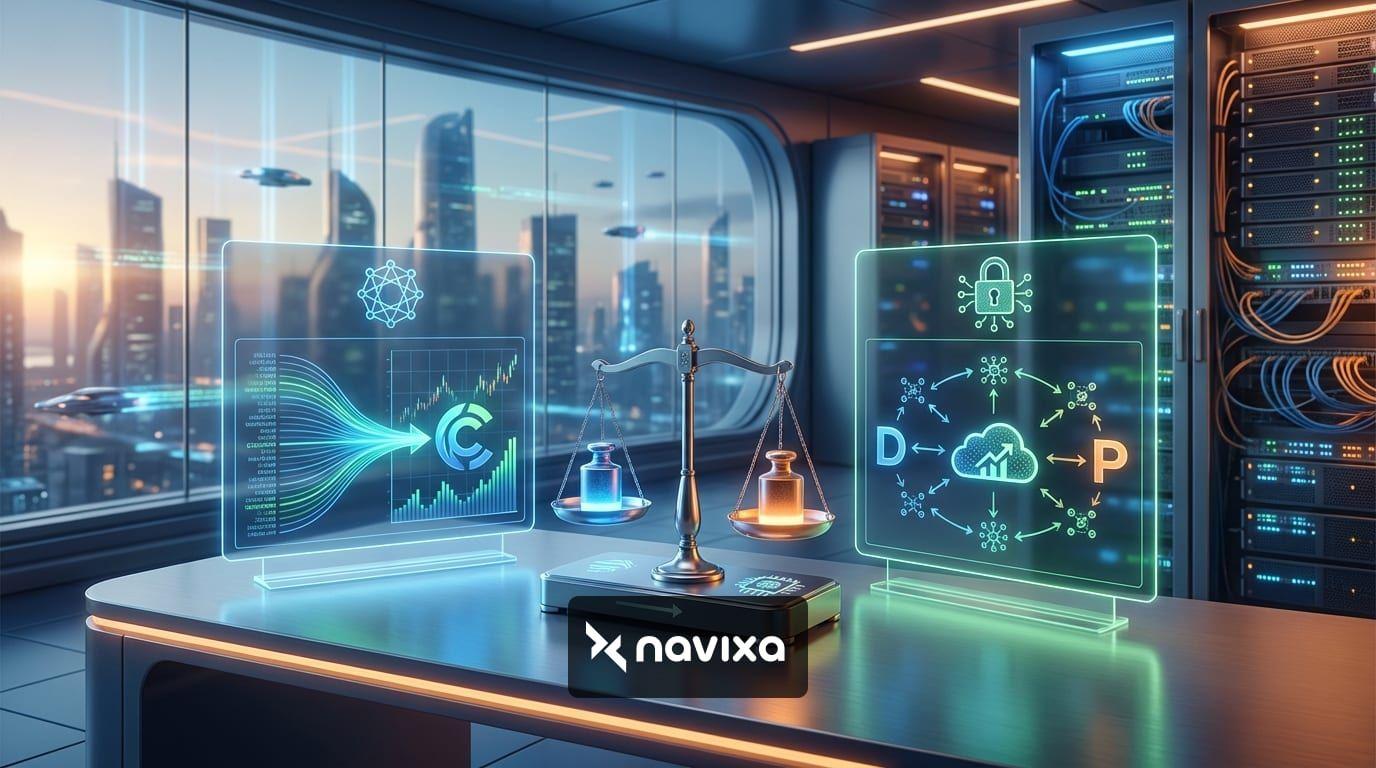
CoreWeave vs. DePIN: The Trader's Comparison
The following table highlights the structural differences between investing in CoreWeave stock and trading DePIN crypto assets. Understanding these nuances is vital for portfolio allocation.
| Feature | CoreWeave (CRWV) | DePIN (e.g., Render, Akash) |
|---|---|---|
| Asset Class | Public Equity (Stock) | Cryptocurrency (Utility Token) |
| Hardware Ownership | Company-owned Data Centers | Distributed (User/Third-party owned) |
| Primary Risk | Capital Expenditure & Valuation | Protocol Bugs & Token Volatility |
| Access to H100s | Guaranteed (Direct NVIDIA Partner) | Variable (Dependent on supply side) |
| Regulatory Status | Fully Regulated (SEC) | Uncertain (Grey area) |
| Liquidity Profile | Market Hours (NASDAQ) | 24/7 Global Trading |
Trading Strategies for the Compute Supercycle
Investors looking to capture value from the AI compute shortage should consider a diversified approach. The "barbell strategy" is particularly effective here: placing capital in stable, high-growth equities while allocating a smaller percentage to high-upside crypto protocols.
The Equity Leg: Long CRWV
Buying CoreWeave stock is a bet on institutional AI adoption. As enterprises move from training models (which requires massive clusters) to inference (running the models), CoreWeave's specialized infrastructure remains critical. Watch for quarterly earnings reports specifically regarding utilization rates and contract backlog. A growing backlog indicates that demand continues to outstrip supply, justifying a premium valuation.
The Crypto Leg: DePIN Rotation
In the crypto markets, liquidity often rotates between sectors. DePIN tokens tend to outperform when major AI news breaks (like a new ChatGPT release or NVIDIA earnings beat). Traders can use technical analysis on RENDER/USD or AKT/USD pairs, looking for breakouts that coincide with broader tech sector bullishness. Additionally, staking these tokens can provide yield, though this adds a layer of protocol risk.
Key Insight: CoreWeave builds the highway. DePIN builds the side roads. When the highway is jammed, the side roads become valuable.
Risks to Consider
No trade is without risk. For CoreWeave, the primary danger is "hyperscaler retaliation." If Microsoft or Amazon successfully develop their own custom silicon that rivals NVIDIA's GPUs, CoreWeave's competitive advantage could erode. Further insights on this dynamic can be found in analysis by The Motley Fool regarding semiconductor market shifts.
For DePIN, the risk is technical and adopton-based. Can decentralized networks actually handle enterprise-grade training loads? Currently, latency issues make DePIN better suited for inference and rendering rather than heavy model training. If these technical hurdles aren't solved, DePIN tokens may remain speculative rather than utility-driven.
Conclusion: How to Position Yourself
The demand for compute power is not slowing down. Whether you choose the regulated path of CoreWeave stock or the decentralized frontier of DePIN depends on your risk tolerance and investment horizon. CoreWeave offers a direct line to the corporate AI boom, while DePIN offers a democratized, albeit riskier, vision of the future.
For a deeper dive into the mechanics of decentralized networks, resources like Messari's DePIN research provide excellent data for fundamental analysis. The smartest play may not be choosing one winner, but acknowledging that both centralized and decentralized compute will be necessary to power the AI age.