
The Next Frontier in Automated Crypto Trading
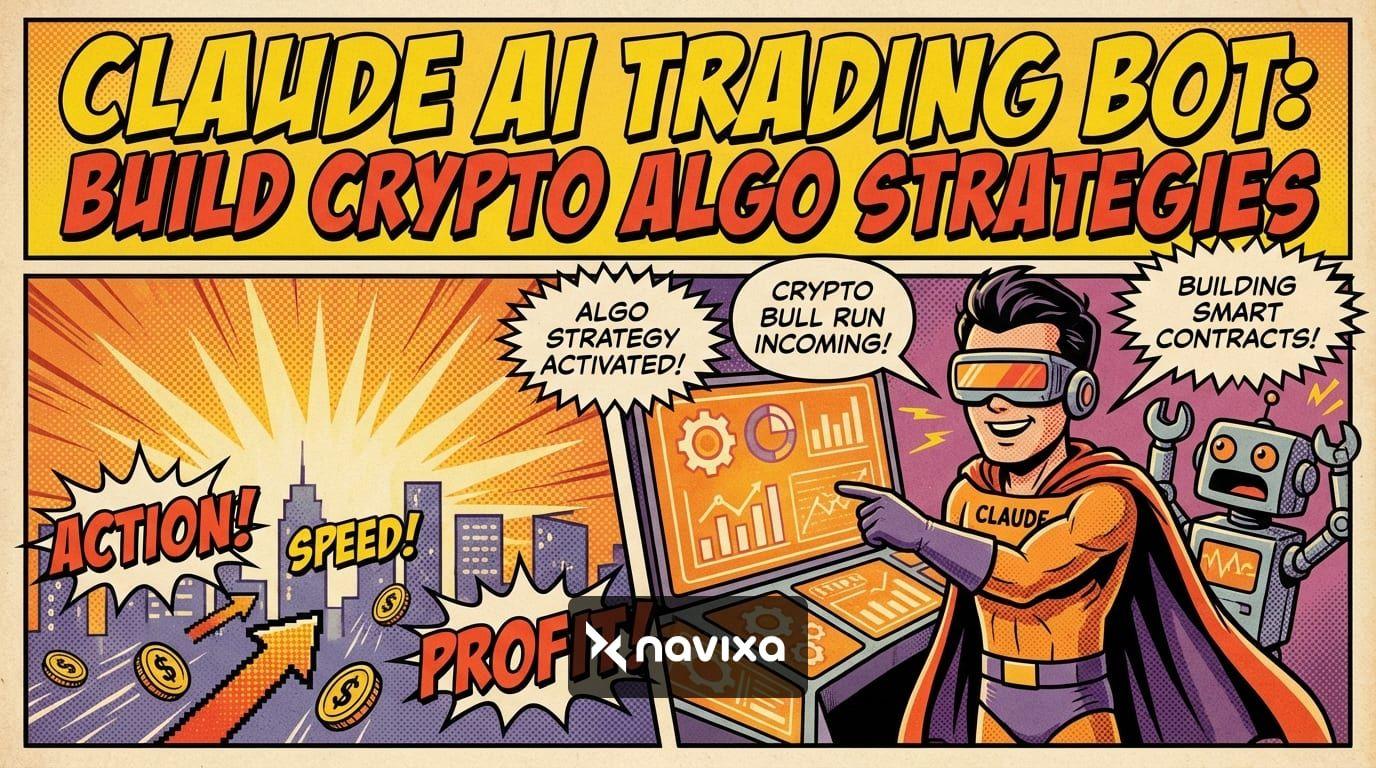
The landscape of algorithmic cryptocurrency trading is undergoing a seismic shift. As the global crypto trading bot market reaches an estimated valuation of $54.07 billion in 2026, retail and institutional traders are rapidly abandoning manual execution. Today, the competitive edge belongs to those who leverage advanced large language models (LLMs) to architect, deploy, and refine their trading systems. At the forefront of this revolution is the Claude AI trading bot, a system powered by Anthropic's highly capable intelligence models to analyze markets, generate complex Python code, and execute trades with precision.
The real-world results of AI-driven automation are already making headlines. In a staggering display of rapid arbitrage, a Claude-powered trading bot operating under the account name "sovereign2013" famously turned a mere $1 stake into over $3.3 million on the decentralized prediction platform Polymarket. By executing lightning-fast data ingestion and dynamic positioning, the bot proved that leveraging AI for strategy generation is no longer theoretical—it is a highly profitable reality.
Whether you are a seasoned quantitative analyst or a crypto enthusiast looking to remove emotional bias from your trades, utilizing a Claude AI trading bot to build crypto algorithmic strategies can drastically elevate your performance. In this comprehensive guide, we will explore why Claude is the premier choice for algo trading, break down actionable strategies, and provide a step-by-step roadmap for building your own automated system.
Why Build a Claude AI Trading Bot?
While traditional rule-based bots have been around for years, integrating an LLM like Claude introduces a new layer of cognitive reasoning and coding efficiency. Building a trading bot with Anthropic's Claude 3.5 Sonnet model provides several distinct advantages over standard grid bots or earlier AI iterations.
1. Unmatched Speed and Coding Proficiency
Claude 3.5 Sonnet operates at twice the speed of its predecessor, Claude 3 Opus, making it exceptionally well-suited for the low-latency demands of cryptocurrency markets. In the world of crypto, where market conditions can flip in milliseconds, rapid iteration is crucial. Claude excels at writing complex, bug-free Python code, specifically when utilizing extensive cryptocurrency libraries like CCXT, which connects to hundreds of global exchanges.
2. Deep Context and Correlation Analysis
Unlike basic bots that execute pre-set moving average crossovers, a Claude AI trading bot can ingest massive amounts of data. With a 200,000-token context window, traders can feed Claude vast datasets of historical order book data, macroeconomic indicators, and technical analysis reports. The model is capable of identifying nuanced correlations across different assets, providing an explanation of *why* an asset is moving, rather than just signaling a buy or sell trigger.
3. Elimination of Emotional Decision-Making
In 2026, automated trading adoption continues to rise, with 42% of traders preferring bots specifically to reduce emotional decision-making. A Claude-architected bot executes flawlessly according to the mathematical logic it was programmed with, bypassing the fear and greed that typically ruin manual trading portfolios.
Core Algorithmic Strategies for AI Bots
Before you start generating code with Claude, you must define the quantitative strategy your bot will employ. AI models are only as good as the logic you ask them to build. Here are three highly effective strategies to build with your Claude AI trading bot:
Market Neutral Grid Trading
Grid trading involves placing a series of buy and sell orders at predetermined intervals around a set price, creating a "grid" of orders. In choppy, sideways markets—which accounted for 60% to 70% of cryptocurrency trading activity during recent consolidation phases—grid bots thrive. You can prompt Claude to write a Python script that dynamically adjusts grid spacing based on real-time Average True Range (ATR) or Bollinger Band volatility.
Statistical Arbitrage
Statistical arbitrage involves simultaneously buying and selling correlated assets to profit from temporary price discrepancies. As demonstrated by the Polymarket success story, rapid arbitrage across fragmented decentralized exchanges (DEXs) or prediction markets can yield massive returns. You can instruct Claude to build web socket connections that listen for real-time price feeds across Binance, Bybit, and OKX, executing trades the millisecond a spread exceeds your profit threshold.
Machine Learning Sentiment Analysis
Because Claude is fundamentally a natural language processing powerhouse, you can build a hybrid bot. The bot can scrape recent news headlines, X (formerly Twitter) sentiment, and Reddit threads, pass the text to the Claude API for sentiment scoring, and execute trend-following trades based on the aggregated bullish or bearish sentiment.
Step-by-Step: Building Your Claude AI Trading Bot
Building an automated trading system requires marrying Claude's code generation capabilities with robust financial infrastructure. Follow these steps to build your custom algo bot.
Step 1: Establish Your Development Environment
Your bot requires a stable execution environment. Most developers use Python due to its extensive data science libraries. You will need to install libraries such as `ccxt` for exchange connectivity, `pandas` for data manipulation, and `numpy` for mathematical calculations.
Pro Tip: Never run your live trading bot on a standard laptop connected to Wi-Fi. Deploy your Python environment on a secure Cloud Virtual Private Server (VPS) such as AWS or Google Cloud to ensure 99.99% uptime and minimal latency.
Step 2: Prompt Engineering with Claude 3.5 Sonnet
The secret to extracting functional trading code from Claude is highly specific prompt engineering. Instead of asking, "Write a trading bot," use a persona-driven prompt with strict parameters.
Example Prompt: *"Act as an expert quantitative developer. Write a Python script using the CCXT library for the Binance exchange. The bot should implement a mean-reversion strategy on the BTC/USDT pair using the 15-minute timeframe. Use an RSI (Relative Strength Index) indicator. Buy when RSI drops below 30, and sell when it crosses above 70. Include robust error handling for API rate limits and a strict 2% stop-loss per trade. Structure the code in a modular, object-oriented format."*
Claude 3.5 Sonnet will output a highly structured, readable script. Because of its superior reasoning capabilities, it will often proactively include safety mechanisms like `try/except` blocks to prevent the bot from crashing during network timeouts.
Step 3: Integrate High-Quality Market Data
A beautifully coded AI strategy is completely useless if fed garbage data. Many AI trading bots fail because they rely on delayed or fragmented price feeds. Ensure your Python script connects to premium data providers like CoinAPI or leverages direct exchange WebSocket connections for tick-level L2/L3 order book data. The cleaner and faster the data ingested by your Claude AI trading bot, the higher the probability of successful trade execution.
Step 4: Rigorous Backtesting
Never deploy a bot with live funds without backtesting it against historical data. You can ask Claude to generate a backtesting script using frameworks like `Backtrader` or `Freqtrade`. Have Claude run simulations using data from bear markets, bull runs, and high-volatility events to analyze the maximum drawdown and Sharpe ratio of your strategy.
Strategy Comparison Table
Understanding how a custom-built Claude bot stacks up against out-of-the-box retail solutions is critical for managing your expectations and resources.
| Feature / Aspect | Custom Claude AI Trading Bot | Traditional Retail Grid Bot | Basic Exchange-Provided Bot |
|---|---|---|---|
| Customization Level | Unlimited (Full Python access) | High (Settings adjustments) | Low (Fixed parameters) |
| Market Adaptability | Dynamic (Can rewrite logic via API) | Static (Requires manual tweaks) | Static (Pre-configured) |
| Data Integration | Limitless (On-chain, sentiment, L3) | Limited to exchange price | Limited to basic price action |
| Initial Setup Time | Days to Weeks (Requires coding) | Minutes | Seconds |
| Hosting Required | Yes (Cloud VPS recommended) | No (Cloud-hosted by provider) | No (Hosted on exchange) |
Risk Management and Security Protocols
The efficiency of automation comes with severe risks if left unchecked. A coding error or a sudden market flash crash can drain an account in seconds. Therefore, you must implement strict risk management guardrails.
1. API Key Security: When generating API keys on your cryptocurrency exchange, strictly disable "Withdrawal" permissions. Your bot only needs permission to read data and execute trades. Store your API keys in secure environment variables (`.env` files), and never hardcode them into the Python script generated by Claude.
2. Dynamic Sizing and Stop-Losses: Hardcode a failsafe into your bot. Instruct Claude to include logic that limits total account exposure on a single trade to 1% or 2%. Furthermore, implement a global kill-switch that halts the bot if the portfolio drops by a specific percentage in a 24-hour window.
3. Paper Trading First: Always run your Claude AI trading bot in a simulated "paper trading" environment for at least two to four weeks. Monitor how it handles slippage, API rate limits, and sudden spikes in market volatility before committing real capital.
Conclusion
Building algorithmic crypto strategies with a Claude AI trading bot represents the bleeding edge of retail quantitative finance in 2026. By utilizing Claude 3.5 Sonnet's rapid coding capabilities, nuanced data analysis, and sophisticated logic generation, you can architect automated systems that rival institutional setups. Remember that AI is an incredible execution and design tool, but it does not replace the need for sound financial strategy, premium data feeds, and rigorous backtesting.
Take the first step today: set up a secure cloud environment, open the Claude interface, and begin drafting the Python blueprint for your algorithmic trading future. Start small, test relentlessly, and let AI transform how you interact with the cryptocurrency markets.
Frequently Asked Questions
Can Claude AI directly execute trades on an exchange?
No, Claude AI itself is a language model and cannot directly connect to your financial accounts. However, you use Claude to write the Python code (using libraries like CCXT). You then run this code on your own computer or cloud server, and the code connects to your exchange via API keys to execute the trades.
Which Claude model is best for building crypto bots?
As of mid-2024 to 2026, Claude 3.5 Sonnet is considered the optimal model for this task. It operates at twice the speed of Claude 3 Opus and features industry-leading coding proficiency, making it perfect for generating complex, context-heavy trading algorithms efficiently.
How much coding knowledge do I need to use a Claude AI trading bot?
While Claude can generate 90% of the required code, a foundational understanding of Python and how APIs work is highly recommended. You need to be able to read the code to spot logic errors, install libraries, and securely deploy the script onto a server.
Are AI trading bots profitable in a bear market?
Yes, if programmed correctly. AI bots can be designed to short-sell, trade derivatives, or run grid-trading strategies that capture micro-profits during sideways or downward trends. The profitability of the bot is determined entirely by the underlying algorithmic strategy, not just the fact that it uses AI.