
Introduction to Bitcoin Price AI Trading
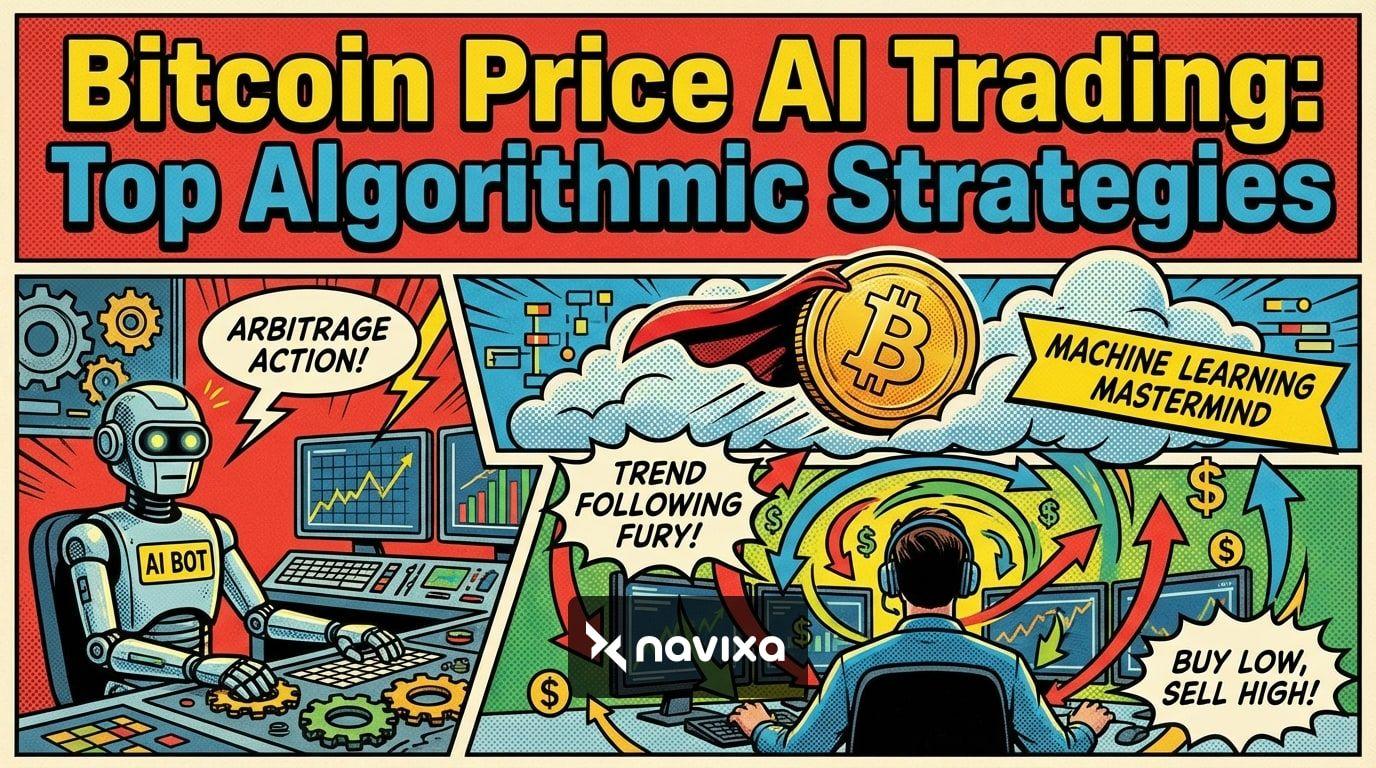
The cryptocurrency market is notorious for its relentless 24/7 cycles, extreme volatility, and rapid price fluctuations. With Bitcoin's price often experiencing sudden shifts based on macroeconomic data, institutional inflows, and global regulatory news, relying solely on human intuition is no longer sufficient. Enter Bitcoin price AI trading, a revolutionary approach that leverages artificial intelligence, machine learning, and quantitative models to optimize algorithmic strategies.
Unlike traditional financial markets, crypto never sleeps. While a human trader must eventually step away from the screen, an AI trading bot operates continuously, monitoring the order books, assessing liquidity, and executing trades at the exact optimal moment.
"AI trading bots have evolved from simple script-based algorithms to sophisticated, multi-agent systems capable of analyzing sentiment, macro indicators, and executing trades in milliseconds."
Whether you are a retail investor looking to generate passive income or an institutional whale managing a massive portfolio, understanding how AI can predict market trends, automate execution, and manage risk is the key to maintaining a competitive edge. This comprehensive guide will explore the mechanics of algorithmic trading, the best tools available, and how you can implement these strategies to maximize your returns.
Understanding Market Consolidation and Volatility
To grasp the power of AI trading, one must first understand the environment it operates within. Cryptocurrencies frequently enter periods of extreme volatility, followed by phases of market consolidation. For example, when Bitcoin consolidates within a tight range—such as oscillating between $68,000 and $71,000—human traders often struggle with the chop, losing capital to false breakouts and erratic price action.
AI algorithms, however, thrive in these exact conditions. Using high-frequency trading logic, bots can execute thousands of micro-trades, capturing tiny profit margins on small price fluctuations. Conversely, during periods of high volatility driven by news events, AI systems can instantly switch from range-bound strategies to trend-following protocols, riding the momentum while dynamically adjusting trailing stop-losses.
The Evolution of Algorithmic Strategies in Crypto
Historically, algorithmic trading in cryptocurrency relied on rigid, rule-based instructions. A trader might program a bot to simply buy when the Relative Strength Index (RSI) drops below 30 and sell when it crosses 70. While effective in predictable markets, these static models fail spectacularly during sudden paradigm shifts. Today, AI-powered strategies utilize advanced frameworks to adapt dynamically to real-time market conditions.
Machine Learning and Predictive Analytics
Modern machine learning models digest vast amounts of historical data—spanning previous Bitcoin halving cycles to minute-by-minute order book depth. By recognizing complex mathematical patterns that elude human analysts, these predictive models forecast short-term Bitcoin price movements with remarkable accuracy. They analyze multi-dimensional state vectors, incorporating price features, moving averages, and trading volume to predict the next market move.
Natural Language Processing (NLP) for Sentiment Analysis
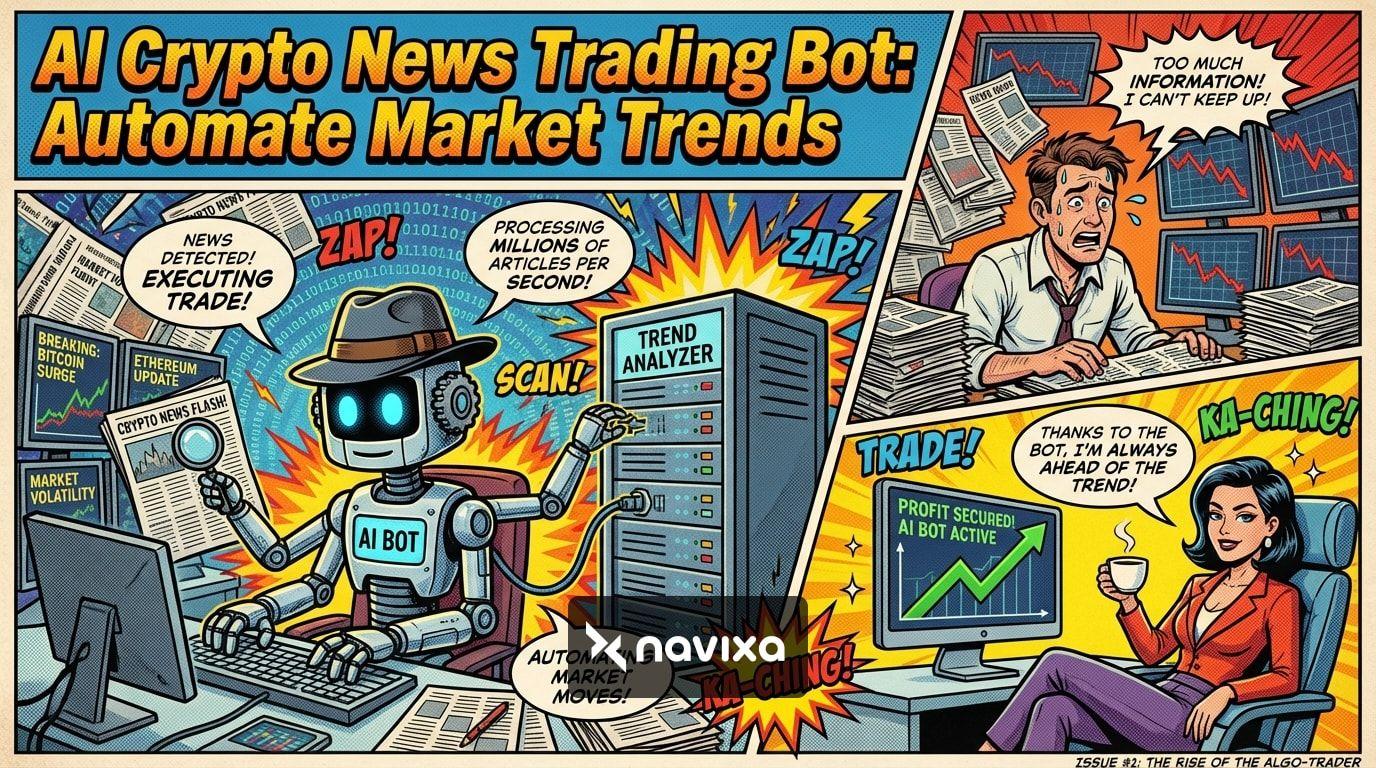
Markets are heavily driven by psychological sentiment. Advanced AI agents now incorporate Natural Language Processing (NLP) to scrape millions of data points from financial news, Twitter, Reddit, and Telegram. If a major regulatory announcement or a significant macroeconomic shift occurs, the AI instantly quantifies the market mood. It can identify the narrative and execute trades before human traders have even finished reading the headline.
Deep Reinforcement Learning
Rather than following a static set of rules, reinforcement learning allows AI trading bots to learn by trial and error in simulated environments. As the AI interacts with live market data, it receives rewards for profitable trades and penalties for losses. Over time, it continuously refines its strategy, maximizing profitability while adapting to sudden Bitcoin price drops or liquidity crunches.
On-Chain Data Analysis
AI algorithms now integrate seamlessly with blockchain explorers. They monitor whale wallet movements, exchange inflows and outflows, and miner selling pressure in real-time. If an AI detects that a massive amount of Bitcoin has suddenly been moved to a spot exchange, it can preemptively short the market or hedge existing long positions to protect capital.
Deep Dive: Top AI Crypto Trading Bots
Choosing the right platform is critical for executing a successful AI trading strategy. The landscape has matured significantly, offering a spectrum of tools designed for both novices and advanced quantitative analysts.
BitsStrategy: A fully managed, AI-driven trading system tailored for users who want a truly hands-off experience. It requires no complex API configurations or manual strategy setups, making it highly attractive for beginners. Its proprietary AI engine continuously adapts to changing market conditions without user intervention.
Token Metrics: Rather than acting solely as an execution bot, Token Metrics functions as an AI-powered research assistant. It uses over 80 data points per token to generate AI-driven ratings, price predictions, and portfolio optimization recommendations, making it invaluable for narrative detection.
Pionex: This platform is unique because it operates as an exchange with built-in trading bots. It offers 16 free pre-built bots, including Grid Trading and Dollar-Cost Averaging (DCA), eliminating the often-complicated step of connecting third-party bots via API keys.
3Commas: A heavyweight in the automated trading space, 3Commas is built for intermediate to advanced traders. It offers a highly customizable SmartTrade terminal, advanced DCA bots, and the ability to integrate custom trading signals from third-party analysts.
Cryptohopper: Known for its robust Strategy Designer and social trading marketplace, Cryptohopper allows users to build complex algorithms without knowing how to code. Users can also backtest their strategies heavily before deploying live capital.
AI Trading Platform Comparison
| Trading Platform | Key Features | Best For | Pricing Model |
|---|---|---|---|
| BitsStrategy | Fully automated AI, no manual setup, adaptive risk management | Beginners and hands-off investors | Tiered Subscriptions |
| Token Metrics | AI coin ratings, narrative detection, predictive analytics | Research-driven traders | Freemium & Paid |
| Pionex | Built-in free bots, grid trading, built-in exchange | Cost-conscious traders | Free (Trading Fees Apply) |
| 3Commas | Multi-exchange terminal, smart trade automation, advanced DCA | Intermediate to advanced users | Monthly Subscription |
| Cryptohopper | Strategy marketplace, AI optimization, visual backtesting | Strategy builders and algorithmic traders | Monthly Subscription |
For up-to-date market insights and independent tracking of trading volumes and exchange liquidity, checking trusted aggregators like CoinGecko or CoinMarketCap remains essential.
Actionable Steps to Implement Bitcoin Price AI Trading
Integrating AI into your Bitcoin trading strategy requires more than just creating an account and funding it. Follow these foundational steps to ensure a robust and profitable setup.
1. Define Your Trading Objectives
Are you looking for high-frequency scalping opportunities, or do you prefer a passive Dollar-Cost Averaging (DCA) approach? Your goals dictate the type of algorithm you should deploy. High-frequency bots require low-latency exchange connections and deep liquidity, whereas DCA bots are far more forgiving of execution speeds and are ideal for long-term accumulation.
2. Utilize Paper Trading and Backtesting
Before risking real capital, thoroughly backtest your AI model against historical Bitcoin price data. Look for platforms that offer robust backtesting engines. Furthermore, engage in paper trading—running the bot in real-time using simulated funds. Ensure the bot can survive sudden 10% market corrections without liquidating the account.
3. Configure Exchange APIs Securely
If you are using a third-party bot, you will need to connect it to your exchange via Application Programming Interfaces (APIs). When generating these keys, ensure you grant the bot permission to read data and trade, but absolutely never check the box that allows withdrawals.
4. Optimize Portfolio Allocation
Never allocate your entire portfolio to a single AI bot or strategy. Keep a portion of your funds in cold storage as a long-term hold, and divide your active trading capital among different algorithms. For instance, allocate 60% to a conservative DCA bot and 40% to an aggressive, sentiment-driven momentum bot.
Advanced Risk Management in AI Trading
Even the most sophisticated AI models are susceptible to failure if proper risk management protocols are ignored. The crypto market's inherent volatility means that algorithms can sometimes exacerbate losses if left unchecked.
Implement Strict Stop-Losses: Always define your maximum acceptable drawdown. Ensure your AI bot is programmed to execute hard stop-losses to protect your capital from sudden flash crashes. Trailing stop-losses are particularly effective, as they lock in profits as the price of Bitcoin rises while protecting against sudden reversals.
Manage Leverage Carefully: Many AI bots are capable of trading perpetual futures contracts using leverage. While leverage amplifies profits, it equally magnifies losses. An algorithmic glitch or an extreme spike in volatility can result in total account liquidation within seconds. Restrict your bots to low leverage until you have empirical proof of their consistency.
Monitor Execution Slippage: Slippage occurs when a trade is executed at a different price than expected due to low liquidity. Ensure your bot is programmed with maximum slippage tolerances, preventing it from executing market orders that could severely degrade your profit margins during highly volatile trading sessions.
Secure Your Infrastructure: API security is paramount. Regularly rotate your API keys, use IP whitelisting to ensure the exchange only accepts commands from your bot's specific server, and employ Two-Factor Authentication (2FA) across all platforms.
Practical Takeaways
Mastering Bitcoin price AI trading involves blending cutting-edge technology with disciplined financial principles. Keep these core concepts in mind: * Data is King: AI models are only as good as the data they consume. Rely on high-quality price feeds and robust sentiment analysis tools. * Adaptability Wins: Markets shift rapidly. Ensure your chosen AI bot utilizes machine learning or reinforcement learning to adapt to new volatility regimes. * Security First: Protect your exchange accounts by properly configuring and restricting API keys used by third-party trading bots. * Continuous Optimization: Never treat AI trading as a passive endeavor. Monitor performance metrics, adjust risk parameters, and evolve your strategy alongside the market.
Frequently Asked Questions
What is Bitcoin price AI trading?
Bitcoin price AI trading involves using artificial intelligence algorithms, machine learning, and predictive analytics to automatically analyze market data, forecast price movements, and execute trades on cryptocurrency exchanges without human intervention.
Can AI trading bots guarantee profits in cryptocurrency?
No. While AI trading bots can process data faster than humans and execute trades free of emotional bias, they cannot guarantee profits. Cryptocurrency markets are inherently unpredictable, and predictive models can fail during unprecedented market conditions.
Do I need to know how to code to use an AI crypto trading bot?
Not anymore. Platforms like BitsStrategy, Pionex, and Cryptohopper offer intuitive, no-code interfaces or pre-built automated bots. These user-friendly ecosystems allow beginners to implement complex algorithmic strategies with just a few clicks.
How does Natural Language Processing (NLP) help in crypto trading?
NLP allows AI bots to read and interpret unstructured text from financial news, social media posts, and regulatory announcements. By gauging whether the market sentiment is bullish or bearish, the bot can make proactive trading decisions before the price reacts fully to the news.
Is it safe to connect an AI bot to my cryptocurrency exchange?
It is generally safe if strict security protocols are followed. When connecting a bot via API, you must only grant the bot permission to read data and execute trades. You should never grant withdrawal permissions. Additionally, using IP whitelisting adds an extra layer of security.
Conclusion
The intersection of artificial intelligence and cryptocurrency has fundamentally transformed how investors approach the market. Bitcoin price AI trading offers unparalleled advantages in speed, data processing, and emotional discipline. By leveraging sophisticated machine learning models, natural language processing for sentiment analysis, and automated execution platforms, traders can navigate Bitcoin's notorious volatility with newfound precision and confidence.
However, it is crucial to remember that technology is a powerful tool, not a substitute for prudent risk management. By combining these advanced algorithmic strategies with strict capital preservation rules, you can position yourself at the forefront of the next evolution in digital asset trading. Explore platforms, backtest your models rigorously, and let data-driven AI elevate your cryptocurrency portfolio today.