
Introduction to the New Era of Market Psychology
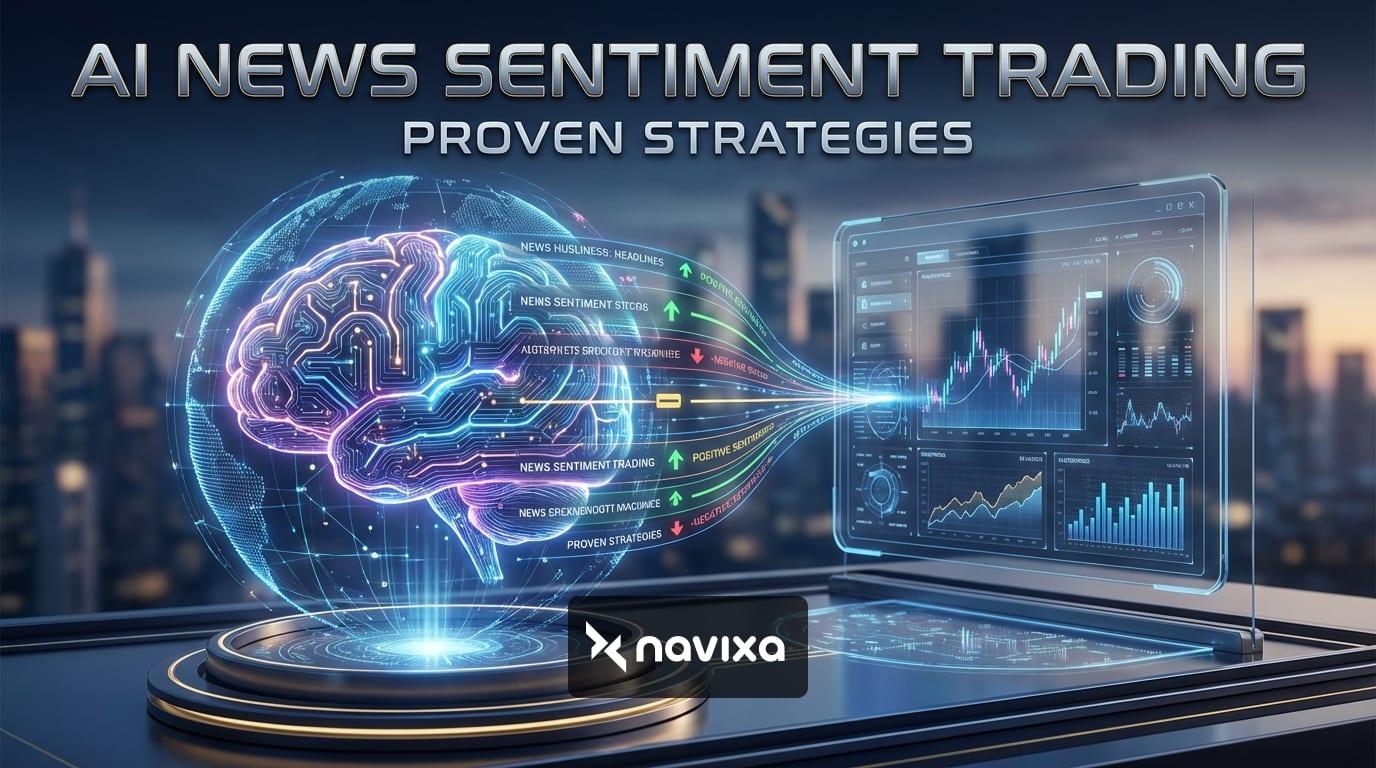
The financial markets have always been driven by two primal emotions: fear and greed. However, the speed at which these emotions propagate through social media, financial news, and global networks has outpaced human comprehension. This is where AI news sentiment trading comes into play. By leveraging advanced artificial intelligence to read, interpret, and act upon vast quantities of text data in milliseconds, traders are no longer reacting to the news—they are trading the emotional shockwaves the news creates.
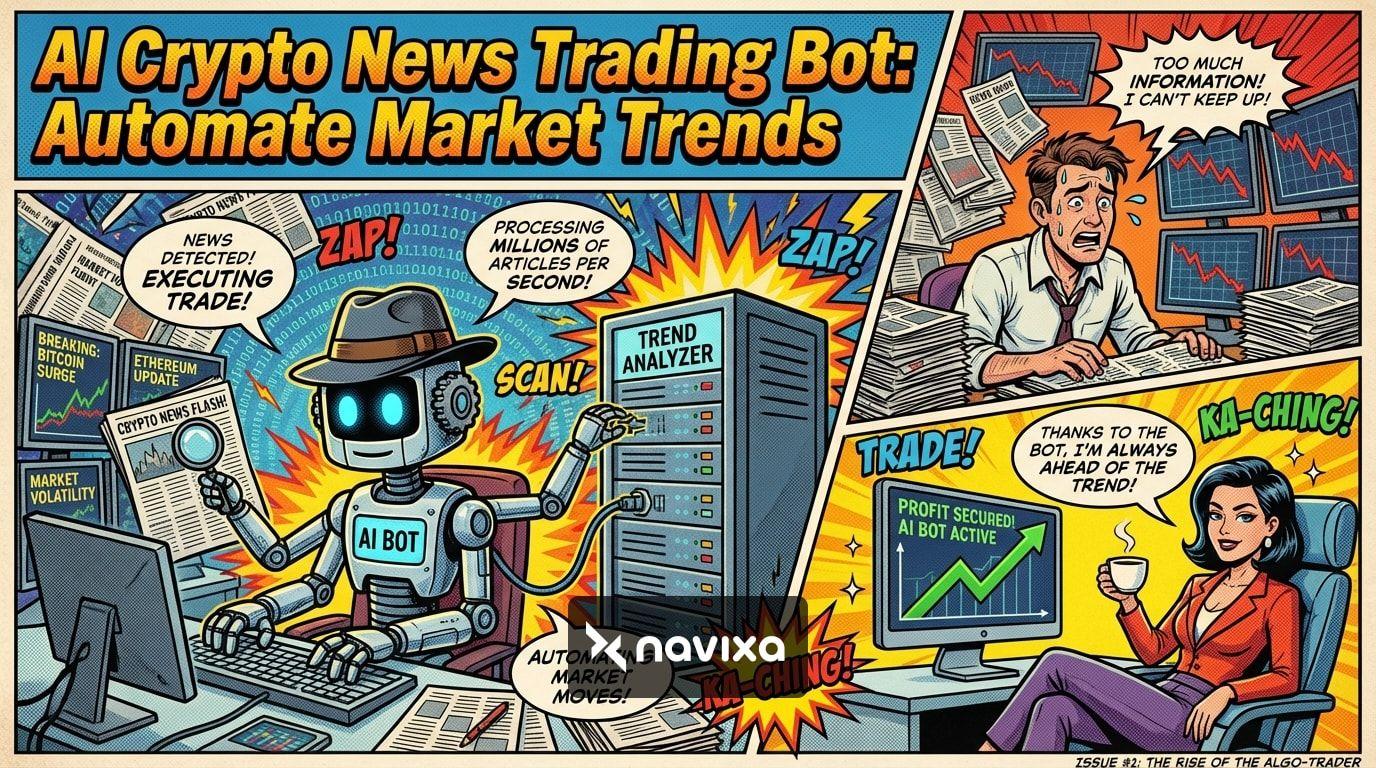
In the fast-paced world of cryptocurrency and traditional finance, an asset's value can fluctuate wildly based on a single headline or social media post. For instance, a sudden influx of positive news regarding institutional adoption can send Bitcoin surging past major resistance levels, while rumors of regulatory crackdowns can trigger aggressive sell-offs. Human traders cannot physically read thousands of articles per minute, but an AI algorithm can.
This comprehensive guide explores the mechanics behind AI news sentiment trading, the most effective strategies utilized by quantitative analysts, and how you can implement these tools to gain a statistical edge in the market.
How AI Algorithms Process Market Emotion
To understand how to deploy an effective AI news sentiment trading strategy, it is essential to look under the hood of the technology. Modern sentiment analysis relies on a combination of complex computer science disciplines.
Natural Language Processing (NLP)
At the core of sentiment trading is Natural Language Processing (NLP). NLP allows computers to understand, interpret, and generate human language. Rather than simply scanning for keywords like "buy" or "sell," advanced NLP models analyze the context, tone, and syntax of a sentence.
"Sentiment is not merely a side effect of financial markets; it is the fundamental driver of short-term price discovery."
If a news outlet publishes the headline, "Despite regulatory hurdles, new Bitcoin ETF inflows break records," a basic keyword scanner might get confused by the word "hurdles." However, an advanced NLP algorithm understands that the overall context is overwhelmingly bullish. It weighs the semantic importance of "break records" against "regulatory hurdles" and assigns a positive numerical value to the text.
Machine Learning and Predictive Scoring
Once the NLP engine parses the text, machine learning algorithms take over. These systems are trained on millions of historical data points, correlating past headlines with subsequent price movements. The AI assigns a sentiment score to an asset, typically ranging from -100 (extreme fear) to +100 (extreme greed).
When multiple highly credible news sources publish positive developments simultaneously, the sentiment score spikes. If this score breaches a predefined threshold, the trading bot automatically executes a buy order, capitalizing on the momentum before the retail crowd even finishes reading the article.
Core AI News Sentiment Trading Strategies
Implementing AI news sentiment trading requires more than just turning on a bot. Successful traders utilize specific strategies tailored to different market conditions.
1. The News Cycle Arbitrage
News cycle arbitrage is the practice of capitalizing on the latency between when a news story breaks and when the broader market fully prices in the information. Because AI models process data in milliseconds, they can execute trades almost instantly after a headline hits major publications or financial terminals.
For example, if a major payment processor announces the integration of a specific altcoin, the AI sentiment engine detects the anomaly immediately. It buys the asset during the initial accumulation phase and sets a trailing stop-loss to ride the inevitable retail wave, eventually selling into the liquidity generated by latecomers.
2. Trend Confirmation and Momentum Trading
Sentiment data is incredibly powerful when used as a confirmation tool for existing technical trends. If a cryptocurrency is breaking out of a long-term technical resistance level, traders often look for volume to confirm the move. AI news sentiment trading adds another layer of validation.
If the breakout is accompanied by a massive surge in positive sentiment across X (formerly Twitter) and financial news platforms, the probability of a sustained rally increases significantly. Conversely, if an asset is breaking out but the sentiment score remains neutral or bearish, it may indicate a "bull trap" or low-liquidity manipulation.
3. Contrarian Reversal Strategies
Legendary investor Warren Buffett famously advised to be "fearful when others are greedy, and greedy when others are fearful." AI sentiment algorithms can quantify this philosophy perfectly.
When the sentiment score reaches absolute extremes (e.g., +95 or -95), it often signals that the market is overextended. Euphoria leads to overbuying, and panic leads to overselling. A contrarian AI strategy monitors for peak sentiment saturation. When the algorithm detects that positive news mentions have peaked and are beginning to decelerate, it can automatically execute short positions or take profits, anticipating an imminent market correction.
Comparing Sentiment Trading with Traditional Analysis
To fully appreciate the value of AI news sentiment trading, it is helpful to compare it against the two traditional pillars of market research: Technical Analysis (TA) and Fundamental Analysis (FA).
| Feature | AI Sentiment Analysis | Technical Analysis (TA) | Fundamental Analysis (FA) |
|---|---|---|---|
| Primary Focus | Market emotion and news data | Price action, charts, volume | Financial health, tokenomics |
| Data Sources | News sites, social media feeds | Chart patterns, moving averages | Earnings reports, macro data |
| Execution Speed | Milliseconds (Algorithmic) | Minutes to hours | Days to months |
| Best Used For | Short-term volatility, arbitrage | Trend identification, entries | Long-term investing, value |
| Major Weakness | Susceptible to false hype | Lags behind sudden news | Ignores short-term psychology |
As the table illustrates, no single method is perfect. The most profitable algorithmic traders use AI sentiment analysis in conjunction with TA and FA to build a comprehensive, multi-layered trading system.
The Role of Alternative Data in Sentiment Trading
Beyond traditional financial news and mainstream social media, advanced AI news sentiment trading algorithms are increasingly tapping into alternative data sources to gain an informational edge. Alternative data refers to unconventional information that is not typically found in earnings reports, SEC filings, or standard price charts.
Scraping Developer Activity and Forums
In the cryptocurrency space, a project's underlying technology is as important as its marketing. AI algorithms can be programmed to monitor developer hubs like GitHub. By analyzing the frequency of code commits, bug fixes, and developer discussions, the AI can gauge the internal sentiment of the development team. If a project experiences a sudden surge in enthusiastic developer activity, the AI might interpret this as a leading indicator of an upcoming major network upgrade or product launch, allowing the bot to position itself before the news hits the mainstream media.
Furthermore, niche forums like Reddit's r/CryptoCurrency or specialized Discord channels serve as incubators for retail trends. An AI monitoring these spaces can detect grassroots sentiment shifts. When a previously unknown altcoin begins to organically dominate daily discussions with positive sentiment, the algorithm can recognize the brewing momentum and trigger early entry signals.
Macro-Economic Event Parsing
AI news sentiment trading is not limited to asset-specific news. Global macroeconomic events, such as Federal Reserve interest rate decisions, inflation reports, and geopolitical developments, have a profound impact on high-risk assets like cryptocurrency.
Modern sentiment engines instantly parse the language used by central bank officials during press conferences. If an AI detects a subtle shift from "hawkish" (restrictive) to "dovish" (accommodative) rhetoric, it can automatically anticipate an influx of liquidity into risk-on markets. By correlating these macro sentiment shifts with real-time price action, the AI builds a highly resilient trading framework that adapts to the broader economic environment.
Actionable Steps to Build Your Strategy
If you are ready to integrate AI news sentiment trading into your portfolio, you need a structured approach. Here is how you can begin leveraging market psychology algorithmically.
Step 1: Choose the Right Analytical Tools
Retail traders do not need to build complex NLP algorithms from scratch. There are numerous platforms and APIs that provide real-time sentiment data. Tools that aggregate sentiment scores from social media and news outlets can be integrated directly into your trading dashboard. Ensure that the data provider has a reliable historical track record and low latency. For high-quality market updates, you can cross-reference sentiment signals with established news platforms like CoinDesk.
Step 2: Define Strict Execution Parameters
AI algorithms act without hesitation, which is both their greatest strength and their biggest risk. You must define strict parameters for your trading bots. This includes: - Threshold Triggers: Only execute a trade if the sentiment score moves by a specific percentage within a specific timeframe (e.g., a 30-point jump in 5 minutes). - Volume Requirements: Require trading volume to increase alongside the sentiment score to avoid buying into illiquid, manipulated spikes. - Asset Filtering: Restrict the bot to trading high-cap assets like Bitcoin or Ethereum, which are less susceptible to single-actor manipulation than micro-cap altcoins. You can verify market caps and liquidity metrics on major exchanges like Kraken.
Step 3: Backtest Rigorously
Before risking real capital, you must backtest your AI news sentiment trading strategy. Run your parameters through historical data to see how the bot would have performed during major past events, such as exchange collapses, regulatory announcements, or macroeconomic shifts. Backtesting exposes flaws in your risk management and helps you optimize your stop-loss and take-profit levels.
Risk Management in Algorithmic Sentiment Trading
While AI news sentiment trading offers a distinct edge, it is not without severe risks. The internet is filled with noise, and algorithms can easily be tricked if proper safeguards are not in place.
The Threat of False Hype and Manipulation
Cryptocurrency markets are particularly vulnerable to coordinated "pump and dump" schemes. Bad actors can utilize bot networks to flood social media with artificially positive sentiment about a low-liquidity token. If your AI sentiment tracker is not sophisticated enough to distinguish between organic human engagement and bot-generated spam, it may trigger a buy order right before the orchestrators dump their holdings.
AI Hallucinations and Context Errors
No NLP model is flawless. Sarcasm, irony, and complex financial jargon can sometimes lead to misinterpretations. For instance, a headline stating "Bitcoin's catastrophic volatility is a dream for short-sellers" contains the words "dream" and "Bitcoin," which a poorly trained model might flag as positive, missing the inherently bearish context of the sentence.
Implementing Failsafes
To mitigate these risks, always employ strict risk management. Never allocate more than a small percentage of your total portfolio to an automated sentiment strategy. Utilize hard stop-losses to protect against flash crashes, and ensure your algorithm requires a confluence of indicators—such as technical support levels or moving average crossovers—before executing a trade based purely on news sentiment.
Practical Takeaways
- Speed is the Edge: AI news sentiment trading leverages NLP to read and react to news in milliseconds, beating human traders to the punch. - Context Matters: Modern AI evaluates the tone and semantic meaning of text, providing a highly accurate gauge of market fear and greed. - Combine Strategies: The best results come from combining sentiment analysis with technical indicators and volume confirmation to filter out false signals. - Manage Risk Aggressively: Protect your capital from fake news, social media manipulation, and AI misinterpretations by using strict stop-losses and position sizing.
Frequently Asked Questions
What is AI news sentiment trading?
AI news sentiment trading is an algorithmic strategy that uses Natural Language Processing (NLP) and machine learning to analyze the tone of financial news, social media, and other text data. The AI assigns a bullish or bearish score and automatically executes trades based on shifts in market emotion.
Can AI sentiment analysis predict market crashes?
While AI cannot definitively predict the future, it can detect the early warning signs of a crash. By monitoring for extreme spikes in fear-based keywords across global news outlets or a sudden acceleration of negative sentiment, the AI can execute defensive maneuvers, such as selling assets or opening short positions, before a massive drop occurs.
How do trading bots avoid fake news and social media manipulation?
Advanced AI systems use source-weighting to combat fake news. A headline from a highly reputable financial terminal carries significantly more weight than an unverified post on social media. Additionally, robust algorithms are programmed to look for volume confirmation, ensuring that actual money is moving in tandem with the news before executing a trade.
Is sentiment trading better suited for crypto or traditional stocks?
Sentiment trading is highly effective in both markets, but it is particularly dominant in the cryptocurrency sector. Crypto markets operate 24/7 and are heavily influenced by social media trends, regulatory news, and retail speculation, making them the perfect environment for sentiment-driven algorithms.
Conclusion
The landscape of algorithmic trading has evolved rapidly, shifting the focus from purely mathematical models to sophisticated systems that analyze human psychology. AI news sentiment trading represents the frontier of this evolution, allowing traders to quantify the unquantifiable: market emotion.
By processing millions of data points, recognizing semantic patterns, and executing trades in milliseconds, these AI systems provide an unparalleled advantage in volatile markets. However, the key to long-term profitability lies in discipline. Technology is only as good as the parameters set by the human operating it. By combining the raw processing power of AI with robust risk management, technical confirmation, and continuous backtesting, you can transform the chaos of the daily news cycle into a structured, reliable strategy for wealth generation. Start integrating sentiment indicators into your technical analysis today, and take control of the emotional currents driving the market.