Introduction to AGI Algorithmic Trading
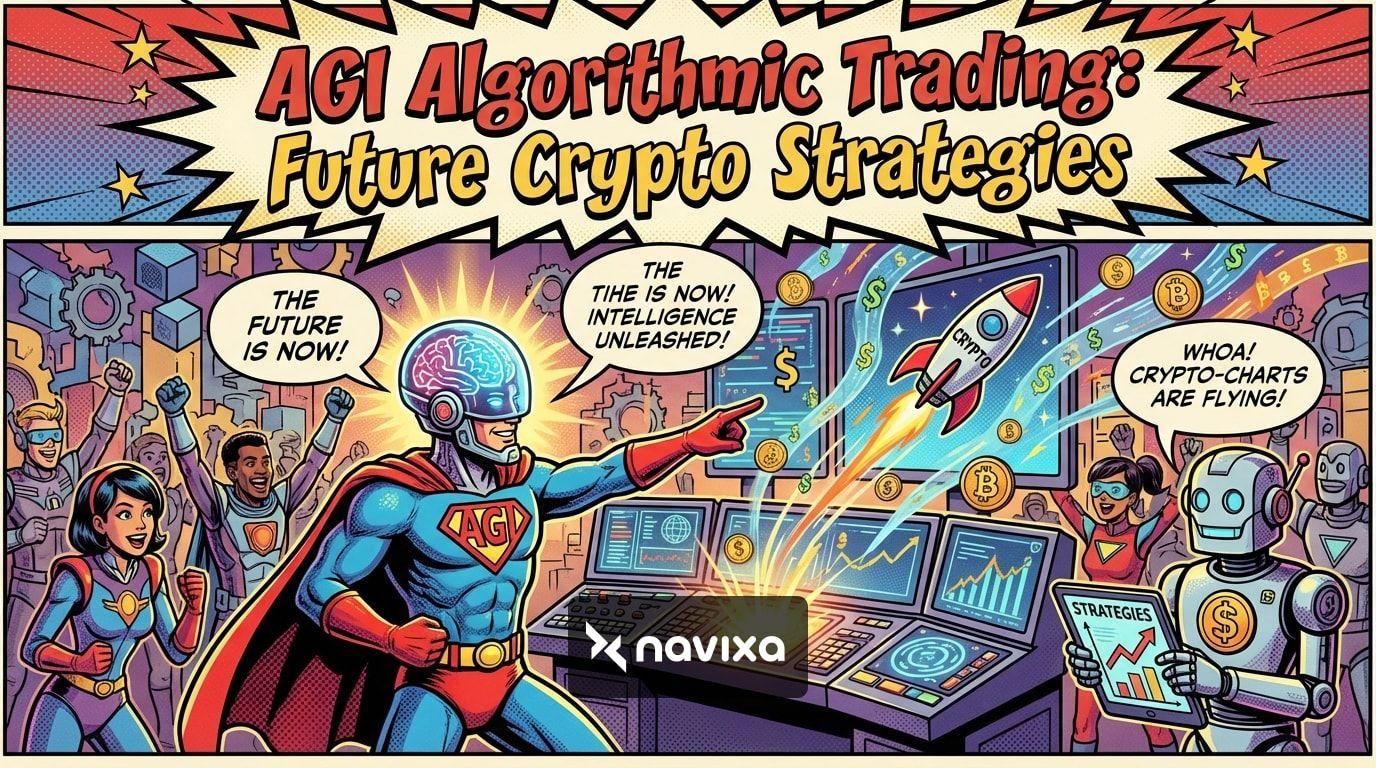
The cryptocurrency market has always been at the bleeding edge of financial technology, but the imminent arrival of Artificial General Intelligence (AGI) is set to rewrite the rules of market engagement entirely. As we navigate the complex macroeconomic landscape of 2026, where the total crypto market cap hovers around $2.3 trillion and Bitcoin faces unprecedented institutional adoption alongside geopolitical headwinds, traditional trading strategies are showing their limitations. Enter AGI algorithmic trading—the next evolutionary leap from standard automated bots to highly cognitive, autonomous financial agents capable of human-like reasoning at machine speed.
For years, traders have utilized narrow AI and machine learning to execute grid trading, arbitrage, and basic momentum strategies. However, these systems operate within strict, pre-programmed boundaries. AGI algorithmic trading represents a fundamental shift. Instead of merely reacting to moving averages or predefined technical indicators, an AGI-driven system can contextualize global events, interpret regulatory shifts, and dynamically rewrite its own trading algorithms in real time.
In this comprehensive guide, we will explore the architecture of AGI-driven market strategies, compare them to the legacy systems of the past, and provide actionable insights on how investors can position themselves for a future where autonomous agents dominate the order books.
The Evolution: From Narrow AI to AGI in Crypto
To understand the magnitude of AGI algorithmic trading, one must first recognize the ceiling of current narrow AI. Traditional cryptocurrency trading bots are exceptional at executing repetitive tasks. If a trader wants to buy Bitcoin when the Relative Strength Index (RSI) drops below 30 and sell when it crosses 70, a narrow AI bot can execute this flawlessly. However, if a sudden geopolitical conflict causes oil prices to spike, triggering inflation fears and a subsequent crypto market sell-off—as witnessed in the dramatic $1 billion liquidation events of March 2026—the narrow AI bot will mindlessly continue to buy the dip, completely unaware of the broader macro context.
AGI, by definition, possesses human-level or superhuman cognitive flexibility. Leading AI developers at companies like OpenAI, DeepMind, and Anthropic have increasingly signaled that human-level AGI could emerge within the next few years. In a trading context, an AGI system does not just look at the chart; it "reads" the market.
When an AGI algorithmic trading system observes a sudden drop in Bitcoin's price, it simultaneously processes breaking news from the Middle East, analyzes shifts in the US Dollar Index (DXY), reads through newly filed SEC/CFTC documents classifying tokens as digital commodities, and monitors spot ETF inflows. It then synthesizes this multi-modal data to conclude whether the price drop is a localized flash crash to be bought or the beginning of a prolonged macro downtrend to be shorted.
Core Components of Future AGI Crypto Strategies
The integration of AGI into cryptocurrency trading relies on several sophisticated technological pillars. As these autonomous systems mature, traders will need to understand the engines powering their strategies.
1. Multi-Modal Sentiment Synthesis
Traditional sentiment analysis relies on counting positive or negative keywords on platforms like X (formerly Twitter) or Reddit. AGI algorithmic trading systems utilize multi-modal Large Language Models (LLMs) to understand nuance, sarcasm, and the credibility of sources. Furthermore, they can ingest video feeds, audio from central bank press conferences, and complex legal documents. For instance, if the Federal Reserve chairman changes his tone slightly regarding interest rate cuts, an AGI system can instantly interpret the dovish or hawkish sentiment and adjust portfolio weightings before human analysts have even finished typing their notes.
2. Autonomous Agentic Execution
We are currently entering an era of "agentic" workflows, where AI does not just output text but executes multi-step actions autonomously. In crypto, an AGI agent can deploy capital across decentralized finance (DeFi) protocols, bridge assets between blockchains like Ethereum and Solana, and execute trades on centralized exchanges simultaneously. If it identifies a yield-farming opportunity that requires borrowing stablecoins, swapping for a governance token, and staking it in a liquidity pool, the AGI can execute the entire smart contract sequence securely and instantly.
3. Self-Correcting Technical and On-Chain Analysis
While human traders rely on lagging indicators, AGI systems can generate predictive models based on massive historical datasets and real-time on-chain metrics. More importantly, AGI algorithmic trading systems are self-correcting. If a previously successful moving average crossover strategy begins to fail due to changing market regimes, the AGI will independently backtest new parameters, optimize its strategy, and deploy the updated model without requiring human intervention or manual reprogramming.
AGI Algorithmic Trading vs. Traditional Trading Bots
To clearly illustrate the difference between legacy automation and the future of market speculation, let us compare the two paradigms side-by-side.
| Feature | Traditional Crypto Bots (Narrow AI) | AGI Algorithmic Trading |
|---|---|---|
| Market Awareness | Limited to specific data feeds (e.g., price, volume). | Holistic (Macroeconomics, geopolitics, on-chain data, social nuance). |
| Adaptability | Rigid; requires manual re-coding and backtesting. | Highly adaptive; self-optimizes and rewrites code autonomously. |
| Execution | Executes pre-set conditional logic (If X, then Y). | Multi-step, agentic workflows across DeFi and centralized exchanges. |
| Risk Management | Static stop-losses and trailing stops. | Dynamic risk modeling based on global liquidity and volatility forecasts. |
| Speed of Analysis | Instant execution of simple rules. | Instant synthesis of complex global variables and deep reasoning. |
Designing the Ultimate AGI-Driven Portfolio Strategy
As AGI algorithmic trading becomes more accessible, retail and institutional investors alike must adapt their strategies. Here are the primary ways AGI will be utilized to generate alpha in the digital asset markets.
Predictive Macro-Arbitrage
Cryptocurrency is no longer an isolated asset class; it is deeply correlated with traditional equities, commodity prices, and inflation data. AGI trading systems will excel at predictive macro-arbitrage. By monitoring global supply chains and geopolitical events, an AGI can predict how oil prices will impact inflation, how that inflation will affect Federal Reserve policy, and how that policy will ultimately price into Bitcoin and altcoins. Investors leveraging macroeconomic indicators alongside AGI will have a massive edge over purely technical traders.
Dynamic Hedging and Liquidity Routing
Volatility is the defining characteristic of the cryptocurrency market. AGI systems will implement dynamic hedging strategies that protect capital during extreme downside events. For example, if an AGI detects anomalous on-chain movements by "whale" wallets that historically precede massive market dumps, it can automatically short Bitcoin perpetual futures to delta-hedge the portfolio, while simultaneously routing stablecoins into high-yield, low-risk DeFi protocols to earn passive income during the storm.
The Rise of Autonomous DAOs
Decentralized Autonomous Organizations (DAOs) are set to be revolutionized by AGI. We will see the creation of investment DAOs completely managed by AGI agents. Human participants will simply deposit capital, and the AGI will act as a super-intelligent fund manager, allocating capital across thousands of micro-strategies, continuously rebalancing, and distributing profits back to token holders via smart contracts.
Actionable Steps for Traders Preparing for AGI
The transition to AGI algorithmic trading will not happen overnight, but the groundwork is being laid today. Traders who wish to remain competitive must begin evolving their approach immediately.
1. Familiarize Yourself with Agentic AI Tools: Begin experimenting with advanced AI frameworks and custom GPTs designed for data analysis. Understanding how to prompt and guide AI agents is the first step toward managing an AGI portfolio. 2. Prioritize Quality Data Over Algorithms: An AGI is only as good as the data it ingests. Traders should focus on securing premium data feeds, including real-time on-chain analytics, institutional order book data, and high-quality macroeconomic news sources. 3. Shift Focus to Strategy Architecture: As AGI takes over the execution and analysis, the human trader's role will shift to that of a strategy architect. Focus on defining overarching risk parameters, ethical boundaries, and broad financial goals, leaving the micro-decisions to the machine. 4. Monitor Regulatory Developments: As AI becomes more integrated into financial markets, regulators will inevitably step in. Keep a close eye on SEC and CFTC rulings regarding automated trading and AI governance to ensure your strategies remain compliant.
Risk Management in an Agentic Future
While the potential of AGI algorithmic trading is staggering, it introduces entirely new categories of systemic risk that must be rigorously managed.
The Threat of AGI Flash Crashes
When thousands of hyper-intelligent AGI agents are competing in the same order books, the potential for algorithmic cascading failures increases. If one AGI identifies a fake news catalyst and begins dumping assets, other AGIs might detect the momentum and follow suit, resulting in a devastating flash crash occurring in milliseconds. Human traders must implement hard-coded "kill switches" and utilize offline cold storage for a significant portion of their portfolio to protect against algorithmic anomalies.
Hallucinations and Bad Data Ingestion
Even advanced AI models can "hallucinate" or draw incorrect conclusions from flawed data. If an AGI algorithmic trading system ingests a maliciously fabricated regulatory document or a deepfake video of a central banker, it could execute catastrophic trades based on a false reality. Robust verification protocols and multi-source consensus mechanisms must be built into the AGI's architecture to cross-reference facts before deploying capital.
Over-Reliance and Skill Degradation
As traders increasingly rely on AGI to make decisions, there is a risk of severe skill degradation. If the AGI system goes offline due to a cloud infrastructure failure or regulatory ban, traders who have forgotten how to read market structure or manage risk manually will be left defenseless. Maintaining a strong foundational knowledge of market mechanics remains absolutely essential.
Frequently Asked Questions
What is AGI algorithmic trading?
AGI algorithmic trading refers to the use of Artificial General Intelligence—AI systems that possess human-like or superhuman reasoning and adaptability—to autonomously execute and manage financial trading strategies. Unlike traditional bots that follow rigid rules, AGI can synthesize global news, macroeconomics, and complex market data to dynamically adapt its trading approach.
How does AGI differ from traditional crypto trading bots?
Traditional bots rely on narrow AI and execute predefined instructions based on specific technical indicators. They cannot adapt to unprecedented events. AGI systems are highly adaptable, capable of reading market sentiment, understanding macroeconomic shifts, and rewriting their own trading algorithms to optimize performance in changing market conditions.
Is AGI trading currently available to retail investors?
True human-level AGI is still in the developmental phases at leading tech companies. However, we are currently in a transitional phase where highly advanced, "agentic" AI tools are becoming available. Retail investors can already utilize sophisticated AI agents that automate complex DeFi workflows and perform advanced data synthesis, serving as a precursor to full AGI.
Will AGI trading systems eliminate market volatility?
It is highly unlikely. In fact, AGI could introduce new forms of volatility. While AGI systems will efficiently arbitrage away small market inefficiencies, the competition between rival AGI agents could lead to hyper-fast algorithmic flash crashes or massive, instantaneous repricings of assets when new global data is published.
How can I protect my crypto portfolio in an AGI-dominated market?
To protect your portfolio, ensure that you use robust risk management techniques such as hard-coded stop losses and circuit breakers. Maintain a diversified portfolio, keep a significant portion of long-term holdings in cold storage, and continuously educate yourself on macroeconomic trends so you are not solely reliant on automated systems.
Conclusion
The advent of AGI algorithmic trading is not merely an upgrade to existing trading bots; it is a fundamental transformation of how financial markets operate. As we look toward a future where autonomous agents manage billions of dollars in digital assets, the line between technology and finance will disappear entirely. By understanding the shift from narrow AI to artificial general intelligence, embracing advanced data synthesis, and implementing rigorous risk management, forward-thinking investors can position themselves at the forefront of this revolution. The markets of tomorrow will be fast, ruthless, and highly intelligent. The time to upgrade your trading strategy is now.
"The future of finance belongs to those who can seamlessly blend human strategic vision with the relentless execution and cognitive processing power of artificial general intelligence."
Embrace the future, refine your strategies, and prepare for the era of the autonomous financial agent.