
Introduction
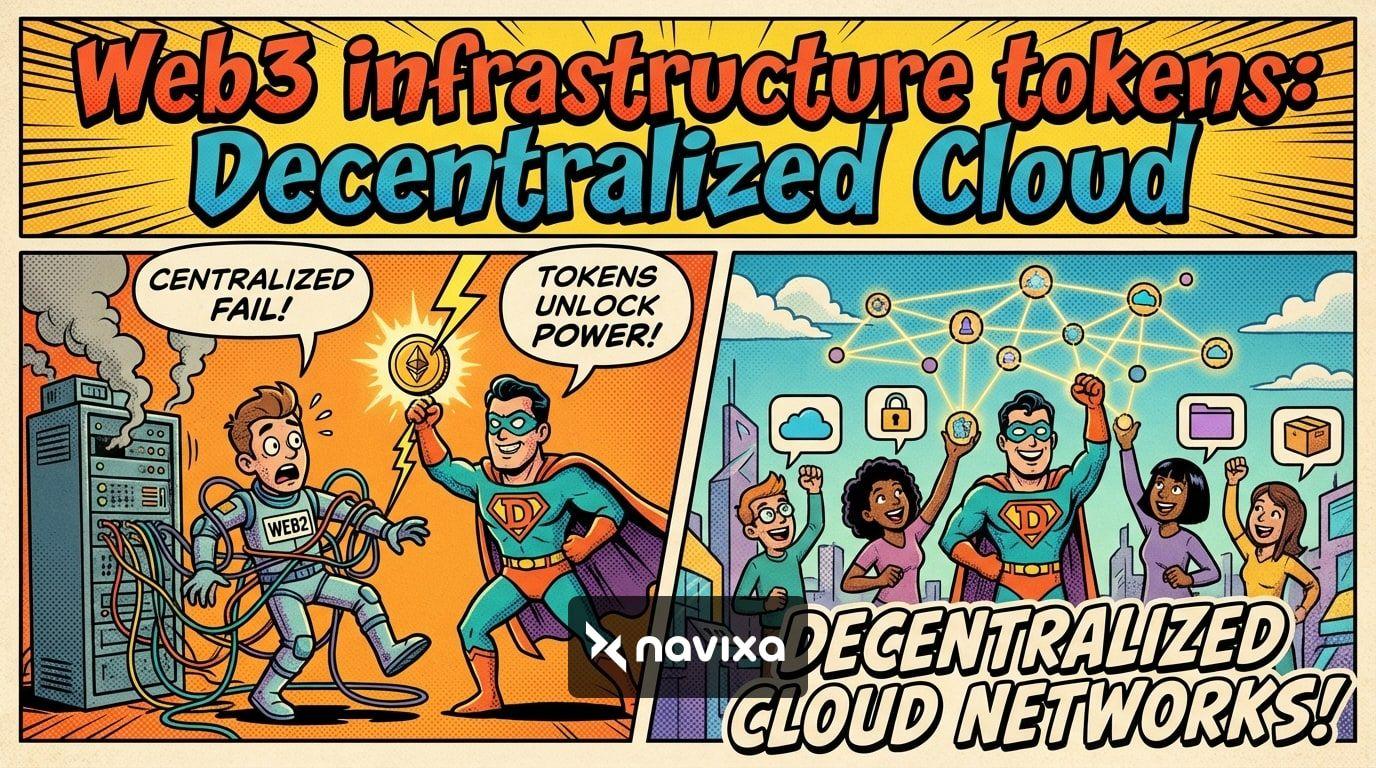
The digital landscape is undergoing a monumental transformation as the world pivots away from centralized corporate servers toward community-driven networks. At the heart of this revolution are Web3 infrastructure tokens, the lifeblood of decentralized cloud crypto ecosystems. These digital assets incentivize a global network of participants to share their unused computing power, storage capacity, and bandwidth, effectively democratizing the building blocks of the internet.
"The transition from centralized data silos to community-owned physical infrastructure is not just a technological upgrade; it is the fundamental restructuring of the digital economy."
Historically, the internet's backend has been monopolized by a handful of tech giants—companies that control data centers and dictate the terms of digital storage and computing. However, Web3 infrastructure tokens are dismantling this monopoly. By leveraging blockchain technology, these tokens facilitate trustless, peer-to-peer marketplaces where users can rent or provide digital resources. As artificial intelligence (AI) workloads, big data analytics, and decentralized finance (DeFi) applications demand more resilient and scalable backends, the value proposition of decentralized cloud networks has never been clearer.
Whether you are a seasoned trader analyzing market trends or a long-term investor seeking exposure to the next generation of digital infrastructure, understanding the mechanics and market dynamics of Web3 infrastructure tokens is essential. In this comprehensive guide, we will explore the underlying technology of decentralized cloud crypto, review top-performing assets, and break down actionable trading strategies and risk management protocols to help you navigate this high-growth sector.
The Evolution of Decentralized Cloud Crypto
To fully grasp the potential of Web3 infrastructure tokens, it is crucial to understand the distinct pillars of the decentralized cloud ecosystem. Unlike traditional cryptocurrencies that primarily serve as a medium of exchange or store of value, infrastructure tokens are strictly tied to utility. They power what is widely known as Decentralized Physical Infrastructure Networks (DePIN).
Decentralized Storage Networks
Decentralized storage protocols aim to replace conventional cloud storage solutions like Amazon S3 or Google Drive. Instead of hosting data in massive, centralized data centers vulnerable to single points of failure, censorship, or data breaches, decentralized storage fragments files, encrypts them, and distributes them across a global network of node operators.
Operators are rewarded with Web3 infrastructure tokens for providing hard drive space and ensuring high data availability. Because the market is open and competitive, decentralized storage often costs a fraction of what traditional providers charge, making it highly attractive for enterprise backups, archival data, and decentralized application (dApp) hosting.
Decentralized Compute and GPU Rendering
While storage is foundational, processing power is the engine of the digital economy. Decentralized compute networks aggregate idle processing power (CPUs and GPUs) from around the world. With the explosive growth of artificial intelligence and machine learning, the demand for high-performance GPU rendering has skyrocketed.
Decentralized compute marketplaces allow developers to bypass the costly bottlenecks of centralized cloud providers. By paying in Web3 infrastructure tokens, developers can access massive parallel computing power to train AI models or render 3D graphics, while the individuals providing the hardware earn a passive income.
Top Web3 Infrastructure Tokens: A Comparative Overview
The ecosystem is populated by numerous projects, each tackling a unique aspect of the decentralized cloud. Below is a comparison of some of the most prominent Web3 infrastructure tokens currently leading the market.
| Token Name | Ticker | Primary Utility | Consensus / Model | Market Focus |
|---|---|---|---|---|
| Filecoin | FIL | Decentralized Storage | Proof of Spacetime | Enterprise Data Archive |
| Render Network | RNDR | GPU Rendering | Proof of Render | AI & 3D Rendering |
| Akash Network | AKT | Cloud Compute | DPoS (Cosmos) | General Cloud Hosting |
| Arweave | AR | Permanent Storage | Proof of Access | Data Permanence |
| The Graph | GRT | Data Indexing | Proof of Stake | Blockchain Querying |
These platforms do not compete directly in all areas; rather, they form a synergistic stack. A developer might use The Graph to index blockchain data, process it using Akash Network's compute power, and permanently store the output on Arweave.
Trading Strategy for Web3 Infrastructure Tokens
Trading decentralized cloud crypto requires a nuanced approach that blends macroeconomic awareness with sector-specific narratives. Because Web3 infrastructure tokens are tied to real-world usage and enterprise adoption, they often behave differently than pure speculative meme coins or consumer dApp tokens.
Momentum and Narrative Trading
The crypto market is highly narrative-driven. Web3 infrastructure tokens tend to experience massive momentum spikes when adjacent technology sectors boom. For example, advancements in artificial intelligence directly catalyze demand for GPU compute tokens like Render and Akash.
Momentum traders should monitor tech industry news, enterprise partnerships, and AI development milestones. When a major tech giant announces a shortage in cloud computing power, it acts as a catalyst for decentralized compute tokens. Traders can capture these moves by riding the initial breakout volume, using trailing stop-losses to secure profits as the narrative peaks.
Dollar-Cost Averaging (DCA) into Fundamental Utility
For those with a longer time horizon, a Dollar-Cost Averaging (DCA) strategy is highly effective. Since decentralized physical infrastructure networks require years to build robust global supply sides (hardware providers) and demand sides (developers), their true value accrual happens gradually.
Investors can build positions in foundational assets like Filecoin and Arweave during market lulls. By consistently allocating capital regardless of short-term price fluctuations, investors can accumulate tokens at a favorable average price, positioning themselves for outsized returns when mainstream adoption accelerates.
Technical Analysis Fundamentals
Applying technical analysis (TA) to Web3 infrastructure tokens requires an understanding of volume profiles and broader market cycles. Since these tokens represent utility layers, their technical charts often mirror institutional accumulation patterns.
Moving Averages and Volume Profile
When analyzing daily or weekly charts, the 50-day and 200-day Simple Moving Averages (SMA) are critical indicators. A "Golden Cross"—where the 50-day SMA crosses above the 200-day SMA—often signals the beginning of a sustained bullish trend for infrastructure tokens.
Equally important is the Volume Profile. Because decentralized cloud crypto is increasingly favored by institutional investors, massive volume nodes often appear at specific price levels. These nodes act as strong horizontal support. Breakouts accompanied by above-average trading volume validate the strength of a new trend, whereas low-volume breakouts should be treated with suspicion.
Support and Resistance in Altcoin Markets
Web3 infrastructure tokens generally exhibit higher volatility than Bitcoin or Ethereum. Therefore, identifying macro support and resistance zones is vital. Traders should zoom out to the weekly timeframes to map out historical supply and demand zones. Often, previous cycle highs act as formidable resistance, while consolidation zones formed during "crypto winters" serve as impenetrable support floors.
For more advanced charting, platforms like DeFiLlama can be used to cross-reference a token's price action with its Total Value Locked (TVL) or network usage metrics, ensuring that price rallies are backed by on-chain fundamentals.
Actionable Steps for Market Participants
If you are looking to capitalize on the growth of decentralized cloud crypto, follow these actionable steps:
1. Diversify Across the Stack: Do not allocate all your capital to one niche. Build a portfolio that includes exposure to storage, compute, and data indexing. This minimizes risk if one specific technology faces regulatory or developmental hurdles. 2. Monitor On-Chain Metrics: Price is only one part of the equation. Track network utilization rates, the number of active nodes, and the revenue generated by the protocol. A network with growing usage will inevitably see value accrue to its native token. 3. Understand Tokenomics: Always review the inflation rate, token unlock schedules, and maximum supply. Even a highly successful infrastructure project can suffer from poor price performance if excessive token emissions dilute the market. 4. Self-Custody Your Assets: Once you have acquired your tokens, prioritize security. Move your long-term holdings off exchanges and into hardware wallets to protect against counterparty risk. You can learn more about secure wallet management through the Ethereum Foundation.
Risk Management in Decentralized Cloud Crypto
While the upside potential is massive, investing in Web3 infrastructure tokens carries distinct risks that must be managed properly.
Smart Contract and Network Vulnerabilities
DePIN projects rely on complex smart contracts and consensus mechanisms to coordinate thousands of independent hardware providers. A bug in the code could lead to slashed funds, network downtime, or loss of user data. Investors should favor projects that have undergone rigorous, third-party security audits and have a proven track record of uptime.
Volatility and Position Sizing
The cryptocurrency market is notoriously volatile. Regulatory crackdowns, macroeconomic tightening, or shifts in technology can cause steep drawdowns. To mitigate this, practice strict position sizing. Never allocate more than you can afford to lose, and avoid over-leveraging your portfolio. Using strict stop-loss orders when executing short-term trades is mandatory to protect your capital from sudden market flushes.
Competition from Tech Giants
The decentralized cloud sector is directly competing with some of the most powerful and well-funded corporations on the planet, such as Amazon, Microsoft, and Google. While decentralized networks offer cost and privacy advantages, the tech giants have unparalleled user experience and enterprise sales pipelines. Investors must continually assess whether decentralized networks are successfully bridging the gap to enterprise adoption.
Practical Takeaways
* Utility is King: Web3 infrastructure tokens derive their long-term value from actual network usage—storage capacity rented, computations processed, and data indexed. * Narrative Synergy: The decentralized compute sector is highly correlated with the broader AI and machine learning boom. Trading these tokens requires keeping a pulse on artificial intelligence advancements. * Technical Validation: Always confirm breakout trends using volume indicators and moving average crossovers before committing substantial capital. * Risk Mitigation: Protect your investments by diversifying across different layers of the infrastructure stack and employing rigorous position sizing.
Frequently Asked Questions
What are Web3 infrastructure tokens?
Web3 infrastructure tokens are digital assets that power and incentivize decentralized physical infrastructure networks (DePIN). They are used as payment to individuals and entities that provide computing power, data storage, and network bandwidth, effectively creating a decentralized alternative to traditional cloud service providers.
How does decentralized cloud crypto differ from AWS or Google Cloud?
Centralized providers like AWS own and operate massive data centers, giving them complete control over user data, pricing, and server uptime. In contrast, decentralized cloud crypto networks distribute these workloads across thousands of independent operators globally. This peer-to-peer model enhances privacy, removes single points of failure, and often reduces costs by utilizing idle global hardware.
Can I mine or earn these infrastructure tokens?
Yes. Unlike traditional Bitcoin mining that requires specialized ASIC hardware, many Web3 infrastructure networks allow users to earn tokens using consumer-grade hardware. For example, you can earn tokens by renting out your excess hard drive space on decentralized storage networks, or by providing your idle GPU power to decentralized rendering and AI compute marketplaces.
Why are AI and machine learning driving the demand for decentralized compute?
AI and machine learning models require massive amounts of GPU processing power to train and execute inferences. As the demand for AI grows, centralized cloud providers frequently face hardware bottlenecks and charge premium prices. Decentralized compute networks solve this by pooling global GPU resources, offering AI developers a more scalable, accessible, and cost-effective computing solution.
Conclusion
The emergence of Web3 infrastructure tokens represents a paradigm shift in how we build, scale, and interact with the internet. By decentralizing the foundational layers of cloud computing, storage, and data management, these networks are stripping power away from centralized monopolies and returning it to a global community of participants. For traders and investors, decentralized cloud crypto offers a unique blend of fundamental utility and explosive growth potential, particularly as the artificial intelligence revolution accelerates the demand for robust, distributed hardware.
As the digital economy continues to evolve, positioning yourself in the infrastructure layer could be one of the most lucrative strategies of this decade. Begin by researching the protocols discussed in this guide, mastering the technical analysis required to time your entries, and always practicing diligent risk management. The future of the internet is decentralized—take the necessary steps today to ensure your portfolio is ready for the transition.