
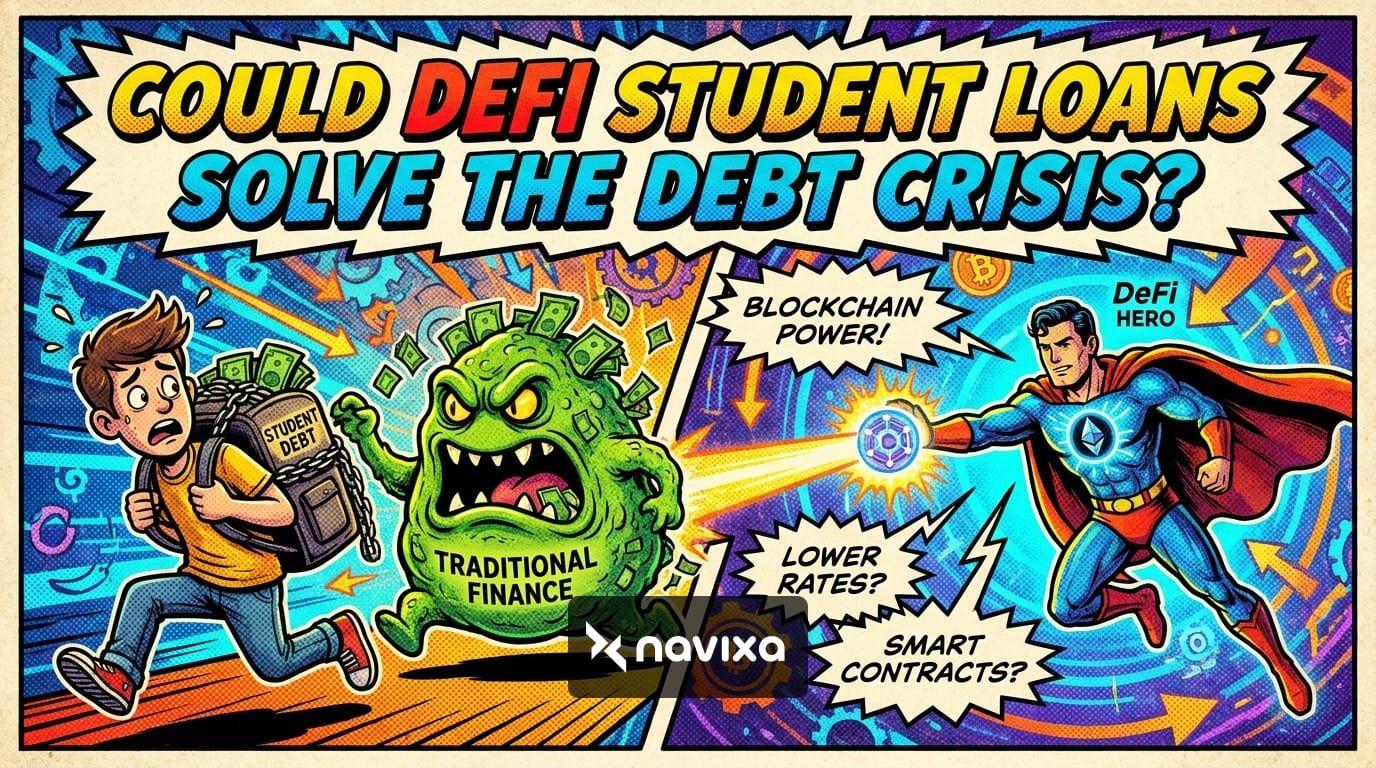
The traditional education financing system has reached a critical breaking point. In the United States alone, outstanding educational debt hovers around the $1.7 trillion mark, saddling millions of graduates with inflexible payment terms, high-interest rates, and centralized bureaucratic hurdles. For decades, the solution to this systemic issue has eluded policymakers and traditional financial institutions. However, the rapid evolution of Web3 has introduced a compelling, decentralized alternative: DeFi student loans.
By merging the borderless efficiency of Decentralized Finance (DeFi) with the emerging sector of Real-World Assets (RWAs), blockchain innovators are redesigning how educational capital is sourced, distributed, and managed. This article delves deep into the mechanics of DeFi student loans, exploring how on-chain lending protocols operate, the trading strategies crypto-natives use to offset fiat debt, and the critical risk management principles required to navigate this new financial frontier.
The Evolution of Education Finance in Web3
Historically, borrowing money for college meant relying on banks or government agencies. These centralized intermediaries dictate interest rates based on opaque macro-environmental factors and rigid credit scoring systems. If you lack a credit history or a wealthy cosigner, accessing capital becomes an insurmountable hurdle.
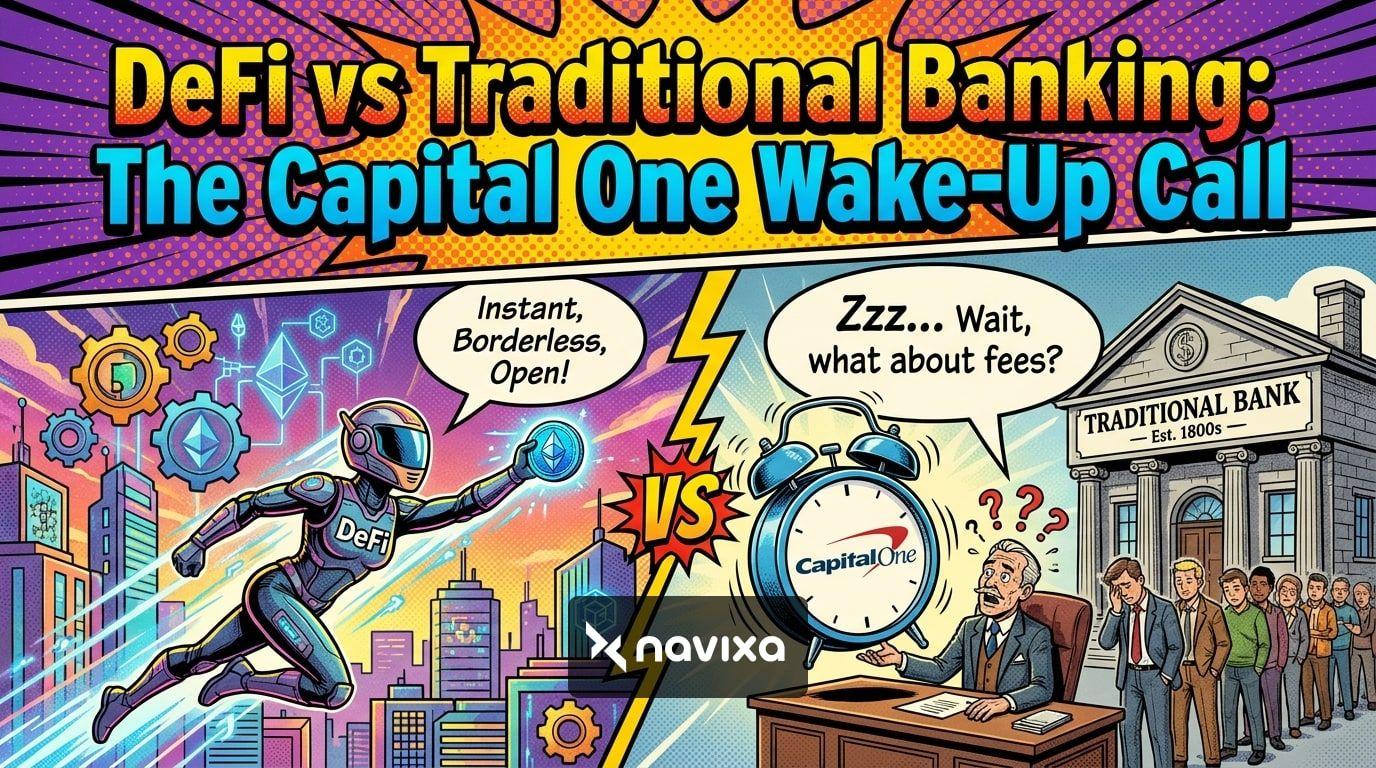
DeFi student loans aim to dismantle these barriers by replacing institutional gatekeepers with transparent smart contracts. Rather than relying on a centralized bank\'s balance sheet, decentralized education finance utilizes global liquidity pools, tokenization, and RWA infrastructure.
What Are DeFi Student Loans?
At their core, DeFi student loans leverage the blockchain to connect borrowers (students) directly with lenders (liquidity providers) without an intermediary. In the broader cryptocurrency market, borrowing usually requires "over-collateralization." For example, to borrow $10,000 in a stablecoin like USDC on platforms such as Aave or the Sky Protocol (formerly MakerDAO), a user might need to deposit $15,000 worth of Ethereum (ETH) or Bitcoin (WBTC).
While over-collateralization works for crypto traders, it is impractical for a college student who needs capital precisely because they lack existing assets. To solve this, new protocols in the "EduFi" (Education Finance) sector use Real-World Asset (RWA) tokenization.
In this model, a student's future earning potential or a bundled portfolio of loan agreements is tokenized on-chain. Institutional investors and decentralized autonomous organizations (DAOs) supply liquidity to these tokenized pools. The students receive funding with practical collateral requirements, while the crypto liquidity providers earn a structured yield generated by the loan interest.
Traditional vs. Decentralized Education Financing
To understand the paradigm shift, we must analyze the structural differences between legacy models and blockchain-based alternatives.
| Feature | Traditional Student Loans | DeFi Student Loans |
|---|---|---|
| Intermediaries | Banks, credit bureaus, government agencies | Smart contracts, decentralized liquidity pools |
| Collateral & Approval | FICO credit scores, income history, cosigners | Tokenized RWAs, institutional collateral pools |
| Interest Rates | Fixed or variable, heavily influenced by central banks | Algorithmic, driven by protocol utilization rates |
| Transparency | Opaque underwriting and hidden administrative fees | 100% transparent, verifiable on a public ledger |
| Global Accessibility | Geofenced, highly dependent on local jurisdictions | Borderless, accessible via any Web3 wallet |
Trading Strategies: Offsetting Debt with DeFi Yields
For current students or graduates who already hold cryptocurrency portfolios, DeFi lending protocols offer a powerful alternative to traditional loan repayment. Rather than liquidating appreciating digital assets (like Bitcoin or Ethereum) to pay off student debt—which triggers taxable events and eliminates future upside—savvy investors utilize a Yield-Offset Trading Strategy.
The Crypto-Collateralized Debt Repayment Strategy
This strategy involves utilizing blue-chip DeFi protocols such as Aave or Morpho. Here is how an investor might structure this trade:
1. Asset Deposit: The user deposits a volatile but historically appreciating asset, such as ETH, into a non-custodial smart contract. 2. Stablecoin Borrowing: The user borrows a stablecoin (e.g., USDC or DAI) against their ETH. Because stablecoins are pegged to the US Dollar, the borrowed principal does not fluctuate in fiat terms. 3. Fiat Off-Ramping: The borrowed stablecoins are routed through a centralized exchange, converted to fiat currency, and used to make a lump-sum payment on the high-interest traditional student loan. 4. Yield Arbitrage: If the traditional student loan carries a 7.5% interest rate, and the DeFi borrowing rate is 4%, the user is effectively refinancing their debt at a lower rate while maintaining their exposure to ETH\'s potential price appreciation.
"By leveraging over-collateralized borrowing in DeFi, investors can transform their dormant crypto portfolios into active credit lines, allowing them to service real-world debt without surrendering their digital assets."
Technical Analysis: Navigating DeFi Interest Rates
Unlike traditional finance where interest rates are dictated by a central bank board, DeFi interest rates are algorithmic. To execute a successful borrowing strategy for debt offset, users must apply technical analysis to the protocol's Utilization Ratio (U).
Understanding the Interest Rate Curve
The Utilization Ratio represents the percentage of a liquidity pool that is currently being borrowed. Most DeFi money markets employ a two-slope interest rate model to manage liquidity risk:
* Below Optimal Utilization (U_optimal): When borrowing demand is low, the interest rate increases slowly and linearly. This ensures borrowing remains cheap to encourage demand. * Above Optimal Utilization: When borrowing demand spikes and liquidity becomes scarce, the interest rate curve steepens aggressively (the "kink" in the curve). This sudden spike is designed to incentivize borrowers to repay their loans and encourage new lenders to deposit capital.
Before taking out a DeFi loan to pay off student debt, an investor must chart the historical borrow rates of the target stablecoin using tools like DefiLlama. If a stablecoin pool consistently operates near its "kink" point, the borrower risks sudden, extreme spikes in borrowing costs, which could negate the arbitrage advantage of the trade.
Risk Management in Crypto Borrowing
While utilizing DeFi student loans or stablecoin borrowing strategies offers immense financial flexibility, it introduces unique risks that do not exist in traditional finance. Proper risk management is non-negotiable.
The Health Factor and Liquidation Risks
The most critical metric in DeFi borrowing is the Health Factor (HF). This number represents the safety of your collateralized loan against market volatility.
* If your collateral (e.g., ETH) drops in value, your Health Factor decreases. * If the Health Factor falls below 1.0, the smart contract will automatically liquidate a portion of your collateral to repay the debt, often charging a liquidation penalty (typically 5% to 10%).
To manage this risk, traders should adhere to conservative Loan-to-Value (LTV) ratios. Even if a protocol allows borrowing up to 80% of the collateral's value, a risk-averse borrower using this strategy for student loans should rarely exceed a 30% to 40% LTV. This provides a massive buffer, ensuring that even if the crypto market experiences a sudden 50% crash, the position remains safe from liquidation.
Smart Contract and RWA Tranche Risks
For investors providing liquidity to DeFi student loan pools (such as those tokenizing RWAs), risk is managed through dual-tranche capital structures.
* Senior Tranches: Designed for risk-averse investors. They offer lower yields but are protected against initial defaults. * Junior Tranches: Designed for high-risk tolerance investors. They absorb the "first loss" in the event a student defaults on their tokenized loan, but they reward the investor with significantly higher APYs.
Understanding which tranche you are supplying liquidity to is essential for capital preservation.
Actionable Steps for Exploring EduFi
Whether you are a student looking for decentralized funding alternatives or a crypto investor seeking to optimize your debt, here are actionable steps to integrate DeFi into your financial planning:
1. Monitor RWA Platforms: Keep an eye on emerging EduFi protocols building on specialized networks (like the EDU Chain). These platforms are pioneering the tokenization of student debt and often offer early-adopter incentives. 2. Analyze Stablecoin Yields: If you have excess capital, consider supplying stablecoins to blue-chip lending protocols. With yields historically ranging between 4% and 8% APY, this passive income can be aggressively applied to the principal of a traditional student loan. 3. Set Up Liquidation Alerts: If you use the Crypto-Collateralized Debt Repayment Strategy, utilize blockchain monitoring bots (via Telegram or Discord) to alert you if your Health Factor drops below a predefined safety threshold. 4. Diversify Collateral: Never lock your entire net worth into a single smart contract. Spread your collateral across multiple battle-tested protocols (e.g., Aave, Sky Protocol, Compound) to mitigate smart contract exploitation risks.
Practical Takeaways
* Systemic Upgrade: DeFi student loans bypass the inefficiencies of traditional banking by utilizing global liquidity pools and transparent smart contracts. * RWA Tokenization: The barrier of crypto over-collateralization is being solved by tokenizing real-world agreements, allowing institutional capital to fund undercollateralized student borrowers safely. * Strategic Arbitrage: Crypto investors can borrow against their digital assets at algorithmic rates to pay off high-interest fiat debt, preserving their exposure to market upside. * Risk Mitigation: Mastering the Health Factor, monitoring the protocol utilization curve, and understanding smart contract risks are mandatory for safely navigating decentralized debt.
Conclusion
The student loan crisis is a multi-generational financial burden that traditional systems have consistently failed to resolve. DeFi student loans represent a monumental shift from opaque, centralized lending to a transparent, borderless financial ecosystem. By tokenizing Real-World Assets and utilizing smart contract lending protocols, Web3 is paving the way for a more equitable education financing landscape.
For the modern investor and student, understanding these decentralized mechanisms is no longer just an edge—it is a necessity. Start exploring the world of EduFi today, audit your current debt structure, and consider how blockchain-based yield and borrowing strategies can accelerate your journey to financial freedom.
***
Frequently Asked Questions
What are DeFi student loans?
DeFi student loans are a novel financial tool that uses blockchain technology and smart contracts to facilitate education financing. Unlike traditional loans issued by banks, DeFi loans source liquidity from decentralized pools and often use Real-World Asset (RWA) tokenization to turn a student's future earning potential or loan agreement into an on-chain asset.
Can I use my crypto to pay off existing traditional student loans?
Yes, many crypto investors use a yield-offset strategy. By depositing assets like Ethereum or Bitcoin into a protocol like Aave, you can borrow stablecoins (which are pegged to the dollar) against your collateral. You can then convert these stablecoins to fiat to pay down your traditional student loans without having to sell your crypto, though you must carefully manage liquidation risks.
What is a Health Factor in DeFi borrowing?
The Health Factor is a numerical representation of the safety of your collateralized loan. It fluctuates based on the market value of your deposited crypto. If the value of your collateral drops significantly and the Health Factor falls below 1.0, the smart contract will automatically sell (liquidate) your assets to cover the debt.
How does RWA tokenization help undercollateralized borrowers?
In traditional crypto lending, you must provide more capital than you borrow, which doesn't work for students who need money. RWA tokenization solves this by allowing protocols to bundle student loan agreements and sell them as tranches to institutional investors. The institutional liquidity acts as the collateral pool, allowing the student to borrow based on their tokenized agreement rather than upfront crypto deposits.