
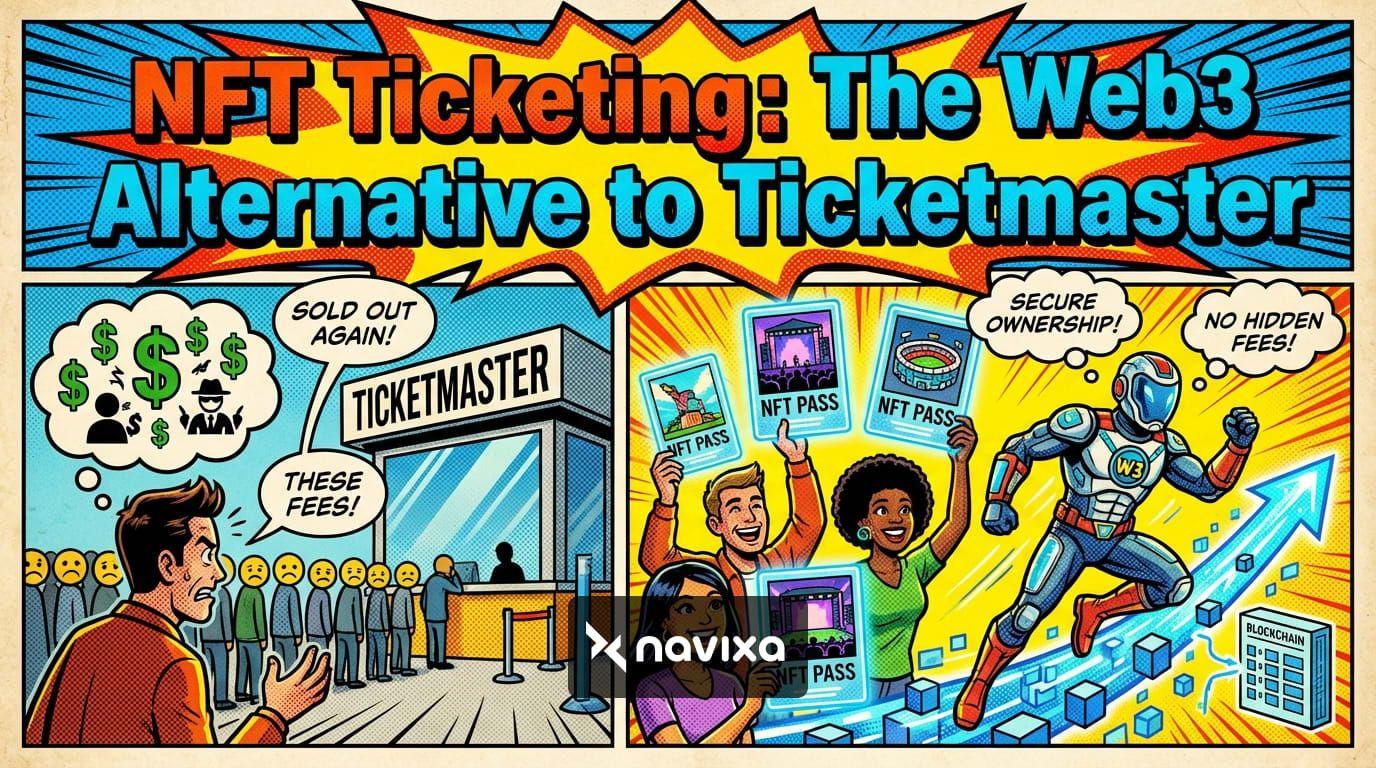
Live events are back in full swing, but the process of securing a ticket has become a modern nightmare. Between predatory secondary markets, sophisticated bot networks, and centralized monopolies implementing dynamic pricing, the ticketing industry is fundamentally broken. Enter Web3. NFT ticketing is emerging as the definitive solution to the industry's most glaring issues, transforming event access from a simple barcode into a programmable, verifiable digital asset. By replacing outdated legacy infrastructure with blockchain technology, Web3 platforms are stripping power away from ticketing giants and returning it to artists, event organizers, and true fans.
The Breaking Point: Why Web2 Ticketing is Failing
The live event ticketing market is an oligopoly largely controlled by centralized giants like Ticketmaster, which commands unparalleled influence over pricing, distribution, and venue contracts. In recent years, high-profile fiascos—such as dynamic pricing models that pushed face-value tickets for popular artists into the thousands of dollars—have sparked global outrage among consumers and lawmakers alike.
The root of the problem lies in the architecture of Web2 ticketing. Traditional tickets are static. Once a ticket is sold, the primary issuer loses control over its lifecycle. Scalpers utilize advanced bot networks to buy up inventory in milliseconds. In fact, cybersecurity reports indicate that centralized ticketing platforms must block upwards of 200 million bot attempts daily. Once these tickets hit secondary markets, they are resold at astronomical markups, with neither the artist nor the venue seeing a dime of the extra profit. Furthermore, static QR codes and PDF tickets are highly susceptible to fraud, leaving countless fans stranded at the gates with counterfeit passes.
The Web3 Solution: How NFT Ticketing Works
NFT ticketing leverages blockchain technology to issue tickets as Non-Fungible Tokens (NFTs). Unlike a standard PDF, an NFT ticket is a unique digital asset stored on a decentralized ledger, guaranteeing provenance, authenticity, and verifiable ownership from the moment of creation until it is scanned at the venue.
Smart Contracts and Programmable Royalties
The most revolutionary aspect of NFT ticketing is the integration of smart contracts. These self-executing contracts allow event organizers to code specific financial and operational rules directly into the ticket.
- Price Ceilings: Organizers can hardcode a maximum resale price, ensuring that tickets cannot be flipped for exorbitant profits, effectively neutralizing the financial incentive for scalpers. - Perpetual Royalties: If an NFT ticket is resold on a secondary market, the smart contract can automatically route a predefined percentage (e.g., 10%) of the sale back to the original artist or event organizer. - Dynamic QR Codes: To combat screenshotting and physical counterfeits, Web3 ticketing apps utilize dynamic QR codes that refresh every few seconds and require cryptographic proof of ownership from the user's wallet to generate.
"By utilizing blockchain technology, the live entertainment industry can finally solve the liquidity gap and the scalping epidemic simultaneously, aligning the incentives of creators and attendees."
Leading Platforms Challenging the Status Quo
The ecosystem of NFT ticketing platforms is rapidly maturing, with the market valuation projected to reach billions over the next decade. Several standout platforms are pioneering this monumental shift in how we access live events.
OPEN Ticketing Ecosystem (Formerly GET Protocol)
Rebranded to better reflect its expansive Web3 mission, the OPEN Ticketing Ecosystem is arguably the most battle-tested infrastructure in the space. Having processed millions of on-chain tickets globally, OPEN provides a white-label API that allows existing ticketing companies to seamlessly integrate blockchain technology without requiring users to understand crypto. Through their native token, the ecosystem facilitates on-chain financing, allowing organizers to use unsold ticket inventory as collateral in Decentralized Finance (DeFi) protocols to raise capital for event deposits.
YellowHeart
YellowHeart gained mainstream attention by partnering with massive acts like Kings of Leon to release the first-ever NFT album and ticketing packages. The platform focuses heavily on the fan experience, treating tickets not just as access passes, but as ongoing digital collectibles. An NFT ticket minted on YellowHeart can evolve post-event, unlocking exclusive airdrops, merchandise discounts, and VIP community access for long-term fans.
KYD Labs and the TICKS Protocol
While many platforms focus purely on the collectible aspect of NFTs, KYD Labs has recently pivoted toward treating tickets as programmable financial instruments via the TICKS protocol. Recognizing that ticketing giants maintain dominance by acting as banks—issuing billions in upfront loans to venues—TICKS aims to decentralize event financing. This turns ticketing into a real-world asset (RWA) play, opening up massive institutional liquidity for Web3 platforms.
Web2 vs. Web3 Ticketing
| Feature | Traditional Ticketing (Ticketmaster) | Web3 NFT Ticketing |
|---|---|---|
| Authenticity | Easily forged PDFs and static QR codes | Cryptographically verifiable on-chain |
| Secondary Market | Dominated by scalpers and unauthorized brokers | Controlled via smart contract price caps |
| Revenue Sharing | 100% of secondary markup goes to scalpers | Programmable royalties routed to artists |
| Post-Event Value | Ticket becomes a useless piece of digital paper | Ticket acts as a digital collectible unlocking future perks |
| Data Ownership | Centralized platforms hoard all consumer data | Organizers get direct, transparent access to attendee data |
Trading Strategy & Market Analysis in Web3 Ticketing
For cryptocurrency investors and active traders, the rise of NFT ticketing presents unique and asymmetrical opportunities. The tokens associated with these ecosystems are utility-driven, meaning their demand is directly correlated with real-world adoption rather than pure speculation. As the total addressable market for live events expands globally, the infrastructure tokens powering these transactions become highly lucrative assets.
Fundamental Analysis and Tokenomics
When analyzing a ticketing protocol, traders must carefully examine the token sink mechanics. For example, in certain ticketing ecosystems, event organizers must acquire native tokens from the open market to "fuel" the issuance of a ticket. This creates inherent buying pressure that scales linearly with the number of tickets sold. Investors should track on-chain metrics such as the number of active integrators, monthly ticket volume, and total value locked (TVL) in event-financing pools to gauge true network adoption.
Technical Analysis Considerations
Tokens in the ticketing niche often exhibit cyclical price action correlated with major global event seasons, such as summer music festivals and major sporting championships. Traders should employ technical analysis strategies—such as identifying accumulation zones using Volume Profile and moving average crossovers on the weekly charts—to position themselves before peak event seasons. Because these are largely altcoins, maintaining a close eye on Bitcoin dominance is also critical, as liquidity tends to flow into utility narratives only after major macro breakouts.
Actionable Steps for Stakeholders
1. For Event Organizers: - Audit Your Ticketing Tech Stack: Begin integrating Web2.5 solutions immediately. You do not need to force users to download a crypto wallet; platforms like the OPEN Ticketing Ecosystem offer fiat gateways where the blockchain operates invisibly in the backend. - Implement Price Ceilings: Use smart contracts to cap secondary sales at 10% to 20% above face value, ensuring your true fans are not priced out of the experience.
2. For Fans and Attendees: - Claim Your Digital Assets: When attending a Web3-ticketed event, ensure you claim your NFT post-show. These digital assets often serve as allowlist passes for future presales and exclusive merchandise. - Use Official Marketplaces: Only buy secondary tickets through the event's official Web3 portal to guarantee you are not purchasing a forged asset.
3. For Crypto Traders: - Diversify into RWA and Utility Narratives: Allocate a percentage of your portfolio to infrastructure tokens powering the ticketing economy. Focus on platforms actively processing real-world ticket volume, rather than vaporware conceptual projects. Keep track of crucial trading metrics and volume data on platforms like CoinMarketCap.
Risk Management in Web3 Ticketing
While the potential of NFT ticketing is vast, the sector is not without specific risks that both investors and organizers must mitigate.
- User Experience (UX) Friction: The biggest hurdle to mass adoption remains the complexity of self-custody wallets. Projects that fail to abstract away gas fees and seed phrases will struggle to capture the mainstream market. Organizers must prioritize platforms with a "Web2.5" architecture that blends traditional logins with blockchain security. - Regulatory Scrutiny: As ticketing tokens are increasingly used for event financing and yield generation, they run the risk of being classified as securities by regulatory bodies. Traders must use strict stop-losses to protect capital against sudden, adverse regulatory crackdowns. - Market Volatility: The cryptocurrency market is inherently volatile. A steep drop in a protocol's native token price could impact the operational runway of the ticketing platform if their corporate treasury is not properly hedged with stablecoins.
Conclusion
The archaic, centralized model of live event ticketing is living on borrowed time. By leveraging the transparency, security, and programmable nature of blockchain technology, NFT ticketing solves the industry's most entrenched problems: scalping, fraud, and unfair revenue distribution. Whether you are an event organizer looking to reclaim control over your ticket supply, a fan tired of exorbitant junk fees, or an investor seeking the next massive real-world asset (RWA) narrative in crypto, Web3 ticketing is a sector you simply cannot afford to ignore. The migration has already begun—it is time to stop renting access from monopolies and start truly owning your event experience.
Frequently Asked Questions
What is an NFT ticket?
An NFT ticket is a digital access pass stored on a blockchain. Unlike a traditional PDF or paper ticket, it is provably unique, impossible to counterfeit, and can contain smart contracts that dictate exactly how it can be resold or transferred.
Can I sell an NFT ticket?
Yes. However, the resale is strictly governed by the rules set by the event organizer. For example, the organizer can cap the resale price to prevent scalping and ensure that a percentage of the resale revenue is automatically sent back to the artist.
How does Web3 ticketing stop scalping?
Web3 ticketing stops scalping by linking the ticket to a verified digital identity and utilizing smart contracts to enforce price ceilings on secondary markets. If a scalper tries to sell the ticket off-platform, the dynamic QR code required for venue entry will not render, rendering the ticket completely useless.
Do I need to buy cryptocurrency to use an NFT ticket?
Not necessarily. Leading Web3 ticketing platforms use a "Web2.5" approach, allowing users to purchase tickets using traditional credit cards and email addresses. The blockchain technology, wallet creation, and NFT minting happen completely in the background without any technical friction for the user.
Are NFT tickets environmentally friendly?
Modern NFT ticketing platforms operate on Proof-of-Stake (PoS) blockchains like Polygon or Tezos, which consume a tiny fraction of the energy used by older Proof-of-Work networks. The energy footprint of minting an NFT on these advanced networks is comparable to sending a standard email or browsing the web.