
The intersection of decentralized finance and cross-border payments has found its most powerful proving ground in Latin America. Today, Mexico crypto adoption is largely being fueled by an economic necessity: the massive United States-to-Mexico remittance corridor. With tens of billions of dollars flowing across the border annually, traditional financial rails are being actively challenged and systematically replaced by faster, cheaper, and vastly more efficient blockchain-based alternatives.
"We're seeing a clear trend toward the digitalization of remittances, especially driven by younger generations."
For cryptocurrency traders, macroeconomic analysts, and fintech investors, this paradigm shift represents significantly more than just a real-world use case for digital assets. It presents unique trading setups, high-yield liquidity provision opportunities, and structural macroeconomic market plays. As stablecoins, utility tokens, and blockchain APIs rapidly consume market share from legacy money transfer operators (MTOs), understanding the underlying mechanics of this digital migration is critical for anyone looking to capitalize on emerging market financial trends.
This comprehensive guide explores the structural shifts in Mexico's crypto remittance market, the trading strategies designed to capitalize on these behavioral changes, and the risk management protocols required to navigate an increasingly complex regulatory landscape.
The Macro Landscape: USD-MXN Remittances Meet Crypto
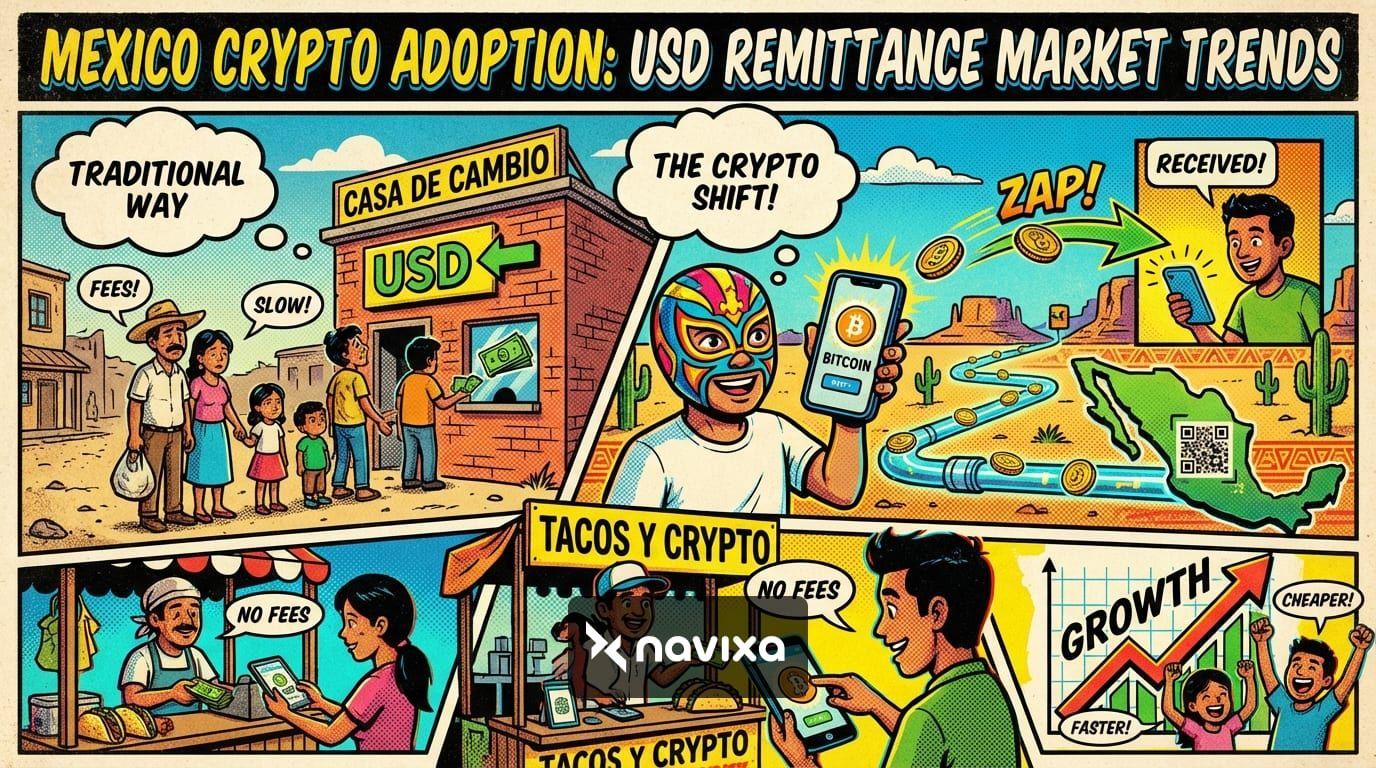
Remittances are an absolutely vital lifeline for the Mexican economy, historically accounting for roughly 3.5% to 4% of the nation's Gross Domestic Product (GDP). In 2024, Mexico received an astounding $64.7 billion in total remittances. For decades, this lucrative financial corridor was dominated by traditional bank wires and physical cash transfer services that charged exorbitant fees. However, the ecosystem recently reached a historic inflection point: digital transfers have officially overtaken physical cash pickups in the U.S.-to-Mexico remittance corridor.
The Shift Toward Digital and Blockchain Rails
The rapid transition toward digital dominance has been accelerated by both technological innovation and targeted macroeconomic policy. Recently, the United States imposed a new 1% tax on physical cash remittances, effectively penalizing traditional methods and aggressively steering users toward digital and blockchain alternatives. Traditional cash transfers not only incur standard network fees and poor foreign exchange rates but now face these additional regulatory costs, making them increasingly untenable for regular users.
Conversely, crypto-powered platforms and Web3 digital applications have reduced the average cost of cross-border transfers from a global average of over 6.4% down to approximately 4% or less. Major cryptocurrency exchanges operating in Latin America are leveraging this cost disparity to capture massive volume. For instance, local exchange Bitso processed over $6.5 billion in U.S.-Mexico remittances in 2024, which accounts for more than 10% of the entire remittance volume between the two nations.
The underlying architecture driving this efficiency relies heavily on stablecoins (such as USDC, USDT, and MXN-pegged digital tokens) and high-liquidity utility tokens designed specifically for On-Demand Liquidity (ODL). By bypassing the antiquated correspondent banking system and the need for pre-funded Nostro/Vostro accounts, crypto rails offer near-instantaneous settlement with dramatically tighter spreads.
Trading Strategies for the Remittance Boom
The explosive growth of Mexico crypto adoption within the cross-border payment sector opens distinct avenues for retail traders, institutional arbitrageurs, and decentralized finance (DeFi) liquidity providers. Here is how market participants are extracting value from this structural shift.
1. Stablecoin Arbitrage and Liquidity Provision
Because enterprise remittance companies require incredibly deep liquidity to instantly swap USD-backed stablecoins for MXN-pegged digital assets, automated market makers (AMMs) and centralized exchange order books experience constant, predictable volume. Traders can capitalize by: * Providing Liquidity: Supplying capital to USDC/MXNB (Mexican Peso stablecoin) liquidity pools. As remittance volume flows consistently from the U.S. to Mexico, liquidity providers earn a fraction of a percent in fees on millions of automated micro-transactions. * Cross-Border Arbitrage: Exploiting micro-discrepancies in the exchange rate of the Mexican Peso against the U.S. Dollar on local crypto exchanges versus traditional foreign exchange (forex) brokerages.
2. Trading Remittance-Focused Utility Tokens
Certain layer-1 blockchains and proprietary networks were built explicitly to handle cross-border fiat settlements. These networks utilize their native tokens as bridge currencies to facilitate instant fiat-to-fiat swaps without requiring traditional pre-funding. * Momentum Trading on Partnerships: Traders frequently track the fundamental business development of these utility tokens. When a major fintech entity or traditional Latin American bank announces integration with a blockchain network for remittance routing, the native bridge token often experiences a massive, volume-driven price surge. * Volume Correlation: Monitoring the on-chain transaction volume of these settlement networks during historical peak remittance days (such as the end of the month, paydays, or major national holidays) can provide highly predictive indicators for short-term token price action.
Technical Analysis: Timing the Market with Macro Overlays
When trading digital assets inherently tied to the Latin American remittance market, traditional technical analysis (TA) metrics must be overlaid with specific macroeconomic indicators: * USD/MXN Forex Chart: The relative strength of the U.S. Dollar against the Mexican Peso dictates the urgency and size of remittance flows. When the Peso weakens significantly, remittances typically surge as expatriates send more dollars home to maximize their families' local purchasing power. Traders should monitor standard support and resistance levels on the traditional USD/MXN chart alongside crypto trading volumes. * On-Chain Velocity and Wallet Tracking: Utilizing block explorers to monitor the velocity of stablecoins entering known Mexican exchange wallets is crucial. A sudden, massive spike in stablecoin inflows usually precedes a large-scale conversion into local fiat, which can temporarily impact local crypto liquidity and alter basis points on major trading pairs.
Traditional vs. Crypto Remittance Cost Analysis
To truly understand why digital assets are absorbing market share so rapidly, traders and analysts must look at the fundamental utility and cost savings provided to the end-user. Below is a detailed comparison of the primary remittance methods currently operating within the U.S.-Mexico financial corridor.
| Transfer Method | Average Fee (%) | Settlement Time | Accessibility | Underlying Infrastructure |
|---|---|---|---|---|
| Traditional Bank Wire | 4.5% - 6.0% | 1 to 3 Business Days | Low (Requires Bank Accounts) | SWIFT, Nostro/Vostro |
| Physical Cash (MTOs) | 5.0% - 7.0% | Minutes to Hours | High (In-Person Kiosks) | Proprietary Closed Networks |
| Digital Fintech Apps | 3.0% - 4.5% | Instant to 1 Day | Medium (Requires Smartphone) | ACH, Local Banking APIs |
| Crypto/Stablecoin Rails | 0.5% - 2.0% | Instant (Seconds) | High (Smartphone/Web3 Wallet) | Blockchain, Smart Contracts |
*Note: This data reflects general industry averages across the USD-MXN remittance corridor based on aggregate financial reports. Crypto rails consistently demonstrate the lowest fees and fastest execution times.*
Actionable Steps for Traders and Fintech Investors
If you are looking to actively position your portfolio to benefit from the ongoing modernization of Latin American financial rails, consider integrating the following actionable steps into your trading and investment thesis:
1. Monitor Web3 Payment Partnerships: Keep a close eye on industry news aggregators for official announcements regarding massive payment processors integrating with local Latin American networks (such as the SPEI system in Mexico). These infrastructure partnerships are direct, highly actionable catalysts for associated token valuation increases. 2. Diversify with MXN Stablecoins: As the digital economy in Mexico matures, holding a basket of regional stablecoins can offer direct exposure to local yield markets. Explore properly audited, regulated decentralized finance platforms offering staking yields or liquidity rewards on non-USD stablecoins. 3. Hedge Against Fiat Volatility: If you operate an enterprise or business in Latin America, utilize stablecoin infrastructure to effectively mitigate the currency risk associated with the fluctuating Mexican Peso. Converting operational revenue into crypto-assets provides a decentralized, highly liquid hedge against localized inflation. 4. Track Policy Changes: Follow macro news from the Bank of Mexico (Banxico) and the U.S. Treasury. Any regulatory friction applied to traditional cash remittances creates an immediate, highly lucrative bullish tailwind for digital asset adoption.
Risk Management in Emerging Market Crypto
While the underlying bullish thesis for Mexico crypto adoption is incredibly compelling, actively trading or investing in emerging markets requires stringent, uncompromising risk management protocols.
Regulatory and Tax Frictions
Cryptocurrency regulation in Mexico is continuously evolving to keep pace with adoption. Currently, digital asset profits are subject to local capital gains taxes, with rates that can range from 1.92% up to 35% depending on income brackets and specific transaction thresholds. The local Fintech Law provides a functioning regulatory framework, but traditional banking institutions still maintain strict limitations on direct integrations with unregulated crypto entities. Traders must ensure they utilize fully compliant, licensed exchanges to avoid the risk of frozen accounts and blocked transactions.
FX and Local Liquidity Risks
When trading niche bridge tokens or minor regional stablecoins, liquidity can evaporate rapidly during extreme global market volatility. If the broader crypto market experiences a sudden, violent drawdown, the bid-ask spread on MXN-to-Crypto pairs can widen significantly. Always utilize limit orders rather than market orders when operating in localized fiat-to-crypto markets to completely avoid catastrophic slippage.
Smart Contract Vulnerabilities
For investors aggressively providing liquidity in DeFi pools catering to cross-border stablecoins, smart contract risk is an ever-present threat. Only allocate risk capital to heavily audited protocols with high total value locked (TVL), transparent development teams, and robust, active bug bounty programs.
Practical Takeaways
* Crypto is Actively Replacing Cash: For the first time in history, digital remittances have successfully surpassed physical cash transfers in the U.S.-Mexico corridor, heavily supported by modern blockchain infrastructure. * Stablecoins are the Primary Backbone: The vast majority of this institutional transfer volume is currently powered by USD and MXN-pegged stablecoins, which entirely bypass slow, expensive traditional banking systems. * Unique Trading Opportunities Exist: The ongoing remittance boom allows observant crypto traders to profit through stablecoin liquidity provision, cross-border arbitrage, and volume-based trading of bridge utility tokens. * Macro Correlation is Mandatory: Profitable trading strategies must mathematically account for the USD/MXN forex exchange rate, as local fiat weakness predictably drives higher cross-border remittance volume. * Compliance is the Key to Longevity: Successfully navigating the Mexican regulatory environment requires utilizing licensed exchange platforms and thoroughly understanding local capital gains tax implications.
Conclusion
The global narrative surrounding digital assets has permanently shifted from pure speculative trading to undeniable real-world utility. Mexico crypto adoption serves as the definitive blueprint for how decentralized blockchain technology can fundamentally disrupt and capture a multi-billion dollar legacy industry. By drastically lowering the operational cost and infinitely increasing the execution speed of USD remittances, cryptocurrencies are providing unprecedented financial inclusion to millions of individuals while breaking down borders.
For the modern trader and investor, this rapid evolution offers a rich, multi-layered landscape of opportunities. Whether you are actively trading the utility tokens powering these massive networks, or passively providing liquidity to cross-border stablecoin pools, aligning your portfolio with the permanent digitization of global payments is a high-conviction strategy. As regulatory frameworks continue to mature and younger, digitally native demographics inherit the global economy, the transition toward blockchain rails will only accelerate. Stay vigilant, aggressively manage your downside risk, and dynamically adapt your strategies to trade the future of global finance.
For more comprehensive information on global payment statistics and macro trends, review the latest extensive reports from the World Bank.
Frequently Asked Questions
Why is crypto adoption growing so fast in Mexico?
Crypto adoption in Mexico is primarily driven by the massive USD-to-Mexico remittance market and the public's demand for decentralized financial solutions. Blockchain rails offer significantly lower fees and faster settlement times compared to traditional money transfer operators. Additionally, a large unbanked population finds digital wallets substantially more accessible than restrictive legacy banking services, especially considering only about 30% of adults in Mexico utilize traditional mobile banking.
Which cryptocurrencies are mostly used for remittances?
Stablecoins directly pegged to the U.S. Dollar (like USDC and USDT) and the Mexican Peso (such as MXNB) handle the vast bulk of institutional remittance volume. Furthermore, specialized utility tokens designed specifically for fast, cross-border settlements are also heavily utilized by financial institutions for rapid On-Demand Liquidity routing.
Are there taxes on cryptocurrency trading in Mexico?
Yes, the Mexican government strictly views cryptocurrency profits as subject to capital gains tax. Taxation rates can vary significantly based on the specific user's income bracket, ranging from 1.92% up to 35%, though smaller transactions below specific thresholds may be exempt. It is highly recommended to consult with a local tax professional when trading digital assets or facilitating high-volume remittance transfers.
Can I trade the remittance volume on standard crypto exchanges?
Absolutely. Retail traders can capitalize on macro remittance trends by dynamically trading the underlying utility tokens that facilitate these cross-border transfers. Alternatively, investors can generate yield by providing liquidity in decentralized finance (DeFi) automated market maker pools that constantly swap USD stablecoins for local fiat-pegged tokens.
How does the USD/MXN exchange rate affect crypto remittances?
The strength of the U.S. Dollar against the Mexican Peso directly impacts core remittance behaviors. A stronger Dollar typically incentivizes workers in the U.S. to send more funds home because the money goes further locally, leading to massive spikes in network volume and substantially increased demand for liquidity on crypto-fiat gateways.