
The real estate market has historically been the cornerstone of generational wealth, providing a reliable hedge against inflation and a source of consistent passive income. However, it has also been one of the most exclusive and illiquid asset classes in the world. High capital requirements, exorbitant intermediary fees, and geographic restrictions have kept average investors locked out of premium commercial and residential opportunities. Enter tokenized real estate, a revolutionary application of blockchain technology that is rapidly transforming the property sector.
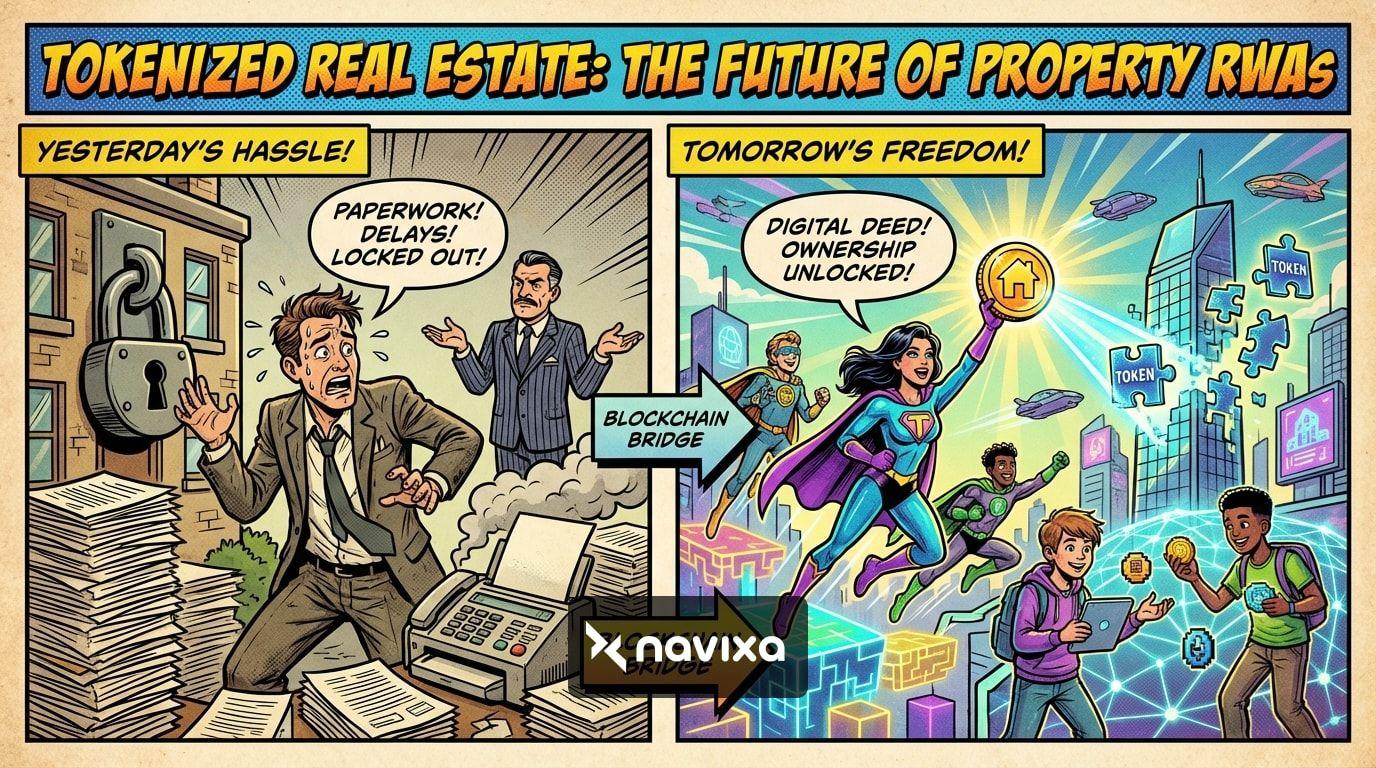
By converting physical property rights into digital tokens, real-world asset (RWA) tokenization is dismantling traditional barriers to entry. Investors no longer need millions of dollars to acquire commercial real estate; they can now purchase fractional ownership for a fraction of the cost. This shift is not just a technological novelty—it is a fundamental restructuring of global capital markets.
Whether you are a seasoned crypto trader or a traditional real estate investor looking to diversify, understanding the mechanics, strategies, and risks of property RWAs is essential. In this comprehensive guide, we will explore how tokenized real estate is reshaping the future of investment and how you can position yourself in this rapidly evolving market.
The Mechanics of Tokenized Real Estate
At its core, tokenized real estate involves issuing digital tokens on a distributed ledger or blockchain, where each token represents a fractional share of an underlying physical property. This process bridges the gap between traditional brick-and-mortar assets and the high-speed, borderless world of decentralized finance (DeFi).
Typically, the physical property is legally acquired by a Special Purpose Vehicle (SPV) or a similar legal entity designed specifically for holding the asset. The ownership shares of this SPV are then digitized into tokens using self-executing smart contracts on robust blockchains like Ethereum, Polygon, or the XRP Ledger. These smart contracts automatically enforce the rules of ownership, including the distribution of rental income, shareholder voting rights, and strict compliance with local securities regulations.
Because these tokens reside on a blockchain, they benefit from immutable record-keeping, instant cryptographic settlement, and the potential for 24/7 secondary market trading. This modern infrastructure eliminates the need for many traditional intermediaries, such as title companies, escrow agents, and excessive brokerage fees, creating a streamlined, highly efficient investment ecosystem that directly empowers the end-user.
The Thriving RWA Market Landscape
The tokenization of Real-World Assets has moved far beyond the initial experimental phase of the early 2020s. As of early 2026, the total value of on-chain RWAs has surpassed the $24 billion milestone. While this initial surge was driven heavily by tokenized U.S. Treasuries and private credit, the focus has rapidly expanded into the real estate sector. Institutional giants and legacy financial institutions have recognized the operational efficiency of on-chain asset management, prompting a massive influx of capital into tokenized property funds.
"Tokenization is no longer a futuristic concept; it is the present reality of global finance, transforming illiquid assets into dynamic, tradable instruments."
Consulting firm Deloitte projects that the volume of tokenized real estate could approach a staggering $4 trillion by 2035. This exponential growth is fueled by clearer regulatory frameworks in progressive jurisdictions across Europe, Asia, and the Americas. These vital legal advancements have allowed industry-leading platforms like Centrifuge and Zoniqx to offer institutional-grade, fully compliant investment products to a global audience. The market has noticeably shifted away from generic cryptocurrency hype toward sustainable, yield-bearing assets.
Trading Strategy: Navigating Property RWAs
Trading tokenized real estate requires a distinctly different approach than day-trading highly volatile cryptocurrencies like Bitcoin, Ethereum, or speculative meme coins. Property RWAs are inherently tied to physical market cycles, interest rates, and localized economic conditions, meaning their price action is generally slower, less erratic, and more predictable.
Income-Focused Tokens vs. Capital Appreciation
When building a resilient portfolio of tokenized properties, investors typically choose between two primary asset profiles:
1. Income-Generating Properties: These tokens represent ownership in established, fully operational, tenant-occupied commercial or residential properties. The primary return on investment (ROI) comes from a consistent rental yield. This passive income is often distributed to token holders seamlessly via stablecoins (like USDC or USDT) directly to their digital wallets on a monthly or quarterly basis. 2. Development Projects: These tokens fund the ground-up construction or major renovation of a property. They offer little to no immediate rental yield but hold the potential for significant capital appreciation once the development project is successfully completed and the property is either sold at a premium or refinanced.
A robust trading and investment strategy involves meticulously balancing these two profiles to maintain steady cash flow while simultaneously exposing the portfolio to long-term upside growth.
Leveraging DeFi Composability
One of the most powerful features of tokenized real estate is its composability within the broader DeFi ecosystem. Unlike a traditional paper deed, a real estate token can be utilized as collateral in decentralized lending protocols. Investors can lock up their yield-bearing property tokens to borrow stablecoins, which can then be reinvested into other market opportunities. This advanced strategy, known as looping, amplifies capital efficiency but requires strict loan-to-value (LTV) risk management to avoid forced liquidations during unexpected market downturns.
Technical Analysis for On-Chain Real Estate
While traditional technical analysis (TA) relies heavily on candlestick patterns, moving averages, and momentum oscillators, evaluating tokenized real estate requires analyzing on-chain metrics and platform-specific data.
Evaluating Total Value Locked (TVL) and Volume
Total Value Locked (TVL) is a critical metric for assessing the fundamental health of a tokenization platform. A consistently growing TVL indicates strong investor trust and a steady inflow of institutional and retail capital. However, TVL alone is not enough; traders must also rigorously evaluate secondary market volume.
High trading volume on decentralized exchanges (DEXs) or specialized RWA marketplaces ensures that you can enter and exit positions with minimal price slippage. If a property token boasts a high valuation but near-zero daily trading volume, the asset is highly illiquid, making it exceptionally difficult to realize your paper gains when you decide to sell.
Wallet Distribution and Holder Metrics
Analyzing wallet distribution helps investors identify systemic centralization risks. If a large percentage of a specific property's tokens is held by a single wallet (often referred to in crypto as a "whale"), that entity could easily manipulate the secondary market price or unilaterally dictate governance decisions. A healthy tokenized asset should feature a broad, decentralized distribution of holders, reflecting genuine retail and institutional market interest.
Traditional vs. Tokenized Real Estate
To fully grasp the disruptive impact of this technology, it is incredibly helpful to compare the archaic legacy system with the new blockchain-based paradigm.
| Feature | Traditional Real Estate | Tokenized Real Estate |
|---|---|---|
| Barrier to Entry | Extremely High (Large capital down payments required) | Low (Affordable fractional ownership available) |
| Liquidity | Low (Takes months or years to sell a property) | High (24/7 continuous trading on secondary markets) |
| Transaction Costs | High (Brokers, escrow fees, lawyers, title insurance) | Low (Automated routing via cost-effective smart contracts) |
| Settlement Time | 30 to 60 Days on average | Instantaneous (Cryptographic blockchain settlement) |
| Global Access | Heavily restricted by physical geography and borders | Borderless (Subject to standardized KYC/AML compliance) |
Actionable Steps for Investors
If you are ready to actively participate in the tokenized real estate market, follow these essential steps to ensure a secure, profitable, and fully compliant entry:
1. Choose the Right Platform: Diligently research reputable tokenization platforms that possess a proven track record, transparent legal structures, and strict regulatory compliance. Look for platforms that clearly outline their SPV structures, custody solutions, and the credentials of their physical property management teams. 2. Set Up a Compatible Web3 Wallet: You will need a secure non-custodial wallet (such as MetaMask, Phantom, or a hardware wallet like a Ledger Nano X) that explicitly supports the specific blockchain network on which the platform operates. 3. Complete KYC/AML Procedures: Because tokenized real estate represents a financial security, all legitimate and legally compliant platforms will require investors to complete thorough Know Your Customer (KYC) and Anti-Money Laundering (AML) background checks before authorizing the purchase or trading of tokens. 4. Diversify Geographically: Protect your investment portfolio against localized economic downturns, natural disasters, or regional regulatory changes by intentionally investing in fractional properties spread across different cities, states, and sovereign countries.
Risk Management in Tokenized Properties
Despite its numerous advantages, investing in tokenized real estate is not without substantial risks. Successful market participants must implement strict risk management protocols to protect their capital.
The Liquidity Illusion
One of the most significant and under-discussed risks in the RWA space is the "liquidity illusion." Just because an asset is tokenized and lives natively on a blockchain does not automatically mean there is a deep, active secondary market of buyers ready to purchase your shares. If you invest in a highly niche or poorly marketed property, you may find yourself entirely unable to sell your tokens during a broader market panic. Always verify the actual depth of liquidity pools before committing your hard-earned capital.
Regulatory and Smart Contract Risks
The global regulatory landscape for digital securities is still actively evolving. Sudden changes in securities laws in major jurisdictions could negatively impact the transferability and legality of your tokens. Additionally, investors face inherent smart contract risk. If the underlying code governing the token issuance or dividend distribution contains an unseen vulnerability, malicious actors could exploit it, potentially draining funds. To mitigate this threat, only invest through platforms that conduct regular, transparent, third-party security audits.
Practical Takeaways
* Fractionalization unlocks access: Tokenized real estate allows investors of all sizes to buy into premium, institutional-grade properties with minimal capital. * Prioritize liquidity: Always check the secondary market trading volume of an RWA token before investing to avoid falling victim to the liquidity illusion. * Leverage composability cautiously: Using property tokens as DeFi collateral can significantly boost overall returns but requires strict loan-to-value risk management to prevent liquidations. * Audit the legal wrapper: Ensure the tokens are legally backed by a binding SPV that absolutely guarantees your fractional ownership rights in the real physical world. * Diversify heavily: Spread your capital investments across multiple property types (residential, commercial, industrial) and geographic locations to effectively hedge against localized market shocks.
Frequently Asked Questions
What is tokenized real estate?
Tokenized real estate is the innovative process of converting the legal ownership rights of a physical property into digital tokens on a blockchain network. Each individual token represents a fractional, proportional share of the underlying asset, allowing multiple investors to collectively own a piece of a high-value property without the need for traditional intermediaries like banks or brokers.
How does tokenized real estate generate income?
Investors generate passive income primarily through traditional rental yields and long-term capital appreciation. When a tokenized property successfully earns monthly rent from its tenants, the net profits (after maintenance and management fees) are distributed proportionally to all token holders. This distribution is usually automated via smart contracts and paid out in fiat-pegged stablecoins directly into the investors' digital wallets.
Can anyone buy tokenized real estate?
While the underlying blockchain technology is inherently permissionless and borderless, tokenized real estate is legally classified as a financial security in the vast majority of global jurisdictions. Therefore, prospective investors must typically pass stringent KYC and AML verification processes on the issuing platform before they are legally permitted to purchase, hold, or trade these asset-backed tokens on secondary markets.
Are tokenized real estate assets regulated?
Yes, they are highly regulated. Reputable tokenization platforms operate strictly within the confines of established securities laws, often utilizing legally binding Special Purpose Vehicles (SPVs) or decentralized autonomous organization (DAO) LLC wrappers to securely link the digital token to the physical property deed. However, regulatory clarity varies significantly by country, making it crucial for investors to understand the legal protections available in their specific jurisdiction before allocating capital.
Conclusion
Tokenized real estate is not merely a passing trend; it is the inevitable modernization of the world's largest asset class. By bridging the tangible stability of physical properties with the unparalleled efficiency, transparency, and liquidity of blockchain technology, property RWAs offer unprecedented opportunities for modern investors.
As the market consistently matures and international regulatory frameworks solidify, the global adoption of tokenized assets will continue to accelerate rapidly. By thoroughly understanding the underlying mechanics, employing smart, data-driven trading strategies, and strictly managing smart contract and liquidity risks, you can successfully navigate this exciting new financial frontier. Start researching regulated tokenization platforms today, and take your first confident step toward building a borderless, blockchain-powered real estate portfolio.