
Introduction
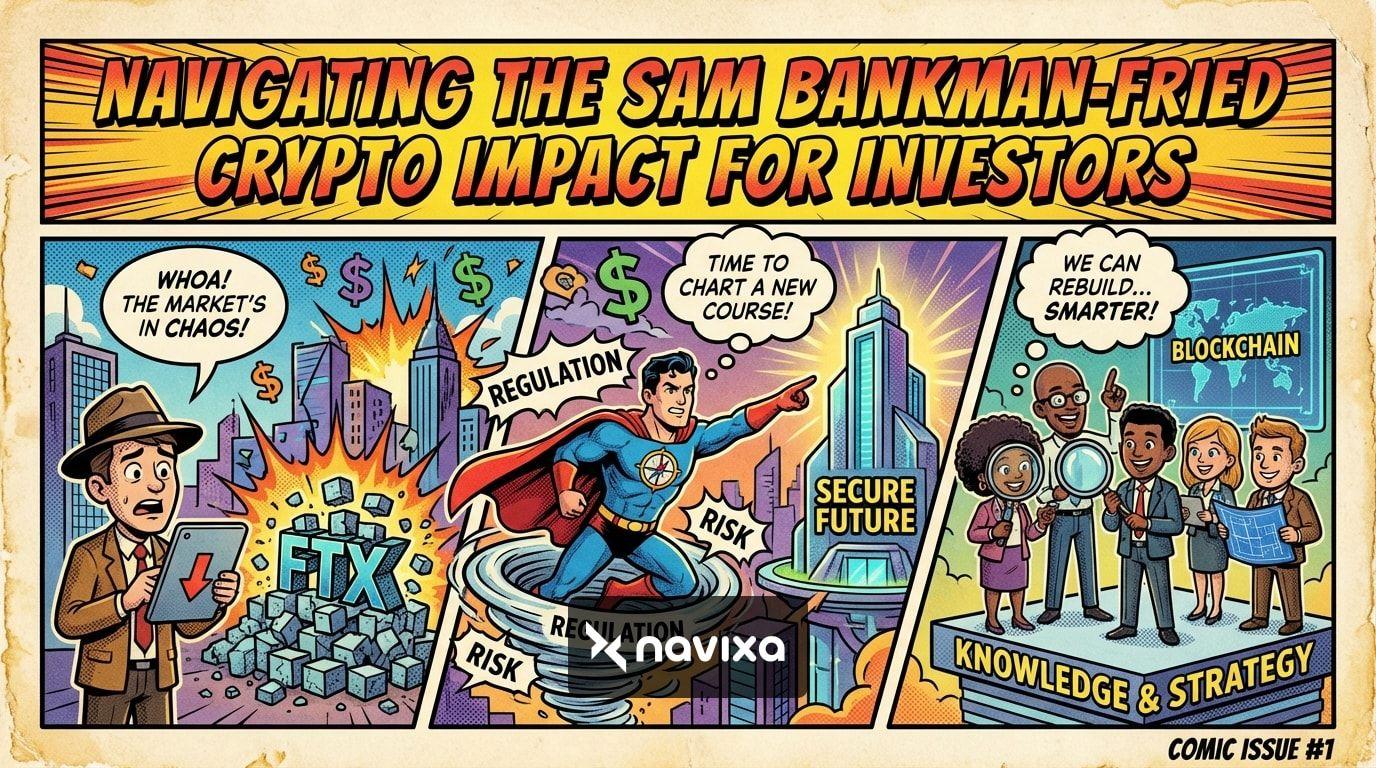
The collapse of FTX sent shockwaves through the global financial system, leaving a multi-billion-dollar crater in its wake. But as the dust settles, the true Sam Bankman-Fried crypto impact is revealing itself not as a death knell for digital assets, but as a painful yet necessary catalyst for industry maturation. Following the dramatic events that led to his initial 25-year prison sentence, the industry has undergone a radical transformation. Even with surprising legal twists—such as the U.S. Court of Appeals for the Second Circuit overturning his conviction in early 2026 on evidentiary grounds and ordering a new trial—the financial and regulatory lessons learned remain permanently etched into the market.
Today, the cryptocurrency ecosystem is characterized by heightened transparency, aggressive regulatory oversight, and a renewed emphasis on institutional adoption. Bitcoin has proven its resilience, holding strong near $70,000 with a market capitalization exceeding $1.38 trillion, bolstered by massive continuous inflows into Spot Bitcoin ETFs. For long-term investors, navigating this new era requires discarding the reckless speculation of the past and adopting a more sophisticated, security-first approach. This comprehensive guide explores how the Sam Bankman-Fried crypto impact has reshaped the investment landscape and outlines a resilient strategy for long-term wealth generation.
The Ongoing Legal Saga: 2026 Appeals and Precedents
To fully grasp the current market climate, investors must understand the ongoing legal developments surrounding the FTX founder. In a stunning reversal that sent ripples through the financial technology sector, the Second Circuit Court of Appeals overturned Bankman-Fried's conviction in February 2026.
The appellate court found that the original trial judge improperly excluded crucial "advice-of-counsel" evidence, which the defense argued would have shown that FTX's operational structures and contracts were designed and approved by external law firms. While this ruling does not exonerate the massive commingling of customer funds, it has profound implications for how fraud and intent are prosecuted in the digital asset space. It highlights the complex intersection of emerging financial technology and traditional legal frameworks, forcing regulators and courts to establish clearer, undeniable precedents moving forward.
The Lasting Sam Bankman-Fried Crypto Impact on the Market
The fallout from the FTX debacle accelerated several structural changes across the digital asset space. What was once a "Wild West" environment has rapidly transitioned into a highly scrutinized financial sector.
Enhanced Regulatory Scrutiny and Compliance
The most immediate Sam Bankman-Fried crypto impact was the swift and heavy-handed response from global regulators. Authorities like the U.S. Securities and Exchange Commission (SEC) and the UK's Financial Conduct Authority (FCA) have tightened their grip on digital asset service providers. New mandates require stringent Anti-Money Laundering (AML) checks, clearer segregation of customer funds, and rigorous disclosures regarding potential conflicts of interest. We are now seeing the implementation of comprehensive frameworks, such as the Markets in Crypto-Assets (MiCA) regulation in Europe, which sets an incredibly high bar for exchange operations.
"The regulatory enforcement actions following the FTX collapse were not designed to stifle innovation, but to purge the market of bad actors and protect retail capital."
The Rise of Proof of Reserves (PoR)
Before FTX's downfall, investors largely relied on blind trust when depositing funds into centralized exchanges. Today, the industry standard has shifted to cryptographic transparency. Top-tier exchanges are now expected to publish regular Proof of Reserves (PoR) audits, utilizing Merkle tree data structures to cryptographically prove that customer deposits are fully backed on a 1:1 basis. While PoR is not a perfect substitute for a comprehensive third-party financial audit—especially concerning hidden liabilities—it provides a crucial layer of visibility that was entirely absent during the Alameda Research commingling scandal.
Institutional Accumulation and ETF Inflows
Ironically, the Sam Bankman-Fried crypto impact effectively cleared the path for traditional finance (TradFi) to enter the space. With fraudulent retail platforms marginalized and regulatory clarity improving, institutional giants felt comfortable launching Spot Bitcoin and Ethereum ETFs. By early 2026, these products have seen tens of billions in sustained inflows. This massive institutional accumulation has fundamentally altered market dynamics, reducing extreme intraday volatility and creating a more robust foundation for long-term price appreciation.
Analyzing the FTX Bankruptcy and 2026 Repayment Process
To understand the full scope of the Sam Bankman-Fried crypto impact, investors must look at the unprecedented bankruptcy recovery process. The FTX Recovery Trust has executed one of the most successful large-scale insolvency resolutions in crypto history.
In March 2026, the estate announced a fourth major distribution of approximately $2.2 billion to creditors. Due to the aggressive recovery of hidden assets and the massive appreciation of the broader cryptocurrency market since the 2022 lows, the estate has managed to return over $16 billion in total. Some retail convenience classes are even seeing payouts of up to 120% of their original fiat claim value.
However, this success is bittersweet for many. Claims were locked in at November 2022 prices—when Bitcoin was trading around $16,000. While creditors are being made whole in dollar terms, they completely missed out on the spectacular run-up that saw Bitcoin reclaim the $70,000 level. This stark reality serves as a permanent reminder of the massive opportunity cost associated with counterparty risk.
A Post-FTX Trading and Investment Strategy
Adapting to the post-FTX environment means restructuring how you buy, store, and trade digital assets. The Sam Bankman-Fried crypto impact demands a shift away from centralization and toward self-sovereignty.
Prioritizing Self-Custody and Cold Storage
The most vital lesson from the exchange collapses of 2022 is the ethos of "Not your keys, not your coins." Long-term investors must utilize hardware wallets (cold storage) to secure the majority of their holdings. By removing assets from centralized platforms, you completely eliminate the risk of losing funds to a bank run or corporate fraud. Exchanges should be used exclusively for executing active trades, not as a digital bank account for long-term storage.
Embracing Decentralized Exchanges (DEXs)
For active traders, Decentralized Exchanges (DEXs) offer a compelling alternative to traditional platforms. DEXs facilitate peer-to-peer trading via smart contracts, meaning you retain control of your private keys throughout the transaction. While liquidity and user interfaces on DEXs continue to improve, their core value proposition is that they remain immune to the specific type of executive malfeasance that characterized the FTX collapse.
Diversification and Technical Analysis
In the current market, fundamental analysis must be paired with rigorous technical analysis. With Bitcoin dominance absorbing a significant portion of market liquidity, altcoin investments require intense scrutiny. Look for projects with transparent tokenomics, active developer communities, and clear regulatory compliance. Utilize moving averages, volume indicators, and macro-economic data (such as inflation rates and central bank policies) to inform your entry and exit points.
For deeper insights into market capitalization and volume metrics, platforms like CoinMarketCap provide invaluable real-time data. Additionally, staying updated on regulatory changes via the U.S. Securities and Exchange Commission is crucial for anticipating broad market shifts.
Centralized vs. Decentralized Exchanges: A New Paradigm
The Sam Bankman-Fried crypto impact forced a massive re-evaluation of where and how trading occurs. Below is a comparison of how Centralized Exchanges (CEXs) and Decentralized Exchanges (DEXs) operate in today's reformed market.
| Feature | Centralized Exchanges (CEX) | Decentralized Exchanges (DEX) |
|---|---|---|
| Custody of Funds | Exchange holds your private keys | User retains full control of keys |
| Regulatory Compliance | Strict KYC/AML, highly regulated | Pseudonymous, largely unregulated (currently) |
| Security Risks | Honeypot for hackers, insider fraud | Smart contract vulnerabilities, phishing |
| Trading Speed & UX | High speed, deep liquidity, fiat on-ramps | Slower, liquidity depends on pools, no fiat |
| Post-FTX Reforms | Mandatory Proof of Reserves, audited | Increased code audits, better UI/UX |
Practical Risk Management Steps
Building long-term wealth in digital assets requires an ironclad approach to risk management. Implement these actionable steps to safeguard your portfolio:
1. Conduct Relentless Due Diligence: Never blindly trust a charismatic founder or a massive marketing budget. Scrutinize the legal structure, auditing partners, and regulatory licensing of any platform you choose to use. 2. Implement Strict Position Sizing: Never risk more than 1% to 2% of your total trading capital on a single speculative altcoin trade. Reserve the bulk of your portfolio for blue-chip assets like Bitcoin and Ethereum. 3. Diversify Custody Solutions: Do not keep all your cold storage assets on a single hardware device from one manufacturer. Utilize multisignature (multisig) wallets for large holdings to eliminate single points of failure. 4. Monitor the Macro Environment: The cryptocurrency market does not exist in a vacuum. Interest rates, global liquidity shifts, and institutional ETF flows have a profound impact on price action. 5. Establish Clear Profit Targets: Emotional trading was the downfall of many during previous bull runs. Predetermined limit orders and profit levels are how disciplined traders avoid acting on market euphoria.
Frequently Asked Questions
What is the main Sam Bankman-Fried crypto impact on retail investors?
The primary impact is a permanent shift in investor trust and behavior. Retail investors are no longer willing to leave significant capital on centralized exchanges without cryptographically verified Proof of Reserves. It has rapidly accelerated the adoption of self-custody hardware wallets and educated the broader public on the severe dangers of commingling customer deposits with corporate trading funds.
Are cryptocurrency exchanges safer now than before the FTX collapse?
Yes, generally speaking. The surviving platforms have been forced by both market pressure and global regulators to adopt much stricter compliance, clear segregation of funds, and rigorous transparency standards. However, "safer" does not mean "risk-free." Counterparty risk always exists whenever a centralized third party holds your assets.
How are FTX creditors being compensated in the bankruptcy process?
The FTX Recovery Trust has been highly successful in clawing back misappropriated assets. Through a series of multi-billion-dollar payouts—including a $2.2 billion distribution in March 2026—many creditors are recovering 100% to 120% of their claims. However, these claims are valued based on the dollar price of crypto during the November 2022 market bottom, meaning creditors missed out on the subsequent massive bull run.
Is Bitcoin still a viable long-term investment after these industry scandals?
Absolutely. The failures of centralized companies like FTX were failures of human greed and traditional corporate fraud, not failures of the underlying blockchain technology. Bitcoin's decentralized network continued to produce blocks seamlessly throughout the crisis. In fact, the elimination of bad actors has paved the way for institutional adoption and Wall Street integration, solidifying its status as a premier digital asset.
Conclusion
The Sam Bankman-Fried crypto impact serves as a defining inflection point in financial history. What began as a catastrophic breach of trust has catalyzed an era of unparalleled transparency, institutional maturity, and regulatory clarity. The market is vastly more resilient, regulated, and structurally sound than the fragile ecosystem that collapsed in late 2022.
For long-term investors, the blueprint for success is clear: prioritize self-custody, demand total transparency from centralized entities, implement strict risk management, and focus on fundamental value over speculative hype. By deeply understanding and learning the painful lessons of the past, you can confidently navigate the future of digital assets. Take control of your private keys today, re-evaluate your exchange risk, and position your portfolio for the next decade of decentralized financial innovation.