
Introduction
The traditional path to homeownership has long been paved with frustrating hurdles, particularly for digital asset investors. For years, the legacy banking system essentially ignored decentralized wealth, forcing high-net-worth cryptocurrency holders to make an agonizing choice: hold onto their digital assets and miss out on real estate opportunities, or liquidate their holdings, trigger massive capital gains taxes, and lose out on future market upside.
Today, that paradigm has been completely shattered by the arrival of crypto mortgages.
As decentralized finance merges with traditional real estate, crypto mortgages have evolved from a niche experimental product into a booming multi-million-dollar industry. We are now in an era where major government-sponsored enterprises, traditional mortgage lenders, and top-tier crypto exchanges are actively collaborating to institutionalize token-backed home loans. The days of being penalized by banks for holding Bitcoin instead of fiat are officially over.
This comprehensive guide explores the intricacies of crypto-backed real estate financing, breaking down the actionable steps, the leading platforms in the market, risk management strategies, and how to strategically utilize your digital wealth to secure a home loan without sacrificing your future market potential.
The Evolution of Crypto-Backed Real Estate Financing
Historically, getting a conventional mortgage required a standard W-2 income and a mountain of traditional fiat reserves. Lenders simply did not know how to underwrite Bitcoin or Ethereum, leading to immediate application rejections for crypto-heavy portfolios. Even if an investor held millions in digital assets, traditional banks viewed them as high-risk borrowers due to the volatile nature of the collateral.
However, the landscape has radically matured. With the intervention of major financial institutions and favorable regulatory pushes from government agencies like the Federal Housing Finance Agency (FHFA), the barrier between Web3 and traditional finance (TradFi) is dissolving. Top-tier lenders are now utilizing AI-enhanced underwriting to properly assess risk profiles based on digital asset reserves rather than just conventional fiat income.
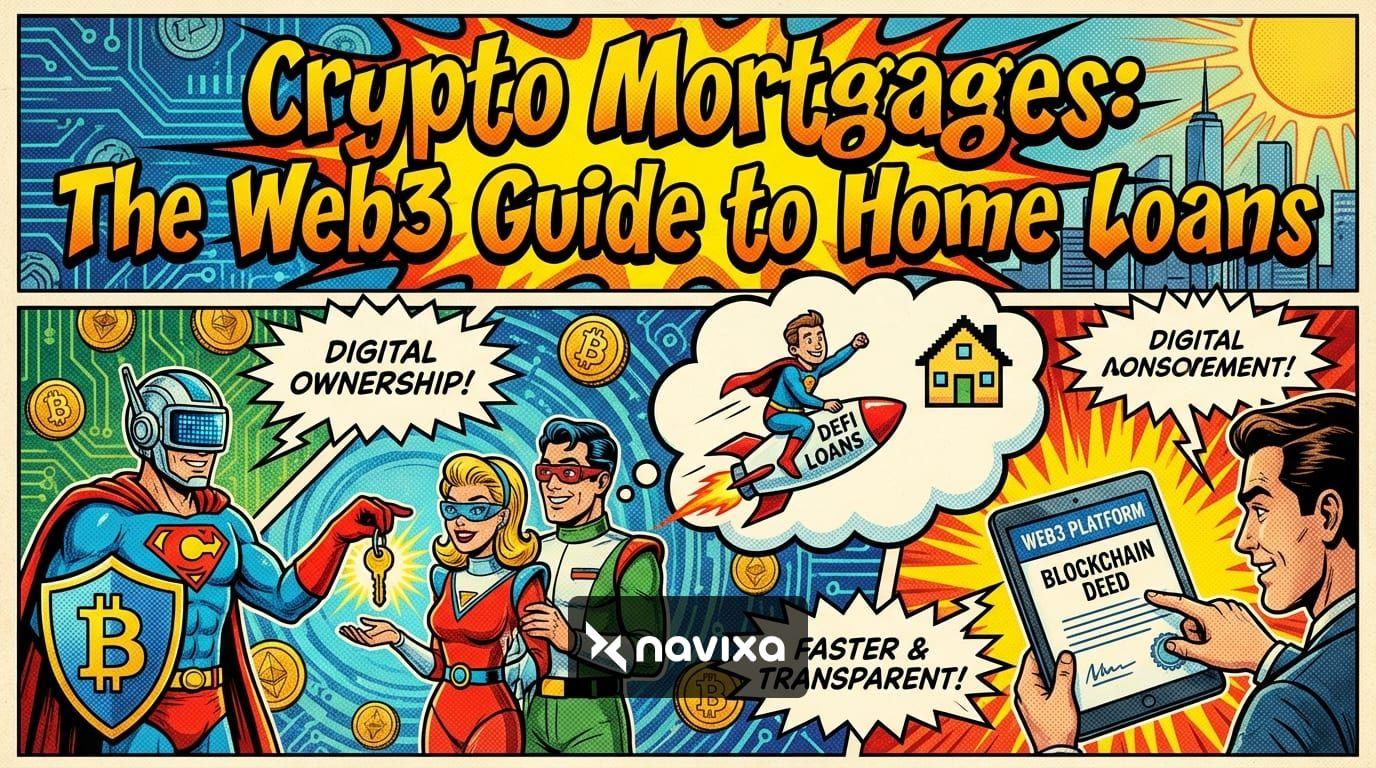
The core proposition is simple yet revolutionary: rather than liquidating your crypto to fund a down payment or purchase a property outright, you pledge it as collateral. This allows you to stack tangible real estate equity while maintaining your long-term crypto exposure.
Trading Strategy: The Financial Case for Crypto Mortgages
Why not just sell your Bitcoin to buy a house? From a wealth management and trading strategy perspective, liquidating digital assets is incredibly inefficient. Here is why savvy investors and seasoned traders are using crypto mortgages instead:
1. Avoiding Taxable Events
When you sell a highly appreciated asset like Bitcoin or Ethereum, you automatically trigger a capital gains tax event. Depending on your local jurisdiction and tax bracket, you could be surrendering up to 20% to 30% of your gains strictly to the government. By utilizing a collateralized loan, no sale takes place. Borrowing against an asset is fundamentally a non-taxable event, preserving your capital and maximizing your purchasing power.
2. Preserving Market Upside
Digital assets are inherently deflationary and have historically appreciated over the long term. If you sell your holdings to buy a property, you permanently exit your position. If the market experiences a massive bull run over the next decade, the opportunity cost of that liquidated crypto could easily eclipse the value of the home itself. Crypto mortgages let you have your cake and eat it too—you secure the real estate while keeping your upside potential completely intact.
3. Diversification Without Liquidation
A golden rule of trading analysis and portfolio management is diversification. By pledging digital assets to secure a mortgage, investors are effectively rebalancing their wealth into tangible, yield-generating physical assets (real estate) without diminishing their decentralized asset portfolio. You benefit from the stability of brick-and-mortar while riding the wave of digital adoption.
Actionable Steps: How to Secure a Token-Backed Loan
Securing a crypto mortgage is conceptually similar to obtaining a traditional loan but requires specific steps tailored to digital assets. Follow these actionable steps to navigate the process smoothly:
Step 1: Assess Your Collateral
First, evaluate the assets you hold. Most institutional lenders currently accept Bitcoin (BTC) and Ethereum (ETH), while newer programs are expanding to accept stablecoins like USDC. You must determine if you have enough digital collateral to meet the lender's loan-to-value (LTV) requirements. Some platforms require a 1:1 collateral ratio, meaning you must pledge $1 million in crypto to secure a $1 million home.
Step 2: Choose the Right Lender Structure
Not all crypto mortgage products are built the same. Some platforms offer 100% financing where your crypto secures the entire purchase, meaning zero cash is required at closing. Others treat your crypto strictly as collateral for the down payment. You will need to select a platform that aligns with your financial goals and liquidity needs.
Step 3: Complete AI-Enhanced Underwriting
Modern crypto mortgage platforms use advanced AI underwriting models to evaluate your financial health quickly. You will need to provide proof of crypto ownership, undergo a standard background and credit check, and verify the property details. This process is highly streamlined, often resulting in loan approvals in a fraction of the time compared to legacy banks—sometimes in as little as 14 days.
Step 4: Secure Custody or Self-Custody
Once approved, your pledged collateral must be secured. Most platforms require you to transfer your assets into a deeply regulated, institutional-grade custodian. Alternatively, a few select lenders now offer self-custody options using multisig wallets, granting borrowers unprecedented control over their pledged assets while the loan is active.
The Market Landscape: Top Crypto Mortgage Platforms
The ecosystem of crypto lenders has expanded dramatically, bringing healthy competition and better rates to consumers. Here is a breakdown of the leading platforms shaping the space today:
Milo
Milo is widely considered a pioneer in digital asset-backed property financing. Having recently crossed the $100 million mark in crypto mortgage originations, Milo has proven the scalability and demand of its model. * Financing: Up to 100% financing with loan amounts reaching up to $25 million. * Collateral: Bitcoin and Ethereum. * Key Advantage: A perfect track record of zero margin calls across their mortgage portfolio, powered by precise AI underwriting. They also offer both traditional institutional custody and a decentralized self-custody option.
Better Home & Finance + Coinbase
In a landmark partnership that brought crypto to the mainstream housing market, Better Mortgage and Coinbase introduced a token-backed conforming mortgage recognized by major government-sponsored enterprises like Fannie Mae. * Financing: Borrowers pledge BTC or USDC to strictly cover their down payment. * Key Advantage: The loan is a conforming mortgage, meaning it adheres to standard underwriting guidelines with highly competitive rates. Most notably, these loans are entirely free of margin calls; if the price of Bitcoin drops, it does not trigger liquidation or require additional capital.
Moon Mortgage
Moon Mortgage offers tailored products for investors wanting to materialize their digital wealth into real estate, particularly focusing on investment properties. * Products: They offer their unique "Trade & Borrow" margin accounts alongside their core crypto mortgage product. * Key Advantage: Borrowers can utilize their digital assets to secure 100% financing for real estate purchases while their assets are stored securely with regulated U.S. banking partners.
Comparing Traditional and Crypto Mortgages
To properly evaluate if this product fits your financial profile, it is crucial to understand how it stacks up against conventional home loans.
| Feature | Traditional Mortgage | Crypto Mortgage |
|---|---|---|
| Down Payment | Requires liquid fiat cash (typically 3-20%) | Pledged crypto or USDC (No cash needed) |
| Tax Implications | None on cash reserves | Avoids massive capital gains on crypto appreciation |
| Underwriting Speed | Typically 30 to 45 days | As fast as 14 days (AI-assisted underwriting) |
| Collateral | The physical property itself | The property + pledged digital assets |
| Margin Calls | N/A | Historically rare (many platforms now offer zero margin calls) |
Risk Management: Protecting Your Assets
While the benefits are immense, blending the high volatility of the cryptocurrency market with the slow-moving, illiquid real estate sector requires strict risk management protocols.
Understanding LTV and Margin Calls
In traditional margin lending, if the value of your collateral falls below a certain threshold, you are hit with a "margin call" and must deposit more funds immediately, or your assets are forcefully liquidated. In the early days of crypto mortgages, this was the biggest fear holding investors back.
However, the industry has aggressively innovated. Platforms like Milo and Better Mortgage now feature zero margin call policies for their primary mortgage products. They structure the loans and over-collateralize them in a way that absorbs standard market volatility. Even if Bitcoin experiences a severe drawdown, your house and your crypto are generally safe from immediate liquidation. This represents a massive shift in consumer protection.
Custody and Counterparty Risks
When you pledge your cryptocurrency, you are entrusting a third party with your wealth. To mitigate counterparty risk, you must verify that your lender uses highly regulated, insured custodians. Leading platforms partner with state-chartered trust companies like Anchorage Digital or industry titans like Coinbase and BitGo to ensure bank-level security. If you are deeply risk-averse regarding third-party custody, seek out lenders offering multisig self-custody arrangements where you hold a portion of the cryptographic keys.
Interest Rate Premiums
Crypto mortgages often carry a slight interest rate premium (typically 0.5% to 1.5% higher) compared to standard 30-year fixed traditional loans. From a risk management perspective, you must calculate whether the cost of this premium over the life of the loan is lower than the capital gains tax you would have paid by liquidating your assets upfront. In most scenarios, for long-term crypto investors, the math works heavily in their favor.
Practical Takeaways for Homebuyers
If you are actively considering a token-backed home loan, keep these actionable tips in mind before signing any paperwork: * Run the Math: Compare the exact capital gains tax hit of selling your digital assets against the slightly higher interest rate of a crypto mortgage. * Prioritize Zero Margin Calls: Always favor lenders whose term sheets explicitly state they do not issue margin calls during regular market volatility. Read the fine print carefully. * Verify Custody: Never pledge your assets to a platform that cannot transparently prove they use institutional-grade custodians. Security should be your top priority. * Leverage Stablecoins: If you are incredibly worried about Bitcoin's day-to-day volatility, some platforms allow you to pledge USDC, effectively eliminating the price fluctuation risk entirely.
Conclusion
Crypto mortgages represent one of the most significant leaps forward in decentralized financial utilities to date. They solve a critical pain point for digital asset holders by successfully bridging the gap between volatile, high-growth cryptocurrencies and the stable, yield-generating world of traditional real estate. With major institutional players and government-sponsored enterprises now backing these tokenized loans, the market has reached a profound level of maturity and safety.
If you have significant digital wealth and are looking to purchase property, there is no longer a need to liquidate your future upside. You can build tangible physical equity, avoid unnecessary taxation, and stay fully invested in the future of money. Take action today by reviewing your portfolio, consulting with a crypto-savvy financial advisor or CPA, and exploring the platforms leading the charge into the future of home financing.
Frequently Asked Questions
What is a crypto mortgage?
A crypto mortgage is a modern type of home loan that allows borrowers to pledge their cryptocurrency (such as Bitcoin or Ethereum) as collateral to secure financing for real estate. This enables buyers to purchase a home without liquidating their digital assets into fiat currency.
Do I have to sell my Bitcoin to get a home loan?
No. That is the primary advantage of a crypto mortgage. You use your digital assets strictly as collateral rather than selling them. This mechanism helps you avoid triggering a massive capital gains tax event while allowing you to benefit from the future price appreciation of your digital portfolio.
Are there margin calls if my crypto drops in value?
Historically, crypto-backed loans carried heavy margin call risks. However, leading modern crypto mortgage platforms have structured their specific mortgage loans to eliminate margin calls entirely. If the value of your Bitcoin drops during a bear market, it does not automatically trigger liquidation or require you to pledge more collateral.
What cryptocurrencies can I use as collateral?
Most major lenders currently accept blue-chip cryptocurrencies, primarily Bitcoin (BTC) and Ethereum (ETH). Additionally, many platforms now accept stablecoins like USD Coin (USDC) to help borrowers avoid volatility concerns while still utilizing their digital liquidity.
How are my digital assets stored during the loan term?
Your assets are generally locked in an institutional-grade, highly regulated custodial vault operated by trusted, federally compliant entities like Coinbase, BitGo, or Anchorage Digital. Some specialized lenders also offer multisig self-custody options where the borrower retains partial cryptographic control over the keys.