
The landscape of digital assets is constantly evolving, but few innovations have sparked as much intrigue, speculation, and eventual technological maturation as non fungible tokens. Often referred to simply as NFTs, these unique cryptographic assets have transitioned from being a niche internet novelty to a foundational layer of the modern digital economy. While the initial wave of media attention was heavily focused on hyper-speculative profile picture (PFP) collections, the market has since matured into a robust infrastructure for digital ownership, identity verification, and decentralized gaming.
Today, understanding non fungible tokens is no longer just for digital art collectors; it is a critical requirement for modern investors, gamers, and technologists. As the global digital asset market cap expands—with market projections estimating the NFT sector alone reaching over $60 billion—the underlying technology is being adopted by major global brands, healthcare providers, and real estate firms.
Whether you are looking to diversify your crypto portfolio, participate in decentralized gaming ecosystems, or simply understand how blockchain technology is changing the concept of ownership, this comprehensive guide will break down the mechanics, trading strategies, and risk management principles associated with non fungible tokens.
The Core Mechanics of Non Fungible Tokens
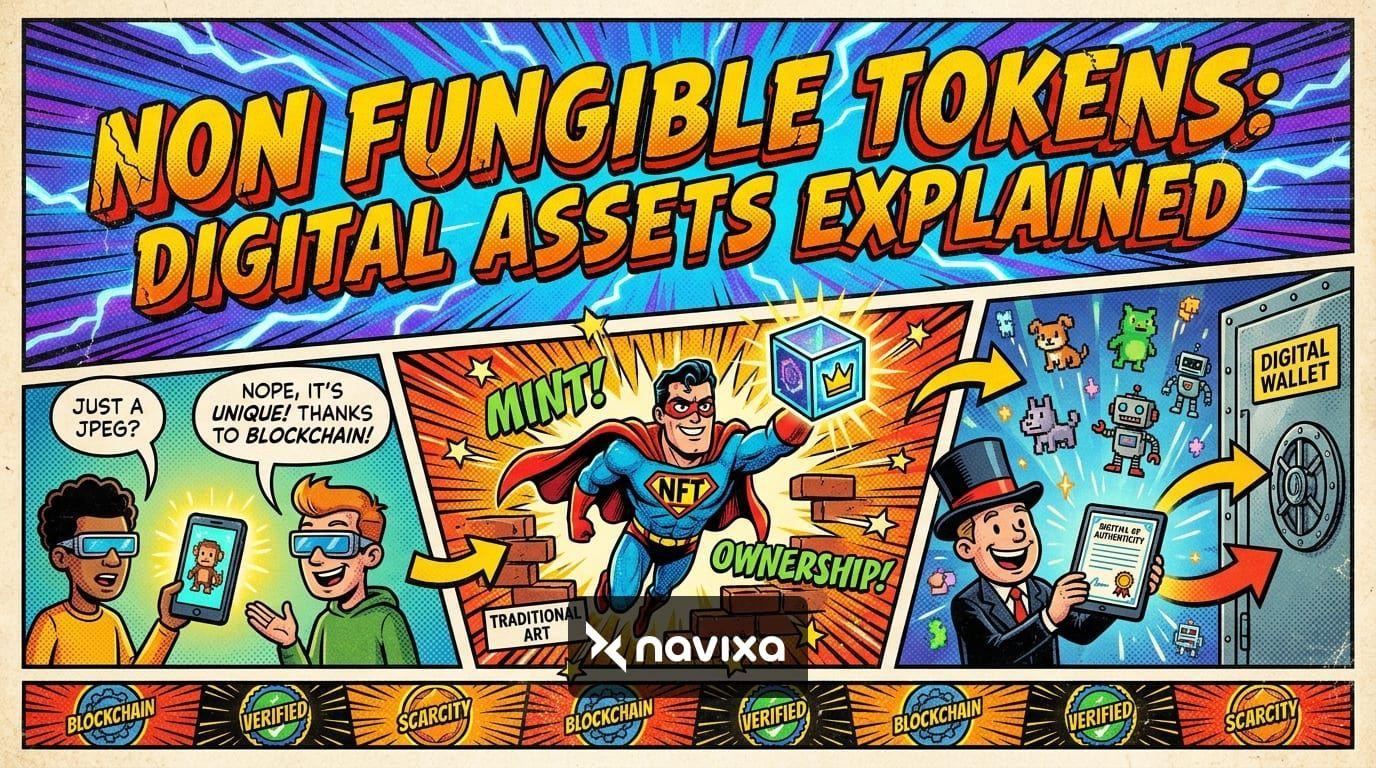
To grasp the true value of non fungible tokens, one must first understand the concept of "fungibility." In traditional finance and cryptocurrency, assets like the US Dollar or Bitcoin are fungible. One Bitcoin is completely indistinguishable from another Bitcoin; they hold the exact same value and can be interchanged seamlessly.
Conversely, a non fungible token is entirely unique. Minted on a blockchain—most commonly Ethereum, Solana, or Bitcoin (via Ordinals)—each token contains distinct metadata and a unique identification code. This metadata ensures that no two tokens are exactly alike, even if they visually appear similar.
How Smart Contracts Power NFTs
The true innovation behind these tokens lies in smart contracts. These are self-executing contracts with the terms of the agreement directly written into lines of code. When an artist, developer, or enterprise creates a non fungible token, the smart contract governs its behavior. It dictates how the asset can be transferred, verifies the digital provenance (the history of ownership), and can even automate royalty payments. For instance, a creator can code a royalty clause that automatically sends them a 5% cut every time the asset changes hands on the secondary market.
The Paradigm Shift: From Hype to True Utility
The modern market for non fungible tokens looks drastically different from the speculative frenzies of previous years. The focus has decisively shifted toward tangible utility and ecosystem integration.
"The true value of an NFT is no longer defined by its aesthetic appeal, but by the tangible problem it solves in the digital or physical world."
Web3 Gaming and Digital Economies
Gaming has emerged as the dominant force in the NFT space, currently accounting for a massive 38% of all non fungible token transaction volume. In these decentralized ecosystems, players truly own their in-game assets—such as weapons, avatars, and virtual land. If a player earns a rare sword in a blockchain-based game, they can freely trade it on secondary marketplaces for real-world value, effectively bridging the gap between gaming and decentralized finance (DeFi).
Real-World Assets (RWA) and Institutional Adoption
Beyond digital realms, non fungible tokens are increasingly being utilized to represent real-world assets. Fractionalized real estate, where a physical property is divided into thousands of digital tokens, allows everyday investors to participate in markets that were previously gatekept by high capital requirements. Similarly, sectors like healthcare are utilizing tokenization to grant patients secure, verifiable control over their medical records, highlighting a utility far beyond digital art.
Top NFT Marketplaces Compared
Choosing the right platform to trade non fungible tokens is critical to your success. Different marketplaces cater to different blockchains, asset types, and trader experience levels. Below is a comparison of the leading platforms shaping the ecosystem today.
| Platform | Best For | Primary Blockchains | Trading Fees | Key Features |
|---|---|---|---|---|
| OpenSea | Beginners & Versatility | Ethereum, Polygon, Solana | 2.5% | Massive variety, highly intuitive UI, strong mobile support. |
| Blur | Professional Traders | Ethereum, Blast | 0% - 0.5% | Real-time analytics, sweeping tools, token rewards, zero listing fees. |
| Magic Eden | Gaming & Solana NFTs | Solana, Bitcoin, Polygon | ~2% | Bitcoin Ordinals support, strong gaming ecosystem, multi-chain functionality. |
| Binance NFT | Low-Fee Trading | BNB Chain, Ethereum | 1% | Deep integration with the Binance exchange, incredibly low transaction costs. |
If you are a first-time buyer, you might want to start with an accessible platform like OpenSea. However, if your strategy involves high-frequency flipping and data analysis, platforms like Blur offer the advanced tooling necessary for professional execution.
Trading Strategy & Technical Analysis for NFTs
Trading non fungible tokens is inherently different from trading liquid cryptocurrencies like Bitcoin or Ethereum. Because NFTs are non-fungible, they suffer from illiquidity—meaning you cannot always sell your asset instantly at a fair market price. Therefore, successful trading requires a specialized approach combining on-chain data analysis and market sentiment.
Floor Price and Listed Supply Dynamics
The "floor price" is the lowest price at which an asset in a specific collection is currently listed for sale. However, floor price alone is deceptive. Expert traders focus heavily on the listed supply ratio. If a collection has 10,000 items but only 200 are listed for sale (a 2% listing rate), it indicates strong community conviction and holding behavior. A sudden surge in the floor price coupled with a low listing rate often precedes a major breakout.
Momentum Trading and Floor Sweeping
Another common strategy is "sweeping the floor." This occurs when a trader or a syndicate buys up multiple of the lowest-priced non fungible tokens in a collection simultaneously, creating artificial scarcity and driving up the floor price. Traders equipped with advanced analytic platforms monitor these aggressive purchasing behaviors in real-time. By tracking whale wallets (large-scale investors), you can identify which collections are accumulating institutional or high-net-worth interest before the broader market catches on.
Analyzing the Metadata
Unlike fungible tokens, rarity plays a massive role in pricing. Traders utilize rarity ranking tools to find mispriced assets. Occasionally, an uninformed seller will list an exceptionally rare token near the collection's floor price. Savvy traders employ automated alerts to "snipe" these undervalued assets and flip them to collectors willing to pay a premium for specific traits.
Actionable Steps to Start Trading
If you are ready to enter the market, follow these actionable steps to ensure a smooth and secure onboarding process.
1. Set Up a Non-Custodial Wallet: To interact with decentralized marketplaces, you need a Web3 wallet. MetaMask is the industry standard for Ethereum and Polygon, while Phantom is the go-to choice for the Solana ecosystem. Ensure your recovery seed phrase is written down and stored offline. 2. Fund Your Wallet: Purchase the base cryptocurrency required for the network you wish to trade on. For example, if you are buying an Ethereum-based NFT, you will need ETH not only for the purchase price but also to cover the network "gas" fees. 3. Research the Community: A non fungible token is often only as strong as its community. Before purchasing, visit the project's official Discord and Twitter. Look for organic engagement, active developers, and a clear, actionable roadmap that details post-mint utility. 4. Execute Your First Trade: Connect your wallet to a trusted marketplace like Magic Eden or OpenSea. Start small. Purchase a low-cost utility NFT, such as an in-game item, to familiarize yourself with the transaction signing process and gas fee fluctuations.
Risk Management & Security Measures
The decentralized nature of non fungible tokens offers immense freedom, but it also places the entire burden of security squarely on your shoulders. The market is fraught with sophisticated scams and financial pitfalls.
Combating Phishing and Smart Contract Risks
The most common way investors lose their non fungible tokens is through phishing links. Malicious actors create identical copies of popular NFT minting websites. When you connect your wallet and sign a transaction on a fake site, you are inadvertently granting the hacker permission to drain your assets. Always double-check URLs, rely on official links from verified social media accounts, and consider using a dedicated "burner wallet" with limited funds for interacting with new or unverified smart contracts.
Understanding Wash Trading and Illiquidity
Wash trading occurs when an individual buys and sells the same token between their own wallets to create the illusion of high trading volume and artificial demand. This traps novice investors into buying an asset they will never be able to resell. Always verify the transaction history on a blockchain explorer to ensure the buying patterns involve unique, legitimate wallets rather than a closed loop of artificial activity.
Practical Takeaways
To summarize the essentials of navigating the current landscape of non fungible tokens: * Utility over Hype: Focus your capital on tokens that provide tangible value, such as token-gated access, gaming assets, or real-world asset integration. * Liquidity is King: Never invest money you might need on short notice. NFTs are illiquid assets and can take weeks to sell at a fair price. * Data is Your Edge: Utilize advanced marketplace analytics to track listed supply ratios, whale wallet movements, and rarity rankings. * Security First: Use hardware wallets for long-term storage and remain hyper-vigilant against phishing attempts and malicious smart contract approvals.
Conclusion
The era of non fungible tokens being dismissed as mere digital novelties has officially passed. Today, they represent a fundamental layer of the evolving digital economy, powering everything from secure digital identity to decentralized gaming ecosystems. While the market demands a steep learning curve and disciplined risk management, the opportunities for forward-thinking investors and participants are immense. By prioritizing utility, leveraging advanced trading analytics, and adhering to strict security protocols, you can confidently navigate this dynamic landscape. Start small, educate yourself continuously, and take your first step into the decentralized future of digital ownership.
Frequently Asked Questions
What exactly are non fungible tokens?
Non fungible tokens are unique cryptographic assets stored on a blockchain. Unlike fungible cryptocurrencies such as Bitcoin, each token has distinct metadata and an identification code that proves its unique digital provenance and ownership.
Are non fungible tokens a good investment?
They can be highly lucrative but carry significant risk due to their speculative nature and market illiquidity. Successful investing requires deep market research, focusing on tokens with strong communities, clear utility, and verifiable on-chain data.
How do gas fees affect NFT trading?
Gas fees are the transaction costs paid to network validators to process blockchain transactions. During times of high network congestion, these fees can spike dramatically. Traders must account for gas fees, as they can significantly eat into profit margins, especially on high-cost networks like Ethereum.
Can NFTs be copied or duplicated?
While the underlying digital file (like an image or a video) can be copied, the non fungible token itself cannot be duplicated. The token represents the verifiable, blockchain-backed certificate of ownership, which remains immutable and unique to the token holder.