
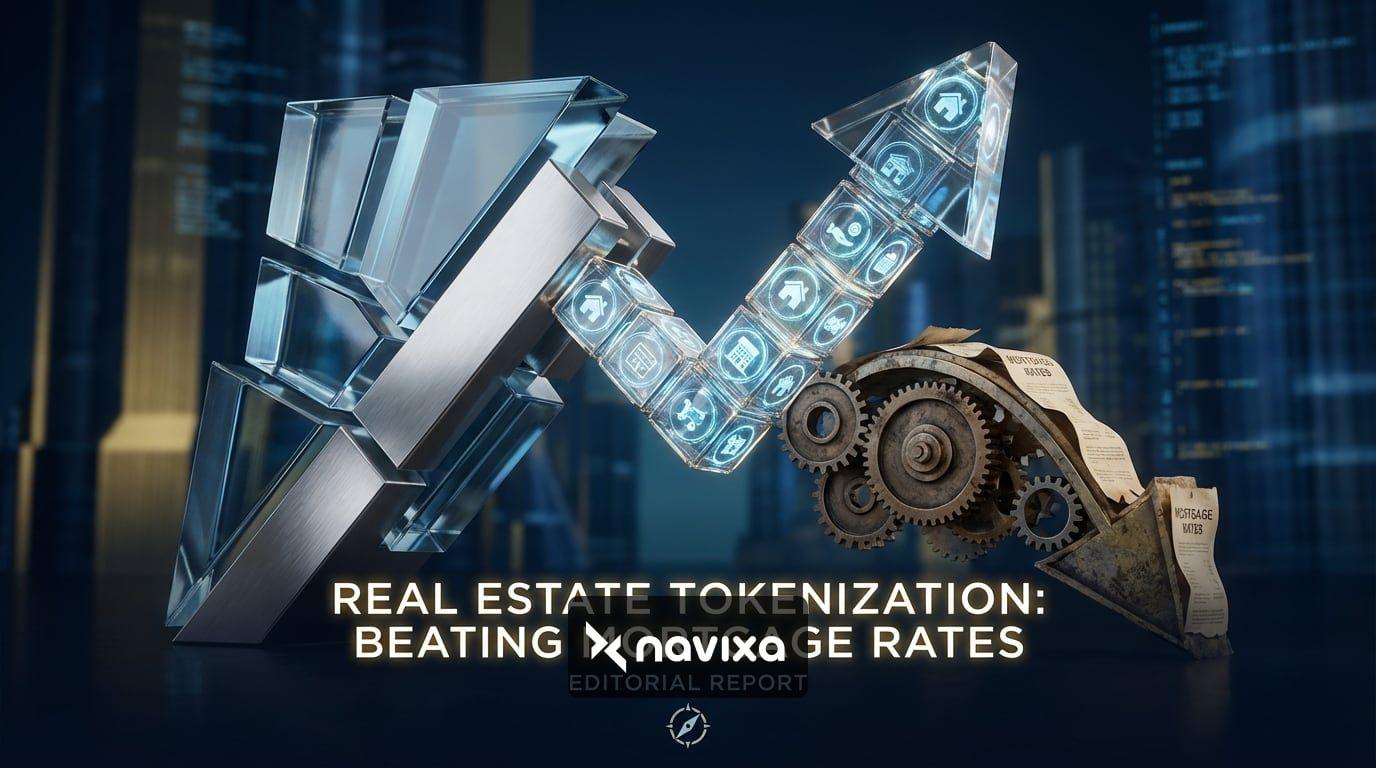
The traditional dream of building wealth through property has collided with a harsh macroeconomic reality. With 30-year fixed mortgage rates stubbornly holding above the 6.1% mark and global real estate prices remaining historically high, the barrier to entry for the average investor has never been steeper.
Enter real estate tokenization, a transformative application of blockchain technology that is rapidly democratizing access to the property market. By breaking down physical assets into fractional digital tokens, investors can bypass the prohibitive costs of traditional mortgages, avoid massive down payments, and build a diversified, yield-generating portfolio entirely on-chain.
In this comprehensive guide, we will explore how real estate tokenization works, why it offers a viable strategy for beating high borrowing costs, and how you can integrate these digital assets into a modern trading and investing strategy.
What is Real Estate Tokenization?
At its core, real estate tokenization is the process of converting the ownership rights of a physical property—or the cash flows generated by it—into divisible digital tokens on a blockchain. These tokens, typically structured as security tokens under frameworks like the ERC-3643 standard, represent a legal, proportional share of the underlying asset.
Instead of a single investor taking out a massive loan to purchase a commercial building, tokenization allows hundreds or even thousands of investors to buy fractional stakes. These digital shares can be programmed with smart contracts to automatically distribute rental income, manage governance, and track ownership with immutable transparency.
"Tokenization bridges the physical and digital worlds, turning historically illiquid real estate into a liquid, globally accessible asset class."
As of early 2026, the broader Real-World Asset (RWA) tokenization market has exploded, surpassing $24 billion in total value. Leading platforms are utilizing advanced blockchain standards to ensure regulatory compliance while offering seamless access to high-yield properties across the globe. Furthermore, decentralized Oracle networks are increasingly used to feed real-time property appraisals and rental market data directly on-chain, ensuring that the token price accurately reflects the physical asset's current market value.
The Macro Landscape: High Mortgage Rates vs. Digital Agility
To understand the immense value of real estate tokenization, we must examine the current macroeconomic environment. Traditional property investment heavily relies on leverage—specifically, the mortgage.
When interest rates are low, borrowing money to buy property is a sound strategy to amplify returns. However, with central banks maintaining tight monetary policies to combat inflation, mortgage rates have remained elevated. Paying upwards of 6.1% on a 30-year loan significantly eats into an investor's cash flow and overall return on investment (ROI). Furthermore, traditional real estate requires massive upfront capital, typically a 20% down payment, along with closing costs, maintenance fees, and property taxes.
Beating the Borrowing Squeeze
Real estate tokenization offers a direct bypass to this restrictive system:
1. Zero Reliance on Mortgages: Because you can buy fractional shares (often starting as low as $50), there is no need to secure a mortgage. Investors can allocate capital they already possess, completely avoiding exorbitant interest payments and the heavily front-loaded interest of traditional amortization schedules. 2. Immediate Cash Flow: Tokenized properties often distribute rental yield on a daily or weekly basis via stablecoins like USDC. Traditional properties can take months to become cash-flow positive after accounting for renovation and tenant acquisition. 3. Compound Growth: The micro-distributions received from tokenized real estate can be immediately reinvested into more tokens or deployed into Decentralized Finance (DeFi) liquidity pools, creating a compounding effect that traditional real estate cannot match.
Actionable Trading and Investing Strategy
Investing in tokenized real estate is not just about buying and holding; it opens the door to sophisticated trading strategies previously reserved for hedge funds.
1. The Yield Arbitrage Strategy
One of the most popular strategies involves capitalizing on the spread between the yield generated by a tokenized property and the yield available in DeFi protocols. If a tokenized commercial property offers an 8% annual percentage yield (APY) from rental income, an investor can purchase these tokens to secure a stable baseline return. Because these tokens are increasingly composable within the DeFi ecosystem, you can deposit your real estate tokens into lending protocols as collateral to borrow stablecoins at a lower interest rate. The borrowed stablecoins can then be reinvested into other high-yield opportunities, effectively multiplying your exposure and overall return.
2. Geographic and Sector Diversification
Traditional investors are often forced to buy property in their local area due to management constraints and budget limits. Real estate tokenization allows you to spread your capital across different geographic markets and property types instantly. A robust portfolio might include 30% commercial real estate in Europe, 40% single-family rentals in the American Midwest, and 30% industrial warehousing in Asia. This diversification mitigates localized market downturns and stabilizes your passive income streams.
3. Capitalizing on Secondary Market Liquidity
Unlike physical real estate, which can take months to sell, tokenized real estate can be traded 24/7 on secondary decentralized exchanges (DEXs) or specialized alternative trading systems (ATS). Savvy traders can perform technical analysis on the price action of specific real estate tokens, buying shares of properties that are undervalued based on their capitalization rates (cap rates) and selling them when market sentiment drives the token price above the property's intrinsic value.
Technical Analysis and Market Data
The technical infrastructure supporting real estate tokenization has matured significantly. We are now seeing the integration of institutional-grade token standards that embed compliance directly into the token's code.
Platforms utilizing these standards ensure that only verified, KYC/AML-compliant investors can hold or trade the tokens. From a market data perspective, on-chain analytics platforms now track the Total Value Locked (TVL) in real estate tokens, allowing analysts to gauge market sentiment.
For instance, when traditional mortgage rates spike, on-chain data typically shows an influx of capital into tokenized real estate protocols. Investors recognize that the friction of traditional financing is too high, leading to increased trading volume and liquidity for real-world asset tokens. Observing these capital flows can help traders identify breakout platforms before they hit mainstream awareness.
Tokenized Real Estate vs. Traditional Real Estate
To clearly illustrate the paradigm shift, below is a comparison of the two approaches to property investment.
| Feature | Traditional Real Estate | Tokenized Real Estate |
|---|---|---|
| Entry Barrier | High (Often $50,000+ for down payment) | Low (Often $50 - $100 per token) |
| Liquidity | Low (Takes months to sell, involves realtors) | High (Instant trading on secondary markets) |
| Financing | Requires mortgages, credit checks, high interest | Cash purchases of fractional shares, no debt required |
| Income Distribution | Monthly, subject to management fees | Daily or weekly via smart contracts (USDC/USDT) |
| Diversification | Difficult (Capital tied up in one asset) | Easy (Can own fractions of hundreds of properties) |
Actionable Steps to Get Started
If you are ready to explore real estate tokenization to beat current mortgage rates, follow these actionable steps:
Step 1: Select a Compliant Platform
Research and select a reputable RWA platform that aligns with your investment goals. Popular options include platforms that specialize in U.S. residential properties and those focused on global commercial real estate. Ensure the platform conducts regular third-party audits of both their smart contracts and their physical properties.
Step 2: Complete KYC and Onboarding
Because real estate tokens are typically classified as securities, you will need to undergo a Know Your Customer (KYC) and Anti-Money Laundering (AML) verification process. This ensures regulatory compliance and protects the ecosystem.
Step 3: Fund Your Web3 Wallet
You will need a compatible Web3 wallet funded with cryptocurrency, typically a stablecoin like USDC, and a small amount of the native network token (like ETH or MATIC) to cover transaction fees. You can learn more about setting up your infrastructure on resources like the Ethereum Foundation.
Step 4: Analyze and Purchase Tokens
Review the available properties. Pay close attention to the property's cap rate, historical occupancy levels, and the management company overseeing the physical asset. Once you find a suitable property, execute the transaction to mint or purchase your fractional tokens.
Step 5: Monitor and Reinvest
Track your daily or weekly yields. To maximize your returns and bypass the limitations of traditional finance, consistently reinvest your rental income into new property tokens to trigger the power of compound interest. Consider exploring DeFi lending protocols to see if your tokens can be used as collateral.
Risk Management in Tokenized Assets
While real estate tokenization offers incredible advantages, it is not without risk. A comprehensive trading strategy must include robust risk management.
Smart Contract Vulnerabilities: The digital nature of tokenization means that assets are governed by code. If a smart contract contains a bug, it could be exploited by malicious actors. Always prioritize platforms that have undergone extensive audits by reputable cybersecurity firms.
Regulatory Uncertainty: The regulatory landscape for digital securities is continually evolving. Changes in securities laws in major jurisdictions could impact the liquidity or operational status of tokenization platforms. Staying informed on regulatory developments is crucial for long-term investors.
Physical Property Risks: It is vital to remember that a real estate token is backed by a physical building. That building is still subject to real-world risks, including natural disasters, tenant defaults, and local economic downturns. Diversifying your token holdings across different regions and property types is the best defense against these physical risks.
Practical Takeaways
* Bypass the Banks: Real estate tokenization allows you to invest in property without taking on high-interest mortgage debt. * Embrace Fractionalization: You can build a globally diversified real estate portfolio with a fraction of the capital required for a single traditional property. * Leverage DeFi Integration: Use your property tokens as collateral in DeFi protocols to unlock further liquidity and amplify your trading strategy. * Prioritize Security: Only invest through compliant, fully audited platforms that provide transparent, on-chain proof of reserves.
Frequently Asked Questions
What is real estate tokenization?
Real estate tokenization is the process of converting the ownership rights or economic benefits of a physical property into digital tokens on a blockchain. These tokens represent fractional ownership, allowing multiple investors to share in the asset's appreciation and rental income without needing to buy the entire property.
How does tokenized real estate provide liquidity?
Unlike traditional real estate, which is highly illiquid and takes months to sell, tokenized real estate can be traded on secondary digital marketplaces 24/7. This allows investors to buy or sell their fractional shares almost instantly, subject to market demand and regulatory lock-up periods.
Can I use tokenized real estate as collateral?
Yes, as the Real-World Asset (RWA) sector integrates more deeply with Decentralized Finance (DeFi), many platforms now allow you to use your real estate security tokens as collateral to borrow stablecoins or other cryptocurrencies. This enables you to unlock liquidity without selling your underlying property shares.
Are real estate tokens regulated?
In most jurisdictions, real estate tokens are classified as securities because they represent an investment contract with an expectation of profit derived from the efforts of others (e.g., the property managers). Therefore, legitimate tokenization platforms require investors to complete KYC/AML procedures to comply with national securities regulations.
Conclusion
As mortgage rates continue to squeeze traditional homebuyers and property investors, real estate tokenization stands out as a powerful, tech-driven alternative. By fusing the tangible value of real-world properties with the liquidity, transparency, and efficiency of blockchain technology, investors can finally beat the borrowing trap.
Whether you are a retail investor looking to generate passive income with minimal capital or an advanced trader aiming to leverage RWA tokens in DeFi, the tokenized real estate market offers unprecedented opportunities. Start researching compliant platforms today, fund your Web3 wallet, and take your first step toward building a decentralized, high-yield property portfolio without ever applying for a mortgage.