
Introduction
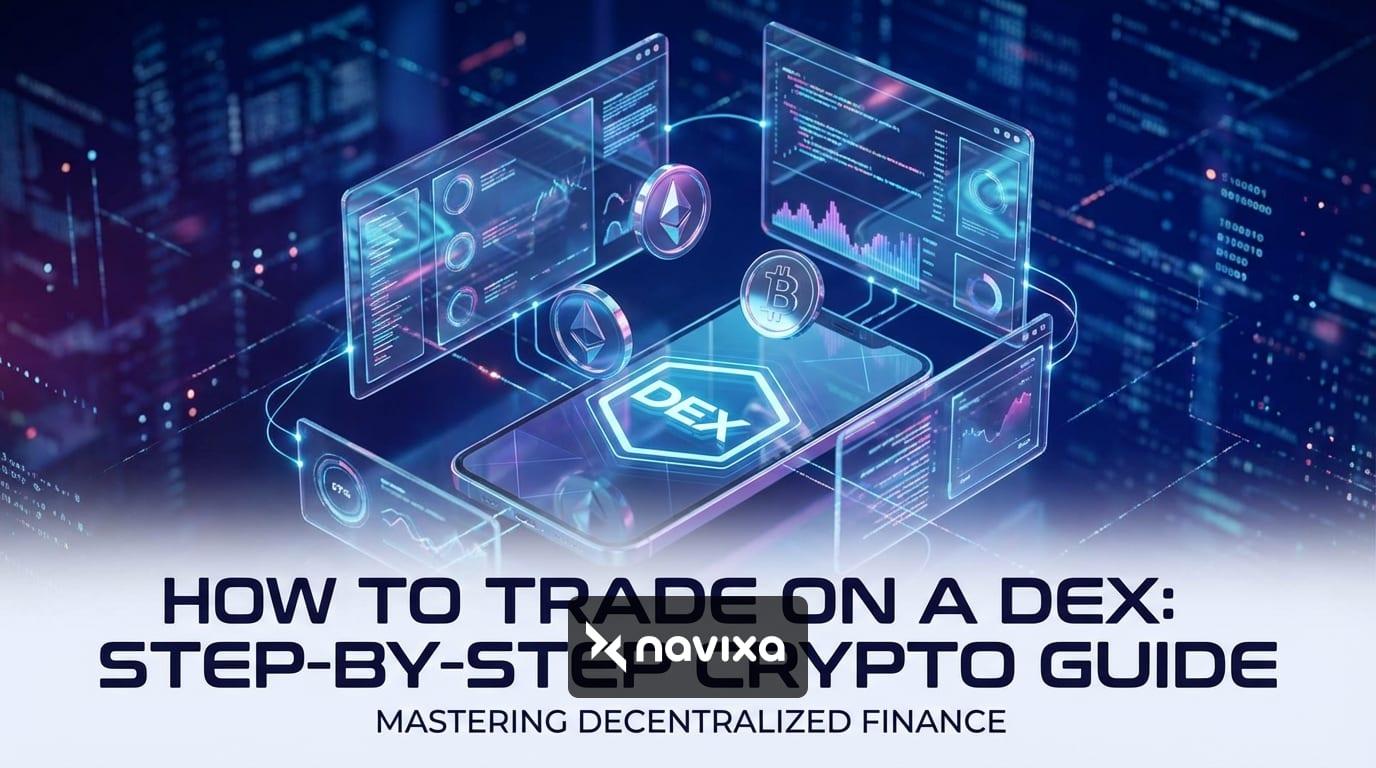
The cryptocurrency market has experienced a massive paradigm shift. As traders increasingly prioritize self-custody, privacy, and capital efficiency, decentralized exchanges (DEXs) have evolved from niche experimental platforms into the core infrastructure of global decentralized finance (DeFi). If you are wondering how to trade on a DEX, you are stepping into a borderless financial ecosystem that operates entirely through code, without centralized intermediaries.
In recent years, the dominance of centralized platforms has been heavily challenged. Networks like Solana have seen explosive growth, processing over $117 billion in monthly spot DEX volume, while decentralized perpetual futures platforms like Hyperliquid are clearing hundreds of billions in monthly derivatives trades. Simultaneously, technological leaps—such as the release of Uniswap v4 with its customizable "hooks" and hyper-efficient "Singleton" architecture—have made on-chain trading faster, cheaper, and more advanced than ever before.
This comprehensive guide will teach you exactly how to trade on a DEX, covering everything from setting up your first Web3 wallet to executing advanced trading strategies and managing on-chain risks.
Understanding Decentralized Exchanges (DEXs)
Before diving into the mechanics of trading, it is crucial to understand what a decentralized exchange actually is and how it differs from traditional trading platforms.
A DEX is a peer-to-peer marketplace where cryptocurrency transactions occur directly between crypto traders. Financial transactions are not facilitated by banks, brokers, or traditional corporate entities. Instead, they are executed by smart contracts—self-executing code living on a blockchain.
Automated Market Makers (AMMs) vs. Order Books
There are two primary models that govern how decentralized exchanges operate:
1. Automated Market Makers (AMMs): Platforms like Uniswap and PancakeSwap rely on AMMs. Instead of matching buyers with sellers, AMMs allow users to trade against a liquidity pool. These pools are funded by other users (Liquidity Providers) who deposit pairs of tokens in exchange for a share of the trading fees. Prices are determined by a mathematical formula (typically the constant product formula) based on the ratio of the tokens in the pool. 2. Decentralized Order Books: Platforms like Hyperliquid and dYdX operate more like traditional centralized exchanges, utilizing on-chain or off-chain order books to match buyers and sellers. This model is highly favored for trading perpetual contracts (derivatives) as it allows for limit orders, leverage, and complex trading strategies without severe slippage.
"The transition from centralized to decentralized exchanges represents a shift from trusting institutions to trusting mathematics and open-source code."
Essential Tools for Trading on a DEX
To interact with a decentralized exchange, you need a few essential tools. Unlike centralized exchanges where you create an account with an email and password, DEXs require you to connect a personal, self-custodial wallet.
1. A Web3 Wallet
Your wallet is your gateway to the DeFi ecosystem. It stores your private keys and allows you to sign transactions securely. Popular choices include: * MetaMask: The industry standard for Ethereum and Ethereum Virtual Machine (EVM) compatible chains like Arbitrum, Optimism, and Base. * Phantom: The premier wallet for the Solana ecosystem, renowned for its user-friendly interface and speed. * Trust Wallet: A versatile multi-chain wallet suitable for mobile users.
2. Native Gas Tokens
Every transaction on a blockchain requires a computational fee known as "gas." You must hold the native cryptocurrency of the blockchain you are using to pay these fees. For example: * To trade on an Ethereum DEX, you need ETH. * To trade on a Solana DEX like Jupiter or Raydium, you need SOL. * To trade on Binance Smart Chain, you need BNB.
Step-by-Step: How to Trade on a DEX
If you are ready to make your first decentralized trade, follow these actionable steps carefully.
Step 1: Set Up and Fund Your Web3 Wallet
Download your chosen wallet as a browser extension or mobile app. Upon creation, you will be given a Seed Phrase (typically 12 or 24 words). Write this down on a physical piece of paper and store it securely. Never share this phrase with anyone. Next, transfer funds from a centralized exchange or another wallet to your new public address, ensuring you include enough of the native token to cover upcoming gas fees.
Step 2: Choose the Right Decentralized Exchange
Select a DEX based on the blockchain you are using and the type of asset you want to trade. * For Ethereum or Layer-2 spot trading, Uniswap remains the undisputed leader. * For high-speed, low-cost trading on Solana, aggregators like Jupiter offer the best routing. * For derivatives and leverage trading, platforms like Hyperliquid offer institutional-grade performance directly from your wallet.
Step 3: Connect Your Wallet to the DEX
Navigate to the official URL of the decentralized exchange. Look for a "Connect Wallet" button, usually located in the top right corner of the interface. Select your wallet provider from the list and approve the connection prompt in your wallet extension. The DEX cannot access your funds just by connecting; it simply reads your public address and token balances.
Step 4: Execute Your Swap or Trade
Once connected, locate the trading interface. 1. Select the token you currently hold in the "Pay" or "From" field. 2. Select the token you wish to receive in the "Receive" or "To" field. 3. Enter the amount you want to trade. 4. The DEX will automatically calculate the exchange rate and display the estimated output. 5. Click "Swap" or "Trade."
Step 5: Manage Slippage and Approve the Transaction
Before finalizing the swap, pay attention to slippage—the difference between the expected price of a trade and the price at which the trade is actually executed. In highly volatile markets or low-liquidity pools, slippage can be significant. Adjust your slippage tolerance in the DEX settings (usually a gear icon).
Finally, confirm the transaction in your wallet. You will be prompted to pay the network gas fee. Once approved, the smart contract will execute, and the new tokens will appear in your wallet within seconds.
CEX vs. DEX: Which is Right for You?
Understanding the fundamental differences between Centralized Exchanges (CEXs) and Decentralized Exchanges (DEXs) will help you tailor your trading strategy.
| Feature | Centralized Exchange (CEX) | Decentralized Exchange (DEX) |
|---|---|---|
| Custody | Exchange holds your private keys | You hold your private keys (Non-custodial) |
| KYC/AML | Required (Identity verification) | Not required (Pseudonymous) |
| Asset Variety | Limited to officially listed tokens | Unlimited (Anyone can create a liquidity pool) |
| Security Risks | Exchange hacks, account freezing | Smart contract bugs, phishing, rug pulls |
| Trading Fees | Determined by the corporate platform | Determined by network congestion and LP fees |
Advanced DEX Trading Strategies
Once you have mastered the basics of how to trade on a DEX, you can explore advanced DeFi strategies to maximize your profitability.
Leveraging Aggregators for the Best Price
DEX aggregators like 1inch or Jupiter do not hold their own liquidity pools. Instead, they scan dozens of different DEXs simultaneously to find the most efficient routing path for your trade. This minimizes slippage and ensures you get the maximum amount of tokens for your swap, automatically splitting your order across multiple platforms if necessary.
Providing Liquidity (LPing)
Rather than just trading, you can earn passive income by depositing your crypto assets into a DEX liquidity pool. In return, the protocol rewards you with a percentage of the trading fees generated by that pool. With advancements like concentrated liquidity and Uniswap v4's dynamic fee hooks, sophisticated liquidity providers can optimize their capital to yield higher returns, though this comes with the risk of impermanent loss.
Decentralized Perpetual Futures
If you have a higher risk tolerance, the decentralized perpetual derivatives market offers immense opportunities. Platforms specializing in perps allow traders to go long or short on assets with leverage, without ever handing over custody of their collateral to a centralized entity. These platforms use advanced cross-margin systems and decentralized oracles to prevent unfair liquidations.
Risk Management and Security Protocols
Trading on a DEX gives you ultimate freedom, but it also makes you solely responsible for your own security. There is no customer support hotline to call if you make a mistake.
* Beware of Phishing: Scammers frequently create fake websites that mimic popular DEX interfaces. Always verify the URL and bookmark official sites. * Smart Contract Risk: Even heavily audited platforms can suffer from exploits. Never lock your entire net worth into a single protocol. * Token Scams and Rug Pulls: Because anyone can list a token on a DEX, malicious actors often create fake tokens with identical names to legitimate projects. Always verify the specific contract address of the token before swapping. * Revoke Approvals: When you trade on a DEX, you must "approve" the smart contract to spend your tokens. If a DEX gets hacked, those approvals can be exploited. Regularly use tools like Revoke.cash to remove outdated smart contract permissions.
Practical Takeaways
* Start Small: Execute a few micro-transactions to get comfortable with gas fees, wallet pop-ups, and transaction times before trading large amounts. * Keep Gas Handy: Never swap 100% of your native token (like ETH or SOL). Always leave a buffer to pay for future transaction fees. * Use Aggregators: Make it a habit to route your larger trades through DEX aggregators to secure the best possible pricing and minimal slippage. * Verify Contracts: Cross-reference token contract addresses on blockchain explorers (like Etherscan or Solscan) to ensure you aren't buying a counterfeit asset.
Frequently Asked Questions
What is the difference between an AMM and an Order Book DEX?
An AMM (Automated Market Maker) uses liquidity pools and algorithmic pricing formulas to execute trades instantly against passive capital. An Order Book DEX matches individual buyers' bids with sellers' asks, similar to traditional stock markets. Order books are typically better for large trades and limit orders, while AMMs excel at providing liquidity for smaller, newly launched tokens.
Do I need to pay gas fees for failed transactions?
Yes. Gas fees compensate network validators for the computational work required to process your transaction. If a trade fails—often due to high slippage or network congestion—the computational work was still performed, meaning your gas fee will not be refunded.
Is it possible to trade with leverage on a decentralized exchange?
Absolutely. The decentralized derivatives sector has grown exponentially. Platforms like Hyperliquid and dYdX allow users to trade perpetual futures contracts with significant leverage entirely on-chain, utilizing sophisticated risk engines and decentralized price oracles.
Can I buy crypto with fiat directly on a DEX?
Traditionally, DEXs only support crypto-to-crypto swaps. However, many modern DEX interfaces and decentralized wallets have integrated third-party fiat on-ramps (like MoonPay or Transak). These integrations allow you to purchase crypto with a credit card or bank transfer, which is then deposited directly into your self-custodial wallet for seamless DEX trading.
Conclusion
Learning how to trade on a DEX unlocks the true potential of decentralized finance. By eliminating the middleman, you retain absolute sovereignty over your assets, gain access to thousands of tokens before they hit mainstream centralized exchanges, and participate directly in the underlying protocol's economy. While the learning curve may seem steep initially, mastering self-custodial wallets, smart contract interactions, and advanced liquidity routing is a vital skill for the modern cryptocurrency investor. Start small, prioritize your digital security, and embrace the decentralized future of trading.