
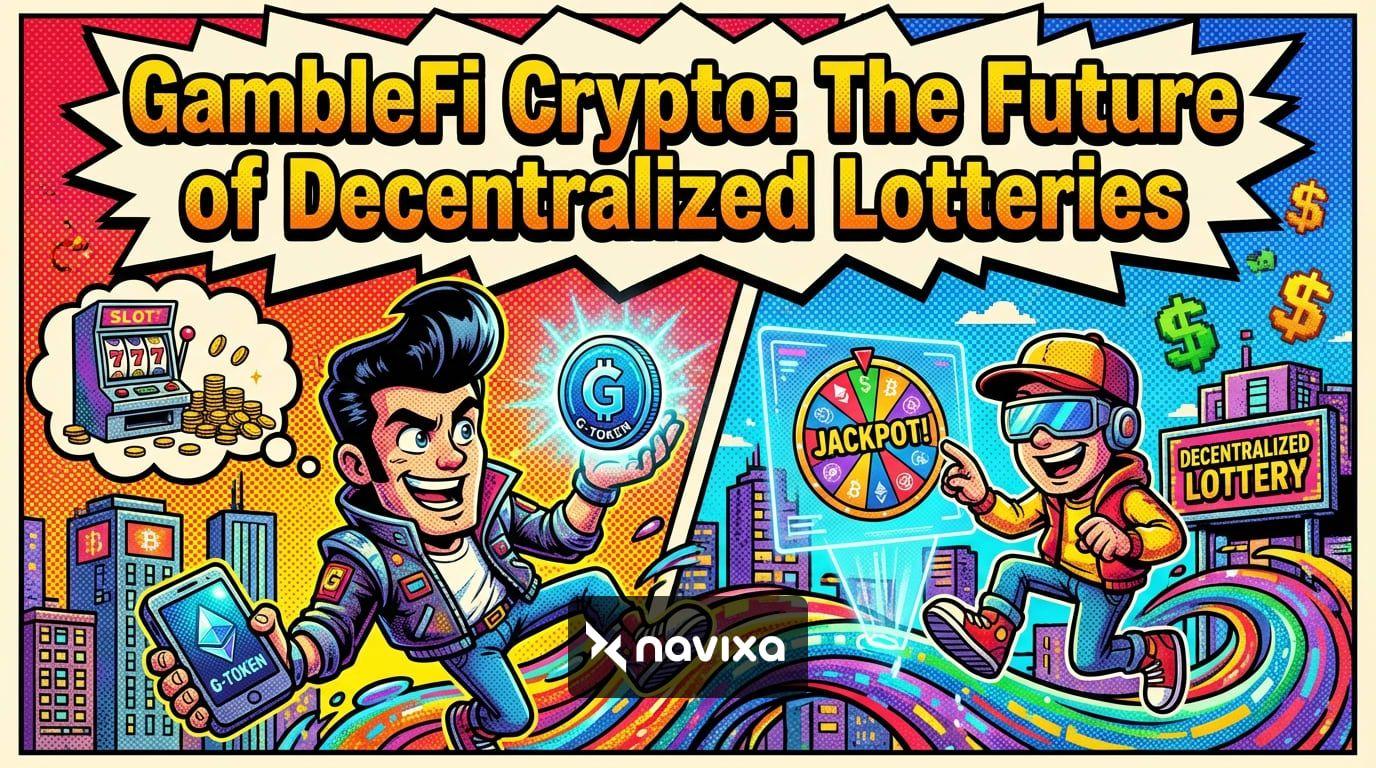
The traditional online gambling industry has long been plagued by a critical issue: a lack of transparency. For decades, players have been forced to trust centralized operators to execute fair games, manage user funds securely, and process withdrawals without arbitrary delays. However, the emergence of GambleFi crypto is turning this outdated model on its head, particularly in the realm of decentralized lotteries.
By merging the lucrative world of online gambling with the transparency and self-custody of Decentralized Finance (DeFi), GambleFi crypto platforms are revolutionizing how users place bets, enter lotteries, and even earn passive income. Instead of simply playing against the house, participants now have the unprecedented opportunity to *own* a piece of the house.
In this comprehensive guide, we will explore the core mechanics of GambleFi crypto, dive deep into how decentralized lotteries operate, highlight top projects, and outline practical trading strategies for investors looking to capitalize on this explosive sector.
What is GambleFi Crypto?
GambleFi crypto is a relatively new but rapidly growing sub-sector of the blockchain industry. At its core, GambleFi (short for Gamble Finance) refers to decentralized applications (dApps) that offer crypto-based betting and gambling services. This includes everything from on-chain poker and sports betting to casino games and decentralized lotteries.
The Shift from Centralized to Decentralized
Traditional online casinos and lottery syndicates operate as opaque entities. When you purchase a lottery ticket or spin a digital slot machine, the underlying random number generator (RNG) is completely hidden from public view. If the house decides to restrict your account or delay a payout, players have very little recourse.
GambleFi crypto solves this by bringing operations on-chain. Smart contracts dictate the rules of the game, automatically execute payouts, and generate random outcomes using verifiable cryptographic proofs. Furthermore, GambleFi integrates DeFi mechanisms such as staking, yield farming, and liquidity provisioning.
"The most revolutionary aspect of GambleFi is the democratization of casino revenues. For the first time, everyday users can hold a token and earn a direct share of a gambling platform's profits."
The Mechanics of Decentralized Lotteries
Decentralized lotteries are arguably one of the most exciting applications within the GambleFi ecosystem. In a traditional lottery, a massive portion of ticket sales goes toward administrative fees, centralized organizers, and marketing. In a decentralized lottery powered by GambleFi crypto, the process is streamlined and highly efficient.
Provably Fair Technology
The backbone of any decentralized lottery is Provably Fair technology. Instead of relying on a private server to pick the winning numbers, blockchain lotteries use decentralized oracles—such as Chainlink VRF (Verifiable Random Function)—to generate randomness.
When a decentralized lottery is drawn, anyone can inspect the smart contract and the blockchain ledger to verify that the winning number was generated fairly and without manipulation. Because smart contracts execute automatically, prize pools are distributed instantly to the winning wallet addresses. There are no claims processes, no geographical restrictions, and no hidden fees.
The "Be the House" Model
Many GambleFi platforms utilize a "Be the House" or revenue-sharing model. In traditional finance, only the casino owners profit from the mathematical edge. In GambleFi, platforms distribute a percentage of the yield or revenue to token holders who stake their assets. If a decentralized lottery takes a 5% fee from the overall prize pool, that fee might be used to buy back and burn the native token, or it might be distributed as dividends to liquidity providers.
Top GambleFi Crypto Projects to Watch
The market for GambleFi crypto is expanding rapidly, with several standout projects leading the charge. If you are researching this niche, it is essential to monitor platforms that are bringing genuine utility and volume to the space.
1. Rollbit (RLB)
Rollbit is widely considered a pioneer in the GambleFi narrative. Originally launched as a centralized platform that migrated heavily into crypto integrations, Rollbit's native token ($RLB) allows users to earn a share of the platform's revenue through a buy-and-burn mechanism. By removing tokens from circulation based on casino profits, Rollbit creates persistent buying pressure.
2. WINR Protocol (WINR)
WINR Protocol takes a decentralized approach by acting as a liquidity and infrastructure provider for on-chain gambling applications. Developers can build decentralized lotteries and games on top of the WINR liquidity pool, while investors can provide capital to the pool and earn rewards from the collective "house edge".
3. Shuffle (SHFL)
Shuffle is a rapidly growing crypto casino that has embraced the GambleFi ethos by launching its native token to reward active players and token holders. Through an engaging wager-to-vest mechanism, users are incentivized to participate in the ecosystem, driving organic volume and liquidity.
Trading Strategy for GambleFi Tokens
Investing in GambleFi crypto requires a nuanced approach. Because these tokens are inherently linked to the revenue of the underlying gambling platforms, traders can use unique fundamental metrics alongside traditional technical analysis.
Fundamental Analysis: Revenue and Tokenomics
When evaluating a GambleFi project, the most critical metric is the platform's actual revenue. Unlike speculative meme coins or vaporware, successful GambleFi tokens are backed by real cash flows.
Look for projects that openly publish their daily or weekly revenue statistics. A platform generating millions in daily volume will inherently have more capital to distribute to token holders or use for token burn mechanisms.
Furthermore, it is crucial to investigate the token emission schedule. If a GambleFi crypto project is generating $100,000 in daily revenue, but it is simultaneously inflating its token supply by $200,000 a day to pay for staking rewards, the real value of your investment will inevitably dilute over time. Always prioritize platforms with deflationary tokenomics or sustainable, real-yield payout structures that do not rely on endless token printing.
Technical Analysis: Identifying Key Levels
For traders, GambleFi tokens can experience high volatility based on market sentiment and platform updates. Here are a few technical analysis strategies to consider:
1. Trend Confirmation: Use moving averages (like the 50-day and 200-day MA) to ensure you are trading in the direction of the macro trend. GambleFi tokens often surge when the broader crypto market is bullish. 2. Volume Profiles: Because GambleFi crypto is a niche narrative, volume precedes price. Look for sudden spikes in trading volume on decentralized exchanges (DEXs), as this often indicates institutional or "whale" accumulation before a major announcement. 3. Support and Resistance: Mark key horizontal levels on the daily chart. Given the revenue-sharing nature of these tokens, strong support levels often form at price points where the staking APY (Annual Percentage Yield) becomes highly attractive to value investors. 4. Momentum Oscillators: Indicators such as the Relative Strength Index (RSI) or the Moving Average Convergence Divergence (MACD) can be incredibly useful. Because GambleFi tokens frequently experience hype cycles driven by casino marketing campaigns or high-profile influencer partnerships, they can quickly reach overbought territory. Selling into these extreme overbought conditions is a sound strategy to protect capital.
Risk Management and Position Sizing
As with any altcoin narrative, risk management is paramount. The regulatory landscape for online gambling is notoriously complex, and GambleFi crypto projects could face jurisdictional scrutiny.
Never allocate more than 5-10% of your total crypto portfolio to a single narrative. Utilize strict stop-loss orders when swing trading, and consider taking profits incrementally as the token price appreciates. If you are participating in a decentralized lottery or staking program, only use capital you can afford to lose.
Comparison: Traditional vs. Decentralized Lotteries
To truly understand the value proposition of GambleFi crypto, it is helpful to compare decentralized lotteries side-by-side with traditional, fiat-based systems.
| Feature | Traditional Lotteries | GambleFi Decentralized Lotteries |
|---|---|---|
| Transparency | Low (Opaque RNG systems) | High (On-chain, provably fair smart contracts) |
| Payout Speed | Days to weeks, requires manual claims | Instant, automated via smart contracts |
| House Edge / Fees | Very High (Often 40-50% kept by organizers) | Low (Often 1-5%, usually redistributed to users) |
| Anonymity | Low (Requires KYC and public disclosure) | High (Wallet-based pseudonymous participation) |
| Revenue Sharing | None (Profits go to states or private entities) | Yes (Token holders can earn a share of yields) |
Actionable Steps to Get Started in GambleFi
If you are ready to explore the world of GambleFi crypto and decentralized lotteries, here are the practical steps to begin:
1. Set Up a Web3 Wallet: Download a self-custodial wallet like MetaMask or Phantom. Ensure you securely back up your seed phrase offline. 2. Fund Your Wallet: Purchase base layer cryptocurrencies such as Ethereum (ETH), Solana (SOL), or stablecoins (USDT/USDC) from a reputable exchange and transfer them to your Web3 wallet. 3. Research the Platforms: Use data aggregators like CoinGecko or DefiLlama to track the top GambleFi tokens by market capitalization and Total Value Locked (TVL). 4. Verify Provably Fair Mechanics: Before entering a decentralized lottery, read the platform's documentation to ensure they use audited smart contracts and verifiable random functions. 5. Engage with the Community: Join the Discord or Telegram channels of the GambleFi projects you are researching. Community sentiment is often a leading indicator of a platform's long-term viability.
Frequently Asked Questions
What makes GambleFi crypto different from regular crypto casinos?
While regular crypto casinos simply accept Bitcoin or Ethereum as a payment method, GambleFi crypto platforms integrate deep DeFi mechanics. This includes native tokens, revenue-sharing models, liquidity pools, and fully on-chain, smart contract-based gaming like decentralized lotteries.
Are decentralized lotteries actually fair?
Yes, provided they use audited smart contracts and decentralized oracles for randomness (such as Chainlink VRF). This "provably fair" technology ensures that neither the players nor the developers can manipulate the outcome of the lottery draw.
How does revenue sharing work in GambleFi?
When players lose bets or pay entry fees for lotteries, the platform generates a profit (the house edge). In GambleFi, a portion of this profit is often routed back to users who stake the platform's native token. This can happen through direct dividend payouts (usually in stablecoins) or through buy-and-burn mechanisms that increase the token's scarcity.
Can I participate in decentralized lotteries anonymously?
One of the primary appeals of GambleFi crypto is the pseudonymous nature of Web3 wallets. Unlike traditional online casinos that require extensive Know Your Customer (KYC) documentation, bank statements, and utility bills, many decentralized platforms only require a wallet connection. However, users should be aware that blockchain transactions are permanently recorded on public ledgers, meaning true anonymity requires sophisticated wallet management.
Is GambleFi legal?
The legality of GambleFi crypto depends heavily on your local jurisdiction. Online gambling is heavily regulated worldwide, and the intersection of gambling and cryptocurrency adds another layer of complexity. Always consult local laws and ensure you are legally permitted to interact with decentralized gambling protocols in your region.
Conclusion: The Future is On-Chain
The narrative surrounding GambleFi crypto is far more than just a fleeting trend. By applying the principles of decentralization, self-custody, and verifiable fairness to an industry historically plagued by opacity, blockchain developers are creating a fundamentally superior product.
Decentralized lotteries represent just the tip of the iceberg. As the ecosystem matures, we can expect to see more sophisticated cross-chain betting pools, advanced revenue-sharing tokenomics, and deeper integrations with traditional sports and prediction markets. For investors and traders, understanding the mechanics of GambleFi and identifying the platforms that generate real, sustainable revenue could unlock significant opportunities in the next market cycle.
Take the time to research, practice rigorous risk management, and never forget that in the world of GambleFi, you finally have the chance to be the house.