
Introduction
The global energy landscape is undergoing a massive transformation. As renewable energy adoption accelerates and traditional power grids strain under unprecedented demand, a new technological frontier is emerging to solve these systemic inefficiencies. Enter DePIN crypto projects. Short for Decentralized Physical Infrastructure Networks, DePIN is rapidly moving blockchain technology out of the purely digital realm and into the physical world. By leveraging tokenized incentives, these networks coordinate individuals and businesses to build, maintain, and operate real-world infrastructure—most notably, decentralized energy grids.
The old model of relying on centralized utility monopolies is becoming obsolete. Instead, DePIN crypto projects allow everyday users to become micro-producers of electricity. Through smart contracts and transparent blockchain ledgers, someone with a solar panel and a battery can seamlessly sell excess power to their neighbor. This peer-to-peer (P2P) infrastructure not only reduces transmission losses but also democratizes access to green energy.
This comprehensive guide will explore how DePIN crypto projects are revolutionizing energy grids, evaluate the leading tokens in this sector, and provide actionable trading and risk management strategies for navigating this high-growth market.
The Role of DePIN in Modern Energy Grids
To understand the value of DePIN crypto projects, one must first recognize the fundamental flaws of legacy power grids. Traditional grids are highly centralized, meaning power is generated at massive plants and distributed over long distances. This leads to energy waste, single points of failure, and limited competition.
Tokenizing the Power Sector
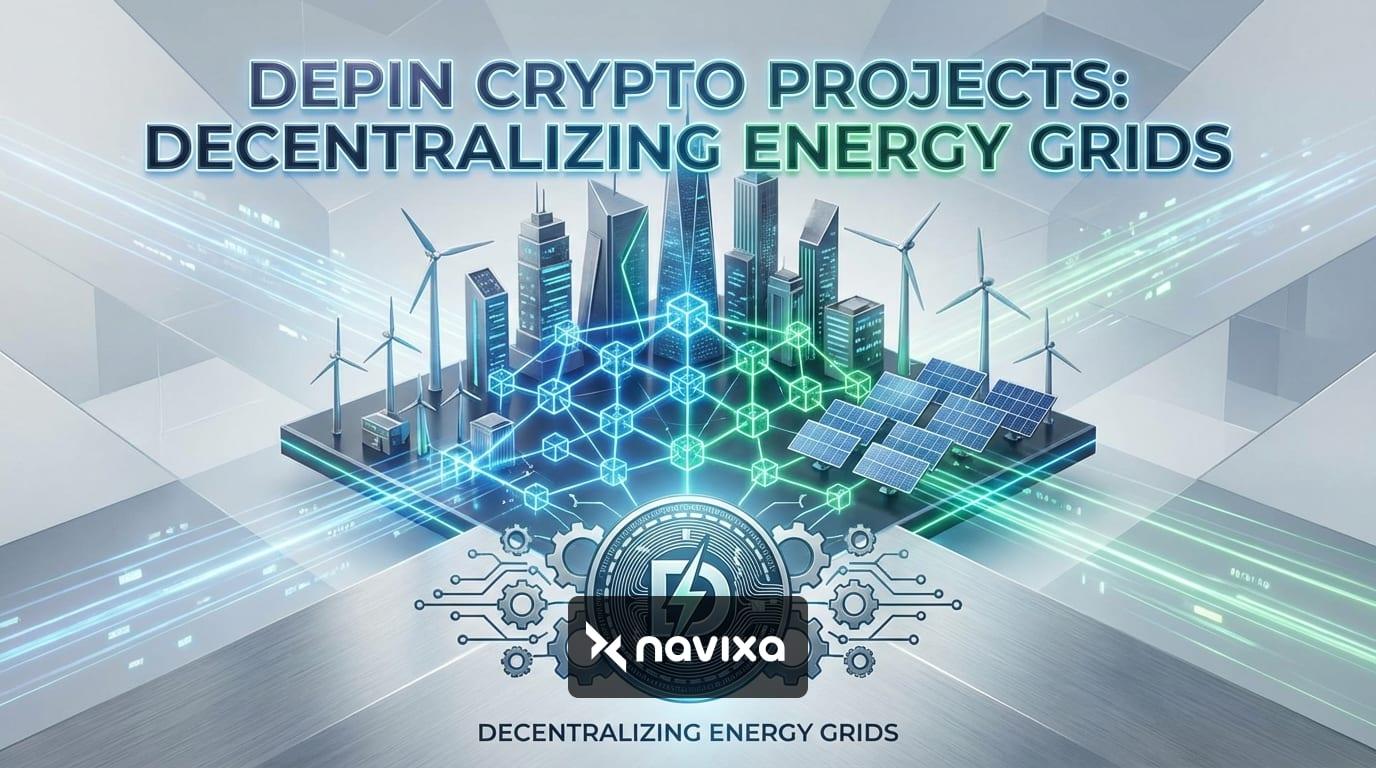
DePIN introduces a fundamentally different architecture divided into four main layers: hardware, middleware, blockchain, and the token model.
"By decentralizing infrastructure, DePIN creates a resilient, community-owned ecosystem where contributors are directly rewarded for the resources they provide."
In an energy context, the hardware consists of solar panels, smart meters, and localized batteries. The blockchain layer executes smart contracts to track energy generation and consumption. Finally, the token model incentivizes participants. When a household contributes surplus energy to the localized grid, the network automatically issues cryptocurrency tokens as payment. This creates an open market where energy pricing is determined dynamically by local supply and demand, rather than fixed by a central authority.
Leading DePIN Crypto Projects in the Energy Sector
Several pioneering projects have successfully bridged the gap between blockchain consensus mechanisms and physical energy distribution. Monitoring these networks is critical for any investor looking to capitalize on the DePIN narrative.
Powerledger (POWR)
Powerledger is arguably one of the most established names in the energy DePIN space. Originating in Australia, it focuses on P2P renewable energy trading and transparent carbon credit verification. Recently, Powerledger migrated its primary operations to the Solana blockchain to take advantage of its high throughput and low transaction costs. This transition allows the network to process micro-transactions for energy trading almost instantly. Their software is currently used globally to track, trace, and trade renewable energy, making the POWR token a cornerstone of the energy DePIN market.
Energy Web (EWT)
While Powerledger focuses heavily on P2P trading, Energy Web is designed to support the broader transition of the global energy grid. Energy Web works directly with massive enterprise partners and grid operators. Their ecosystem utilizes decentralized identifiers (DIDs) to verify green energy assets, bringing regulatory-grade transparency to carbon markets. The recent launch of their fully managed Worker Nodes via the Energy Web Launchpad simplifies decentralized computation, further cementing their status as a foundational enterprise layer for the energy sector.
Helium (HNT) and IoT Sensor Networks
Though primarily known for decentralized wireless connectivity, Helium plays an indirect but vital role in modern energy grids. Smart energy grids require thousands of Internet of Things (IoT) sensors to monitor power flow, detect outages, and manage peak loads. The Helium network provides the low-cost, decentralized wireless infrastructure that these energy sensors rely on to communicate securely, demonstrating the interoperability of various DePIN crypto projects.
Trading Strategy for Energy DePIN Tokens
Investing in DePIN crypto projects requires a blend of fundamental and narrative-driven trading strategies. Unlike meme coins or purely speculative assets, DePIN tokens are tied to physical hardware deployment and real-world utility.
Fundamental Network Growth
The most reliable indicator of a DePIN project's health is its network adoption. Investors should track metrics such as the number of active nodes, the volume of energy traded on the platform, and enterprise partnerships. Platforms like DePINscan provide valuable on-chain data regarding hardware deployments. A steady increase in physical devices connected to the network usually precedes a rise in token demand.
Narrative and Sector Rotation
Cryptocurrency markets are heavily driven by narratives. The intersection of green energy, artificial intelligence (which requires massive energy consumption), and blockchain makes energy DePIN a compelling narrative. When macro-environmental policies favor renewable energy subsidies, or when the broader tech sector faces energy constraints, capital often rotates into utility-focused DePIN crypto projects. Traders should monitor global energy policies and environmental, social, and governance (ESG) trends to time their entries.
Technical Analysis of the DePIN Sector
Technical analysis (TA) for DePIN crypto projects requires analyzing both the individual token charts and the underlying blockchain ecosystems that host them.
Analyzing Multi-Chain Migrations
Many legacy DePIN projects initially launched on Ethereum but have since migrated to faster Layer-1 chains like Solana or implemented Layer-2 scaling solutions to handle the high volume of micro-transactions inherent in physical infrastructure networks. When analyzing a DePIN token, look at its liquidity pools across different decentralized exchanges (DEXs). A successful migration to a high-throughput chain often results in a technical breakout due to renewed user adoption and reduced gas fees.
Moving Averages and Volume Profiles
For tokens like POWR or EWT, mapping out the 50-day and 200-day Simple Moving Averages (SMA) is crucial. A Golden Cross, where the short-term average crosses above the long-term average, frequently signals a prolonged bullish trend in the utility sector. Additionally, traders should utilize the Volume Profile Visible Range (VPVR) indicator to identify historical accumulation zones. Because DePIN tokens attract institutional interest, large volume nodes often act as strong support levels during market corrections.
Comparison Table: Top Energy DePIN Networks
Here is a quick comparison of the leading decentralized physical infrastructure networks focusing on the energy and utility sectors:
| Project Name | Native Token | Primary Blockchain | Core Use Case | Target Audience |
|---|---|---|---|---|
| Powerledger | POWR | Solana / Ethereum | P2P Energy Trading & Carbon Tracking | Prosumers & Retail Energy Markets |
| Energy Web | EWT | Energy Web Chain | Grid Management & Enterprise DIDs | Grid Operators & Enterprise Corporations |
| Rowan Energy | RWN | Rowan Blockchain | Rooftop Solar Rewards & Verification | Residential Solar Owners |
Actionable Steps for DePIN Investors
If you want to gain exposure to DePIN crypto projects, follow these actionable steps:
1. Set Up a Compatible Web3 Wallet: Since many DePIN projects utilize high-speed networks, ensure you have wallets like Phantom (for Solana-based tokens) and MetaMask (for Ethereum and EVM-compatible chains). 2. Research Tokenomics: Before investing, analyze the token distribution. Ensure that the token provides genuine utility, such as governance rights, payment for energy consumption, or staking mechanisms for network security. 3. Participate as a Node Provider: The most direct way to benefit from DePIN is by contributing to the network. Whether it is installing a verified smart meter to sell solar energy or running a lightweight computation node, becoming an active participant allows you to earn passive crypto income. 4. Utilize Reliable Trackers: Bookmark decentralized infrastructure tracking tools. Monitoring the real-time growth of active hardware deployments will give you a significant edge over purely speculative traders. For further research, check out resources like CoinGecko's DePIN Category or DePINscan.
Risk Management in DePIN Investments
While the potential for DePIN crypto projects is massive, the sector carries unique risks that differ from decentralized finance (DeFi) or digital art.
Regulatory Hurdles
The energy sector is one of the most heavily regulated industries in the world. Decentralized energy trading requires compliance with local utility commissions, tariff laws, and grid safety standards. If a jurisdiction passes strict laws against P2P energy trading to protect centralized utility monopolies, DePIN adoption in that region could instantly stall. Always diversify your portfolio globally to mitigate regional regulatory risks.
Hardware Dependency and Supply Chain Risks
Unlike standard software-based crypto protocols, DePIN relies on the deployment of physical hardware. This makes these projects vulnerable to global supply chain disruptions, semiconductor shortages, and manufacturing delays. If users cannot easily purchase the necessary smart meters or IoT sensors, network growth will stagnate.
Token Volatility vs. Real-World Pricing
There is a fundamental friction between volatile cryptocurrency prices and stable real-world utility costs. If a token's value drops significantly, the financial incentive for users to share their energy might disappear. Conversely, if the token skyrockets, transaction fees could become too expensive for practical energy trading. Projects must employ robust tokenomic models, such as stablecoin integrations or dynamic reward algorithms, to balance these forces.
Practical Takeaways
- Understand the Core Value: DePIN crypto projects connect blockchain technology to real-world physical infrastructure, creating transparent and efficient P2P energy grids. - Track Physical Adoption: Base your investment decisions on hardware deployments and active node counts rather than mere social media hype. - Embrace Multi-Chain Ecosystems: Recognize that high-throughput blockchains are the backbone of modern DePIN success. - Mitigate Risk: Be highly aware of the regulatory environments governing energy production in various jurisdictions.
Frequently Asked Questions
What are DePIN crypto projects?
DePIN stands for Decentralized Physical Infrastructure Networks. These are blockchain-based protocols that use cryptocurrency tokens to incentivize individuals to build, maintain, and operate physical infrastructure, such as wireless networks, cloud storage, and energy grids.
How does DePIN improve traditional energy grids?
DePIN allows for decentralized, peer-to-peer energy trading. Instead of relying on a centralized utility company, individuals with solar panels can sell their excess energy directly to neighbors. This reduces transmission losses, lowers costs, and increases the grid's overall resilience against localized failures.
Are DePIN tokens a good investment?
They offer unique exposure to real-world utility and physical asset deployment. However, like all cryptocurrencies, they are subject to market volatility. Investors must weigh the project's real-world adoption, tokenomics, and the regulatory environment of the targeted industry before investing.
What happens if the hardware fails in a DePIN network?
DePIN systems are designed with redundancy in mind. Because the network is distributed across thousands of independent nodes, the failure of a single device (like a smart meter or a local battery) does not compromise the broader grid. The network simply reroutes resources dynamically using smart contracts.
Conclusion
The evolution of DePIN crypto projects represents one of the most tangible and impactful use cases for blockchain technology to date. By decentralizing energy grids, these networks are stripping power away from monopolistic utilities and placing it back into the hands of local communities. The integration of transparent ledgers, smart contracts, and real-world hardware is forging a path toward a greener, more resilient, and highly efficient global power network.
As the DePIN sector continues to mature, those who understand the underlying technology, track physical adoption metrics, and employ strict risk management will be uniquely positioned to thrive. Whether you are a trader looking to diversify into utility-backed assets or an environmentalist eager to participate in P2P energy sharing, the time to explore decentralized physical infrastructure is now. Start researching leading projects, set up your Web3 wallet, and take your first step into the future of decentralized energy.