
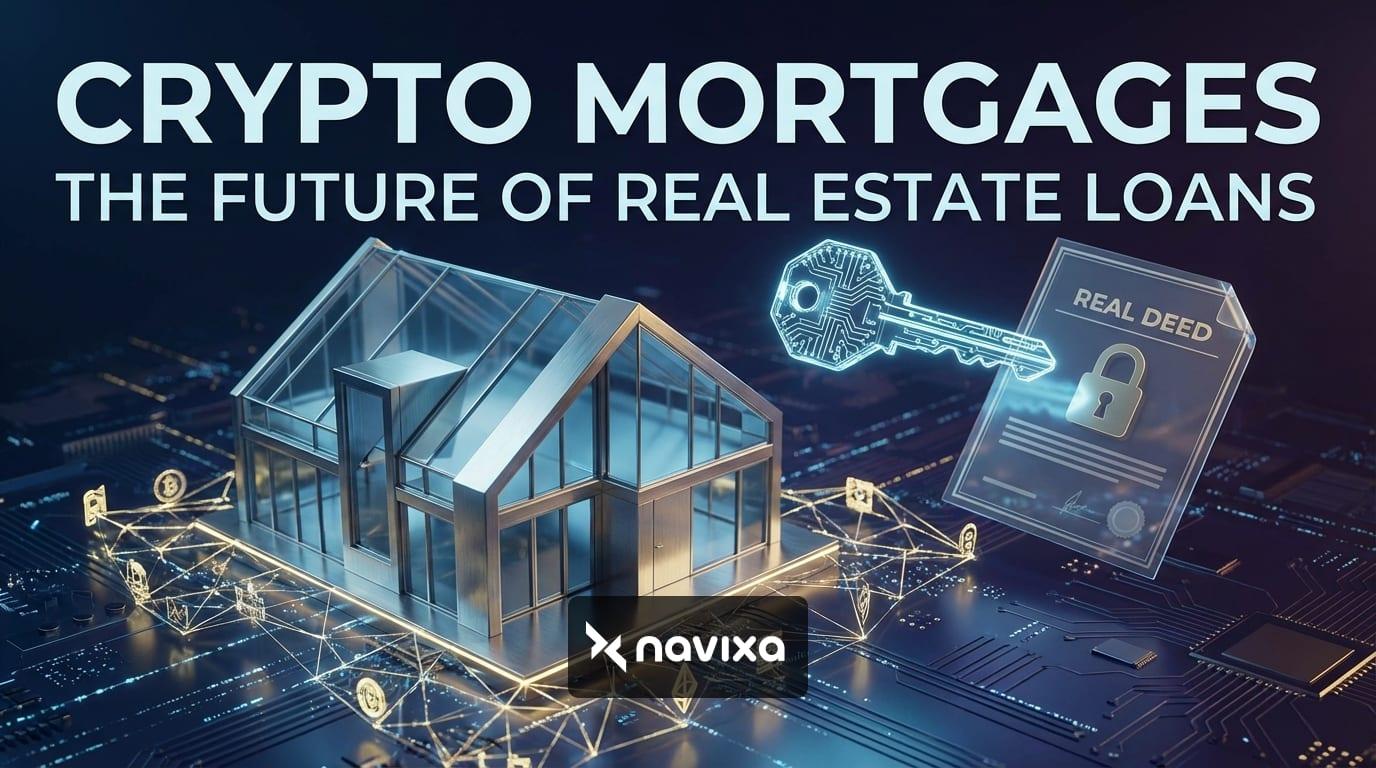
The intersection of digital wealth and traditional finance has reached a historic milestone. For years, cryptocurrency investors faced a frustrating dilemma when purchasing real estate: selling their digital assets meant triggering massive capital gains taxes and sacrificing future market upside. Today, the financial landscape has drastically shifted. Enter crypto mortgages—a revolutionary lending product bridging the gap between decentralized digital wealth and real-world property ownership.
What if you could buy your dream home without liquidating a single Bitcoin? Crypto mortgages make this a reality. By allowing borrowers to pledge their digital assets as collateral, these innovative home loans offer up to 100% financing with zero cash down.
In this comprehensive guide, we will explore how crypto mortgages work, review the leading lenders dominating the market, break down the underlying wealth-stacking strategies, and help you navigate the risk management protocols essential for protecting your investments.
What Are Crypto Mortgages?
A crypto mortgage is a specialized home loan allowing you to use your cryptocurrency holdings—typically Bitcoin (BTC), Ethereum (ETH), or stablecoins like USDC—as collateral to finance a real estate purchase.
Unlike traditional mortgages requiring a standard 10% to 20% cash down payment and relying heavily on fiat income history, a crypto-backed mortgage is secured primarily by the value of your digital assets. You do not sell your cryptocurrency to fund the purchase. Instead, the lender places your digital assets in secure, institutional custody (or a self-custody arrangement) for the duration of the loan. In return, you receive fiat currency to buy the property outright.
"Crypto mortgages represent the ultimate convergence of digital asset wealth and traditional real estate, allowing investors to truly materialize their digital wealth into real-world gains."
This model solves a critical pain point. Selling cryptocurrency often triggers substantial capital gains taxes, which can erode purchasing power significantly. By leveraging crypto as collateral, you completely sidestep this taxable event while retaining 100% of the upside potential if the digital asset market continues to appreciate.
How Crypto-Backed Home Loans Work: The Mechanics
The mechanics of crypto mortgages are distinct from conventional lending, specifically regarding collateralization, interest rates, and loan-to-value (LTV) ratios.
Loan-to-Value (LTV) and Overcollateralization
Because cryptocurrencies are inherently volatile, lenders mitigate risk through overcollateralization. While traditional mortgages offer an 80% LTV based on the home's value, crypto lenders calculate LTV based on your digital assets.
Typically, lenders require you to pledge crypto worth 100% to 250% of the loan amount. For example, securing a $1 million mortgage might require depositing $1 million to $2.5 million worth of Bitcoin. The exact ratio depends on the lender. Some pioneering companies now offer up to 100% home financing, meaning zero cash down payment is required if your crypto collateral meets their threshold.
Interest Rates and Terms
While you save heavily on taxes, crypto mortgages generally carry a slight premium on interest rates. Current market rates for these specialized loans average between 7% and 9%. The loan terms often mirror traditional structures, offering 30-year fixed rates. Furthermore, advanced lenders now utilize AI-enhanced underwriting and real-time collateral monitoring to precisely assess risk, dramatically speeding up the closing process to as little as 14 to 30 days.
Leading Providers Shaping the Market
The digital asset lending sector has matured rapidly, with key players establishing robust, regulated lending infrastructures.
Milo Credit
Milo is widely recognized as an early mover and dominant force in the crypto mortgage space. Having surpassed $100 million in total loan originations—including a record-breaking $12 million single loan—Milo has proven the viability of digital asset lending for high-net-worth individuals.
Milo offers up to 100% financing on home purchases, with loan amounts stretching up to $25 million. Their starting interest rates hover around 8.25%. A standout feature of Milo is its historical track record of zero margin calls across its portfolio, achieved through sophisticated AI underwriting and real-time monitoring. They also offer a self-custody option, allowing borrowers to maintain control of their Bitcoin while qualifying for financing.
Moon Mortgage
Another major innovator is Moon Mortgage, catering to luxury homebuyers and investors. With a minimum loan amount of $1 million, Moon Mortgage allows buyers to use Bitcoin, Ethereum, and USDC to secure real estate funding.
Moon Mortgage partners with Anchorage Digital, a federally chartered crypto bank, to securely hold assets. In addition to their core mortgage product, they offer a "Trade & Borrow" margin account, enabling investors to borrow cash against their crypto while still maintaining the ability to actively trade their digital assets.
The Macroeconomic Impact and TradFi Convergence
The rise of crypto mortgages is not just a niche convenience; it represents a major macroeconomic shift. For years, trillions of dollars in digital wealth remained completely isolated from the traditional economy. Crypto holders were "asset rich but fiat poor," unable to utilize their wealth without triggering taxable events and crashing the markets via mass sell-offs.
Crypto-backed lending builds a crucial bridge between Decentralized Finance (DeFi) and Traditional Finance (TradFi). It injects dormant liquidity into the real estate market, driving property sales and economic growth without disrupting the blockchain ecosystems. As regulatory frameworks continue to clarify around digital assets, institutional capital is flowing into this sector, recognizing cryptocurrency as a legitimate, highly liquid form of collateral.
The Wealth Stacking Strategy: A Numerical Example
Taking out a crypto mortgage is more than just a convenient way to buy a house; it is a highly sophisticated macro investment strategy often referred to as "wealth stacking."
When you sell Bitcoin to buy a house, you convert an appreciating digital asset into a physical asset. Real estate historically appreciates, but generally at a much slower pace than top-tier cryptocurrencies. By leveraging a crypto mortgage, you keep your digital assets intact.
Consider this hypothetical scenario: Imagine you hold $2 million in Bitcoin, and you want to purchase a $1 million home. - Scenario A (Selling): You sell $1 million in Bitcoin. You pay roughly $200,000 in capital gains taxes. You are left with $800,000, meaning you still need a mortgage, and you permanently lose the future growth of that sold Bitcoin. - Scenario B (Crypto Mortgage): You pledge your $2 million in Bitcoin as collateral. You receive a $1 million crypto mortgage to buy the house outright. You pay zero taxes. If Bitcoin's value doubles over the next five years, your collateral is now worth $4 million.
In Scenario B, you capture 100% of the crypto upside while simultaneously building traditional equity in your appreciating real estate property. You are effectively double-compounding your net worth.
Traditional Mortgages vs. Crypto Mortgages
To fully grasp the paradigm shift, it is essential to compare the conventional home-buying process with the crypto-backed approach. Traditional banks rely heavily on fiat income verification (W-2s, pay stubs), which is notoriously difficult for full-time crypto traders or decentralized autonomous organization (DAO) contributors to produce. Crypto mortgages bypass this friction.
| Feature | Traditional Mortgage | Crypto Mortgage |
|---|---|---|
| Down Payment Requirement | Typically 10% to 20% in fiat cash | Up to 100% financing (Zero fiat cash down) |
| Primary Collateral | The real estate property itself | Digital assets (BTC, ETH) + the property |
| Tax Implications | Liquidating investments triggers capital gains | No taxable event (crypto is pledged, not sold) |
| Income Verification | Heavy W-2 and fiat credit history required | Based primarily on digital asset wealth |
| Approval Speed | 30 to 60 days with extensive paperwork | As little as 14 to 21 days (AI-driven) |
Risk Management: Navigating Volatility and Margin Calls
As with any advanced borrowing strategy, risk management is paramount. The primary risk associated with crypto mortgages is the extreme volatility of the digital asset market.
The Threat of Margin Calls
Because your loan is secured by digital assets, a severe market crash can lower the value of your collateral below the lender's required minimum threshold. If this happens, you may face a margin call. A margin call requires you to deposit additional cryptocurrency or fiat to restore the loan-to-value ratio. If you fail to meet the margin call, the lender has the right to liquidate a portion of your crypto to cover the shortfall.
Mitigation Strategies
Top lenders have implemented robust safeguards to protect both themselves and their clients: 1. Generous Buffers: Lenders require significant overcollateralization from the start, ensuring that standard market dips do not trigger instant liquidations. 2. Pre-Agreed Drop Zones: Providers agree not to liquidate collateral unless it drops to a pre-agreed catastrophic value during the underwriting process, giving borrowers peace of mind. 3. AI Monitoring: Industry leaders utilize AI to constantly monitor collateral health in real-time, providing borrowers ample warning and flexible options before liquidations occur.
As an investor, you should never pledge 100% of your net worth into a single loan. Keeping a reserve of liquid crypto or fiat is the most effective way to manage margin call risk.
Actionable Takeaways for Prospective Borrowers
If you are considering leveraging your digital portfolio for real estate, follow these strategic steps:
1. Calculate Your LTV Tolerance: Assess how much crypto you are willing to lock up. Ensure you have a reserve buffer of at least 20% to 30% to handle sudden market downturns without risking a margin call. 2. Consult a Tax Professional: While crypto loans avoid capital gains taxes upon origination, the tax code surrounding digital assets is complex and constantly evolving. Always verify local regulations. 3. Compare Custody Options: Decide whether you want a lender that uses third-party institutional custody (like Coinbase, BitGo, or Anchorage Digital) or if you prefer a lender offering self-custody multisig solutions. 4. Evaluate the Interest Spread: Ensure the expected annual appreciation of your cryptocurrency outweighs the 7% to 9% interest rate you will pay on the mortgage.
Frequently Asked Questions
What is a crypto mortgage?
A crypto mortgage is a real estate loan that allows borrowers to use their cryptocurrency (like Bitcoin or Ethereum) as collateral instead of selling it for a cash down payment. The borrower receives fiat currency to purchase the home, and their digital assets are held securely by the lender until the loan is repaid.
Do I lose my crypto if the real estate market crashes?
No. Your digital assets act as collateral for the loan itself, completely independent of the real estate market's fluctuating value. However, if the *crypto* market experiences a severe crash, you may be required to post additional collateral to satisfy a margin call.
Which cryptocurrencies are accepted for real estate loans?
Currently, lenders predominantly accept mainstream, highly liquid digital assets. Bitcoin (BTC) and Ethereum (ETH) are universally accepted by top crypto mortgage providers. Many lenders also accept leading stablecoins, such as USDC, to minimize volatility risks.
Can I live in the house, or is it only for investment properties?
Both options are fully supported. While early crypto mortgage iterations were largely restricted to investment properties, leading providers now offer full 100% financing for primary owner-occupied residences, vacation homes, and commercial real estate.
Conclusion
Crypto mortgages represent a monumental leap forward in financial technology, seamlessly merging the explosive growth potential of digital assets with the tangible stability of real estate. By enabling investors to unlock liquidity without triggering taxable events or sacrificing future market gains, these loans offer a powerful tool for strategic wealth building.
Whether you are a long-term HODLer looking to buy a primary residence or a macro investor seeking to diversify into property, the infrastructure is now robust, regulated, and ready for mainstream adoption. As the market continues to mature and AI-driven underwriting makes borrowing safer and faster, crypto mortgages are set to become a foundational pillar of modern real estate finance.
Ready to transform your digital portfolio into real-world equity? Start by consulting with top crypto mortgage providers today to explore your borrowing power and take the next confident step toward comprehensive wealth stacking.