
Crypto Mortgage Lenders: Buying Real Estate With DeFi
For years, successful cryptocurrency investors have faced a frustrating paradox: being incredibly wealthy on a blockchain, yet struggling to convince a traditional bank to approve a standard home loan. When your net worth is tied up in Bitcoin, Ethereum, or decentralized finance (DeFi) protocols, traditional underwriting models fail to recognize your purchasing power. To buy a house, the old system forced you to liquidate your digital assets, triggering massive capital gains taxes and causing you to lose your position in a high-yielding market.
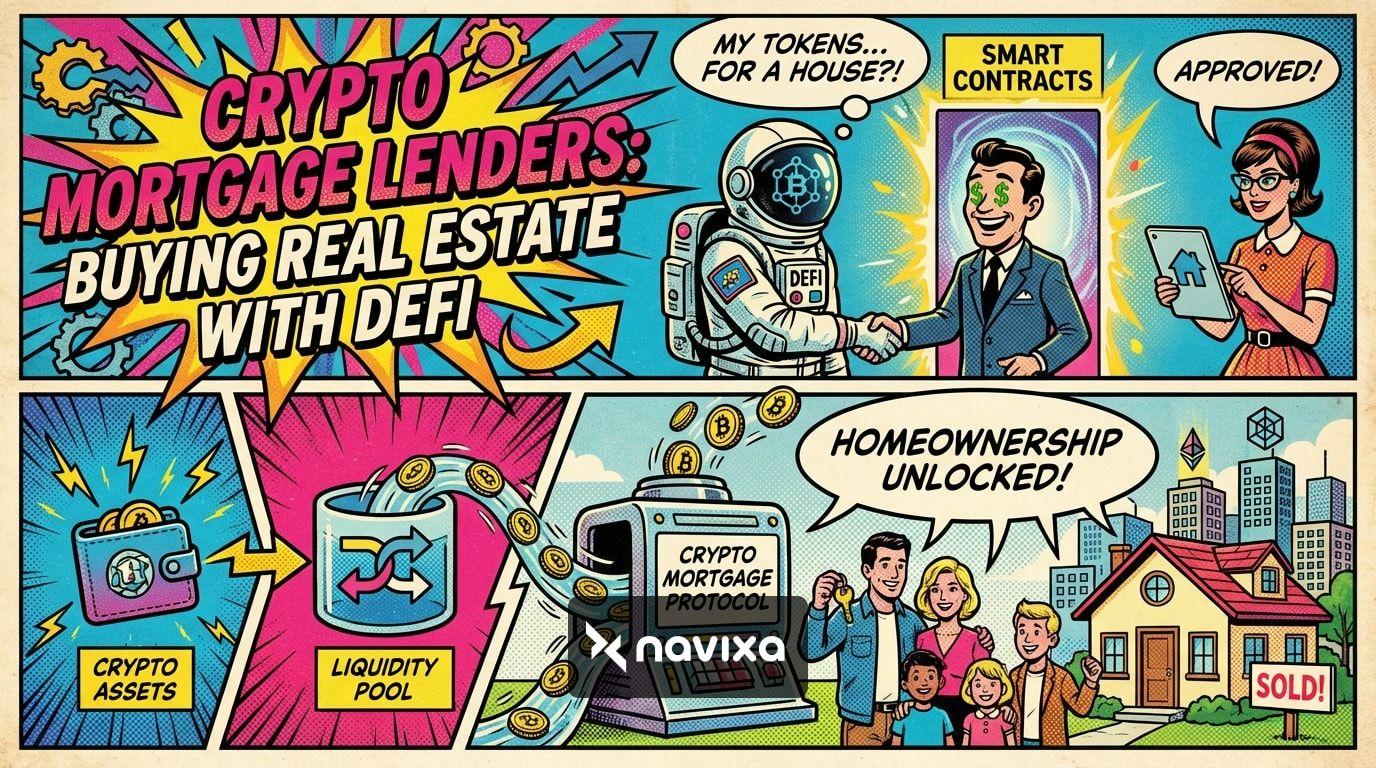
Today, the financial landscape has drastically shifted. A new wave of crypto mortgage lenders is bridging the gap between DeFi and traditional real estate. By collateralizing digital assets or staking them through smart contracts, modern investors can finance real estate purchases without selling a single token.
"A crypto mortgage doesn't just buy you a house; it allows you to maintain your position in a high-growth asset class while legally sidestepping immediate capital gains taxes."
Whether you are seeking 100% financing through a centralized platform or looking for a decentralized protocol that stakes your stablecoins, navigating the crypto-backed real estate market requires strategy, market awareness, and strict risk management.
What is a Crypto-Backed Mortgage?
A crypto mortgage is a residential or commercial home loan that utilizes your cryptocurrency portfolio as collateral instead of relying solely on traditional income verification, credit scores, or a cash down payment.
In the traditional mortgage system, a lender evaluates your fiat income and requires a 10% to 20% down payment in cash. If you default, the bank seizes the house. In the crypto mortgage space, lenders use your digital assets—usually Bitcoin (BTC), Ethereum (ETH), or stablecoins like USDC—to secure the loan.
There are generally two primary frameworks utilized by crypto mortgage lenders:
1. Crypto as Collateral (Pledged Assets): You deposit your cryptocurrency into a secure custodial wallet or a DeFi smart contract. Because the loan is heavily overcollateralized, lenders often allow you to finance up to 100% of the property's purchase price. You retain ownership of the crypto, meaning if the asset's price skyrockets, you keep the upside. However, if the price plummets, you face the severe risk of a margin call. 2. Crypto as a Qualifying Asset: Instead of locking up your crypto, the lender uses your digital asset portfolio as proof of reserves or asset-depletion income to qualify you for a standard fiat mortgage. This does not require pledging the crypto to a custodian, significantly lowering the risk of liquidation.
Borrowing Strategy: The Mechanics of a DeFi Mortgage
Acquiring real estate through cryptocurrency involves mechanics derived from both traditional finance (TradFi) and DeFi lending protocols. The core concept revolves around the Loan-to-Value (LTV) ratio.
To protect against the extreme volatility of digital assets, crypto mortgage lenders require significant overcollateralization. For instance, if you wish to borrow $1 million to purchase a home, a lender might require you to deposit $1.5 million to $2 million worth of Bitcoin.
Why Use Crypto Instead of Cash?
The primary borrowing strategy hinges on tax efficiency and asset appreciation. Selling $1 million of Bitcoin that you bought at a low price triggers a hefty capital gains tax event. By borrowing against it, you receive a non-taxable loan in fiat currency to buy the property. You secure a hard, cash-flowing real estate asset while maintaining your long-term crypto exposure. If the digital asset appreciates over the course of the 30-year mortgage, the collateral value vastly outpaces the fiat debt, effectively making the loan cheaper over time.
Top Crypto Mortgage Lenders in the Market
The ecosystem of crypto lending has matured significantly. While traditional banks remain hesitant, specialized fintechs and DeFi platforms have stepped up to offer robust solutions.
Milo
Milo was one of the pioneers in the crypto mortgage industry. They offer 30-year mortgages up to $5 million and are known for allowing up to 100% financing. By pledging Bitcoin, Ethereum, or USDC as collateral, borrowers can bypass the need for a traditional down payment. Milo evaluates the loan based on the crypto collateral rather than conventional credit scores, making it a prime choice for international buyers and crypto-native investors.
Moon Mortgage
Moon Mortgage caters to high-net-worth investors by offering a 'Trade and Borrow' product alongside their mortgage services. Their minimum loan amount generally hovers around $1 million, specifically targeting luxury real estate buyers. Moon Mortgage accepts BTC, ETH, and USDC, aiming to materialize digital wealth into tangible property while allowing the borrower to leverage their portfolio's overall value.
USDC.homes
Operating closer to true decentralized finance, USDC.homes represents a groundbreaking shift in real estate lending. They facilitate crypto mortgages for real-world properties that are often tokenized as NFTs. In their unique model, the down payment is staked within DeFi protocols. The yield generated from staking the collateral accrues interest, which is then used to offset a portion of the monthly mortgage payment. This hybrid model beautifully blends DeFi yields with traditional amortization.
Ledn
Ledn is highly respected for its transparency and focus on Bitcoin-backed mortgages. Unlike platforms that accept a wide array of altcoins, Ledn sticks to the most liquid and historically stable cryptocurrency: Bitcoin. Their loans operate similarly to traditional mortgages but use BTC as the foundational collateral, appealing to Bitcoin maximalists who want strict overcollateralization and institutional-grade custody.
Comparison of Leading Crypto Lenders
| Lender | Supported Assets | Max Financing / LTV Focus | Best For |
|---|---|---|---|
| Milo | BTC, ETH, USDC | Up to 100% Financing | Zero-down buyers and international investors. |
| Moon Mortgage | BTC, ETH, USDC | High LTV on Luxury | High-net-worth individuals buying luxury homes. |
| USDC.homes | USDC, Staked Assets | Yield-Offset Payments | DeFi users wanting staking yields to pay debt. |
| Ledn | BTC Only | Conservative LTV | Bitcoin maximalists prioritizing security. |
Market Analysis: The Case for Dual-Asset Exposure
From a macroeconomic perspective, mixing cryptocurrency with real estate is a powerful diversification play. Real estate is traditionally a slow-moving, illiquid, but highly stable asset class that provides utility (shelter) and cash flow (rental income). Cryptocurrency is highly liquid, globally accessible, and volatile, offering asymmetrical upside.
By utilizing crypto mortgage lenders, you bridge these two distinct asset classes. You lock in a physical asset using fiat-denominated debt (which inflates away over time) while letting your deflationary or high-growth digital assets continue to compound. As institutional adoption of Web3 grows, real estate purchases funded by blockchain collateral will likely transition from a niche offering to a standardized wealth management tool.
Actionable Steps: How to Secure a Crypto Mortgage
If you are ready to transition your digital wealth into a physical deed, follow these actionable steps:
1. Evaluate Your Portfolio and LTV Tolerance
Calculate how much crypto you are willing to lock up. Because crypto markets are volatile, you should aim for a lower Loan-to-Value (LTV) ratio than the lender strictly requires. If a lender requires a 50% LTV, aim to collateralize at 30% to give yourself a massive buffer against potential price drops.
2. Choose the Right Partner
Review the crypto mortgage lenders available and select one that aligns with your asset base. If you only hold Bitcoin, Ledn or Milo might be the best fit. If you want your stablecoins to generate yield to pay down the mortgage, look into DeFi-native options like USDC.homes.
3. Verify Custody and Security
Never transfer your cryptocurrency without deeply understanding where it is held. Reputable lenders use institutional custodians (like BitGo or Coinbase Custody) or heavily audited multisig smart contracts. Read the fine print to ensure the lender is not aggressively rehypothecating (re-lending) your collateral in risky offshore markets.
4. Undergo KYC and Property Appraisal
Even in the crypto world, buying physical real estate requires adherence to local real estate laws. You will need to complete Know Your Customer (KYC) protocols. The lender will also require a traditional appraisal of the property to ensure it holds enough value to back the fiat side of the loan.
5. Fund and Close
Once approved, you will transfer your collateral to the designated custodian. The lender then wires fiat currency (USD, EUR, etc.) directly to the title or escrow company to close the real estate transaction.
Risk Management: Surviving the Margin Call
The absolute biggest threat in crypto lending is the margin call. Real estate prices rarely drop 20% in a week, but cryptocurrencies can and do.
When you pledge Bitcoin or Ethereum as collateral, the lender monitors the price continuously. If the value of your collateral falls below a specific threshold (the maintenance margin), the lender will issue a margin call. You will be forced to quickly deposit more cryptocurrency or fiat to rebalance the LTV ratio.
If you fail to meet the margin call within the allotted time (sometimes as little as 24 to 48 hours), the lender's automated systems or smart contracts will liquidate a portion of your crypto to pay down the loan and protect their capital.
How to mitigate this risk: * Overcollateralize excessively: Do not stretch your budget. If you have $2 million in crypto, do not take out a $1.9 million loan. * Keep dry powder: Always have a reserve of stablecoins or fiat ready to deploy in the event of a sudden market flash crash. * Use stablecoins: If you use USDC as collateral, the volatility risk is largely removed, though you sacrifice the potential upside of holding growth assets like BTC or ETH.
Practical Takeaways
* Avoid Tax Events: Using crypto as collateral allows you to buy property without triggering the massive capital gains taxes associated with cashing out. * Keep Your Upside: You retain ownership of your digital assets. If the market rallies, your net worth grows while your fiat mortgage debt stays the exact same. * Understand the Custodian: Always verify the security protocols of the institutional custodian holding your assets. * Prepare for Volatility: Establish a strict risk management framework to handle potential margin calls during bear markets.
Conclusion
The integration of decentralized finance into traditional real estate is no longer a futuristic concept; it is a present-day reality. For investors with significant digital portfolios, crypto mortgage lenders offer an unparalleled opportunity to diversify into hard assets without sacrificing their position in the crypto market.
Whether you opt for a centralized 100% financing model like Milo, or a yield-bearing DeFi setup like USDC.homes, the key to success lies in meticulous risk management and understanding the mechanics of overcollateralization. By bridging the gap between Web3 and physical property, you can optimize your tax strategy, preserve your capital, and build true generational wealth.
Ready to turn your virtual portfolio into tangible real estate? Start researching the top crypto lenders today, evaluate your risk tolerance, and consult with a tax professional to see if a crypto-backed mortgage is the right strategic move for your financial future.
Frequently Asked Questions
Can I buy a house directly with cryptocurrency?
Yes, but it depends entirely on the seller. If a seller agrees to accept Bitcoin or another digital asset, you can transfer it directly. However, this triggers a taxable event for you as the buyer. Using a crypto-backed mortgage is usually preferred because you borrow fiat against your crypto to pay the seller, legally avoiding the immediate tax hit.
Do I lose my cryptocurrency when I get a crypto mortgage?
No, you do not lose your cryptocurrency. It is temporarily locked in a highly secure custodial wallet or a smart contract as collateral. Once you pay off the mortgage, your digital assets are fully released back to you. However, if you default on the loan or fail to meet a margin call during a severe market crash, a portion of your crypto may be liquidated to cover the outstanding debt.
What happens if the price of my crypto crashes?
If the value of your collateral drops below the lender's required Loan-to-Value (LTV) threshold, you will receive a margin call. You will be required to deposit more crypto or cash to bring the ratio back into compliance. If you cannot provide additional funds within the strict timeframe, the lender will sell some of your crypto to safely pay down the loan balance.
Are interest rates higher for crypto mortgages?
Generally, yes. Because of the added volatility and regulatory risks, crypto-backed mortgages often come with slightly higher interest rates than conventional fiat mortgages. However, lenders that use your crypto strictly as a 'qualifying asset' (without taking custody) may offer rates much closer to traditional conventional loans.