
Introduction
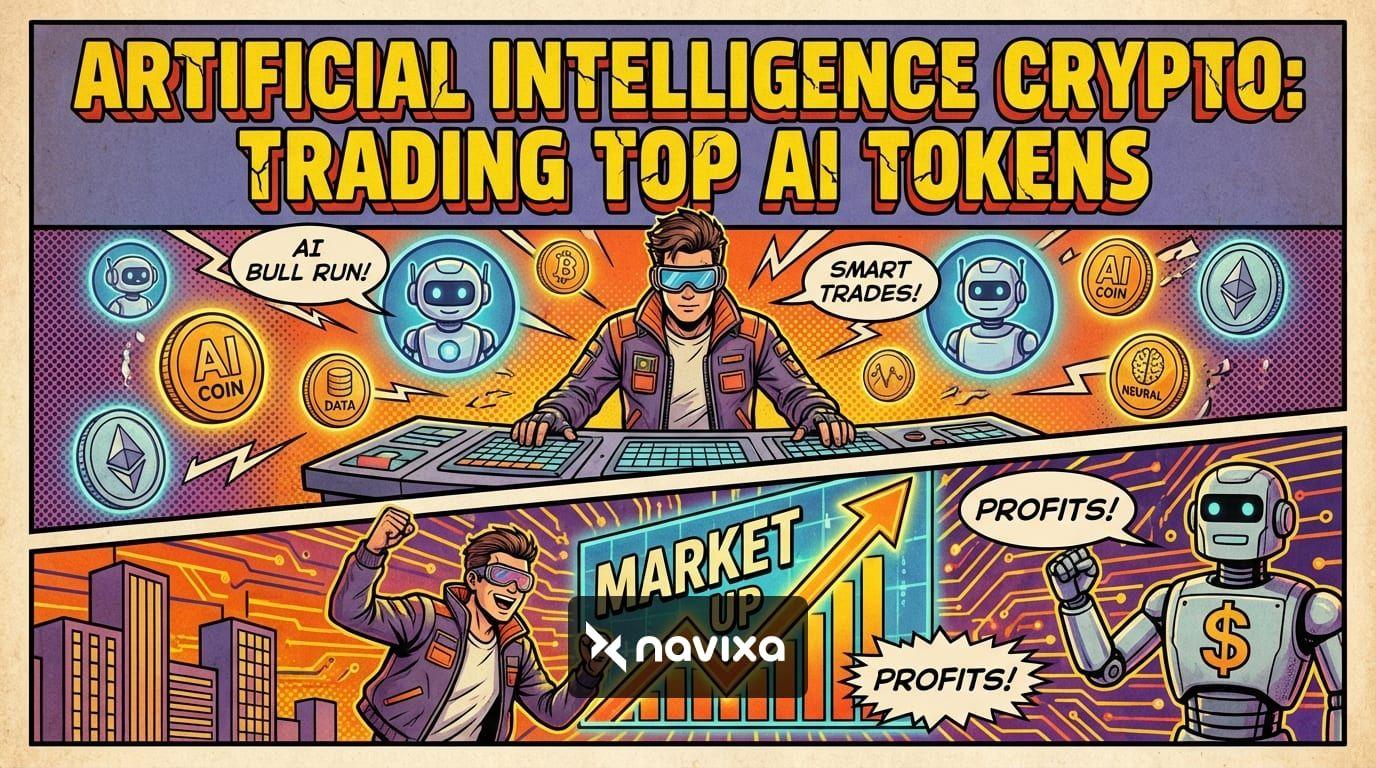
The intersection of artificial intelligence and blockchain technology has birthed one of the most volatile, innovative, and lucrative sectors in the digital asset space: artificial intelligence crypto. As decentralized networks attempt to democratize machine learning, data processing, and compute power, an entirely new class of digital assets has taken center stage. Trading these advanced tokens requires more than just basic technical analysis; it demands a deep understanding of macro technological trends, granular on-chain data, and the unique tokenomics that govern decentralized networks.
Whether you are a swing trader looking to capitalize on the momentum of major Silicon Valley tech announcements or a fundamental investor analyzing the long-term utility of decentralized GPU networks, understanding how to trade top AI tokens is absolutely paramount. The artificial intelligence crypto sector is not just a passing trend—it represents a fundamental shift in how computing resources and artificial models are developed, distributed, and monetized.
In this comprehensive guide, we will explore the underlying forces driving the artificial intelligence crypto market. We will break down the leading tokens, evaluate their fundamental utility, and outline actionable trading strategies. By the end of this article, you will be equipped with the knowledge needed to navigate this high-octane sector with confidence and precision.
The Evolution of the AI Crypto Landscape
Initially, artificial intelligence crypto projects were largely speculative. Many early protocols relied heavily on industry buzzwords rather than functional, scalable products. However, the landscape has rapidly matured into a multi-billion dollar sector characterized by distinct sub-categories, each addressing critical bottlenecks in the traditional AI industry.
1. Decentralized Compute Networks: The rapid advancement of artificial intelligence models has created a massive global shortage of computing power. Decentralized compute networks solve this by sourcing idle GPU power globally. These platforms provide the necessary hardware muscle to train complex machine learning algorithms at a fraction of the cost of centralized cloud providers. For traders, the tokens powering these networks offer direct exposure to the infrastructure layer of the AI boom.
2. AI Agent Protocols: These innovative networks facilitate the creation, deployment, and orchestration of autonomous digital agents. These agents can execute complex tasks such as arbitrage trading, supply chain negotiation, and decentralized finance (DeFi) portfolio management without any human intervention.
3. Data Marketplaces: High-quality machine learning algorithms require massive, diverse datasets to function accurately. Blockchain-based data marketplaces allow users to monetize their proprietary data while providing developers with the raw material needed to train their models securely.
"The fusion of artificial intelligence and blockchain is rapidly moving from an experimental concept into real-world utility, completely reshaping the infrastructure of decentralized compute, data markets, and autonomous digital agents."
However, the sector remains highly turbulent. High-profile ecosystem changes and protocol mergers, such as the Artificial Superintelligence Alliance (ASI), have demonstrated both the ambition and the sheer complexity of uniting disparate decentralized networks. As a cryptocurrency trader, the volatility stemming from such fundamental shifts provides unique, high-yield opportunities—provided you approach the market with strictly disciplined risk management.
Top AI Crypto Tokens to Watch and Trade
To trade the artificial intelligence crypto sector effectively, you must familiarize yourself with the heavyweights. The following tokens are currently dominating market share, developer activity, and daily trading volume.
Bittensor (TAO): The Decentralized AI Machine
Bittensor (TAO) operates as an open-source protocol powering a massive, decentralized machine-learning network. Instead of a single centralized corporate entity hoarding AI advancements, Bittensor rewards network participants in its native token, TAO, for contributing valuable machine-learning models and computational power to the ecosystem. The network is divided into specialized subnets, each focusing on specific digital commodities and AI tasks.
Trading TAO: Historically, TAO has acted as the bellwether for the entire artificial intelligence crypto sector. Its price action is heavily influenced by subnet development, node operator participation, and institutional interest in AI decentralization. Institutional traders often treat TAO as a proxy for the broader decentralized AI narrative. Savvy traders watch for heavy volume accumulation during broader market dips, as smart money tends to scoop up TAO at a discount when retail panic sets in.
Render (RNDR): Powering AI with Decentralized GPUs
The Render Network connects digital creators and AI developers who desperately need intense GPU rendering power with node operators willing to lease their idle graphics processing units. While originally focused heavily on 3D rendering and visual effects, Render has pivoted aggressively to support the immense computational demands of AI model training and generative AI applications.
Trading RNDR: RNDR is exceptionally sensitive to macroeconomic news surrounding traditional hardware manufacturers. When major chipmakers announce quarterly earnings, launch new hardware, or host developer conferences, RNDR frequently experiences sympathetic volatility. Swing traders can capitalize on these predictable events by building strategic positions in RNDR weeks ahead of major tech summits, anticipating the spillover narrative.
NEAR Protocol (NEAR): The AI-Friendly Layer 1
While traditionally known as a highly scalable Layer 1 blockchain, NEAR Protocol has rapidly positioned itself as a premier destination for AI-focused decentralized applications. Its high transaction throughput, robust sharding architecture, and incredibly fast finality make it the ideal environment for executing complex, AI-driven smart contracts in real-time.
Trading NEAR: Because NEAR is a foundational Layer 1 ecosystem supporting various sectors beyond just artificial intelligence, its valuation is supported by broader decentralized finance and Web3 metrics. This foundational strength makes NEAR slightly less volatile than pure-play AI altcoins. Traders looking for a lower-beta, structural entry into the artificial intelligence crypto market often use NEAR as a cornerstone portfolio holding.
Fetch.ai (FET) & The ASI Ecosystem
Fetch.ai, originally renowned for its autonomous economic agents, became the focal point of the highly publicized Artificial Superintelligence Alliance (ASI) merger. The ambition was to consolidate multiple major AI tokens into a single unified powerhouse. While the merger faced significant technical hurdles and shifting alliances—resulting in substantial price corrections—FET remains a highly liquid and deeply monitored token within the space.
Trading FET: Fetch.ai is currently a high-risk, high-reward trading instrument. Its price action remains tightly coupled with news regarding ongoing alliance updates, ecosystem restructuring, and network integrations. Day traders and scalpers thrive on this asset because the frequent, dramatic news cycles generate massive intraday volatility.
Proven Trading Strategies for AI Tokens
Success in trading artificial intelligence crypto relies heavily on blending traditional cryptocurrency trading mechanics with an acute, hyper-vigilant awareness of the broader technology industry.
Momentum Trading Around AI Narratives
The broader artificial intelligence sector is a narrative-driven machine. Breakthrough announcements from centralized AI giants—such as major language model updates, new generative AI capabilities, or record-breaking revenue from hardware manufacturers—inject immediate, aggressive liquidity into decentralized AI tokens. * The Strategy: Maintain a meticulous macroeconomic calendar that includes major technology conferences, corporate earnings reports, and anticipated product launch dates. Traders typically execute a "buy the rumor, sell the news" strategy, accumulating tokens leading up to these events and systematically taking profits as retail excitement peaks immediately after the announcement.
On-Chain Data and Subnet Analysis
Unlike traditional tech equities, the cryptocurrency market offers transparent, real-time blockchain data. For tokens like TAO, network value is derived directly from measurable subnet activity, developer commits, and miner participation. * The Strategy: Utilize advanced block explorers and on-chain analytics platforms to monitor active node counts, total computational output, and token staking metrics. A steady, unpublicized increase in locked tokens or an influx of active miners often precedes a bullish price breakout. By identifying these on-chain divergences early, astute traders can position themselves ahead of the mainstream retail crowd.
Pair Trading AI Assets
Given the high correlation among top AI tokens, pair trading is an effective strategy to hedge against broader market downturns. * The Strategy: Identify two highly correlated artificial intelligence crypto tokens. If TAO experiences a massive fundamental breakout while RNDR lags inexplicably, a trader might go long on RNDR and short TAO, betting that the historical price correlation will eventually restore balance. This market-neutral approach insulates the trader from sudden, market-wide crashes.
Technical Analysis for AI Assets
When conducting technical analysis on artificial intelligence crypto tokens, traders should rely heavily on indicators that measure momentum and trend strength, as these assets frequently enter prolonged, aggressive phases of price discovery.
* Moving Average Convergence Divergence (MACD): Because AI tokens are prone to sudden, violent trend reversals based on external tech news, the MACD is a crucial tool. It helps traders spot underlying shifts in bullish or bearish momentum before they are fully reflected in the actual price action. * Fibonacci Retracements: During explosive market cycles, AI tokens often surge to new all-time highs and then retrace sharply as early investors take profits. Fibonacci retracement levels—particularly the 0.382 and 0.618 golden pockets—serve as excellent high-probability zones for placing limit orders to catch the ensuing bounce. * Relative Strength Index (RSI): The RSI is vital for identifying overbought conditions during intense narrative hype cycles. When an AI token's RSI pushes above 80 on a daily timeframe amidst a flurry of positive news, it is often a leading indicator that the asset is overextended and due for a healthy correction. * Volume Profile: Given the highly speculative nature of newer AI tokens, volume analysis is non-negotiable. A technical price breakout that is utterly unsupported by rising trading volume is frequently a bull trap. Always look for definitive volume confirmation when an AI token breaches a major historical resistance level.
Actionable Steps and Risk Management
Trading artificial intelligence crypto is inherently fraught with risk. The technological sector is still in its relative infancy, and many ambitious projects will inevitably fail to deliver on their lofty roadmap promises. Implementing institutional-grade risk management is the only way to survive and thrive.
* Diversify Your Bets: Never allocate your entire trading portfolio to a single AI token, no matter how compelling the narrative. Balance high-conviction, large-cap plays with smaller allocations to riskier, small-cap AI agent protocols. * Understand Tokenomics and Emissions: Many AI projects utilize aggressive inflation schedules to properly incentivize node operators and developers during their growth phases. Always review token unlock schedules on platforms like TokenUnlocks. A massive, sudden influx of newly unlocked tokens can severely suppress the asset's price, easily negating even the most perfect technical chart setup. * Enforce Strict Stop-Loss Orders: The extreme volatility that makes artificial intelligence crypto tokens so profitable can also entirely wipe out an unhedged account. Determine your absolute invalidation point before entering any trade and utilize hard stop-loss orders to preserve your trading capital. * Monitor the Broader Crypto Market: AI tokens do not exist in a vacuum. If Bitcoin or Ethereum face a severe macroeconomic drawdown, the AI token sector will likely suffer compounded losses due to its higher beta. Always align your AI trading strategies with the broader market trend. For insights on market health, regularly consult authoritative platforms like CoinMarketCap.
Comparing Top AI Crypto Tokens
To help visualize the fundamental differences and trading profiles of the leading assets, refer to the comprehensive comparison table below.
| Token | Primary Ecosystem Utility | Volatility Profile | Best Suited Trading Style |
|---|---|---|---|
| Bittensor (TAO) | Decentralized Machine Learning & Subnets | High | Fundamental swing traders, institutional proxies |
| Render (RNDR) | Distributed GPU Compute & Rendering | Medium-High | Narrative traders tracking traditional tech hardware |
| NEAR Protocol (NEAR) | AI-Optimized Layer 1 Blockchain Infrastructure | Medium | Core portfolio builders, broader ecosystem investors |
| Fetch.ai (FET) | Autonomous Economic AI Agents | Very High | Day traders, aggressive news-based momentum scalpers |
Conclusion
The emergence of artificial intelligence crypto represents a monumental paradigm shift in how computing resources, proprietary data, and machine learning models are distributed and monetized globally. From the robust structural backbone provided by decentralized compute networks like Render, to the highly complex autonomous agents of Fetch.ai, the landscape of opportunities for prepared traders is vast and deeply varied.
However, sustained success in this high-octane arena demands rigorous emotional discipline and continuous education. By systematically combining narrative-driven momentum trading with fundamental on-chain data analysis and unwavering risk management, you can effectively capitalize on the explosive growth of AI altcoins. Stay informed, monitor traditional technological catalysts closely, and always ruthlessly protect your downside risk. Start refining your artificial intelligence crypto watchlists today, and confidently position yourself at the absolute forefront of the next great financial and technological frontier.
Frequently Asked Questions
What makes an artificial intelligence crypto token truly valuable?
An artificial intelligence crypto token derives its intrinsic value directly from its utility within its specific decentralized network. This utility can take many forms, including paying for decentralized computing power, incentivizing secure peer-to-peer data sharing, financially rewarding developers who create superior machine learning models, or acting as the native settlement currency for autonomous digital agents conducting transactions.
Are AI crypto tokens correlated with traditional tech and AI stocks?
Yes, historically there is a remarkably strong positive correlation. News, breakthroughs, and quarterly earnings reports from major traditional AI developers and global semiconductor companies frequently act as powerful catalysts for the decentralized AI sector. When the traditional AI equities market surges on positive sentiment, artificial intelligence crypto tokens typically experience immediate, sympathetic bullish momentum.
What are the main risks associated with trading AI crypto?
The primary risks involve extreme market volatility, rapidly shifting technological narratives, and an evolving regulatory landscape. Additionally, because the sector is highly experimental, traders face risks such as protocol vulnerabilities, unexpected technological failures, dissolved partnerships, and aggressive token emission schedules that can lead to rapid asset devaluation.
Can I mine artificial intelligence crypto tokens like Bitcoin?
It depends entirely on the specific protocol's consensus mechanism. While you cannot mine them using traditional Proof-of-Work methods like Bitcoin, networks like Bittensor (TAO) and Render (RNDR) allow you to earn tokens by contributing highly specific hardware resources. Instead of solving cryptographic puzzles, you contribute by providing valuable machine learning models, computational output, or idle GPU rendering power to the network.
How can I research new AI token projects before trading?
Diligent traders should rigorously review a project's technical whitepaper to fully understand the underlying architecture. Beyond that, it is critical to monitor developer activity on platforms like GitHub, track network growth via blockchain explorers, evaluate tokenomics, and stay constantly updated through reputable cryptocurrency news outlets and data aggregators.