
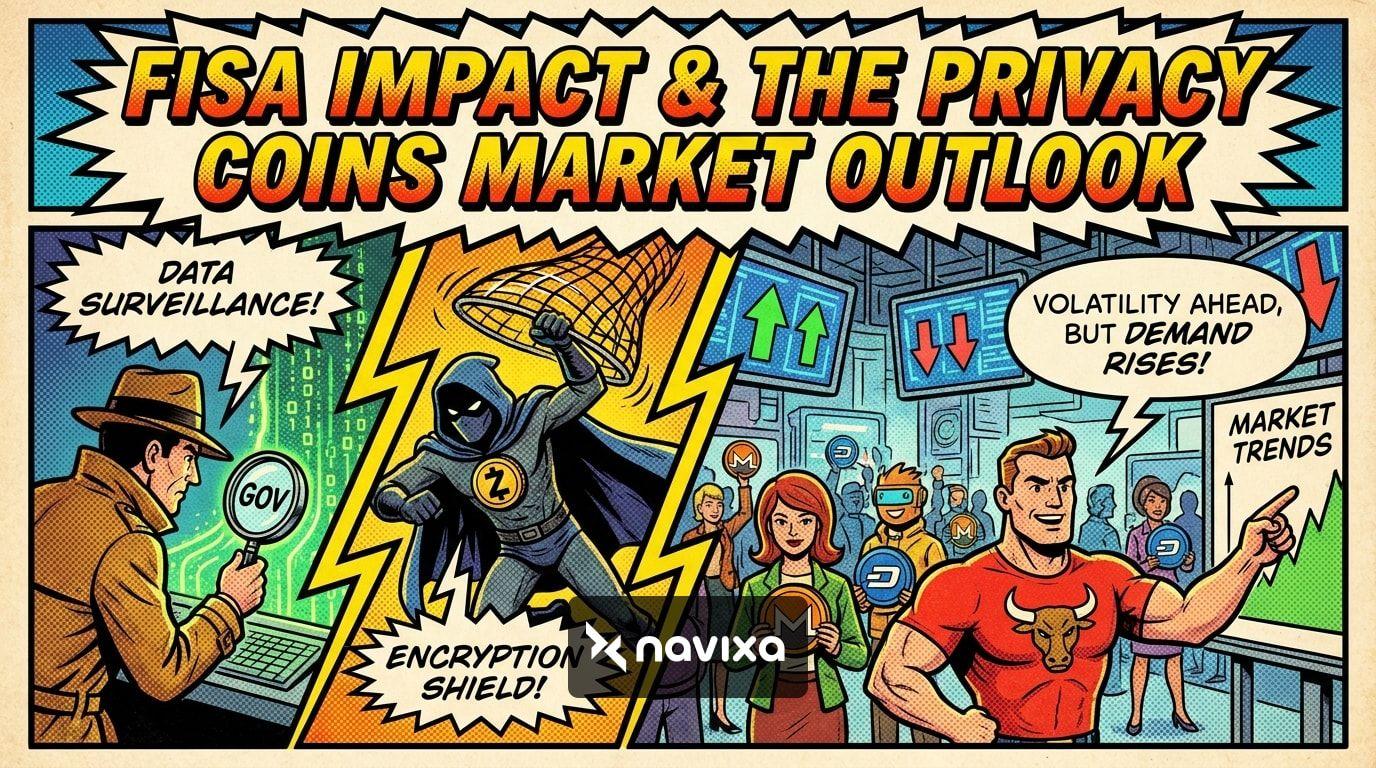
The intersection of government surveillance and decentralized finance has never been more volatile. As lawmakers debate the reauthorization and reform of the Foreign Intelligence Surveillance Act (FISA)—specifically the highly controversial Section 702—a profound counter-movement is taking shape in the cryptocurrency sector. Investors and technologists alike are scrutinizing the growing reach of state data collection, triggering massive capital inflows into privacy-preserving digital assets. To truly understand the privacy coins market outlook, one must first understand the macro regulatory friction that is driving it.
While traditional cryptocurrencies like Bitcoin operate on transparent, public ledgers where every transaction is visible and traceable, privacy coins utilize advanced cryptography to obscure wallet addresses, transaction histories, and transfer amounts. As global financial transparency laws tighten and warrantless surveillance programs expand, the demand for financial anonymity is surging. This article explores the cascading effects of FISA regulations on digital assets, the paradoxical market behavior of privacy tokens, and how traders can navigate this highly scrutinized sector.
The FISA Section 702 Battle and Financial Privacy
Section 702 of the Foreign Intelligence Surveillance Act allows the U.S. government to conduct targeted surveillance of foreign persons located outside the United States without a warrant. However, the program routinely sweeps up massive amounts of communications belonging to ordinary citizens. With the ongoing legislative battles stretching into 2026 to either reform or renew these powers, civil liberties advocates have sounded the alarm over the erosion of digital privacy.
For more comprehensive details on the ongoing legal fight, you can read the analysis by the Electronic Privacy Information Center (EPIC) on FISA.
The heightened awareness of state-level surveillance has acted as a primary catalyst for privacy-focused technologies. In the cryptocurrency realm, the realization that transparent ledgers can be monitored, cross-referenced with centralized exchange KYC data, and mapped by chain-analysis firms has led to an ideological and financial pivot. When citizens feel their digital communications and financial transactions are subject to warrantless queries, the intrinsic value of privacy-preserving networks skyrockets.
Market Analysis & Trading Psychology
In traditional equity markets, regulatory crackdowns generally lead to a severe loss of asset value. However, the privacy coin sector exhibits a fascinating psychological phenomenon known as "anti-fragility." When major governments announce bans on privacy coins or force centralized exchanges to delist them, retail and institutional privacy advocates often interpret this as a bullish validation of the technology's effectiveness.
If a government or surveillance apparatus demands the removal of an asset because it is "too private" to monitor, it effectively proves the asset's core value proposition. In early 2026, despite a wave of coordinated delistings from regulated platforms in Japan, South Korea, India, and the U.S., the total market capitalization for privacy-focused assets surpassed the $24 billion mark. Monero (XMR) even defied conventional market logic by achieving an all-time high near $790 during a period of peak regulatory hostility.
This counter-intuitive price action requires traders to adopt an unconventional mindset. The typical panic-selling associated with exchange delistings is frequently absorbed by long-term accumulation from whales who move their assets off-exchange. Successfully navigating these waters requires a disciplined long-term crypto holding strategy, as short-term price fluctuations driven by news cycles can shake out inexperienced investors. Traders must recognize that the ultimate price floor of a privacy coin is dictated not by exchange liquidity, but by the fundamental global demand for untraceable commerce.
The Technical Divide: Mandatory vs. Optional Privacy
Not all privacy coins face the same level of regulatory hostility. The core underlying technology dictates how regulators approach them. The two dominant philosophies in the space are mandatory privacy and optional privacy.
Mandatory Privacy Networks
Networks like Monero (XMR) enforce privacy at the protocol level. Every single transaction utilizes Ring Confidential Transactions (RingCT) and stealth addresses to hide the sender, receiver, and amount. Because transparency is impossible on the Monero blockchain, regulators consider it a high-risk asset for anti-money laundering (AML) compliance, leading to its systematic removal from compliant centralized exchanges (CEXs).
Optional Privacy Networks
Conversely, networks like Zcash (ZEC) utilize zero-knowledge proofs (zk-SNARKs) but offer users the choice between transparent addresses (similar to Bitcoin) and shielded addresses (fully private). Because Zcash allows for transparent, compliant transactions, many global exchanges have opted to keep ZEC listed while dropping XMR. This fundamental difference in architecture plays a massive role in the overall privacy coins market outlook.
Privacy Asset Comparison
Below is a breakdown of the leading privacy assets, their underlying architecture, and their regulatory risk profiles.
| Asset | Privacy Model | Core Technology | Regulatory / Delisting Risk |
|---|---|---|---|
| Monero (XMR) | Default / Mandatory | RingCT, Stealth Addresses | High |
| Zcash (ZEC) | Optional (Shielded) | zk-SNARKs | Medium |
| Secret (SCRT) | Smart Contract Level | Intel SGX Enclaves | Medium |
For live market data and capitalization metrics on these assets, you can track the broader CoinGecko Privacy Coins Sector index.
Trading Strategies in a Hostile Regulatory Environment
For investors willing to brave the volatility, the privacy sector offers asymmetric upside, provided that risk is managed meticulously. Here are actionable strategies for trading and investing in privacy coins amid the FISA and broader regulatory crackdowns.
1. The Decentralized Exchange (DEX) Pivot
As centralized on-ramps disappear, liquidity is rapidly migrating to decentralized exchanges and peer-to-peer trading platforms. Traders should familiarize themselves with atomic swaps and DEXs like Bisq or Haveno. By moving operations on-chain, you bypass the centralized choke points that regulators target. The premium paid for peer-to-peer privacy coins often creates arbitrage opportunities for savvy traders who can bridge the gap between remaining CEXs and decentralized liquidity pools.
2. Portfolio Diversification & Sector Rotation
It is incredibly risky to allocate an entire portfolio to privacy coins given the persistent threat of outright legal bans. A robust portfolio hedges regulatory risk by blending privacy assets with diverse traditional and digital equities. For instance, while defending against macro surveillance, an investor might balance their portfolio with stable traditional defense assets; analyzing a macro defense outlook can provide a reliable hedge against geopolitical instability.
Similarly, diversifying into disruptive real estate technology through a Zillow stock long-term outlook, or exploring alternative tech sectors like a Web3 gaming investment, can insulate your capital. Even high-volatility, narrative-driven traditional stocks—such as those explored in the DJT truth social thesis—can capture the same anti-establishment momentum that drives privacy coin maximalists, but without the immediate threat of blockchain-level sanctions.
3. Monitoring Macro Catalysts
Privacy coins are highly responsive to macroeconomic catalysts, particularly related to Central Bank Digital Currencies (CBDCs). As over 130 countries develop or launch CBDCs, the reality of programmable money—money that can be tracked, frozen, or assigned expiration dates—is driving individuals toward privacy alternatives. Monitoring CBDC rollout announcements and FISA legislative votes will give traders a leading indicator of when privacy coin demand will spike.
Risk Management: The Off-Ramp Dilemma
While the theoretical value of privacy coins is robust, the practical reality of realizing profits presents a significant hurdle. The primary risk in the privacy coins market outlook is the "off-ramp friction." Even if Monero triples in value, converting that XMR back into fiat currency to pay a mortgage or buy groceries is becoming increasingly difficult as compliant banks block transactions originating from non-compliant exchanges.
Actionable Risk Mitigation: - Staggered Exits: Never attempt to off-ramp large sums of privacy coins in a single transaction. - Asset Swapping: Consider swapping privacy coins into Bitcoin or Ethereum on a DEX, and then moving those transparent assets to a regulated exchange for fiat conversion. *Note: Chain-analysis firms may flag deposits originating from known privacy-mixing contracts, so ensure you consult a tax professional regarding "tainted" assets.* - Self-Custody: Never leave privacy coins on a centralized exchange. If an exchange receives a regulatory injunction, they will halt XMR or ZEC withdrawals immediately, freezing your funds indefinitely.
Conclusion: The Future of Financial Sovereignty
The ongoing debate over FISA Section 702 is just one battle in a much larger war for digital privacy. As surveillance capabilities become more sophisticated, integrating artificial intelligence and vast data brokerage networks, the counter-economy powered by privacy coins will likely cement its place as a permanent fixture of the global financial system.
The privacy coins market outlook remains a double-edged sword: it offers unparalleled utility and ideological purity, but carries severe liquidity and compliance risks. By understanding the technological nuances, embracing decentralized trading infrastructure, and maintaining a diversified portfolio, investors can strategically position themselves in one of the most resilient and fascinating sectors in the crypto economy.
Frequently Asked Questions
What are privacy coins?
Privacy coins are a specialized class of cryptocurrencies designed to obscure transaction data. Unlike Bitcoin, where the sender, receiver, and amount are permanently visible on a public ledger, privacy coins use advanced cryptography (like zero-knowledge proofs and ring signatures) to keep financial data completely anonymous.
How do FISA Section 702 and government surveillance impact crypto?
Government surveillance programs like FISA Section 702 allow intelligence agencies to collect massive amounts of digital communications. As public awareness of these sweeping surveillance capabilities grows, individuals seeking financial sovereignty and data protection increasingly migrate their wealth into privacy-preserving cryptocurrencies, driving up demand.
Are privacy coins legal to hold and trade?
In most Western democracies, including the United States, holding privacy coins is perfectly legal. However, regulators enforce strict Anti-Money Laundering (AML) rules on exchanges, making it illegal or overly burdensome for corporate platforms to facilitate the trading of assets they cannot monitor. As a result, many countries have banned privacy coins from being listed on domestic centralized exchanges, even though the assets themselves are not illegal to own.
What is the primary difference between Monero and Zcash?
The main difference lies in their approach to anonymity. Monero (XMR) enforces mandatory privacy; every single transaction is hidden, making it the preferred choice for maximum anonymity. Zcash (ZEC) offers optional privacy, allowing users to choose between a transparent transaction (like Bitcoin) or a shielded transaction (fully private). Because of this flexibility, Zcash is often viewed more favorably by regulated exchanges.
What happens to my funds if my exchange delists a privacy coin?
If an exchange announces the delisting of a privacy coin, they will typically provide a window of time (e.g., 30 days) for users to withdraw their assets to a private wallet or sell them. If you fail to move your funds before the deadline, the exchange may halt withdrawals, effectively locking your assets or force-liquidating them at current market rates. It is highly recommended to hold privacy coins in self-custody hardware wallets.