
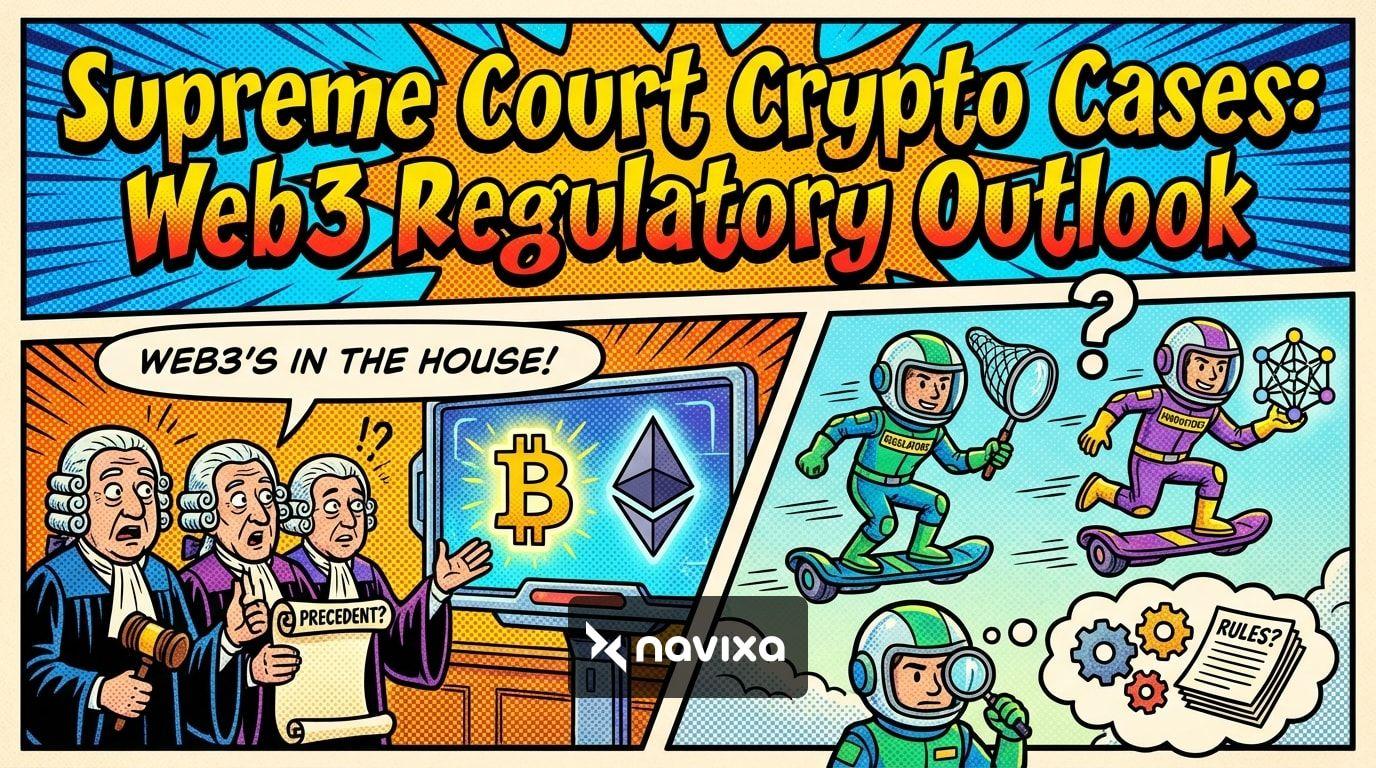
The intersection of constitutional law and digital asset markets has never been more vital to understand than it is today. Over the past few years, a series of pivotal Supreme Court crypto cases has completely redefined the Web3 regulatory outlook. For investors, developers, and day traders alike, the rules of the game have shifted dramatically. Gone are the days when federal agencies could unilaterally govern by enforcement without strict judicial oversight.
Understanding the legal precedents set by the highest court in the United States is no longer just a task for attorneys—it is a core component of a profitable, long-term cryptocurrency trading strategy. From the dismantling of long-standing administrative doctrines to the landmark joint interpretations issued by regulatory bodies in early 2026, the market has entered a new era of clarity and compliance.
This comprehensive guide will explore the most impactful Supreme Court crypto cases, how they shape the modern Web3 regulatory outlook, and exactly how traders can adapt their technical analysis, actionable steps, and risk management protocols to thrive in this new environment.
Understanding the Supreme Court Crypto Cases
To grasp the current state of Web3, we must look at the judicial decisions that forced a paradigm shift in how digital assets are classified and policed. Historically, the U.S. Securities and Exchange Commission (SEC) and the Commodity Futures Trading Commission (CFTC) operated with wide latitude. However, landmark rulings have curbed agency overreach and established a more rigid framework for the industry.
Loper Bright and the End of Chevron Deference
Perhaps the most consequential of all recent decisions was the 2024 Supreme Court ruling in *Loper Bright Enterprises v. Raimondo*. This case officially overturned the 1984 *Chevron* doctrine, which previously required courts to defer to a federal agency's interpretation of ambiguous statutes.
"The end of Chevron deference marked the transition of the cryptocurrency industry from an era of enforcement-driven fear to a period of judicial fairness and statutory clarity."
For the crypto industry, the end of Chevron deference was a massive victory. It stripped agencies like the SEC of their ability to unilaterally stretch the definitions of the Howey Test to classify almost all digital assets as securities. Without Chevron, courts are now mandated to exercise independent judgment when interpreting financial statutes. This has directly impacted ongoing appellate cases, including those involving major exchanges like Coinbase and token issuers like Ripple, fundamentally altering their legal defense trajectories.
SEC v. Jarkesy and Corner Post
Following *Loper Bright*, the Supreme Court delivered additional blows to the administrative state. In *SEC v. Jarkesy*, the Court ruled that defendants have a Seventh Amendment right to a jury trial when the SEC seeks civil penalties for securities fraud, effectively limiting the agency's use of in-house administrative law judges. Furthermore, the *Corner Post* decision expanded the statute of limitations for challenging agency rules under the Administrative Procedure Act (APA).
These Supreme Court crypto cases collectively forced the hand of regulators. Realizing that "regulation by enforcement" would no longer survive judicial scrutiny, the SEC and CFTC were compelled to issue their landmark Joint Interpretation in March 2026, explicitly distinguishing between the digital asset itself (often a commodity) and the transaction (which may or may not be an investment contract).
Adapting Your Crypto Trading Strategy
With the legal landscape significantly altered by these Supreme Court crypto cases, market participants must adapt their trading strategies to account for new structural realities. The introduction of the GENIUS Act in 2025 and the subsequent 2026 regulatory frameworks have created clear winners and losers in the altcoin market.
Event-Driven Trading and Sector Rotation
In a post-Chevron world, event-driven trading has become highly lucrative. Traders can capitalize on court docket updates, appellate rulings, and newly issued agency guidelines. A robust trading strategy now involves sector rotation—moving capital away from DeFi tokens that still bear lingering securities characteristics and toward newly classified "digital commodities" and permitted payment stablecoins.
Algorithmic Sentiment Analysis
Institutional traders are increasingly utilizing algorithmic sentiment analysis to trade the news. By scraping data from the Supreme Court of the United States docket updates and legal news wires, trading bots can execute split-second trades the moment an interlocutory appeal or certiorari petition is granted. Retail traders can mimic this by setting custom alerts for legal keywords and utilizing smart order routing to catch the immediate volatility that follows a major legal announcement.
Technical Analysis in a News-Driven Market
While fundamental analysis tells you *what* to buy based on the Web3 regulatory outlook, technical analysis (TA) tells you *when* to buy. Regulatory news often causes violent price action, making traditional TA tools indispensable for navigating the chaos.
Volatility Contraction and Breakouts
Before major Supreme Court decisions or appellate court rulings are announced, the market often experiences a Volatility Contraction Pattern (VCP). Traders will notice narrowing Bollinger Bands and a decline in trading volume as the market holds its breath. Once a ruling drops—such as a denial of an SEC appeal—the ensuing breakout is usually accompanied by a massive volume spike. By plotting key resistance levels prior to the news, traders can place conditional buy orders that only trigger if a bullish regulatory outcome forces a technical breakout.
Using RSI and Fibonacci Retracements
During news-driven flash crashes, the Relative Strength Index (RSI) will frequently dip into heavily oversold territory (below 30). For traders looking to enter long positions on fundamentally sound projects, these panic-selling events present prime buying opportunities. Combining RSI with Fibonacci retracement levels allows traders to pinpoint exact support zones. For example, if a token drops 20% on an out-of-context headline but bounces perfectly off the 0.618 golden ratio, it signals strong institutional support despite the regulatory noise. Moving Average Convergence Divergence (MACD) crossovers on lower timeframes (like the 15-minute chart) can further confirm that the momentary legal panic has subsided.
Regulatory Risk Management
No trading strategy is complete without strict risk management, especially when trading assets that are highly sensitive to legal and political shifts. The Supreme Court crypto cases have mitigated long-term risks, but short-term volatility remains a constant threat.
Position Sizing and Capital Allocation
Never allocate more than 1-2% of your total trading capital to a single trade, particularly if that asset is currently embroiled in an active SEC or CFTC lawsuit. By keeping your position sizes small, you protect your portfolio from devastating losses in the event of an unfavorable court ruling.
Options Hedging
Sophisticated traders use cryptocurrency options to hedge against regulatory risk. If you hold a large spot position in a layer-1 blockchain token, you can purchase out-of-the-money (OTM) put options expiring around the time of a major scheduled court hearing. If the ruling is negative and the market tanks, the profits from the put options will offset the losses in your spot portfolio. This neutralizes the "tail risk" associated with sudden judicial mandates.
Geofencing and Counterparty Risk
Even with domestic clarity improving, global regulatory arbitrage remains a factor. Traders must manage counterparty risk by carefully selecting the exchanges they use. Ensure that your trading platforms are fully compliant with the latest 2026 frameworks and hold transparent proof of reserves. Where possible, utilize decentralized finance (DeFi) protocols for self-custody to eliminate centralized exchange risk entirely.
Actionable Steps for Web3 Investors
To position yourself advantageously in this evolving legal environment, follow these actionable steps:
1. Conduct a Portfolio Audit: Review your current holdings. Are your assets classified as digital commodities, or do they still carry the risk of being deemed unregistered securities? Rebalance accordingly based on the 2026 SEC/CFTC joint interpretation. 2. Monitor the Judicial Calendar: Bookmark the dockets for ongoing appellate cases in the Second and Fifth Circuits. Court decisions usually follow specific schedules, and knowing these dates can help you anticipate volatility. 3. Upgrade Your Stop-Loss Strategy: Implement trailing stop-losses. Legal news can cause temporary wicks that hunt traditional stop-losses before reversing. A trailing stop allows the trade to breathe while still protecting your downside. 4. Diversify Across Jurisdictions: While U.S. clarity is improving, maintaining exposure to projects thriving in fully regulated international hubs adds a layer of geographic diversification.
Pre- vs. Post-Ruling Regulatory Environment
The shift in the Web3 regulatory outlook is best understood by comparing the historical enforcement era with the current legally bounded framework.
| Regulatory Feature | Pre-2024 Environment (Chevron Era) | Post-Supreme Court Rulings (2026 Outlook) |
|---|---|---|
| Agency Authority | Broad, unilateral deference to SEC/CFTC interpretations. | Agencies must prove statutory authority; courts exercise independent judgment. |
| Enforcement Style | "Regulation by enforcement" with heavy reliance on fines. | Transparent guidelines and formal rulemaking processes. |
| Asset Classification | Sweeping application of the Howey Test to almost all tokens. | Separation of the digital asset (commodity) from the specific investment contract transaction. |
| Judicial Recourse | Administrative law judges internal to the SEC. | Seventh Amendment right to jury trials in federal courts for civil penalties. |
| Market Sentiment | High regulatory risk premium suppressing institutional entry. | Clear compliance pathways encouraging deep institutional liquidity and Web3 adoption. |
Practical Takeaways
- The series of Supreme Court crypto cases, spearheaded by the overturning of Chevron deference, has fundamentally restricted agency overreach in the digital asset space. - The 2026 Web3 regulatory outlook is the most stable it has ever been, characterized by transparent frameworks and a clear distinction between digital commodities and securities. - Traders must blend fundamental legal analysis with strict technical analysis to capitalize on news-driven volatility. - Utilizing advanced risk management techniques, such as options hedging and dynamic position sizing, is essential to surviving regulatory shockwaves. - Always monitor the active appellate dockets, as the downstream effects of Supreme Court rulings continue to be litigated in lower federal courts.
Conclusion
The era of regulatory ambiguity that long plagued the cryptocurrency markets is rapidly drawing to a close, catalyzed by a historic series of Supreme Court crypto cases. By dismantling Chevron deference and enforcing constitutional checks on administrative agencies, the judiciary has paved the way for a transparent and flourishing Web3 ecosystem. For traders and investors, this shifting landscape is not a barrier—it is a tremendous opportunity.
By integrating legal sentiment into your trading strategy, mastering technical analysis during periods of high volatility, and employing rigorous risk management, you can confidently navigate the markets. Take control of your portfolio today by auditing your current holdings against the latest 2026 compliance frameworks, and stay ahead of the curve as the financial frontier continues to mature.
Frequently Asked Questions
What are the most impactful Supreme Court crypto cases?
The most impactful recent cases include *Loper Bright Enterprises v. Raimondo*, which overturned the Chevron deference doctrine, and *SEC v. Jarkesy*, which affirmed the right to a jury trial for civil penalties. While not exclusively about cryptocurrency initially, these administrative law cases have drastically limited the SEC's ability to arbitrarily regulate the Web3 space.
How does the end of Chevron deference affect crypto?
Before it was overturned in 2024, Chevron deference required judges to defer to federal agencies' interpretations of ambiguous laws. Its end means that the SEC and CFTC can no longer unilaterally classify tokens as securities without strict judicial scrutiny, leading to much fairer legal battles for cryptocurrency platforms and clearer rules for traders.
How can traders hedge against regulatory news?
Traders can hedge against sudden regulatory announcements by using cryptocurrency options (such as buying put options on their spot holdings), utilizing strict trailing stop-losses, and diversifying their portfolios into widely accepted digital commodities like Bitcoin, which carry significantly lower regulatory risk.
What is the 2026 Web3 regulatory outlook?
As of 2026, the regulatory outlook is highly optimistic. Following the Supreme Court decisions and legislative actions like the GENIUS Act, federal agencies have issued joint interpretations that clarify the distinction between a digital asset and an investment contract. This has ushered in a wave of institutional adoption and market stability.
Does the Howey Test still apply to cryptocurrencies?
Yes, the Howey Test still applies, but its application has been significantly refined by the courts. Regulators and judges now widely recognize that the digital token itself is generally just a line of code (a commodity or asset), while the specific *circumstances* of its sale or offering may constitute an investment contract under Howey.