
Taiwan Crypto Regulations: A Guide to Global Adoption Trends
- Mar 16, 2026
- 14 min read
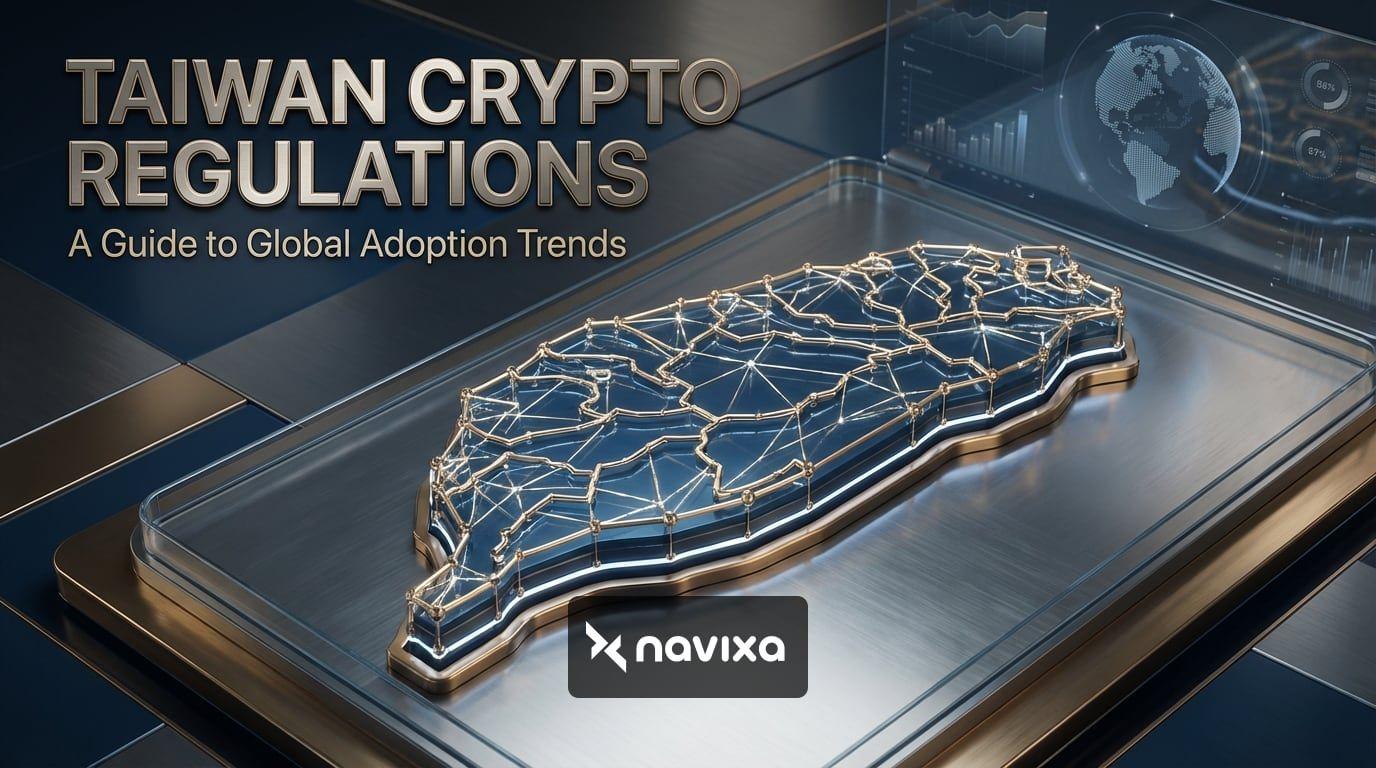
The global cryptocurrency landscape is undergoing a monumental shift, and Asia is at the epicenter of this financial revolution. Historically known for its dominance in semiconductor manufacturing and technology hardware, Taiwan is now aggressively positioning itself as a secure, regulated hub for digital assets. For years, the island maintained a cautious, hands-off approach, but recent legislative milestones have dramatically altered the playing field. Understanding Taiwan crypto regulations is no longer just a legal necessity for local operators; it is a critical component for international investors and traders analyzing global adoption trends.
As the Financial Supervisory Commission (FSC) transitions the market from a loosely monitored gray area into a strict licensing regime, the implications for trading strategies, market liquidity, and institutional adoption are profound. This comprehensive guide explores the evolution of Taiwan's digital asset laws, how they reflect broader global adoption trends, and what these changes mean for your crypto portfolio.
The Evolution of Taiwan Crypto Regulations
To grasp the current state of the market, one must look at the historical context of Taiwan's relationship with blockchain technology and digital currencies.
From "Virtual Commodity" to Regulated Asset
For nearly a decade, Taiwan's central bank and the FSC maintained a unified, skeptical stance. In late 2013 and early 2014, the authorities issued joint statements classifying Bitcoin and other digital assets not as legal tender, but as highly speculative "virtual commodities." Local banks were explicitly barred from facilitating crypto-to-fiat transactions or offering services tied to digital assets. This conservative approach effectively isolated traditional banking from the crypto sector, pushing users toward peer-to-peer trading and offshore platforms.
However, the explosion of decentralized finance (DeFi), the rise of institutional investment, and the increasing demand for Security Token Offerings (STOs) forced a regulatory pivot. In 2019, the FSC officially recognized security tokens as a distinct class of securities, opening a narrow but highly regulated corridor for tokenized assets.
The AML Mandate and the Draft VASP Act
The most significant turning point arrived between 2024 and 2025. In July 2024, an amendment to Taiwan's Anti-Money Laundering (AML) Act mandated that all Virtual Asset Service Providers (VASPs) must formally register with the FSC before operating. The authorities set a hard deadline for compliance by September 2025, warning that unregistered operators could face up to two years in prison and fines of up to NT$5 million.
Building on this momentum, the FSC introduced the draft Virtual Asset Services Act (VASP Act) in 2025. This landmark legislation, expected to be fully implemented in 2026, shifts Taiwan from a basic AML registration framework to a comprehensive licensing regime. It requires local and offshore exchanges to meet stringent capital requirements, implement robust cybersecurity measures, and ensure the strict segregation of corporate and user funds.
Key Components of the New VASP Licensing Regime
The transition to a formal licensing regime brings Taiwan into the upper echelon of regulated crypto jurisdictions. The new rules are designed to foster innovation while ruthlessly weeding out bad actors.
Strict Capital and Audit Requirements
Under the impending VASP Act, any entity wishing to facilitate the exchange, transfer, or custody of digital assets must obtain explicit FSC approval. The requirements include:
* Minimum Capital Reserves: Platforms must hold sufficient liquid assets to back their operations and protect against insolvency. * Asset Segregation: User funds cannot be commingled with company operational funds, a direct regulatory response to the collapse of global exchanges like FTX. * Mandatory Audits: VASPs must submit to regular, independent financial audits to verify their reserves and compliance with local laws.
The 2026 New Taiwan Dollar Stablecoin
Perhaps the most exciting development in Taiwan's regulatory pipeline is the anticipated launch of a government-regulated stablecoin pegged to the New Taiwan Dollar (NTD), targeted for late 2026.
"Stablecoins offer faster settlement windows, predictable value with fiat-backed assets, and borderless reach through digital wallets. Taiwan's entry into this space signals a massive leap toward modernizing cross-border finance."
According to the FSC's framework, only licensed financial institutions will be permitted to issue these stablecoins. They must maintain a 1:1 fiat reserve and are strictly prohibited from paying interest on stablecoin holdings. This measured, deliberate approach mirrors the broader global adoption trends where governments are embracing the utility of stablecoins while mitigating systemic financial risks.
How Global Adoption Trends Influence Taiwan
Taiwan does not operate in a vacuum. Its legislative framework is heavily influenced by the successes and failures of international regulators.
Aligning with the EU's MiCA Framework
When drafting the VASP Act, Taiwanese policymakers closely studied the EU's Markets in Crypto-Assets (MiCA) regulation. MiCA is widely regarded as the global gold standard for digital asset oversight. By adopting similar provisions regarding stablecoin issuance, transparency, and consumer protection, Taiwan ensures that its local crypto ecosystem remains interoperable with European and global markets. This alignment makes Taiwan an attractive destination for multinational crypto enterprises looking for regulatory clarity in Asia.
The Asian Hub Competition
Asia is a fiercely competitive landscape for financial technology. Hong Kong has actively rolled out licensing for retail crypto trading, while Singapore continues to refine its Payment Services Act to attract blockchain talent. To remain competitive, Taiwan is leveraging its reputation for strong rule of law and technological prowess. By establishing clear guidelines via the Financial Supervisory Commission (FSC), Taiwan is signaling to institutional investors that it is open for business, provided that businesses prioritize consumer safety and AML compliance.
Trading Strategy & Technical Analysis in a Regulated Market
As regulatory clarity improves, the market microstructure undergoes profound changes. For crypto traders, a regulated Taiwan market requires a shift in both trading strategy and technical analysis.
Adapting Your Trading Strategy
In an unregulated environment, markets are often plagued by extreme volatility, wash trading, and unpredictable liquidity gaps. The enforcement of the VASP Act will naturally drive out non-compliant, low-liquidity exchanges.
For retail and institutional traders, this means:
1. Lower Slippage: As licensed exchanges attract institutional market makers, order book depth increases, reducing slippage on large block trades. 2. Focus on Quality Assets: Regulated platforms are often restricted from listing highly speculative, low-cap meme coins without proper vetting. Strategies should pivot toward major caps (Bitcoin, Ethereum) and approved utility tokens. 3. Arbitrage Opportunities: During the transition phase, price discrepancies may appear between fully regulated Taiwanese exchanges and offshore platforms. However, fiat off-ramps will be strictly monitored, meaning arbitrageurs must have impeccable AML documentation to capitalize on these spreads.
Technical Analysis Considerations
Technical analysis (TA) relies on the premise that historical price and volume data can predict future movements. Under the new Taiwan crypto regulations, TA indicators become significantly more reliable.
* Volume Indicators: Because wash trading (fake volume) is strictly penalized under the new FSC rules, volume-based indicators like On-Balance Volume (OBV) and the Volume Weighted Average Price (VWAP) will reflect true market sentiment rather than manipulated data. * Support and Resistance: Institutional capital tends to respect traditional support and resistance levels more strictly than retail-driven speculative capital. Expect cleaner breakouts and more predictable consolidation phases on licensed exchanges.
Actionable Steps and Risk Management
Whether you are a local Taiwanese resident or an international investor utilizing Asian exchanges, adapting to these new rules is essential for capital preservation.
Actionable Steps for Traders and Institutions
* Verify Platform Compliance: Ensure that your exchange has completed its AML registration with the FSC and is on track for full VASP licensing. Offshore exchanges failing to comply may face IP blocks or have their local banking gateways severed. * Prepare for Enhanced KYC: Expect rigorous Know Your Customer (KYC) protocols. Keep your identity documents, proof of address, and source of wealth declarations up to date to avoid account freezes. * Monitor Stablecoin Integration: Once the NTD stablecoin launches, it will likely become the primary base pair for local trading. Familiarize yourself with its issuance mechanics and liquidity pools.
Robust Risk Management
Even in a regulated market, cryptocurrency remains inherently volatile. Implement strict risk management rules: * Use hard stop-losses to protect against sudden market downturns. * Diversify your holdings across cold storage and fully regulated custodial platforms. * Stay informed on macro-economic data, as government-regulated stablecoins inextricably link the crypto market to traditional central bank interest rate decisions.
Comparing Taiwan's Rules with Global Counterparts
To better understand Taiwan's position in global adoption trends, let's compare its regulatory framework with other major jurisdictions.
| Regulatory Feature | Taiwan (VASP Act) | EU (MiCA) | United States | Hong Kong |
|---|---|---|---|---|
| Asset Classification | Virtual Commodity / Security Tokens | Crypto-Assets / E-Money | Commodity / Security (Fragmented) | Virtual Assets |
| Licensing Regime | Mandatory VASP Licensing (2026) | Full MiCA Licensing | State-by-State / Federal | SFC Licensing for Platforms |
| Stablecoin Rules | Restricted to Licensed Financial Institutions | Strict Reserve & E-Money Rules | Pending Federal Legislation | Regulated under HKMA |
| Retail Trading | Permitted on Registered VASPs | Permitted | Permitted | Permitted (Highly Restricted) |
Practical Takeaways
* Regulatory Shift: Taiwan has transitioned from a skeptical observer to a proactive regulator, introducing mandatory AML registrations and a comprehensive VASP licensing regime. * Stablecoin Innovation: The planned introduction of a New Taiwan Dollar-backed stablecoin in 2026 highlights the integration of blockchain into mainstream finance. * Trading Reliability: Strict regulations eliminate wash trading, making technical analysis indicators more accurate and improving overall market liquidity. * Global Alignment: By modeling its rules on international standards like the EU's MiCA, Taiwan is positioning itself as a secure, globally connected crypto hub.
Frequently Asked Questions
Is cryptocurrency legal in Taiwan?
Yes, it is legal to buy, hold, and trade cryptocurrency in Taiwan. However, digital assets like Bitcoin are classified as "virtual commodities" rather than legal tender. Security tokens are regulated under securities laws, and platforms facilitating trades must comply with strict AML and FSC regulations.
How do Taiwan crypto regulations affect everyday traders?
For everyday traders, the new regulations mean enhanced security but also stricter KYC requirements. You will trade on platforms that are audited and legally bound to protect your funds, which reduces the risk of exchange insolvency. However, you must be prepared for rigorous identity verification.
What is the upcoming New Taiwan Dollar stablecoin?
Targeted for a 2026 launch, the NTD stablecoin will be a digital asset pegged 1:1 to the New Taiwan Dollar. Under FSC guidelines, only licensed financial institutions can issue it, ensuring it is fully backed by fiat reserves and subject to strict regulatory oversight.
What are the penalties for non-compliant VASPs in Taiwan?
Operating an unregistered or non-compliant Virtual Asset Service Provider in Taiwan carries severe consequences. Following the recent AML amendments, responsible persons at non-compliant firms face up to two years of imprisonment and criminal fines of up to NT$5 million.
Conclusion
The evolution of Taiwan crypto regulations is a testament to the undeniable momentum of global adoption trends. By actively drafting the VASP Act and exploring sovereign-backed stablecoins, Taiwan is not just playing catch-up; it is actively shaping a resilient, forward-looking digital economy. For traders and investors, this regulatory clarity offers a safer environment, more reliable technical data, and deeper institutional liquidity.
As the line between traditional finance and decentralized technology continues to blur, staying informed is your best asset. Adjust your trading strategies, embrace the security of regulated platforms, and prepare for the next generation of digital finance. Ready to optimize your portfolio? Start by reviewing your current exchange's regulatory status today, and ensure your assets are positioned safely for the future.