
Prediction markets have exploded in popularity, becoming one of the most compelling use cases for blockchain technology. At the forefront of this revolution is Polymarket, a decentralized platform that allows users to bet on the outcome of real-world events using cryptocurrency. Unlike detailed financial derivatives that require a PhD to understand, Polymarket offers a simple premise: buy shares in an outcome, and if you are right, you profit. This Polymarket trading guide will walk you through everything you need to know to get started, from setting up your wallet to executing advanced trading strategies.
Whether you are looking to hedge against economic downturns, speculate on political elections, or leverage your knowledge of pop culture, Polymarket provides a liquid, transparent, and permissionless environment to do so. Built on the Polygon blockchain, it minimizes transaction costs while maximizing speed, making it accessible even to traders with smaller bankrolls.
What Is Polymarket?
Polymarket is a decentralized information markets platform (often called a prediction market) deployed on the Polygon network. It allows participants to trade on the most hotly debated topics in the world—including politics, crypto prices, global affairs, and sports. Unlike traditional sportsbooks, Polymarket utilizes an order book and automated market maker system to determine odds based on supply and demand.
How the Share System Works
Understanding the pricing mechanism is crucial for any trader. In Polymarket, every market is binary. You are essentially buying "Yes" or "No" shares in a future event. Key mechanics include:
• Share Price as Probability: Prices range from $0.00 to $1.00. A share price of $0.65 implies the market believes there is a 65% chance the event will occur.
• Binary Payout: If the event resolves to "Yes," the Yes shares become redeemable for $1.00, and No shares become worth $0.00. If it resolves to "No," the opposite happens.
• Trading Before Expiry: You do not have to hold until the event ends. You can sell your shares at any time to lock in profits or cut losses as the odds shift.
Prerequisites for Trading
Before you place your first trade, you must set up the necessary infrastructure. Since Polymarket is non-custodial, you retain control of your funds at all times.
1. A Web3 Wallet
You need a self-custody wallet compatible with the Ethereum Virtual Machine (EVM). MetaMask, Phantom, or Coinbase Wallet are the most popular choices. Polymarket also offers email login options which create a wallet for you, but experienced traders usually prefer using their own established wallets for better security control.
2. USDC on Polygon
All trades on Polymarket are denominated in USDC (USD Coin), a stablecoin pegged to the US dollar. Critically, this USDC must exist on the Polygon network, not Ethereum mainnet, to avoid high gas fees. You can acquire Polygon-USDC by purchasing it directly on a centralized exchange (like Coinbase or Binance) and withdrawing to the Polygon network, or by bridging funds from Ethereum using a bridge protocol.
Step-by-Step: How to Trade on Polymarket
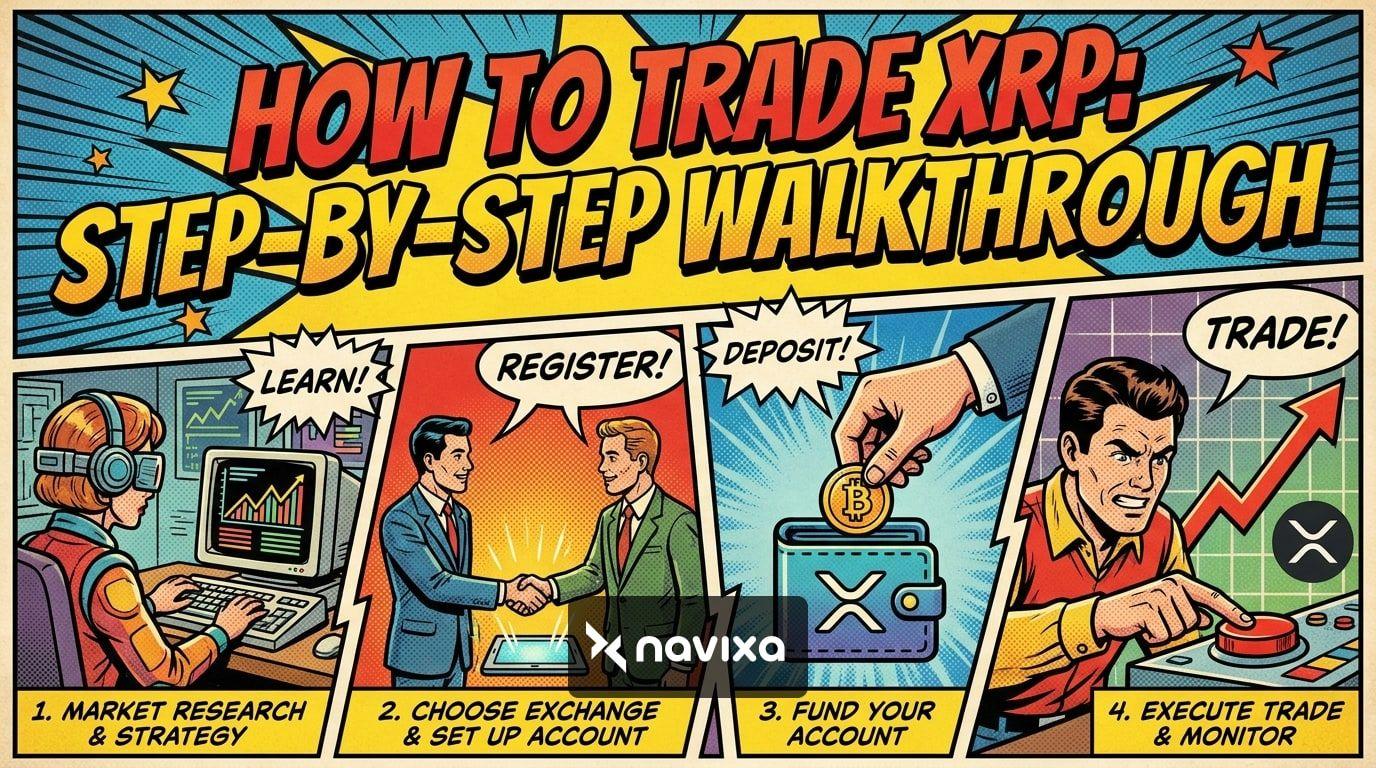
Follow this simple workflow to execute your first prediction market trade.
Step 1: Connect Your Wallet
Navigate to the official Polymarket website. Click the "Sign Up" or "Log In" button in the top right corner. Select your wallet provider (e.g., MetaMask) and sign the message to authenticate ownership. Note that if you are in a restricted jurisdiction (like the United States), the site may block your access via IP geofencing.
Step 2: Deposit Funds
If your wallet is empty, click the "Deposit" button. Polymarket provides a unique deposit address for your account. Transfer USDC (on Polygon) to this address. The transaction usually clears in less than a minute due to Polygon's fast block times. You will also need a tiny amount of MATIC (POL) token for gas fees, though Polymarket often subsidizes transaction costs for users.
Step 3: Select a Market
Browse categories such as "Politics," "Crypto," or "Pop Culture." Look for markets with high liquidity (volume). High liquidity ensures you can enter and exit positions easily without suffering from slippage (price impact).
Step 4: Execute the Trade
Once you've chosen a market (e.g., "Will Bitcoin hit $100k in 2024?"), decide on your position. If you believe it will happen, buy "Yes." If not, buy "No."
You can place a Market Order (buy immediately at the best available price) or a Limit Order (set a specific price you are willing to pay). Limit orders are useful if you want to enter at a specific probability (e.g., only buying "Yes" if the price drops to 40 cents).
Advanced Trading Strategies
Simply picking winners is gambling; managing risk is trading. Here are three strategies used by professional prediction market traders.
1. Arbitrage
Arbitrage involves spotting price discrepancies between different platforms. For instance, if Polymarket prices a "Yes" outcome at $0.60 (60%) but a rival platform like Kalshi or a traditional sportsbook prices the same event at 65%, there is an inefficiency. Traders can bet on both sides across platforms to lock in a risk-free profit or take the "value" side of the bet.
2. Hedging Real-World Risk
This is one of the most practical uses of Polymarket. Crypto investors often use prediction markets to hedge their portfolios. If you hold a large amount of Ethereum and are worried that a specific regulation might pass that would crash the price, you can bet "Yes" on the market "Will Regulation X pass?" If the regulation passes, your crypto portfolio might dip, but your Polymarket payout will offset those losses.
3. News Trading
Markets react to information. Traders who monitor news feeds, RSS streams, or social media can often react faster than the broader market. If breaking news suggests a candidate is dropping out of a race, a fast trader can buy "No" shares on that candidate before the price collapses to zero.
| Feature | Polymarket | Kalshi | Traditional Sportsbooks |
|---|---|---|---|
| Account Type | Web3 Wallet (Non-Custodial) | Bank Connected (Custodial) | Bank Connected (Custodial) |
| Currency | USDC (Crypto) | USD (Fiat) | USD/EUR (Fiat) |
| Fees | Gas fees (low) | Trading fees apply | Built into odds (Vig) |
| Limits | Liquidity constrained only | Regulatory caps apply | House limits apply |
| Global Access | Global (excl. US) | US Only | Restricted by region |
Resolution and Oracle Risks
A common question for beginners is: "Who decides who won?" Polymarket uses the UMA Protocol, a decentralized oracle, to resolve markets. This optimistic oracle system allows anyone to propose a resolution (e.g., "The Republicans won the Senate"). If the proposal is undisputed for a set period, it becomes final.
If a resolution is disputed, UMA token holders vote to settle the truth. This decentralized mechanism protects users from a central authority manipulating results, but it introduces a slight delay in payouts compared to a centralized sportsbook that settles instantly. Traders should be aware that "ambiguous" market wording can sometimes lead to disputes, so always read the specific "Rules" tab on every market before betting.
Conclusion: The Future of Forecasting
Polymarket has transformed prediction markets from a niche academic concept into a vibrant financial ecosystem. By following this Polymarket trading guide, you now possess the knowledge to navigate the interface, execute trades, and manage the unique risks of decentralized betting. Whether you are trading for profit or simply want to better understand the world's probabilities, the key is to start small, verify the market rules, and never bet more than you can afford to lose.