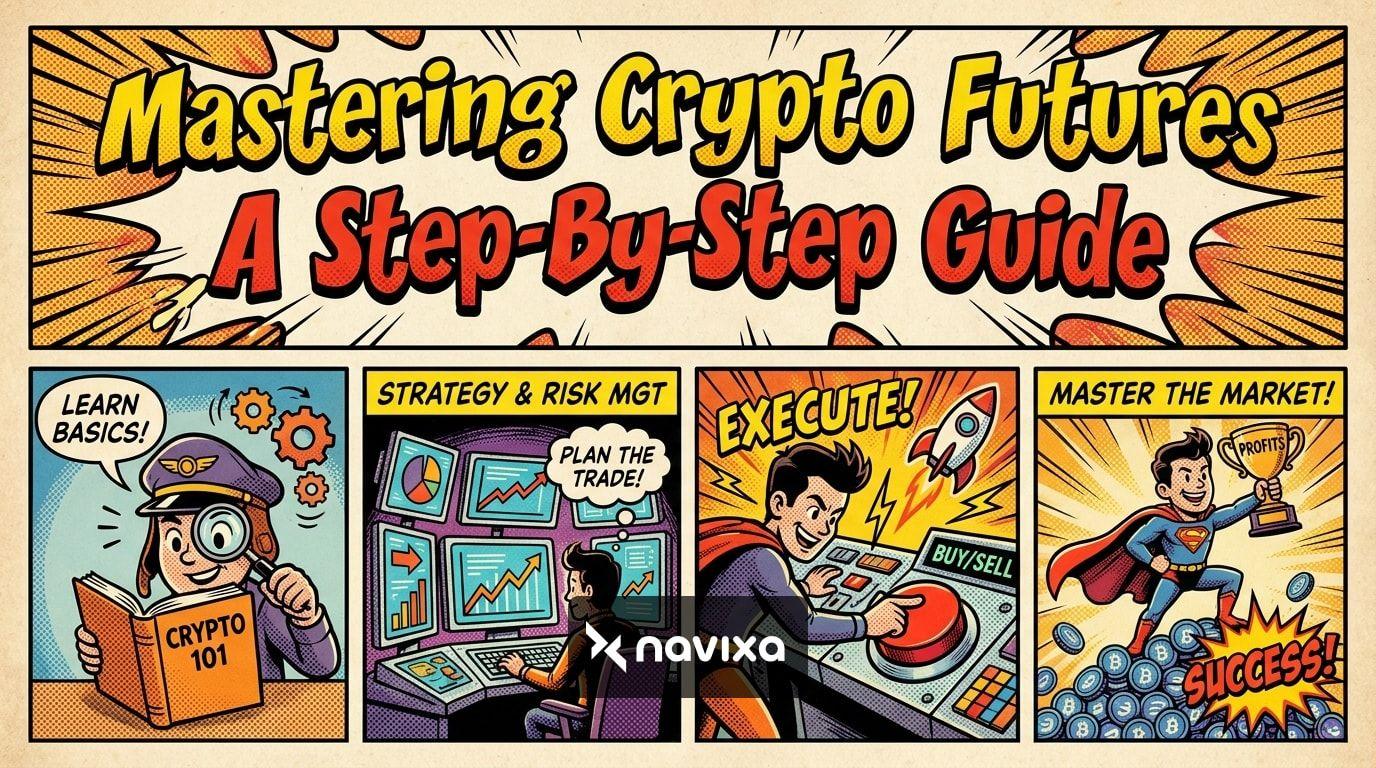

Master Cryptocurrency Trading: A Step-by-Step Guide for Beginners
- Jan 10, 2026
- 7 min read

Cryptocurrency trading has evolved significantly since the early days of digital assets. By early 2026, the market has matured into a multi-trillion-dollar ecosystem, driven by institutional adoption, clearer regulatory frameworks like the US GENIUS Act, and the widespread success of spot ETFs. However, despite these advancements, the core appeal of crypto remains its volatility and the potential for significant returns for those who master the art of trading.
Whether you are looking to day trade Bitcoin while it consolidates in the $90,000 range or swing trade altcoins during altseason, understanding the mechanics of the market is non-negotiable. This guide will walk you through the essential steps to start your trading journey, from selecting the right exchange to executing advanced risk management strategies.
Understanding the 2026 Market Landscape
Before placing your first trade, it is crucial to recognize that the market dynamics have shifted. The approval of spot ETFs for Bitcoin and Ethereum has brought massive liquidity, stabilizing some of the wilder swings seen in previous cycles. However, events like the US government's move toward a Strategic Bitcoin Reserve have kept the cryptocurrency trading environment highly reactive to macroeconomic news. Today, traders must pay as much attention to Federal Reserve interest rate policies as they do to on-chain metrics.
Step 1: Choosing a Trading Platform
Your choice of exchange is your gateway to the market. In 2026, the line between traditional finance and crypto exchanges is blurring. Platforms are now offering deeper integration with fiat banking systems, making funding your account easier than ever.
Centralized Exchanges (CEXs)
For beginners, CEXs remain the safest bet. They offer high liquidity, customer support, and user-friendly interfaces. Look for exchanges that are fully compliant with regulations like MiCA (in Europe) or have clear operating licenses in your jurisdiction. Security features such as Proof of Reserves (PoR) are now industry standard; avoid any platform that does not publish monthly PoR audits.
Decentralized Exchanges (DEXs)
For those interested in trading newer, lower-cap tokens before they hit major exchanges, DEXs are essential. However, they require you to manage your own private keys via a Web3 wallet. While they offer greater privacy, the risk of smart contract exploits or 'rug pulls' is higher.
Step 2: Fundamental vs. Technical Analysis
Successful trading relies on analyzing price movements and project viability. Most traders use a mix of two main schools of thought.
Fundamental Analysis (FA)
FA involves evaluating the intrinsic value of a project. In 2026, this means looking beyond the whitepaper. You must analyze:
• Tokenomics: Is the supply inflationary or deflationary? Are large unlocks scheduled for early investors?
• Utility: Does the token have a real-world use case, such as governance, gas fees, or RWA (Real World Asset) tokenization?
• Adoption: Are active addresses increasing? Is the Total Value Locked (TVL) growing?
Technical Analysis (TA)
TA focuses on chart patterns and statistical indicators. Even with institutional algorithms dominating the market, classic patterns like 'Head and Shoulders' or 'Bull Flags' remain relevant.
You can learn more about specific chart patterns on sites like Investopedia, which offers extensive educational resources.
Step 3: Developing a Strategy
Randomly buying coins based on social media hype is not a strategy; it is gambling. To survive the 2026 markets, you need a defined approach. Below is a comparison of the most common trading styles to help you decide which fits your personality and schedule.
| Trading Style | Timeframe | Risk Level | Best For |
|---|---|---|---|
| Scalping | Seconds to Minutes | Very High | Active traders with high focus |
| Day Trading | Hours (Intraday) | High | Those who treat trading as a full-time job |
| Swing Trading | Days to Weeks | Medium | Beginners and those with part-time availability |
| Position Trading | Months to Years | Low to Medium | Long-term investors (HODLers) |
Momentum Trading
Momentum traders look for assets moving significantly in one direction on high volume. For example, if Bitcoin breaks a key resistance level at $95,000 with strong volume, a momentum trader would buy, expecting the price to continue rising.
Range Trading
This strategy is particularly effective in the current market environment where Bitcoin often consolidates. Traders identify support (floor) and resistance (ceiling) levels and buy at support while selling at resistance. The key is to wait for confirmation that the price is bouncing off these levels.
Step 4: Risk Management Fundamentals
This is the most critical section of this guide. Even the best traders are wrong 40-50% of the time. The difference is that when they lose, they lose small, and when they win, they win big.
The 1% Rule
Never risk more than 1% of your total trading capital on a single trade. If you have a $10,000 account, your maximum loss on any given trade should not exceed $100. This ensures that a string of bad trades won't wipe you out.
Stop-Loss Orders
A stop-loss is an automatic order to sell your asset if it drops to a certain price. Entering a trade without a stop-loss is like driving a car without brakes. Always define your exit point before you enter the trade.
For updated insights on market risk and volatility, reliable sources like CoinDesk provide daily updates on crypto market conditions.
Step 5: Controlling Trading Psychology
The 2026 market is faster than ever due to AI trading bots, but human psychology remains the same. Two emotions drive the market: Fear and Greed.
FOMO (Fear Of Missing Out) often causes beginners to buy at the top when prices are soaring. Conversely, FUD (Fear, Uncertainty, and Doubt) causes them to panic sell at the bottom. A successful trader follows their plan, not their emotions. If a trade hits your stop-loss, accept it and move on. Revenge trading—trying to immediately win back losses—is the fastest way to lose your portfolio.
Conclusion
Mastering cryptocurrency trading in 2026 requires more than just luck. It demands a solid understanding of the new institutional landscape, a commitment to technical analysis, and, above all, rigorous risk management. By treating trading as a business rather than a hobby, you position yourself to navigate the volatility and potentially profit from the opportunities this dynamic market offers. Start small, stay disciplined, and never stop learning.