
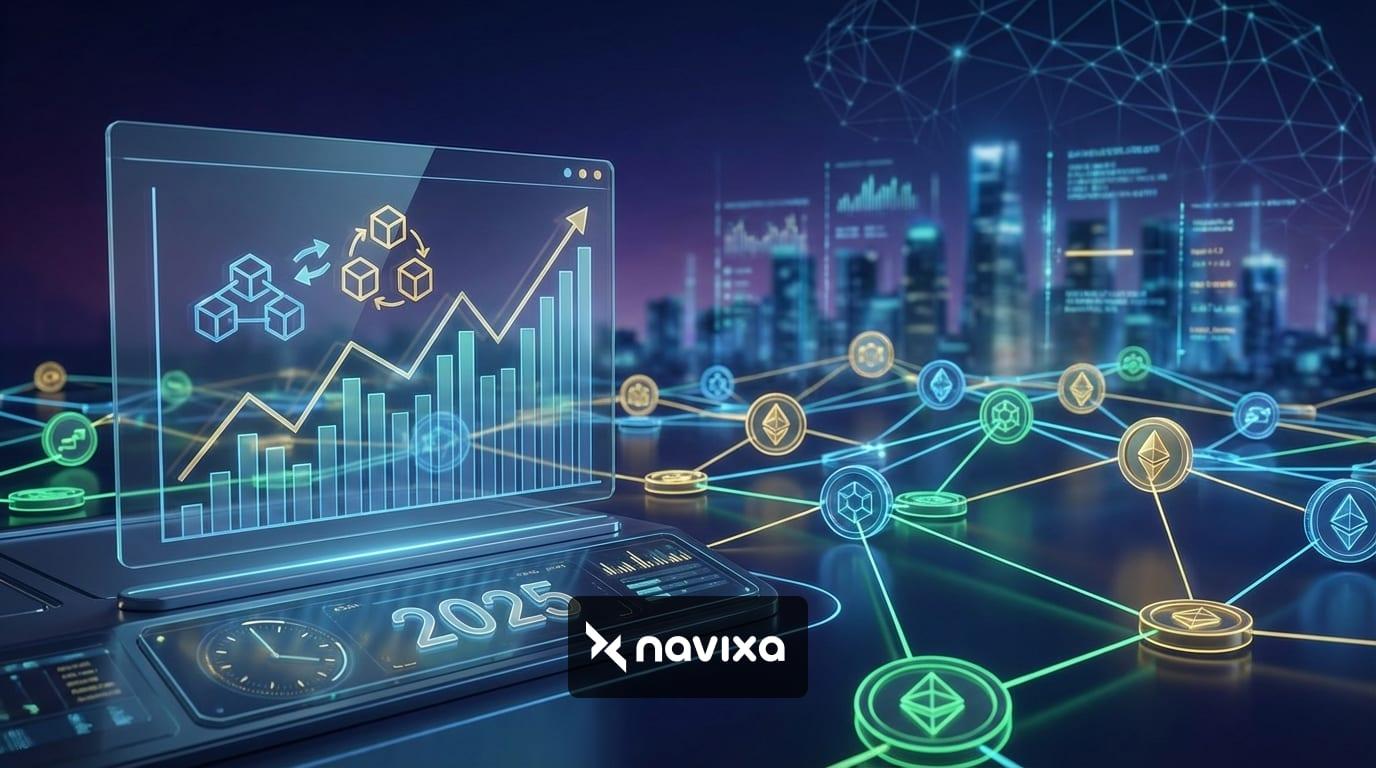
By late 2025, the intersection of artificial intelligence and blockchain technology has evolved from a speculative narrative into a foundational pillar of the crypto economy. The "AI crypto" sector, once driven by hype cycles and buzzwords, has matured into a landscape defined by tangible infrastructure, decentralized compute networks, and autonomous agent economies.
For investors and traders, this shift represents a critical turning point. The market is no longer just betting on which project has the catchiest ticker; capital is flowing into protocols that are actively solving the bottlenecks of centralized AI—namely, the shortage of GPU compute, data privacy concerns, and the siloing of machine learning models. As we stand in December 2025, the divergence between "vaporware" and utility-driven protocols has never been clearer.
This analysis breaks down the state of the market as we head into 2026. We will explore the massive consolidation of the Artificial Superintelligence Alliance (ASI), the economic impact of Bittensor's recent halving, and the dominance of Render in the decentralized GPU space. Furthermore, we will identify the key metrics you must watch to navigate this high-growth sector effectively.
The Maturation of AI Crypto Tokens: 2025 in Review
The year 2025 has been characterized by a "flight to quality." In 2023 and 2024, nearly any token with "GPT" or "AI" in its name could sustain a short-term rally. However, the market dynamics of late 2025 tell a different story. Institutional interest has gravitated heavily toward infrastructure plays—projects that provide the "picks and shovels" for the broader AI industry.
Three specific sub-sectors have emerged as dominant force multipliers:
Decentralized Physical Infrastructure Networks (DePIN): Protocols that aggregate idle GPU power from around the world to train and render AI models at a fraction of the cost of centralized cloud providers like AWS or Google Cloud.
Data Intelligence & Oracle Networks: Systems that ensure AI data integrity, provenance, and fair monetization for data contributors.
Autonomous Agent Economies: Platforms allowing AI agents to transact, negotiate, and execute complex workflows on-chain without human intervention.
The Artificial Superintelligence Alliance (ASI): A New Titan
Perhaps the most significant consolidation event of the decade was the formation of the Artificial Superintelligence Alliance (ASI). By merging the tokenomics and technological roadmaps of Fetch.ai, SingularityNET, and Ocean Protocol, this alliance created a decentralized behemoth capable of challenging centralized AI giants.
Status of the Merger in Late 2025
As of December 2025, the multi-phase merger process has largely matured. The unified token ecosystem now powers a diverse stack of technologies: Fetch.ai's autonomous agents, SingularityNET's R&D in AGI (Artificial General Intelligence), and Ocean Protocol's decentralized data exchange. This interoperability allows an AI agent to purchase a dataset using the unified token standard and immediately process it on a decentralized network.
Traders should note that while the ticker transition has been complex across various exchanges, the ASI Alliance functions as a singular economic zone. The primary value proposition here is the "network effect"—where improvements in one protocol (e.g., better data from Ocean) directly enhance the capabilities of agents in another (Fetch.ai).
Bittensor (TAO): Post-Halving Economics
One of the most discussed events in December 2025 is the recent Bittensor (TAO) halving. Just over a week ago, on December 15, 2025, the network implemented its first reward halving, reducing the daily issuance of TAO tokens from 7,200 to 3,600. This deflationary mechanism, similar to Bitcoin's four-year cycle, has profound implications for the AI crypto market.
The "Zombie Subnet" Cleanse
The halving does more than just reduce supply; it acts as a stress test for the ecosystem's subnets. With mining rewards effectively cut in half, the profitability threshold for validators and miners has doubled. Analysts predict a "Darwinian cleanse" of underperforming or "zombie" subnets—those that fail to generate real-world value or produce high-quality machine learning outputs.
For investors, this consolidation is bullish in the long term. Capital and compute power are expected to concentrate into high-performance subnets that focus on high-demand tasks like Large Language Model (LLM) training, protein folding simulations, and predictive financial modeling. The price action of TAO in late December 2025 has been volatile as miners adjust, but the fundamental thesis of a decentralized intelligence market remains robust.
Render (RENDER): The Backbone of Decentralized Compute
While Bittensor focuses on the *intelligence* layer, Render (RENDER) continues to dominate the *infrastructure* layer. In late 2025, Render has solidified its position as the premier decentralized GPU network. With the proliferation of generative AI (text-to-video, real-time 3D rendering), the demand for GPU cycles has outstripped the supply available from centralized providers.
Render's migration to Solana earlier in the cycle laid the groundwork for the high-throughput, low-latency performance required for real-time AI inference. By December 2025, the network is not just rendering static frames but is increasingly being used for AI model fine-tuning. This expansion of utility has decoupled RENDER's price action from pure speculation, aligning it more closely with actual network usage and compute volume.
Near Protocol & The "User-Owned AI" Narrative
A surprising but strong contender in the 2025 AI narrative is Near Protocol (NEAR). While originally known as a scalable Layer-1 blockchain, Near has successfully pivoted to brand itself as the home for "User-Owned AI." The roadmap for late 2025 and 2026 emphasizes chain abstraction—hiding the complexities of blockchain so that AI agents can interact seamlessly with Web3 applications.
The project's focus on "chain signatures" allows AI agents on Near to control accounts and sign transactions on other chains like Ethereum or Bitcoin. This interoperability position makes NEAR a critical hub for the growing autonomous agent economy
. By enabling AI to own assets and execute trades across chains, Near is effectively building the operating system for the next generation of automated finance (DeFAI).
Comparison: Top AI Crypto Tokens of 2025
The table below provides a snapshot comparison of the leading decentralized AI protocols as of December 2025, highlighting their primary utility and key milestones.
| Token / Project | Primary Utility (2025) | Consensus / Architecture | Key late-2025 Milestone |
|---|---|---|---|
| Bittensor (TAO) | Decentralized Machine Learning Market | Proof of Intelligence (Subnets) | First Halving (Dec 2025) |
| ASI Alliance | Unified AI Agent Economy & Data | Multi-Chain (Cosmos/ETH) | Full Token Merger Completion |
| Render (RENDER) | Distributed GPU Rendering & Compute | Solana (Proof of History) | Expansion to AI Inference Jobs |
| Near Protocol (NEAR) | Chain Abstraction for AI Agents | Sharded Proof-of-Stake | Cross-Chain Agent Signatures |
Strategic Takeaways for Traders in 2026
1. Follow the Compute, Not the Hype
In 2026, the most reliable leading indicator for an AI token's performance is its *compute usage*. For Render, look at the number of frames rendered and jobs processed. For Bittensor, monitor the weight distribution across subnets. Tokens that are purely speculative without underlying computational demand are likely to underperform as the market matures.
2. The Rise of "DeFAI" (Decentralized Finance + AI)
Keep a close watch on projects that sit at the intersection of DeFi and AI. Autonomous agents that can manage liquidity, execute arbitrage, and rebalance portfolios are becoming a reality. Protocols like Near and the ASI Alliance are building the rails for this. The next breakout token could be a specialized "Agent Launchpad" that makes it easy for retail users to deploy their own trading bots.
3. Governance and Tokenomics Matters
With the TAO halving behind us, we are seeing how supply shocks influence price discovery in the AI sector. Always analyze the emission schedules of AI tokens. High inflation (token unlocks) can suppress price even if the technology is sound. Look for projects with deflationary mechanisms (like Render's burn-and-mint equilibrium) or fixed supply curves.
Conclusion: The Era of Utility
As we close out 2025, the AI crypto market is visibly distinct from the speculative frenzy of previous years. The winners are defined by their ability to provide decentralized, censorship-resistant, and efficient alternatives to Big Tech's AI silos. Whether it is the collaborative intelligence of Bittensor, the raw compute power of Render, or the interoperable agents of the ASI Alliance, the future of AI is decentralized
. For the astute investor, the opportunity lies in identifying the infrastructure layers that will power this new economy for the decade to come.