
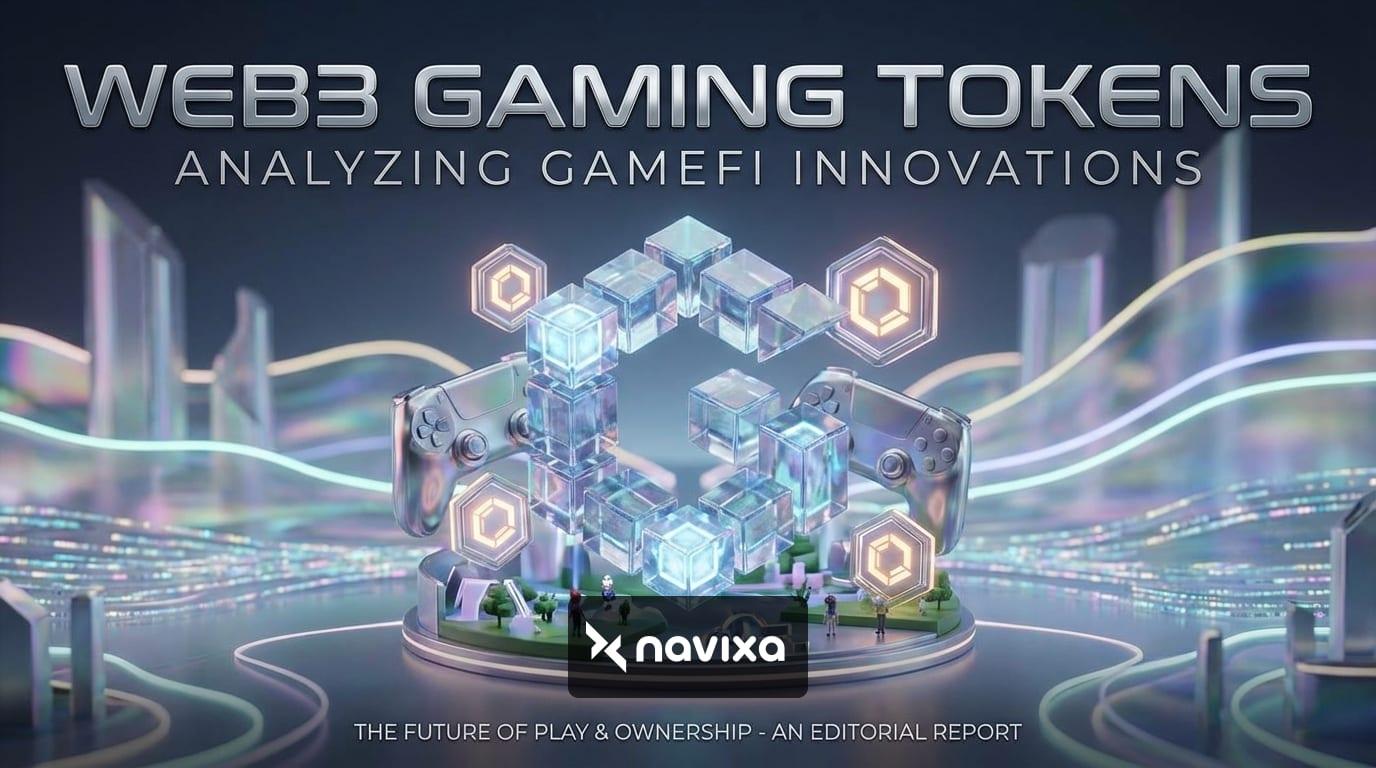
The intersection of decentralized finance and the gaming industry has birthed one of the most dynamic sectors in the cryptocurrency ecosystem: GameFi. At the heart of this digital revolution are Web3 gaming tokens, specialized digital assets that power in-game economies, enable decentralized governance, and facilitate verifiable ownership of virtual items. Following a brutal market shakeout in 2025 where the sector's market capitalization plummeted by nearly 70%, early 2026 has ushered in a powerful renaissance. With the GameFi market cap rapidly rebounding past the $6.59 billion mark, it is clear that blockchain gaming is maturing from a speculative hype cycle into a utility-driven digital economy.
This comprehensive guide explores the latest GameFi innovations, analyzes the top tokens leading the market recovery, and provides actionable trading strategies for navigating this high-growth sector.
The Evolution of GameFi: From P2E to Play-and-Earn
The initial wave of blockchain gaming was defined by the "Play-to-Earn" (P2E) model. While revolutionary, many early projects suffered from hyperinflationary tokenomics. As long as new players entered the ecosystem, token prices soared; however, once user growth stagnated, in-game economies often entered a death spiral.
Today, the narrative has fundamentally shifted. Game developers are prioritizing high-quality gameplay and sustainable economic models, ushering in the "Play-and-Earn" era.
Why Web3 Gaming Tokens Matter Today
In 2026, Web3 gaming tokens are no longer just speculative rewards; they are integral components of complex, decentralized virtual worlds. These tokens provide several core utilities:
1. Digital Ownership: Through Non-Fungible Tokens (NFTs) and native fungible tokens, players truly own their in-game assets, allowing them to trade or sell items on secondary markets. 2. Decentralized Governance: Many gaming platforms use decentralized autonomous organizations (DAOs). Holding native tokens grants players voting rights on crucial game updates and treasury allocations. 3. DeFi Integration: Modern GameFi projects seamlessly integrate decentralized finance mechanics. Players can stake their gaming tokens for yield, provide liquidity on decentralized exchanges, or use them as collateral for crypto loans.
"Crypto in 2026 is defined by a shift from speculation to utility. GameFi is focusing on sustainability, allowing players not just to earn but also to stake, lend, or trade assets within a gaming economy."
Regulatory Tailwinds and Institutional Capital
A significant catalyst for the 2026 GameFi resurgence is the evolving regulatory landscape. The anticipated enactment of the CLARITY Act is expected to remove major hurdles for institutional investors, allowing capital to flow into blockchain gaming platforms through compliant token structures. Furthermore, developers are increasingly integrating stablecoins into their platforms to mitigate extreme in-game volatility, thereby fostering a more stable environment for both players and institutional backers.
Top Web3 Gaming Tokens Leading the Market
As the broader cryptocurrency market experiences a macroeconomic tailwind—highlighted by Bitcoin trading comfortably above the $90,000 mark in early 2026—several Web3 gaming tokens are emerging as clear market leaders. Understanding the unique value proposition of each token is crucial for any crypto trader or investor.
| Token Name | Ticker | Primary Network | Core Value Proposition |
|---|---|---|---|
| Axie Infinity | AXS | Ronin / Ethereum | The historical bellwether of GameFi; transitioning to a robust, multi-game ecosystem. |
| The Sandbox | SAND | Ethereum / Polygon | Leading the decentralized metaverse narrative with user-generated content and virtual real estate. |
| Immutable | IMX | Ethereum (Layer 2) | The premier Layer-2 scaling solution specifically designed for zero-gas fee NFT and Web3 gaming. |
| Gala Games | GALA | GalaChain | A decentralized network of player-owned node operators running a diverse portfolio of AAA-quality games. |
| World of Dypians | WOD | Multi-chain | A fast-growing MMORPG token driving massive on-chain player activity and high trading volumes. |
Axie Infinity ($AXS) continues to act as the bellwether for the entire GameFi sector. Market analysts note that when AXS experiences a surge in trading volume and bullish sentiment, it often triggers a cascading rally across other large-cap gaming tokens like The Sandbox ($SAND) and Decentraland ($MANA).
Trading Strategies for Web3 Gaming Tokens
Trading Web3 gaming tokens requires a nuanced approach that blends traditional technical analysis with crypto-specific on-chain metrics. Because these assets are highly reactive to both macroeconomic trends and niche gaming narratives, traders must remain exceptionally vigilant.
Technical Analysis in GameFi
When applying technical analysis to gaming tokens, focus on momentum indicators and volume profiles:
* Moving Averages (MAs): Utilize the 50-day and 200-day moving averages to identify macro trend reversals. A "Golden Cross" (where the 50-day MA crosses above the 200-day MA) in a token like $IMX often signals sustained institutional accumulation. * Relative Strength Index (RSI): GameFi tokens are prone to massive, hype-driven rallies. An RSI above 75 often indicates overbought conditions, signaling a potential short-term pullback. Conversely, an RSI below 30 during a market dip can present a lucrative entry point. * Volume Analysis: Always confirm price breakouts with trading volume. A surge in price without a corresponding spike in volume is often a "fakeout." High volume validates the strength of a new trend.
On-Chain Metrics to Watch
To gain an edge in the Web3 gaming market, traders must look beyond price charts and analyze fundamental on-chain data. Platforms like DappRadar and CoinMarketCap are invaluable for tracking these metrics:
* Unique Active Wallets (UAW): This metric tracks the number of individual wallets interacting with a game's smart contracts. A steady increase in UAW indicates genuine user growth and adoption. * Token Velocity and Retention: Monitor how often tokens are transferred versus staked. High staking rates reduce the circulating supply, creating upward price pressure. * NFT Marketplace Volume: For games that rely heavily on NFTs (like virtual land or character skins), the trading volume on secondary marketplaces is a strong leading indicator of the underlying token's future performance.
Actionable Steps for GameFi Investors
If you are looking to capitalize on the innovations within the Web3 gaming sector, consider the following actionable steps:
1. Conduct Deep Fundamental Research: Before investing, play the game. Is it actually fun? A game that relies solely on financial incentives rather than entertainment value will struggle to retain players long-term. 2. Diversify Across the Ecosystem: Do not allocate all your capital to a single game. Balance your portfolio by investing in infrastructure tokens (like $IMX or $RON) that benefit from the broader growth of the sector, alongside specific game tokens (like $AXS or $WOD). 3. Monitor Token Unlocks: Many GameFi projects have vesting schedules for early investors and team members. Use crypto tracking tools to monitor upcoming token unlocks, as sudden increases in circulating supply can lead to significant price dumps.
Risk Management in Blockchain Gaming
While the potential returns in the GameFi sector are substantial, the risks are equally severe. Effective risk management is non-negotiable.
Beware of Inflationary Tokenomics: Always analyze a project's whitepaper to understand its emission schedule. If a game prints tokens indefinitely without robust "sinks" (mechanisms to burn or lock tokens), the asset's value will inevitably crash.
Smart Contract Vulnerabilities: Blockchain games operate via complex smart contracts. Hacks and exploits are unfortunately common. Ensure that the project you are investing in has undergone multiple security audits by reputable firms like CertiK or Hacken.
Implement Strict Stop-Losses: Given the extreme volatility of altcoins, never enter a trade without a predefined exit strategy. Utilize stop-loss orders to protect your capital from sudden market downturns.
Practical Takeaways
* The GameFi sector has recovered impressively in 2026, driven by a transition from speculative P2E models to sustainable, utility-driven gaming economies. * Regulatory developments, such as the CLARITY Act, and the integration of stablecoins are paving the way for institutional capital to enter the blockchain gaming space safely,. * Tokens like AXS, SAND, and IMX continue to lead the market, with AXS serving as a critical indicator for broader sector movements. * Successful trading requires a combination of technical indicators (RSI, Moving Averages) and on-chain metrics (Unique Active Wallets, staking ratios). * Risk management—specifically monitoring token unlock schedules and understanding emission models—is crucial for long-term profitability.
Frequently Asked Questions
What are Web3 gaming tokens?
Web3 gaming tokens are digital cryptocurrencies native to blockchain-based games. They are used to facilitate in-game transactions, reward players, purchase virtual assets (like NFTs), and provide holders with decentralized governance voting rights.
How do you evaluate a GameFi token's potential?
Evaluating a GameFi token requires looking at both fundamental and on-chain data. Key factors include the quality and entertainment value of the game, the tokenomics (emission rates and token sinks), the number of Unique Active Wallets (UAW), and the strength of the development team and community.
What caused the recent recovery in blockchain gaming?
After a severe downturn in 2025, the 2026 recovery was catalyzed by several factors: a shift towards sustainable "Play-and-Earn" models, better regulatory clarity attracting institutional capital, the integration of stablecoins to reduce volatility, and broader macroeconomic momentum driven by Bitcoin's strong performance.
Are Web3 gaming tokens a good investment?
They can be highly lucrative but carry significant risk due to market volatility and experimental tokenomics. They are best suited for investors who actively manage their portfolios, conduct deep fundamental research, and utilize strict risk management strategies like stop-loss orders and portfolio diversification.
Conclusion
The intersection of gaming and blockchain technology represents a fundamental shift in how digital value is created, distributed, and owned. As the industry moves past the speculative frenzy of its early days, the GameFi innovations of 2026 are laying the groundwork for a robust, sustainable digital economy. By understanding the underlying tokenomics, leveraging technical and on-chain analysis, and practicing rigorous risk management, traders can position themselves to capitalize on the massive potential of Web3 gaming tokens. The future of gaming is decentralized, and the opportunity to participate in this financial revolution has never been more accessible.
--- *Disclaimer: Cryptocurrency trading involves significant risk. The information provided in this article is for educational purposes only and should not be construed as financial advice. Always conduct your own research before making investment decisions.*