

The convergence of artificial intelligence and digital assets has created the defining financial narrative of our time. With Bitcoin surging past $78,000 and the global crypto market cap resting firmly above $2.67 trillion, institutional capital is flowing heavily into digital scarcity. Concurrently, the tech stock market is experiencing an unprecedented surge driven by artificial intelligence—a frenzy that has led many analysts and executives to warn of an impending "AI bubble."
Investors are left navigating two parallel, yet fundamentally different, tech booms. While AI is driving massive capital expenditures into infrastructure and data centers, cryptocurrency is transitioning into an established institutional asset class. Understanding the nuances of the ai bubble vs crypto debate is crucial for anyone looking to optimize their portfolio over the next decade.
- The AI boom is characterized by unprecedented corporate capital expenditure, sparking fears of a valuation bubble.
- Cryptocurrency markets are displaying signs of maturity, backed by institutional adoption such as pension funds buying the dip.
- Trading psychology plays a crucial role in both sectors, with FOMO driving retail capital into unproven AI and crypto projects.
- Understanding the convergence of these markets offers unique hedging opportunities for long-term investors.

Understanding the Boom: Are We in an AI Bubble?
When we analyze the explosive growth of artificial intelligence, it is impossible to ignore the sheer velocity of capital deployment. Mega-cap tech companies are locked in a historic arms race, spending billions on GPUs, data centers, and advanced power capacity. Unlike the dot-com bubble of the late 90s, where companies with zero revenue commanded massive valuations purely on the promise of internet “eyeballs,” the current AI leaders are established global giants funding their expansion through massive, existing cash flows.
However, the rapid influx of speculative capital into secondary AI startups and hardware suppliers is where classic bubble mechanics begin to show. Valuations for emerging AI firms are increasingly disconnected from near-term revenue projections, driven instead by narrative and an overwhelming fear of missing out (FOMO). For instance, recent developments have seen traditional crypto miners, such as Riot, experiencing stock jumps simply by expanding data center deals and signaling an “AI pivot.” This kind of narrative-driven price action mirrors the exuberance seen in past economic bubbles, as highlighted in Oaktree Capital Management's memo on market bubbles.
When evaluating assets swept up in technological fervor, investors must remain highly cautious. You can learn more about managing these psychological expectations in our comprehensive guide to Palantir Stock Price Target: Anchoring Bias & Risk.
Crypto Market Resilience and Maturation
In stark contrast to the nascent stage of the AI boom, the cryptocurrency market is demonstrating historical resilience and maturation. While Bitcoin's famous volatility remains a factor, the structural foundation of the market has fundamentally shifted. Institutional adoption is no longer a theoretical concept—it is an operational reality.
Recent moves by major institutional players, such as Canadian pension giant AIMCo buying the dip and accumulating substantial unrealized gains, highlight how long-term capital is buffering market corrections. With Bitcoin dominance hovering comfortably above 58%, the legacy cryptocurrency provides a relatively stable anchor for the broader digital asset market. Furthermore, foundational entities like the Ethereum Foundation are executing sophisticated treasury strategies, signaling a shift toward long-term operational sustainability over short-term speculation.
**Macro Warning:** During a recent podcast, [Tether CEO Paolo Ardoino's recent market assessment](https://coinmarketcap.com/) cited a potential AI-driven stock market bubble as one of the primary macro risk factors for Bitcoin, warning that an AI sentiment shift could trigger associated U.S. stock market turmoil.
The institutionalization of crypto—from spot ETFs to the tokenization of real-world assets (RWAs)—suggests the digital asset sector is significantly further along the traditional tech adoption curve than speculative, early-stage AI ventures. It marks a paradigm shift from the retail-driven euphoria of 2017 toward a calculated, macroeconomic integration.

AI Bubble vs Crypto: A Comparative Analysis
While both sectors attract forward-looking investors, their market mechanics, underlying drivers, and risk profiles are vastly different. Understanding these distinctions is absolutely critical when comparing the ai bubble vs crypto narrative.
| Feature | AI Tech Boom | Cryptocurrency Market |
|---|---|---|
| Primary Driver | Corporate capital expenditure, GPU demand, institutional infrastructure build-out. | Decentralization narratives, digital scarcity, institutional ETFs, Web3 adoption. |
| Valuation Metric | Traditional P/E ratios, forward revenue multiples, compute capacity. | Network effects, tokenomics, on-chain activity, hash rate, active wallet addresses. |
| Market Maturity | Early-stage hyper-growth (infrastructure phase). | Maturing institutional phase (adoption & regulation phase). |
| Retail Accessibility | Mostly limited to public stocks (mega-caps) and restrictive mutual funds. | Direct ownership of underlying protocols, 24/7 global permissionless trading. |
| Major Risk Factor | Hardware oversupply, delayed ROI on AI implementation, stock concentration risk. | Regulatory crackdowns, macroeconomic liquidity shocks, protocol exploits. |
This divergence creates a fascinating unique dynamic. If the AI bubble were to burst due to delayed returns on massive data center investments, the resulting capital flight could drag down the broader tech sector—including crypto—through sheer liquidity panic. Conversely, a loss of faith in centralized tech monopolies could drive investors toward the relative, decentralized safety of Bitcoin. For deeper insights on how these macroeconomic shifts affect your portfolio, see our analysis on GDP Impact on Crypto: A Beginner's Trading Guide.
Market Analysis & Trading Psychology
When navigating the chaotic intersection of the AI bubble and crypto market cycles, understanding trading psychology is your greatest edge. Both sectors are currently fueled by the allure of exponential, paradigm-shifting technology, which inherently triggers deep-seated cognitive biases.
The Danger of Narrative Trading
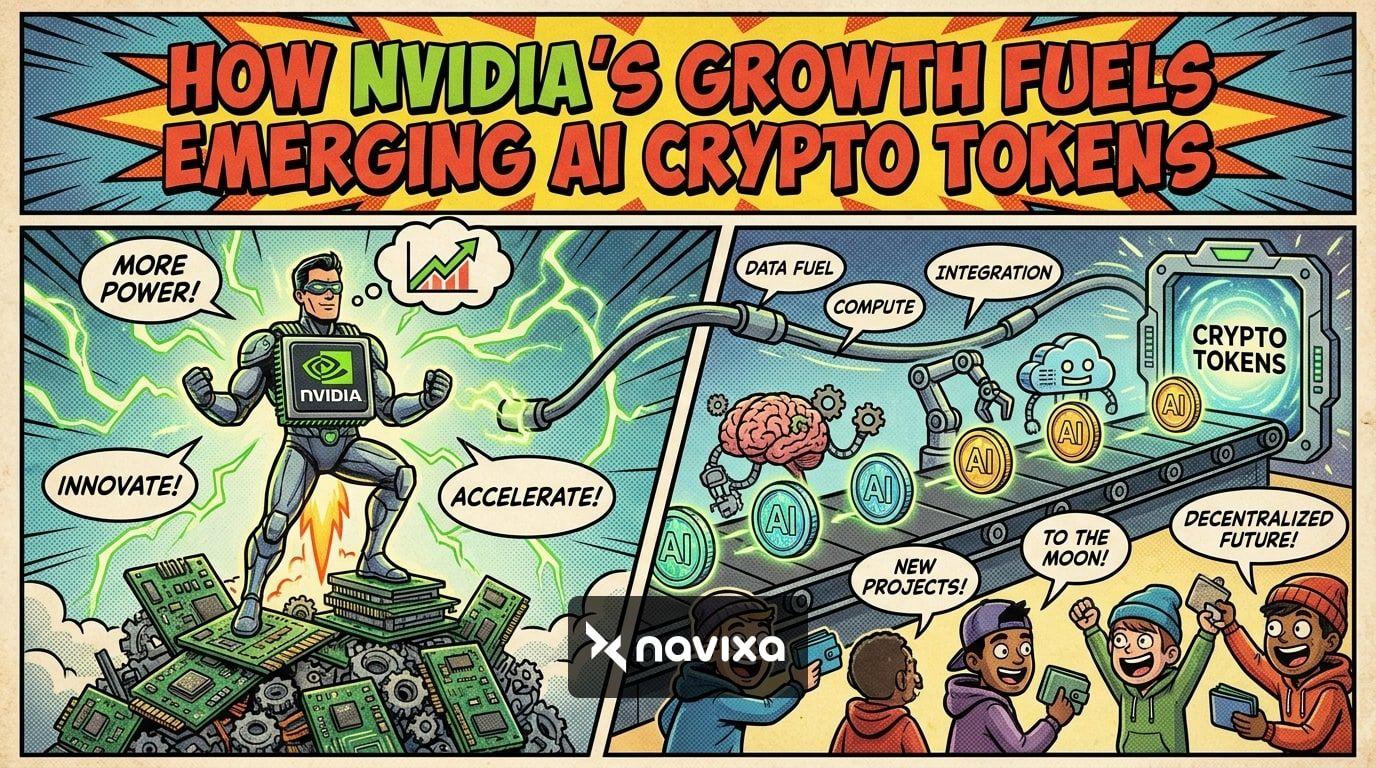
Human psychology heavily influences the formation and popping of market bubbles. Investors inherently want to be early to the "next big thing." In artificial intelligence, this manifests as extreme valuation multiples for unproven startups simply because they secured a supply of Nvidia chips. In crypto, it results in massive speculative inflows to low-cap altcoins promising revolutionary decentralized compute or AI-agent networks.
The psychological trap here is anchoring bias. An investor might see an AI token drop 50% from its all-time high and automatically assume it is "cheap," failing to realize the initial valuation was purely narrative-driven and entirely disconnected from fundamental utility.

The Convergence Hype
Perhaps the most dangerous psychological zone right now is the overlap between the two sectors. Trending coins on aggregators like CoinGecko often feature new protocols launching "sovereign advertising networks powered by AI and blockchain consensus." These projects routinely blend the buzzwords of both industries to farm retail liquidity.
**Risk Management Alert:** Be extremely cautious of micro-cap crypto projects abruptly rebranding as "AI solutions." Many of these tokens lack actual AI utility, lack competent engineering teams, and rely entirely on speculative hype generated by the broader stock market's AI boom.
Traders must mentally separate a company legitimately building AI infrastructure from a blockchain project simply riding the coattails of the prevailing narrative. If you want to prepare your mindset for broader market drawdowns, reviewing advanced macro strategies in our Stock Market Crash Crypto: Long-Term Holding Strategy can provide a solid foundation for surviving the noise.
Strategies for Hedging Across AI and Crypto
Investors do not need to choose strictly between participating in the AI revolution and holding cryptocurrency; rather, the objective should be strategic diversification. Here are actionable methods to hedge your exposure:
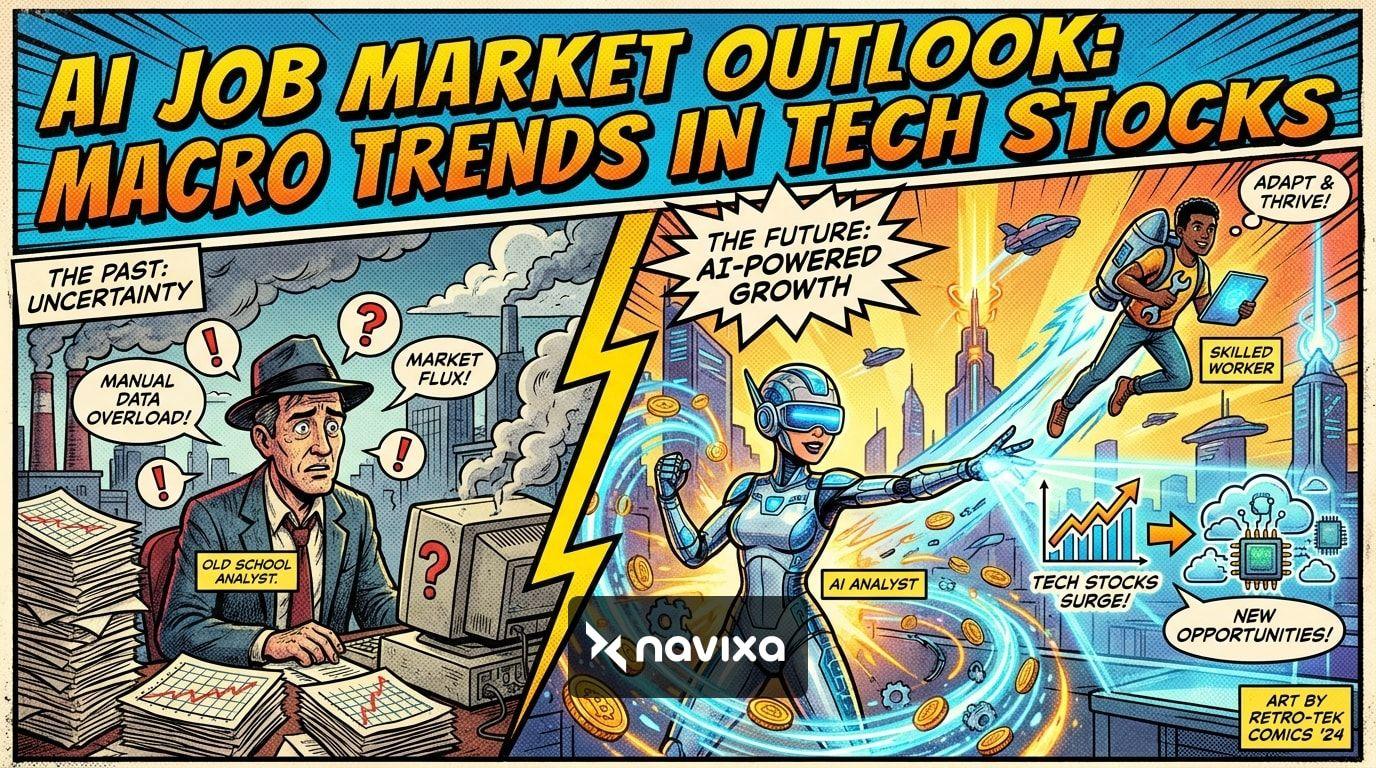
1. The Barbell Approach: Balance high-conviction, established assets like Bitcoin and large-cap AI infrastructure stocks (like Nvidia or Microsoft) on one end, with smaller, carefully vetted speculative bets on decentralized physical infrastructure networks (DePIN) on the other. 2. Monitor the Macro Job Market: The deployment of agentic AI is rapidly changing the landscape of tech employment. Track these vital macroeconomic trends through our AI Job Market Outlook: Macro Trends in Tech Stocks. A softening corporate job market can signal a broader economic slowdown that severely affects both speculative AI stocks and high-risk crypto assets. 3. Watch the Hash Rate and Compute Power: Crypto miners pivoting to AI data centers are an excellent proxy for market demand. If Bitcoin mining becomes significantly less profitable than leasing out GPU clusters for AI model training, expect sweeping shifts in corporate strategy, mining difficulty, and subsequent stock valuations.

Practical Takeaways for Investors
If you are actively navigating the current macroeconomic climate, keep these practical points at the forefront of your strategy: - Avoid the Hype Echo Chamber: Do your own relentless research on the fundamental utility of both AI stocks and crypto tokens. If a project or startup cannot explicitly explain its revenue model or token utility without relying on generic tech buzzwords, it is likely a speculative trap. - Understand Market Correlation: Historically, Bitcoin has acted as a high-beta tech asset during periods of severe monetary tightening. If the AI bubble aggressively pops, expect short-term liquidity shocks to heavily hit the crypto market as well. To understand how legends navigate systemic risks, check out our piece on the Buffett Stock Market Warning: Crypto Macro Outlook. - Position for Longevity: The true winners of the AI revolution and the digital asset space will be the protocols and companies that survive the inevitable "trough of disillusionment" and build genuine, long-lasting products that actually improve workforce efficiency and financial sovereignty.
Conclusion
The debate surrounding the ai bubble vs crypto isn't merely about determining which sector will eventually fail—it's about fundamentally understanding the unique timelines of their respective adoptions. Artificial intelligence is currently undergoing a massive, capital-intensive infrastructure build-out that displays classic signs of temporary overvaluation and narrative exuberance. Meanwhile, the cryptocurrency market is actively maturing, heavily supported by increasing institutional guardrails, clearer regulatory frameworks, and proven use cases for digital scarcity.
By maintaining a highly disciplined trading psychology, ignoring narrative-driven hype, and utilizing a strategically diversified approach, investors can capture the tremendous upside of the next technological frontier while prudently hedging against inevitable market corrections. Stay vigilant, manage your portfolio risk strictly, and always base your trading decisions on fundamental realities rather than the fear of missing out.
Frequently Asked Questions
What exactly is the "AI bubble"?
The "AI bubble" refers to a theoretical macroeconomic scenario where the valuations of artificial intelligence companies and related infrastructure stocks inflate rapidly beyond their intrinsic value, driven almost entirely by investor hype, media narratives, and excessive corporate spending rather than actual near-term profits or tangible productivity gains.
How does the current crypto market differ from past bubbles?
Unlike the 2017 ICO craze or the 2021 retail NFT boom, the current cryptocurrency market is heavily underpinned by structural institutional investment. The active presence of pension funds, corporate treasuries, and regulated spot ETFs provides a massive layer of foundational capital that makes the market markedly more resilient to retail-driven volatility.
Will an AI stock market crash affect Bitcoin?
Yes, it is highly likely. Cryptocurrencies and legacy tech stocks often share a strong correlation during severe liquidity shocks. If the AI bubble bursts rapidly, both institutional and retail investors may be forced to liquidate their crypto assets to cover margin calls or reduce overall portfolio risk, causing significant short-term downward price pressure.
Are "AI Crypto Tokens" a safe investment?
Many tokens aggressively bridging AI and crypto are currently highly speculative. While some legitimate projects provide vital decentralized computing power or verified AI agents, many merely use AI buzzwords to attract uninformed investment. Thorough fundamental analysis of the team, tokenomics, and actual GitHub commits is absolutely required to avoid falling into narrative-driven traps.
How should I optimally balance my portfolio between AI and Crypto?
A widely respected strategy is the barbell approach: securely investing in established, cash-flowing blue-chip tech stocks and major cryptocurrencies (like Bitcoin and Ethereum) for long-term stability, while allocating only a very small, strictly managed percentage of your portfolio to speculative AI startups or high-risk crypto altcoins.