
Trading Strategies
VIX Index Explained: Volatility Strategies for Risk Management
- Nov 27, 2025
- 7 min read
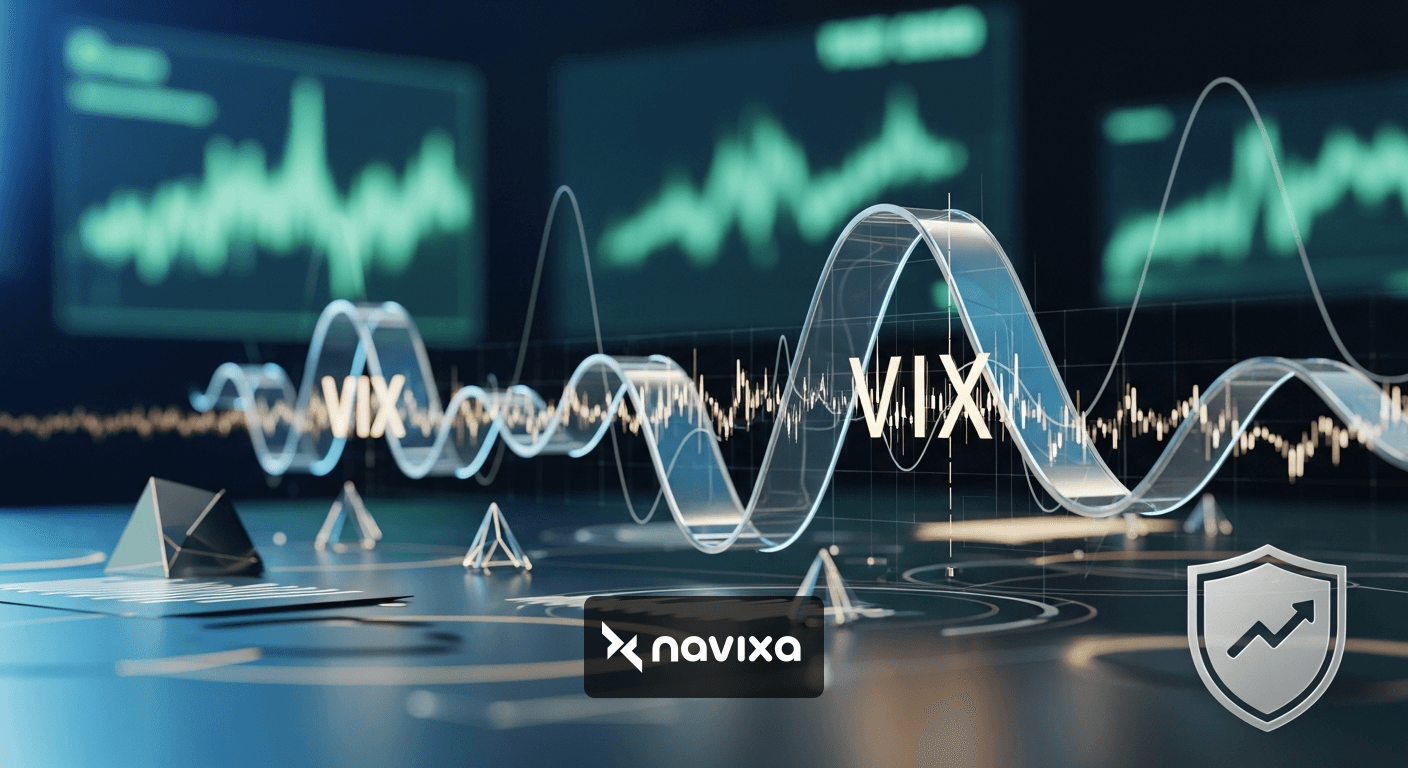
In the world of financial markets, uncertainty is the only guarantee. Whether you are a traditional equity trader or a cryptocurrency enthusiast, understanding how to measure and trade fear is often the difference between a liquidated portfolio and a profitable hedge. The CBOE Volatility Index, commonly known as the VIX index, has long been the gold standard for gauging market sentiment in the S&P 500. However, in the evolving landscape of 2025, the principles of the VIX have transcended traditional finance, birthing crypto-native equivalents like the Crypto Volatility Index (CVI) and Deribit’s DVOL.
For algorithmic traders and AI bot users, volatility is not just a risk factor—it is an asset class. By monitoring the VIX, traders can adjust grid parameters, automate hedging entries, and capitalize on mean reversion opportunities. This comprehensive guide will demystify the VIX, explore its correlation with Bitcoin in late 2025, and provide actionable strategies for managing risk in high-volatility environments.
What Is the VIX Index?
Created by the Chicago Board Options Exchange (CBOE), the VIX measures the market’s expectation of 30-day volatility. It is derived from the prices of SPX index options—specifically, how much traders are willing to pay for both calls (betting on a rise) and puts (betting on a fall). When option premiums swell, it indicates that investors expect sharp price swings, pushing the VIX higher.
Often dubbed the "Fear Gauge," the VIX has an inverse relationship with the stock market. During stable bull runs, the VIX typically drifts below 20. During crashes or geopolitical panics—such as the tariff-induced scares seen in early 2025—the VIX can spike above 30 or even 50.
Interpreting VIX Levels
Understanding VIX readings is crucial for timing market entries and exits:
• Below 15 (Complacency): Markets are calm, but this can signal a local top as traders become overconfident.
• 15 – 25 (Normal): The historical average range. Strategies like trend-following work well here.
• Above 30 (Fear): High uncertainty. While risky, this often presents the best buying opportunities for long-term investors ("buy when there is blood in the streets").
The Crypto Volatility Index (CVI) and DVOL
While the VIX tracks the S&P 500, cryptocurrency markets have developed their own benchmarks. The most prominent are the Crypto Volatility Index (CVI) and Deribit’s volatility index (DVOL).
The CVI functions similarly to the VIX but uses a decentralized oracle network (Chainlink) to aggregate options data from various exchanges. It ranges from 0 to 200, calculating the implied volatility of Bitcoin and Ethereum. This metric is essential for crypto traders because realized volatility in crypto is significantly higher than in traditional equities.
Bitcoin vs. VIX Correlation in 2025
Interestingly, 2025 has shown a shifting correlation between Bitcoin and the VIX. In July 2025, data providers noted a record 90-day correlation (0.88) between Bitcoin's implied volatility and the VIX, suggesting institutional integration ("Wall Streetization") was deepening. However, by November 2025, we observed periods of "decoupling," where Bitcoin acted as a risk-off asset during currency instability, moving inversely to the VIX.
Traders must remain adaptable: when correlation is high, a VIX spike is a signal to de-risk crypto positions. When correlation breaks, Bitcoin may serve as a hedge against traditional market turmoil.
TradFi VIX vs. Crypto Volatility (Comparison)
| Feature | VIX (CBOE) | CVI / DVOL (Crypto) |
|---|---|---|
| Underlying Asset | S&P 500 Options (SPX) | Bitcoin & Ethereum Options |
| Typical Range | 10 – 80 (Avg ~18) | 30 – 150 (Avg ~55) |
| Calculation Source | Centralized (CBOE) | Decentralized Oracles / Exchange Data |
| Trading Instruments | VIX Futures, ETFs (VXX) | CVI Tokens, Volatility Tokens, DVOL Futures |
| Predictive Horizon | 30 Days | 30 Days |
Volatility Trading Strategies for 2025
Knowing the index level is useless without a strategy. Below are three professional approaches to trading volatility.
1. Mean Reversion (Shorting Volatility)
Volatility is mean-reverting. Unlike a stock price that can go to infinity, the VIX or CVI rarely stays at extreme highs for long. When the VIX spikes above 40 (or CVI above 100), it often signals panic selling is exhausted.
Strategy: Traders might short VIX futures or sell call options on Bitcoin when implied volatility is historically high. This captures the premium as market fear subsides and volatility contracts.
2. Hedging with VIX ETFs and CVI Tokens
If you hold a large portfolio of equities or crypto, a sudden crash can be devastating. Volatility products tend to rise when the market falls.
Strategy: Allocate 1-5% of your portfolio to long volatility instruments (like VIX call options or CVI tokens) during periods of extreme complacency (VIX < 12). If the market crashes, the profit from these hedges helps offset losses in your spot positions.
3. Automated Grid Trading Bots
AI trading bots flourish or fail based on volatility settings. A tight grid during high volatility will result in the price breaking out of the grid, leaving the bot with "bag holdings."
Strategy: Connect your trading bot to a volatility feed. If the VIX/CVI rises, program the bot to automatically widen its grid range (e.g., increasing grid step from 0.5% to 2.0%). This prevents early exits and allows the bot to capture larger swings profitably.
Risk Management: Using Volatility for Position Sizing
Smart traders do not use fixed position sizes (e.g., "always invest $1,000"). They use volatility-adjusted sizing. The logic is simple: when volatility is high, the daily range of the asset is larger, meaning your stop-loss must be wider to avoid noise.
To keep your dollar risk constant, you must reduce your position size as volatility increases. For example, if the CVI doubles from 50 to 100, you should theoretically halve your position size to maintain the same risk profile. This discipline prevents catastrophic drawdowns during "black swan" events.
Conclusion
The VIX index is more than just a ticker on a screen; it is a direct line into the psychology of the market. In 2025, with institutional crypto adoption at an all-time high, the lines between traditional volatility (VIX) and crypto volatility (CVI/DVOL) are blurring, creating unique arbitrage and hedging opportunities.
By mastering these indices, you move from reacting to fear to capitalizing on it. Whether you are manually hedging a portfolio or configuring an AI bot to adapt to market turbulence, volatility is a tool that belongs in every serious trader's arsenal.
Ready to automate your risk management? Explore advanced volatility trading strategies and integrate them with your algorithmic setups today.