
Introduction: The New Era of Digital Bullion
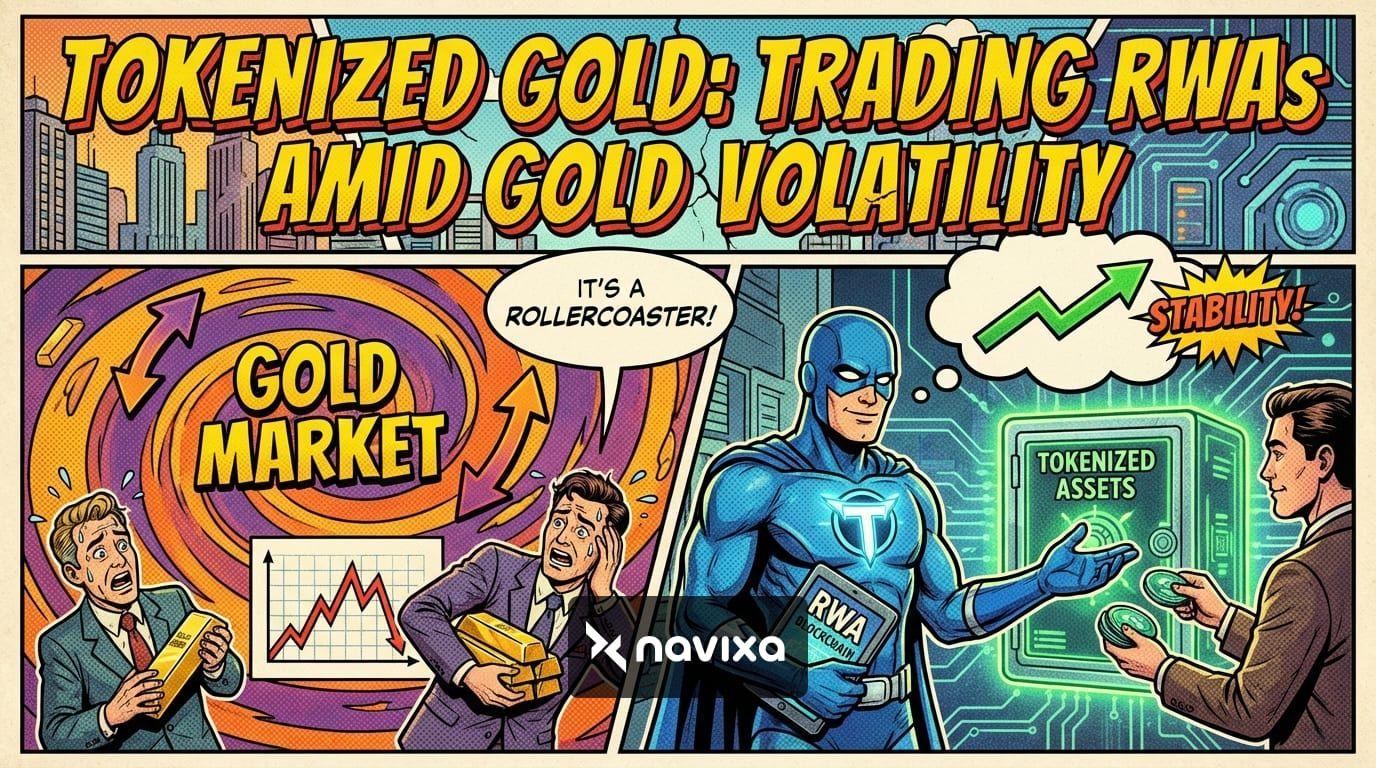
In an era of unprecedented macroeconomic shifts and unpredictable geopolitical landscapes, gold has fiercely reasserted its dominance as the ultimate safe-haven asset. However, as gold prices surged past $5,400 per ounce during recent global flashpoints, a glaring structural limitation in traditional financial markets was fully exposed: physical gold and traditional exchange-traded funds (ETFs) do not trade on weekends. When global crises unfold on a Friday night, traditional investors are trapped until Monday morning, completely unable to react to rapidly changing market conditions.
Enter tokenized gold—the blockchain-based evolution of physical bullion that trades 24 hours a day, seven days a week. By digitizing real-world assets (RWAs), tokenized gold merges the timeless stability of physical precious metals with the cryptographic security, fractionalization, and instant settlement of decentralized finance (DeFi). For modern traders, understanding how to navigate this asset class is no longer optional; it is a critical component of dynamic portfolio management amid extreme market volatility. This guide explores how tokenized gold is reshaping the commodity landscape and details actionable strategies to trade it effectively.
The State of Tokenized Gold
Tokenized commodities have rapidly moved from experimental concepts to foundational pillars of the cryptocurrency ecosystem. According to market intelligence, the tokenized gold market capitalization eclipsed $6 billion following massive price rallies, driven by a heavy influx of both retail and institutional capital. In the preceding year alone, cumulative trading volumes for tokenized gold hit a staggering $178 billion. This surge made tokenized gold the second most-traded gold investment vehicle globally, surpassed only by the traditional SPDR Gold Shares (GLD).
"Tokenized gold provides instant settlement and 24/7 liquidity, making the ability to swap gold for stablecoins at 3:00 AM on a Sunday a new prerequisite for institutional risk management."
Currently, the market is heavily consolidated. Two dominant tokens—Tether Gold (XAUT) and Pax Gold (PAXG)—control approximately 97% of the entire tokenized gold market supply. These tokens are backed 1:1 by physical gold bars stored in fully audited, high-security London vaults. The undeniable success of these assets has even prompted the World Gold Council to propose "Gold as a Service," a standardized framework designed to modernize the issuance, custody, and interoperability of digital gold products across both traditional and decentralized financial rails. Furthermore, major liquidity providers and institutional market-makers have actively integrated tokens like PAXG and XAUT into their OTC desks, permanently blurring the lines between traditional commodity trading and the blockchain.
Tokenized Gold vs. Traditional Gold Investments
To understand why crypto-native traders and institutional market-makers are migrating to on-chain RWAs, it is essential to compare tokenized gold against traditional investment vehicles.
| Feature | Tokenized Gold (e.g., PAXG, XAUT) | Traditional Gold ETFs (e.g., GLD) | Physical Bullion |
|---|---|---|---|
| Trading Hours | 24/7/365 | Traditional Market Hours | Business Hours |
| Settlement Speed | Instant (Blockchain) | T+1 or T+2 Days | Immediate (Requires transport) |
| Fractional Ownership | Extremely High (Up to 18 decimals) | Limited to full share price | Low (Coins/Bars) |
| Storage Fees | Often integrated into transfer fees | Annual expense ratio | High (Vaults, insurance) |
| Yield Opportunities | Yes (DeFi staking, CeFi yield) | No | No |
Trading Strategies for Tokenized RWAs
Trading tokenized gold requires a nuanced approach that seamlessly blends traditional commodity analysis with crypto-native market mechanics. Below are several advanced strategies utilized by successful traders to capitalize on the unique attributes of on-chain gold.
1. Weekend Arbitrage and the CME Gap
One of the most lucrative opportunities in tokenized gold trading stems from its permanent, 24/7 liquidity. Traditional gold markets, including the prominent Chicago Mercantile Exchange (CME), close for 62 hours over the weekend. If a major macroeconomic or geopolitical event occurs during this blackout period, tokenized gold immediately prices in the shock.
Astute traders monitor weekend price action in PAXG or XAUT to accurately predict where traditional gold futures will open on Monday. By executing trades on crypto exchanges over the weekend, proactive traders can effectively front-run the massive institutional capital that remains locked out until traditional markets open, capturing the highly profitable "CME gap" premium before prices equalize.
2. Portfolio Risk Parity and Anchoring
In cryptocurrency portfolios that are heavily weighted toward high-beta, highly volatile assets like Bitcoin (BTC) and Ethereum (ETH), tokenized gold serves as a pristine, low-volatility anchor. Historically, Bitcoin has occasionally behaved more like a "risk-on" technology stock during initial liquidity shocks, suffering steep, rapid drawdowns before eventually recovering.
Implementing a dynamic risk parity strategy involves using smart contracts or trading bots to auto-rebalance portfolios. When the volatility of BTC or ETH spikes beyond a predetermined threshold, automated protocols can seamlessly swap a portion of the risk exposure directly into XAUT or PAXG. This systematically preserves capital while maintaining the funds entirely on-chain, eliminating the time delay and high friction of moving back into traditional fiat currencies.
3. Yield-Bearing Gold and DeFi Integrations
Physical gold has historically been criticized by traditional dividend investors because it produces absolutely no yield. Tokenization completely shatters this narrative. Major cryptocurrency exchanges and decentralized platforms have rapidly introduced yield-bearing gold products to the market.
For example, traders can now lend their tokenized gold on decentralized money markets, or stake it in structured CeFi products (such as those recently launched by major exchanges) to earn an annual percentage yield (APY). Furthermore, innovations like gold-linked yield-bearing stablecoins allow investors to hold gold exposure while simultaneously capturing returns derived from derivatives market spreads. This innovation transforms a traditionally passive store of value into an active, high-utility, income-generating asset.
Technical Analysis: Navigating Volatility
While gold is generally much less volatile than traditional cryptocurrencies, its recent historic rallies demonstrate that it remains highly reactive to macro events. When conducting technical analysis on tokenized gold, modern traders must synthesize multiple disparate data streams:
* Macroeconomic Indicators: The Federal Reserve's interest rate decisions, global CPI inflation data, and shifting real yields directly dictate the baseline macroeconomic trend of gold. * On-Chain Metrics: By leveraging specialized crypto data platforms like CoinGecko, traders can continually monitor the daily trading volume, market depth, and liquidity velocity of XAUT and PAXG. Sudden, unprompted spikes in on-chain volume often precede major macro price action. * Whale Tracking: Blockchain transparency allows analysts to track massive wallets in real time. During recent geopolitical crises, on-chain analytics successfully identified enormous "whales" instantly swapping millions in USDC stablecoins directly into tokenized gold. When massive amounts of stablecoins are suddenly deployed into gold tokens by institutional-grade wallets, it heavily signals insider positioning ahead of global market uncertainty.
Actionable Steps to Start Trading Tokenized Gold
If you are ready to proactively integrate tokenized RWAs into your trading framework, follow these highly actionable steps to get started safely and efficiently:
1. Select a Reputable, Backed Asset: Stick exclusively to highly liquid, fully backed tokens like PAXG or XAUT. Verify that the issuing entity provides regular, verifiable third-party attestations proving that the circulating digital token supply perfectly matches the physical gold securely held in their vaults. 2. Choose the Right Trading Venue: Ensure you are trading on an exchange or decentralized platform with deep liquidity to aggressively minimize slippage. Institutional market-makers have increasingly integrated these tokens, meaning top-tier centralized exchanges now offer excellent spot and derivative markets for gold tokens. 3. Define Your Time Horizon: Clearly determine whether you are utilizing tokenized gold as a short-term tactical hedge against weekend volatility, or as a long-term portfolio diversifier meant to steadily balance your broader crypto holdings over multiple years.
Risk Management
While tokenized gold offers revolutionary trading benefits, it is certainly not without fundamental risks. Effective risk management is absolutely paramount when trading heavily tokenized RWAs.
De-Pegging and Liquidity Risks
During extreme moments of global market panic, the price of a digital gold token can temporarily deviate from the actual physical spot price of gold. This rare "de-pegging" usually occurs due to sudden, massive liquidations on crypto exchanges where the immediate order book depth cannot instantly absorb the intense sell pressure. To protect against this, traders must strictly utilize limit orders rather than market orders, thoroughly protecting themselves from severe slippage during flash crashes.
Custody and Counterparty Risks
Unlike entirely decentralized cryptocurrencies like Bitcoin, tokenized RWAs inherently rely on centralized corporate entities. The physical gold must be securely vaulted, repeatedly audited, and heavily insured by traditional corporations. If the issuing company faces sudden regulatory enforcement, bankruptcy, or a critical operational failure, the tokens could theoretically be frozen. Always ensure the token issuer operates under strict regulatory oversight, such as the New York State Department of Financial Services (NYDFS), and utilizes bankruptcy-remote trusts to protect holders.
Practical Takeaways
* Unmatched Accessibility: Tokenized gold systematically breaks down the high barriers of traditional finance, offering granular fractional ownership and immediate 24/7 liquidity. * Strategic Trading Advantage: Weekend trading explicitly allows crypto-native investors to react to global news cycles and geopolitical events days before traditional markets officially open. * Yield Generation: Through deep DeFi and CeFi integrations, tokenized gold now offers lucrative yield opportunities, solving the oldest and most persistent criticism of physical bullion. * Strict Risk Mitigation: Always manually verify the proof-of-reserves for any RWA token and remain highly vigilant regarding counterparty and liquidity risk.
Frequently Asked Questions
What is tokenized gold?
Tokenized gold is a digital, cryptographic representation of physical gold hosted on a blockchain network. Each individual token typically corresponds to a specific, standardized weight of physical gold (such as one fine troy ounce) held securely in a fully audited vault. This allows investors to trade the value of gold 24/7 using modern cryptocurrency infrastructure.
Are tokens like PAXG and XAUT fully backed by physical gold?
Yes, the leading tokenized gold assets are strictly backed 1:1 by physical gold. Top issuers like Paxos and Tether employ independent, globally recognized auditing firms to publish regular transparency reports. These reports legally verify that the digital tokens in active circulation perfectly match the serialized physical gold bars held in their secured vaults.
How can I earn yield on tokenized gold?
Unlike physical gold coins or traditional ETFs, tokenized gold can be actively utilized in decentralized finance (DeFi) protocols or on centralized exchanges. Users can lend their gold tokens on money markets, provide vital liquidity to decentralized exchanges (DEXs), or utilize specialized, yield-bearing exchange products to earn passive interest over time.
What happens if the company issuing the tokenized gold goes bankrupt?
Highly reputable tokenized gold issuers purposefully structure their assets so that the physical gold is safely held in bankruptcy-remote trusts. This vital legal structure ensures that even if the issuing company faces severe financial insolvency or operational shutdown, the physical gold backing the tokens remains securely allocated solely to the token holders, shielding them from corporate creditors.
Conclusion
The explosive, multi-billion dollar growth of tokenized gold marks a permanent paradigm shift in how global commodities are viewed, valued, and traded. By transforming a historically stagnant, traditional asset into a highly dynamic, 24/7 digital instrument, blockchain technology has successfully democratized access to the world's oldest safe haven.
As macroeconomic volatility and geopolitical uncertainty continue to fiercely challenge traditional markets, integrating tokenized RWAs into your trading strategy offers an unparalleled, modern advantage. Whether you are actively seeking to front-run weekend market gaps, establish a low-volatility anchor for your crypto portfolio, or generate steady yield on a traditionally zero-yield asset, tokenized gold provides the ultimate bridge between the legacy of traditional finance and the decentralized future. Take the time to meticulously research regulated issuers, continuously monitor on-chain trading volume, and begin actively diversifying your digital portfolio today to stay ahead of the curve.