
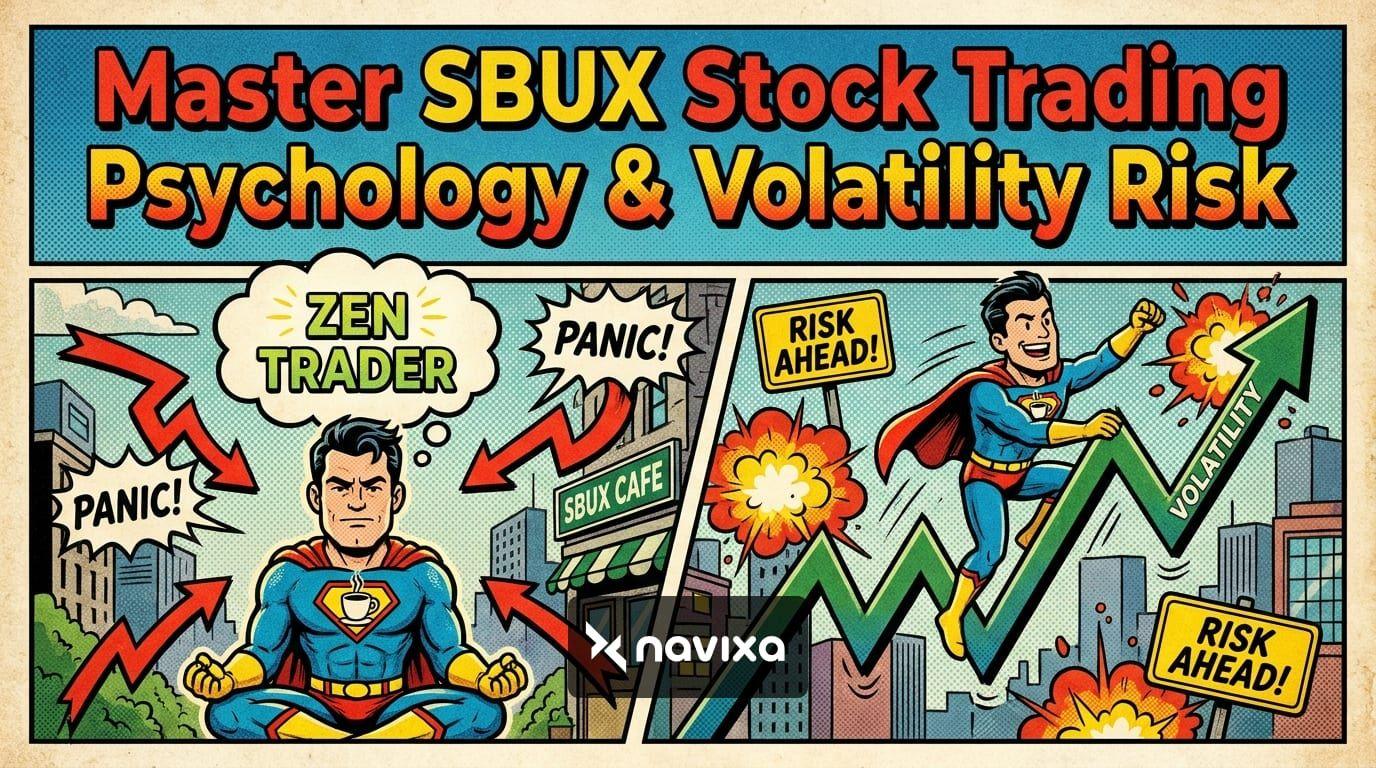
Navigating the equity markets requires more than just a solid understanding of technical indicators and financial statements. It demands an ironclad mindset. When dealing with high-profile retail consumer equities like Starbucks Corporation, market sentiment can shift drastically in the blink of an eye. Mastering SBUX stock trading psychology is essential for traders who want to capitalize on the inherent volatility of this global brand without falling victim to emotional decision-making.
Whether it is the pressure of unexpected leadership changes, fluctuations in global comparable store sales, or the macroeconomic impact of rising coffee bean prices, the factors influencing Starbucks shares are vast. By combining rigorous risk management with an understanding of cognitive behavioral patterns, traders can distance themselves from retail panic and align their strategies with institutional flows.
- Mastering SBUX stock trading psychology helps traders avoid emotional pitfalls like FOMO and revenge trading during periods of high market volatility.
- Acknowledging cognitive biases, such as anchoring and recency bias, is critical for evaluating current price action objectively.
- Effective risk management requires predefined position sizing and strict stop-loss orders to protect capital against sudden macroeconomic shifts.
- Analyzing institutional options flows provides a clearer picture of market sentiment, allowing traders to position themselves securely before binary events like earnings reports.
The Anatomy of Starbucks Stock Volatility
To build a robust psychological framework, you must first understand the battlefield. Starbucks stock is heavily influenced by a combination of macroeconomic trends and microeconomic company performance. Over the past few years, the coffee giant has faced an array of challenges: shifting consumer habits, labor organization efforts, international market slowdowns (particularly in China), and fluctuating commodity prices.
Historically, Starbucks shares display an annualized volatility rate hovering around 29%. For day traders and swing traders, this high variance is highly attractive. However, without a disciplined approach to SBUX stock trading psychology, this volatility acts as a double-edged sword. Sudden news regarding global same-store sales growth or changes in forward guidance can cause aggressive intraday price swings. For instance, an unexpected earnings beat driven by successful turnaround strategies under strong executive leadership can trigger violent short-covering rallies.
When a stock gaps up or down by 5% to 7% in after-hours trading, retail traders often experience immediate emotional responses. Fear of missing out (FOMO) compels them to buy the top of a rally, while panic induces them to sell at the very bottom of a sudden dip. Understanding how the Cboe Volatility Index (VIX) and broader market stress affect individual retail stocks can help you filter the noise.
Market Analysis & Trading Psychology
The foundation of consistent trading success lies in emotional regulation and self-awareness. Our section on Market Analysis & Trading Psychology delves into the specific cognitive biases that plague traders navigating volatile consumer discretionary stocks. By identifying these mental traps, you can consciously overwrite bad habits with disciplined, rules-based execution.
Overcoming Anchoring and Recency Bias
One of the most dangerous psychological traps in trading is anchoring bias. This occurs when a trader fixes their expectations on a specific past price level—such as a 52-week high or a recent all-time low—and uses that historical anchor to make present-day decisions. If SBUX previously traded at $115 and drops to $95, an anchored trader might view the stock as "cheap" regardless of deteriorating fundamentals. Conversely, if the stock rallies from $75 to $100, they might hesitate to buy a confirmed breakout because they anchor to the recent lows.
"The market does not know what you paid for your shares. The market only reflects the aggregate belief of all participants in the present moment."
To combat anchoring, you must view price action in its current context. When evaluating a highly traded asset, traders often fall victim to the same cognitive distortions. You can read more about overcoming these hurdles in our guide on Palantir Stock Price Target: Anchoring Bias & Risk, which mirrors the psychological traps found here.
Recency bias is similarly destructive. If the last three trades a person executed resulted in losses due to sudden intraday reversals, they will likely hesitate on their fourth trade, even if the technical setup is perfect. The mind prioritizes recent pain over long-term statistical probabilities.
Managing Earnings Season Anxiety
Earnings season is the ultimate test of SBUX stock trading psychology. When a company reports its quarterly results, the stock price reacts instantaneously to beats or misses in revenue, adjusted earnings per share (EPS), and forward-looking guidance. These are binary events; the market either heavily rewards or aggressively punishes the stock.
Earnings reports act as binary events that can drastically spike implied volatility. Avoid placing large, unhedged bets immediately before an earnings call unless you are utilizing a defined-risk options strategy like a straddle or strangle.
Before an earnings release, implied volatility (IV) swells. Options premiums become expensive as market makers price in the anticipated move. Retail traders frequently buy naked options right before the report, hoping for a lottery-ticket payout. Even if the stock moves in their chosen direction, the sudden drop in implied volatility (known as IV crush) can result in a net loss on the trade. A disciplined trader avoids gambling on binary events, preferring to wait for the post-earnings trend to establish itself before committing capital.
Actionable SBUX Trading Strategies
Mastering your mindset is only half the battle; you must also implement concrete strategies that align with your risk tolerance. A structured plan removes the guesswork and drastically reduces the cognitive load during live market hours.
Support and Resistance Plays
For a stock with defined trading ranges like Starbucks, classic support and resistance methodologies remain highly effective. Institutional buyers typically defend certain moving averages (like the 50-day or 200-day simple moving averages). When the price approaches these zones, observing the price action and volume can provide clues about future direction.
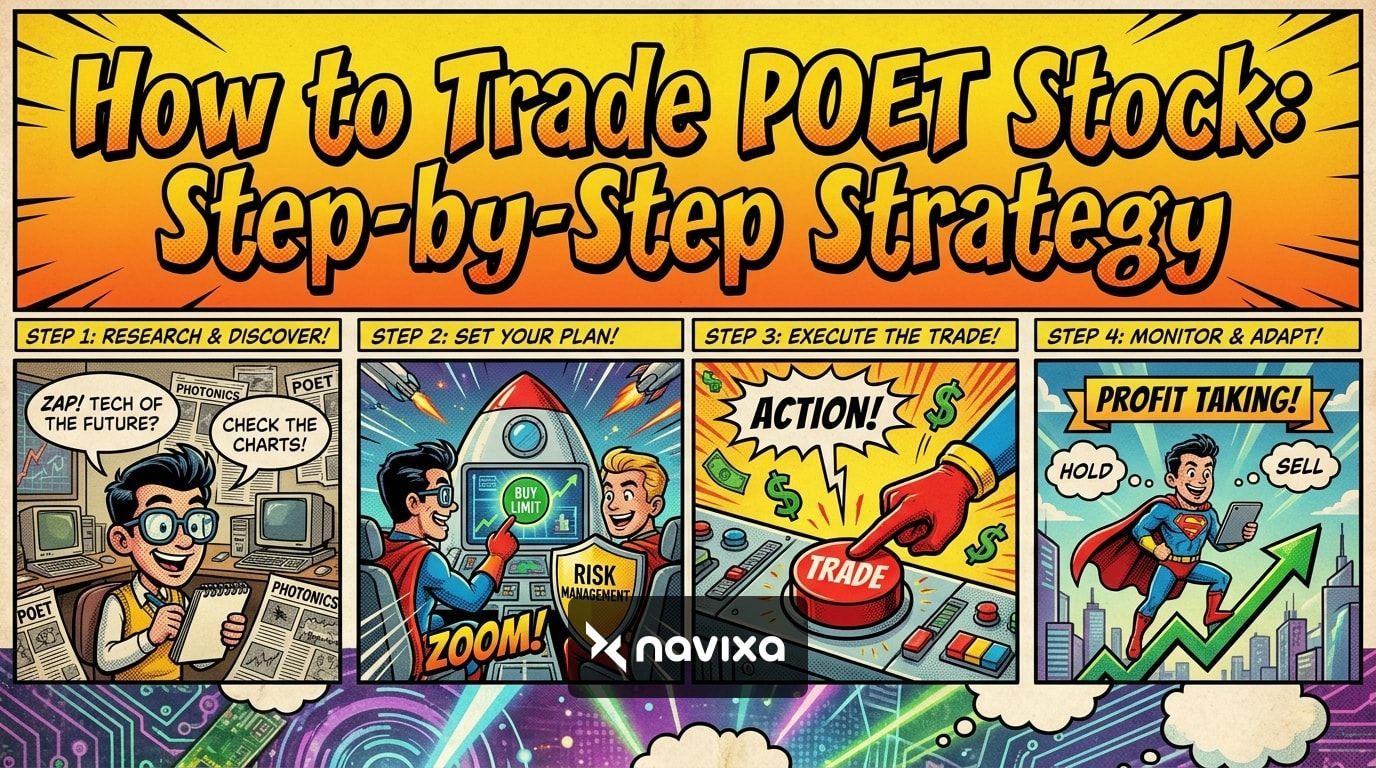
Rather than blindly buying at a support line, disciplined traders wait for confirmation. This might look like a bullish engulfing candlestick pattern on high relative volume, signaling that larger market participants are stepping in. Developing a rules-based system helps traders in all asset classes. Our comprehensive overview on How to Trade POET Stock: Step-by-Step Strategy reinforces these foundational steps of waiting for confirmation.
Options Flow and Institutional Mindsets
Watching the options flow is a crucial technique for gauging market sentiment. If the put/call ratio is excessively high, it indicates that the majority of retail and speculative traders are betting on a downside move. Interestingly, when retail sentiment becomes overwhelmingly bearish, contrarian institutional players often trigger a short squeeze, propelling the stock upward.
By tracking unusual options activity, you can align yourself with "smart money." It is vital to decouple your ego from your trading thesis. If your fundamental analysis dictates that the company is struggling, but the technical price action and options flow indicate heavy accumulation, you must trade the reality of the chart, not your personal opinion.
| Retail Trader Psychology | Institutional Trader Psychology |
|---|---|
| Chases massive green candles out of FOMO | Accumulates quietly during periods of weakness |
| Holds losing positions hoping they will recover | Cuts losses quickly based on predefined risk metrics |
| Trades aggressively around binary earnings events | Uses options to hedge risk ahead of volatility spikes |
| Makes decisions based on news headlines and emotion | Relies on data, order flow, and statistical probabilities |
Maintain a detailed trading journal that records not only your technical entry and exit points but also your emotional state at the time of execution. Identifying your personal emotional triggers is a critical step in mastering SBUX stock trading psychology.
Risk Management: Protecting Your Capital
Capital preservation is the single most important objective for any trader. You can have an excellent win rate, but if you do not manage risk appropriately, a single outsized loss can wipe out weeks of hard-earned profits.
The global pressures weighing on the coffee market often resemble energy sector volatility. Understanding these dynamics is crucial, much like when Trading OPEC Macro Shocks: Crypto Risk & Market Mindset. Tariffs, supply chain disruptions, and climate impacts on crop yields can cause sudden shifts in Starbucks' profitability.
To defend against unexpected macro shocks, strict position sizing is mandatory. Never risk more than 1% to 2% of your total account equity on a single SBUX trade. This mathematically ensures that you can survive a string of consecutive losses without suffering ruinous portfolio damage.
Additionally, employing hard stop-loss orders removes the emotion from exiting a bad trade. When you enter a position, you should immediately know your exit point if the thesis is invalidated. As the trade moves in your favor, utilize trailing stop-losses to lock in profits while giving the asset room to breathe.
In periods of heavy market drawdowns, a long-term approach can alleviate immediate stress. See Stock Market Crash Crypto: Long-Term Holding Strategy for parallel mindset tools that encourage zooming out and viewing market turbulence objectively.
Conclusion
Mastering SBUX stock trading psychology is a continuous journey of self-discovery and discipline. By recognizing your cognitive biases, managing earnings season anxieties, and adhering to strict risk management protocols, you transform yourself from a reactive retail participant into a strategic, process-driven trader.
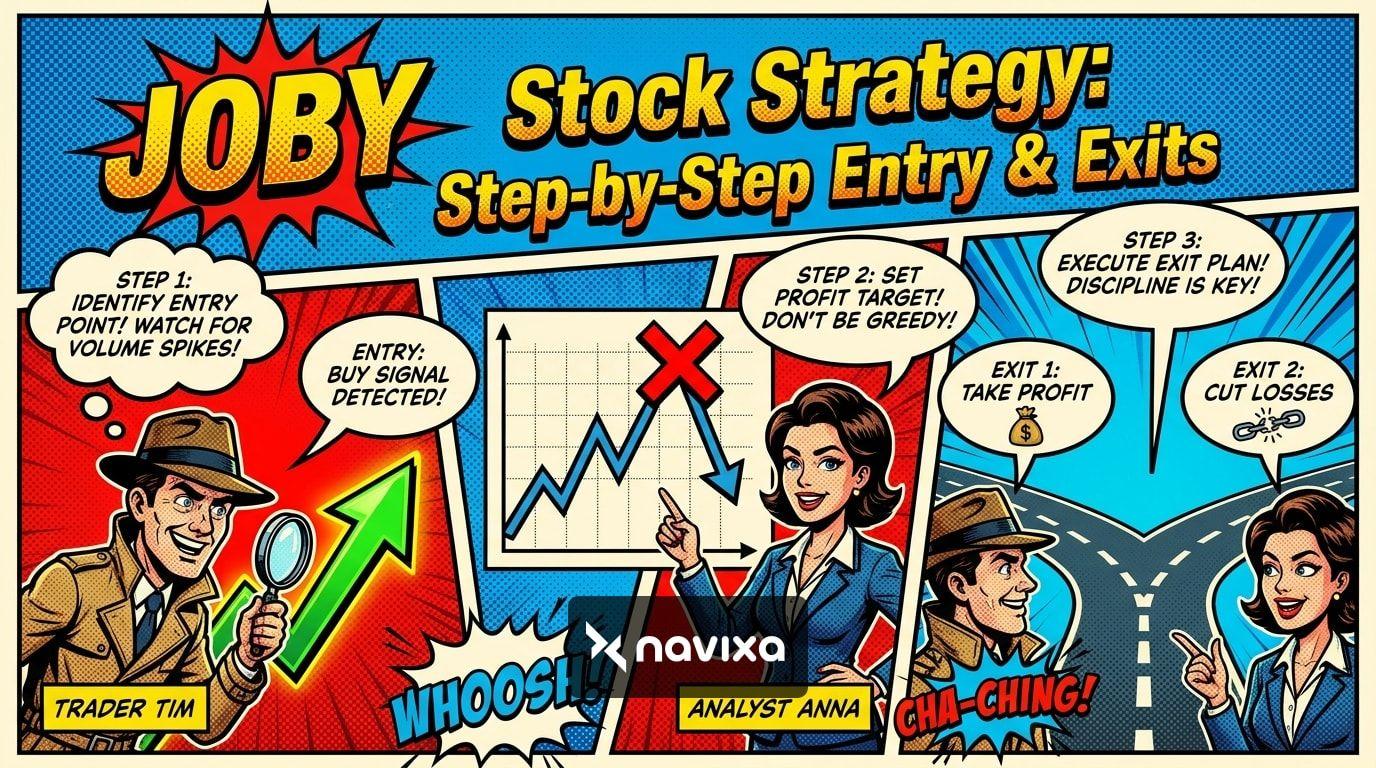
Always remember that the market is a mechanism for transferring wealth from the impatient to the patient. Stay focused on the data, respect the broader market trends monitored by entities like the Securities and Exchange Commission (SEC), and never let a single trade dictate your long-term financial success. For those applying structured risk frameworks to multiple sectors, mastering your mindset is essential. Check out Master Your QCOM Stock Trading Strategy: Entry & Exit for additional perspectives on systematic trading.
Frequently Asked Questions
What is the typical volatility of SBUX stock?
Starbucks stock historically features an annualized volatility rate of around 25% to 30%. This moderate-to-high volatility makes it an attractive asset for swing traders and day traders looking to capitalize on price swings, but it also requires stringent risk management to avoid steep drawdowns.
How does anchoring bias affect my trading performance?
Anchoring bias causes you to focus on irrelevant past price data rather than current market conditions. For example, refusing to buy a stock because it is higher than it was a month ago—despite strong current fundamental and technical indicators—means you miss out on viable trend continuations.
Should I hold my SBUX positions through earnings announcements?
Holding speculative, unhedged positions through earnings announcements is generally considered highly risky due to the binary nature of the event. Professional traders often prefer to close out short-term swing positions before the release or use complex options strategies to hedge against extreme implied volatility expansion.
Why is a trading journal important for market psychology?
A trading journal forces accountability. By writing down your emotional state, trade thesis, and outcome, you can identify recurring behavioral patterns. Over time, reviewing this journal highlights whether your losses are coming from technical errors or psychological lapses like revenge trading and FOMO.
How can I apply institutional strategies to retail trading?
Retail traders can adopt institutional habits by strictly enforcing predefined stop-losses, focusing on position sizing rather than maximal leverage, and waiting for technical confirmation before entering trades. Monitoring options flow and larger macroeconomic trends also helps align retail strategies with the broader "smart money" movements.