
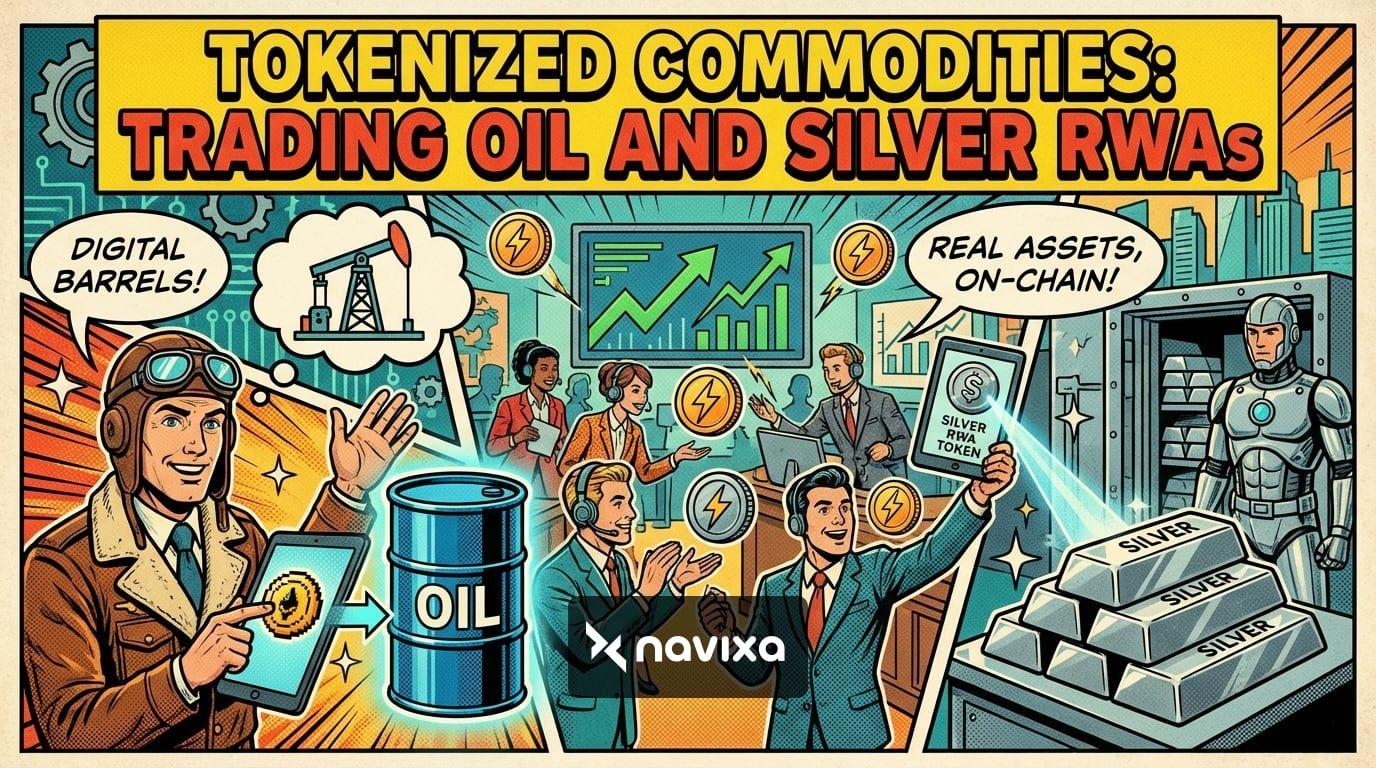
The financial landscape is undergoing a tectonic shift, driven by the digitization of real-world assets (RWAs). At the forefront of this revolution are tokenized commodities, which bridge the gap between traditional heavy-industry markets and the agile, 24/7 world of blockchain technology. Historically, trading tangible assets like crude oil and physical silver required significant capital, complex logistical arrangements, and dealing with slow settlement times. Today, blockchain networks have democratized access, allowing both retail and institutional traders to gain direct, fractional exposure to these critical global resources.
Whether it is leveraging the industrial applications of silver or navigating the geopolitical volatility of oil, tokenized commodities are reshaping how modern traders build diversified portfolios. By utilizing smart contracts and decentralized ledgers, investors can bypass the friction of legacy financial systems. This comprehensive guide delves deep into the mechanics of trading oil and silver RWAs, offering actionable strategies, technical analysis insights, and risk management techniques for the digital asset trader.
Understanding Tokenized Commodities
Tokenized commodities are digital tokens minted on a blockchain that represent a direct, legally enforceable claim to a specific quantity and quality of a physical asset. Unlike traditional derivatives or futures contracts—which often settle in cash and track price synthetically—these RWAs are backed 1:1 by the actual commodity stored in audited vaults or tracked through verifiable supply chains.
The Mechanics of Asset Backing
The process begins with an independent custodian verifying the physical asset, such as a barrel of West Texas Intermediate (WTI) crude or an investment-grade silver bar. Once the asset's existence, purity, and volume are confirmed by third-party auditors, corresponding digital tokens are minted. To ensure continuous transparency, platforms utilize decentralized oracle networks for Proof of Reserve (PoR). This guarantees that every token in circulation remains fully collateralized by a real-world asset at all times.
"By moving physical assets on-chain, tokenized commodities function similarly to digital warehouse receipts, offering regulatory transparency and eliminating the need for convoluted paper trails."
Why Oil and Silver?
While gold has long dominated the RWA sector, oil and silver present unique and highly lucrative opportunities for agile traders:
* Silver (The Dual-Purpose Metal): Silver is uniquely positioned as both a monetary safe haven and a critical industrial component. With the global push toward renewable energy, electric vehicles, and advanced electronics, industrial demand for silver is surging. Holding tokenized silver (such as Kinesis Silver or assets minted via platforms like Tether's Hadron) allows traders to capitalize on both macroeconomic inflation hedging and the green energy transition. * Oil (The Economic Engine): Crude oil remains the lifeblood of the global economy. Tokenizing oil—whether it represents physical barrels in a storage facility or production capacity revenue rights—grants traders the ability to react instantly to geopolitical events, OPEC+ production decisions, and supply chain disruptions without the exorbitant capital requirements of the traditional futures market.
The Advantages of Trading On-Chain Commodities
Transitioning from traditional commodity brokers to decentralized platforms introduces a myriad of benefits that fundamentally enhance profitability and operational efficiency.
Fractional Ownership and 24/7 Markets
Traditional commodity markets are restricted by strict trading hours and extremely high entry barriers. A standard oil futures contract on legacy exchanges requires a commitment of 1,000 barrels, effectively freezing out smaller market participants. Tokenized commodities fragment these large assets into affordable micro-shares. Furthermore, decentralized crypto markets never sleep. Traders can adjust their oil or silver positions over the weekend in response to breaking news, long before traditional commodity exchanges open their doors on Monday morning.
Eliminating Intermediaries and Faster Settlement
Legacy commodity trades often settle on a T+2 or T+3 basis, which traps trading capital and exposes participants to prolonged counterparty risk. Blockchain technology enables instant, atomic settlement (T+0). When you execute a trade for tokenized silver on a decentralized exchange, the digital asset transfers to your self-custodial wallet immediately, drastically improving your capital efficiency. For further reading on how blockchain is actively transforming global settlement infrastructure, refer to Chainlink's insights on tokenized assets.
Traditional vs. Tokenized Commodities: A Direct Comparison
To fully grasp the paradigm shift occurring in the financial sector, it is helpful to examine how tokenized oil and silver stack up against their traditional counterparts.
| Feature | Traditional Commodities (Futures/ETFs) | Tokenized Commodities (RWAs) |
|---|---|---|
| Market Trading Hours | Monday - Friday (Set exchange hours) | 24/7/365 Continuous Trading |
| Settlement Time | T+2 or T+3 days | Instant (Atomic Settlement) |
| Accessibility | High capital barriers, institutional focus | Fractional ownership, retail-friendly |
| Ownership Type | Cash-settled derivatives or fund shares | Direct claim on the physical asset |
| Transparency | Opaque, reliant on centralized periodic audits | On-chain Proof of Reserve via Oracles |
| Custody Solutions | Held by brokerages and central depositories | Self-custodial wallets (e.g., MetaMask, Tangem) |
Trading Strategies for Tokenized Oil and Silver
Trading real-world assets on the blockchain requires a strategic blend of traditional commodity market knowledge and crypto-native execution. Here are some of the most effective approaches for trading tokenized oil and silver.
Arbitrage and Cross-Market Opportunities
Because tokenized commodities trade on decentralized exchanges (DEXs) alongside traditional centralized markets, price discrepancies frequently occur. An astute trader can monitor the spot price of traditional silver and the on-chain price of a silver token. If a sudden spike in DeFi liquidity causes the tokenized silver to trade at a premium or discount, traders can execute an arbitrage strategy—buying the undervalued tokenized asset and shorting the traditional derivative (or vice versa) to capture the spread risk-free.
Macro Hedging with Silver
Silver RWAs serve as an excellent tool for macro hedging within a broader cryptocurrency portfolio. During periods of high inflation or when fiat currency devaluation accelerates, crypto assets can sometimes become highly correlated with risk-on tech stocks, leading to severe volatility. Tokenized silver, however, retains its historical safe-haven properties. Traders can rotate out of volatile altcoins into tokenized silver during macroeconomic uncertainty, successfully preserving capital without ever having to off-ramp into fiat currency or leave the blockchain ecosystem.
Energy Cycles and Tokenized Oil
Oil prices are notoriously cyclical and heavily influenced by seasonal demand shifts and geopolitical tensions. Traders can leverage tokenized oil to play these cycles with surgical precision. For instance, anticipating winter energy demands or tracking geopolitical instability in major oil-producing regions allows traders to accumulate tokenized oil positions. Because the blockchain enables instant liquidity, traders can exit these positions the precise moment a geopolitical resolution is announced, effectively avoiding the dangerous gap-down risks inherent in weekend traditional market closures.
Technical Analysis in the RWA Ecosystem
Applying technical analysis (TA) to tokenized commodities involves combining traditional charting techniques with modern on-chain data metrics to form a holistic view of the market.
Integrating On-Chain Data with Price Action
While standard technical indicators like the Relative Strength Index (RSI), Moving Average Convergence Divergence (MACD), and Fibonacci retracements remain highly effective for predicting oil and silver price movements, RWA traders possess a distinct extra edge: transparent on-chain data.
* Token Minting and Burning Metrics: Monitoring the minting and burning of commodity tokens provides real-time insights into institutional demand. A massive influx of newly minted silver tokens indicates strong institutional accumulation, which often precedes a bullish price breakout on the charts. * Liquidity Pool Depth and Volume: On automated market makers (AMMs), the depth of the liquidity pool dictates transaction slippage. By closely tracking Total Value Locked (TVL) in oil and silver liquidity pools, traders can identify optimal entry and exit points for large block trades without moving the market negatively against their own positions.
Actionable Steps to Start Trading
If you are ready to integrate tokenized commodities into your trading arsenal, follow these actionable steps to ensure a smooth transition into RWA markets:
1. Set Up a Secure Web3 Wallet: Utilize a highly secure, self-custodial wallet like MetaMask or a hardware solution like Tangem to ensure you have absolute control over your private keys and assets. 2. Select a Reputable RWA Platform: Look for platforms that offer transparent, cryptographic Proof of Reserve. Projects integrating Ondo Global Markets or enterprise solutions like Tether's Hadron are leading the charge in secure asset tokenization. You can also explore institutional-grade infrastructure by checking out resources on the XDC Network's RWA framework. 3. Fund Your Account with Stablecoins: The vast majority of tokenized commodities are paired directly against stablecoins (such as USDC or USDT) on decentralized exchanges, making them the most efficient base currency for your trades. 4. Verify Custody Audits: Before executing a purchase, independently verify the underlying asset's physical existence through the token issuer's regular, publicly available attestation reports. 5. Execute and Monitor: Begin with smaller, fractional purchases to test platform liquidity and trade slippage before scaling up your trading size and exposure.
Risk Management and Custody Security
While the integration of physical assets and blockchain offers unprecedented advantages, the RWA sector is not without inherent risks. Implementing a robust risk management framework is essential for long-term trading success.
Smart Contract Risks
The digital infrastructure governing tokenized commodities relies entirely on smart contracts. If a vulnerability exists in the underlying code, bad actors could potentially exploit it to drain the platform's liquidity pools. Traders must prioritize assets issued by established platforms that undergo rigorous, multi-firm smart contract audits and maintain active bug bounty programs to secure their networks.
Physical Custody and Audits
The intrinsic value of an RWA is entirely dependent on the physical asset it safely represents. If the centralized custodian storing the physical silver or barrels of oil mismanages the reserves, faces legal seizure, or commits outright fraud, the corresponding digital token will plummet in value. To mitigate this catastrophic risk, traders should only invest in tokens that utilize decentralized oracle networks for continuous, automated Proof of Reserve (PoR) tracking, ensuring the physical vault matches the on-chain token supply block by block.
Practical Takeaways
* Unmatched Diversification: Tokenized oil and silver provide a tangible, hard-asset counterbalance to the speculative volatility of purely digital cryptocurrencies. * Superior Capital Efficiency: Atomic settlement and deep asset fractionalization allow traders to optimize their capital, entering and exiting global commodity markets instantly without traditional broker fees. * Due Diligence is Key: Always verify the bridge between the physical vault and the digital token. Rely strictly on real-time cryptographic attestation and on-chain metrics rather than blind trust in a centralized issuer.
Frequently Asked Questions
What are tokenized commodities?
Tokenized commodities are digital representations of physical assets, such as crude oil, silver, or gold, issued on a blockchain network. Each token equates to a specific fraction of the physical asset, allowing for decentralized, 24/7 global trading while maintaining intrinsic real-world value.
How does tokenized silver differ from a traditional silver ETF?
A traditional silver ETF represents shares in a centralized fund that holds physical silver or silver derivatives, and it is strictly limited by traditional stock market trading hours and settlement delays. Tokenized silver, conversely, gives you a direct, legally enforceable claim to the physical metal, can be held in a self-custodial crypto wallet, and trades 24/7/365 with instant atomic settlement.
Is trading tokenized oil risky?
Like all financial trading, it carries market risk based on the fluctuating global price of crude oil. Additionally, there are smart contract risks and counterparty risks associated with the custodian holding the physical oil. However, utilizing established platforms with continuous Proof of Reserve audits can significantly mitigate these custody risks.
Can I redeem my digital tokens for physical silver or oil?
In many cases, yes. Reputable tokenization platforms allow holders who meet a specific minimum threshold of tokens to officially redeem them for the underlying physical asset, subject to standard logistical fees, KYC verifications, and regulatory procedures.
What crypto wallets support RWA tokens?
Most tokenized commodities are issued as standard tokens on major smart contract blockchains like Ethereum, Polygon, Base, or Solana. Therefore, widely used Web3 wallets such as MetaMask, Trust Wallet, and hardware wallets like Ledger or Tangem are fully capable of securely holding these RWA assets.
Conclusion
The rapid emergence of tokenized commodities represents a monumental leap forward in global financial engineering. By fusing the intrinsic, time-tested value of physical oil and silver with the borderless, instantaneous nature of blockchain technology, RWAs are effectively dismantling the restrictive barriers of traditional finance. Modern traders are no longer constrained by the opening bells of Wall Street or the heavy minimum capital requirements of legacy futures contracts.
As the infrastructure surrounding real-world assets continues to mature and expand, those who learn to strategically navigate this hybrid market will be exceptionally well-positioned to capitalize on both global macroeconomic trends and crypto-native market efficiencies. Start researching audited RWA platforms today, implement strict risk management protocols, and take your first confident step into the future of decentralized commodity trading.
Ready to revolutionize your trading portfolio? Explore top-tier RWA protocols today and begin trading tokenized oil and silver to secure your financial future against traditional market volatility!