
The financial world is bracing for what is widely projected to be the largest stock market debut in history. With confidential paperwork recently filed with the SEC targeting a June listing, the SpaceX IPO is not just a milestone for the aerospace and technology sectors—it is setting up to be a historic event in market speculation. Boasting an anticipated valuation hovering between $1.75 trillion and $1.8 trillion, and a potential capital raise of up to $75 billion, SpaceX is positioned to shatter the $29 billion record set by Saudi Aramco in 2019.
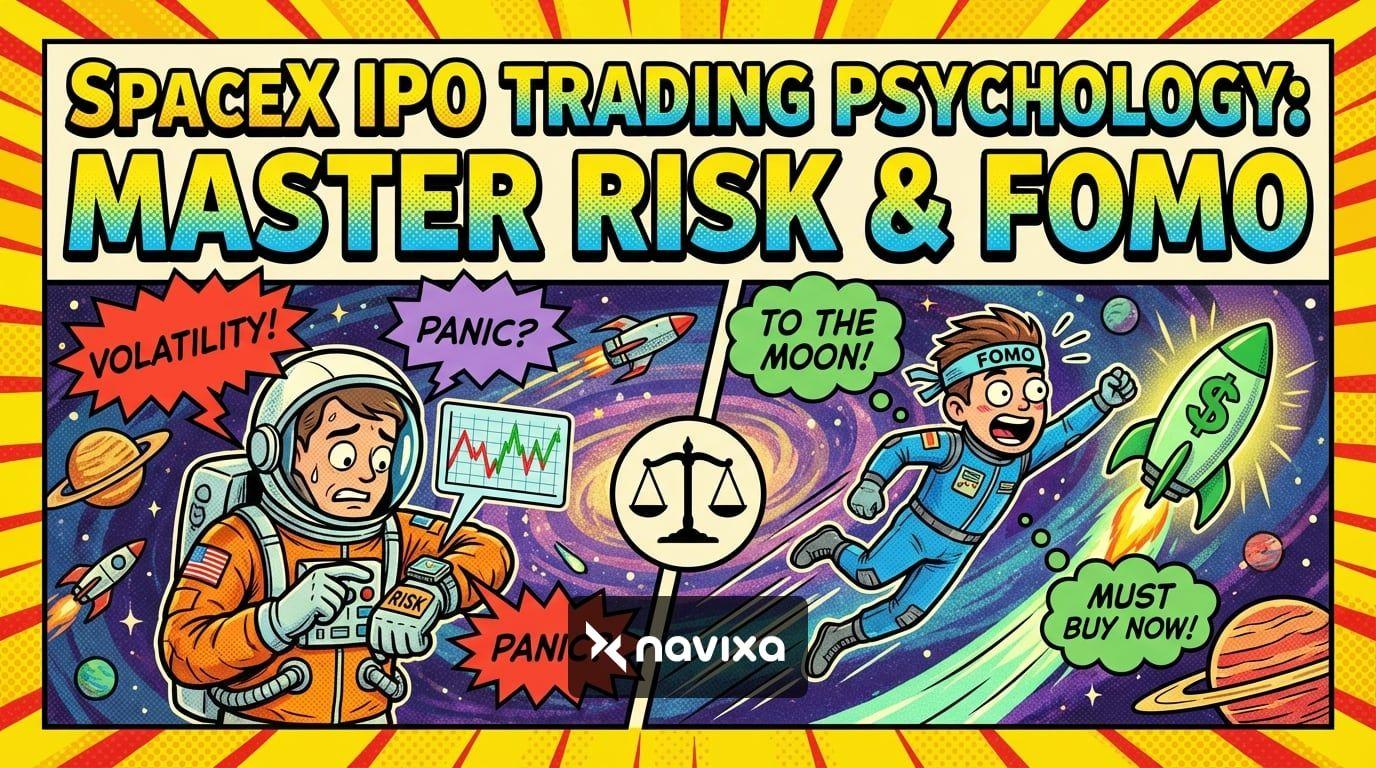
However, beneath the staggering numbers lies a complex web of market behavior. The SpaceX IPO trading psychology will undoubtedly be driven by unprecedented retail interest, particularly because up to 30% of the shares may be allocated directly to retail investors. This dynamic brings a level of volatility typically reserved for cryptocurrency markets and major token generation events (TGEs). To navigate this generational market event, traders must master their emotional triggers, implement rigorous risk management, and conquer the ultimate enemy of the modern trader: FOMO (Fear Of Missing Out).
The Phenomenon of the SpaceX IPO
To understand the psychological forces at play, one must first grasp the sheer scale of the SpaceX ecosystem. The company is no longer just a rocket manufacturer. Following an all-stock merger in February with Elon Musk's artificial intelligence venture, xAI, SpaceX is now a consolidated behemoth bridging space exploration, global satellite telecommunications (Starlink), and cutting-edge space-based AI data centers.
Starlink alone ended the previous year with millions of subscribers, and analysts project its revenue could reach up to $24 billion by the end of 2026. When you combine this massive revenue engine with the hype surrounding xAI and the cult of personality surrounding Elon Musk, the IPO transforms from a standard financial listing into a global cultural event.
For traders—especially those accustomed to the wild swings of the cryptocurrency market—this presents both a generational opportunity and a dangerous trap. The planned 30% retail allocation is roughly three times the industry norm. This means retail sentiment, rather than pure institutional valuation models, could drive the immediate post-IPO price discovery. The resulting hyper-volatility will ruthlessly punish undisciplined participants.
Understanding SpaceX IPO Trading Psychology
Mastering the SpaceX IPO trading psychology requires acknowledging the cognitive biases that will dominate the market on opening day. When billions of dollars are exchanging hands in a matter of minutes, logic often takes a back seat to raw emotion.
The Gravity of FOMO (Fear Of Missing Out)
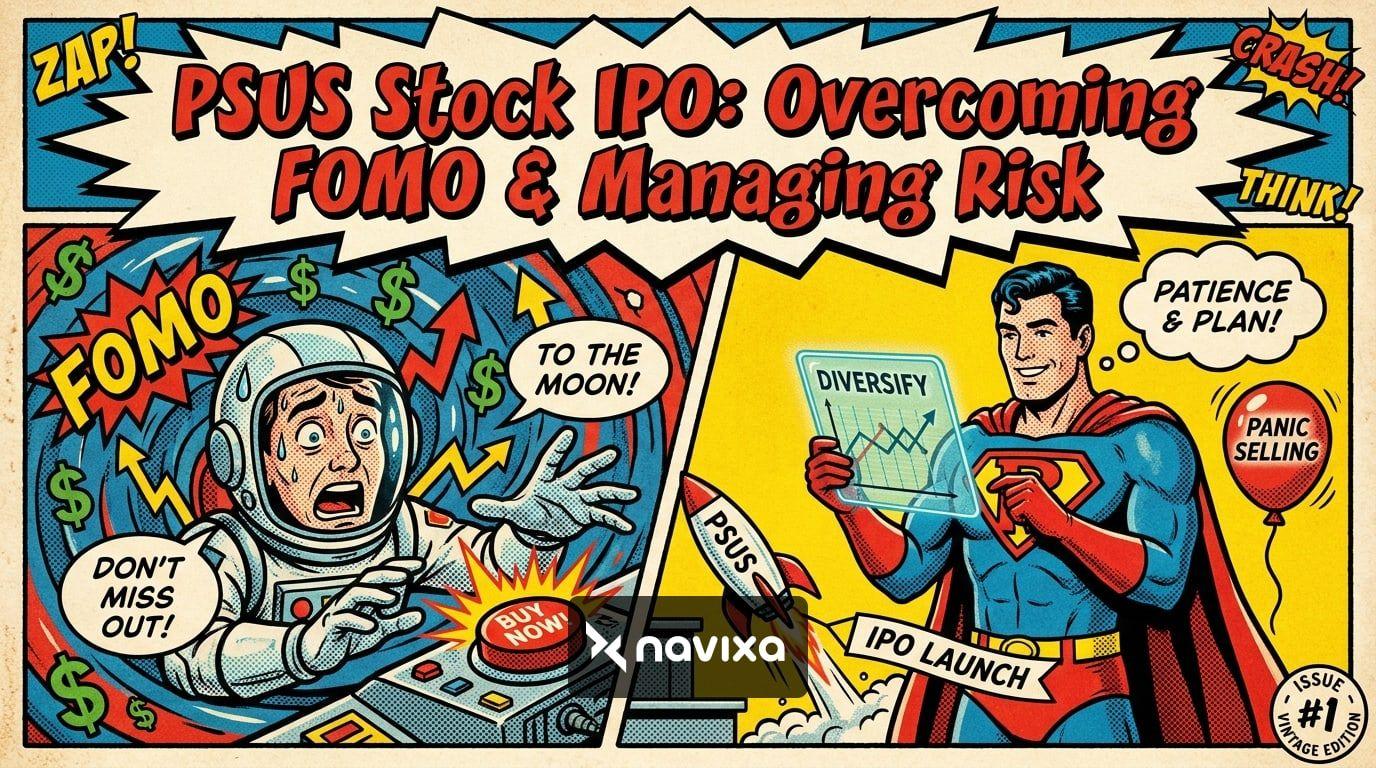
FOMO is the most powerful psychological driver in modern trading. The narrative surrounding SpaceX—colonizing Mars, launching space-based AI servers, and dominating global internet infrastructure—is heavily romanticized. When the market opens and retail investors see the ticker symbol flashing green, the biological urge to hit "buy" at any price becomes overwhelming.
Traders experiencing FOMO often abandon their pre-determined entry strategies. They buy the top of the initial parabolic spike, convincing themselves that the asset will "only go up." In reality, early institutional investors and insiders are often waiting for this exact liquidity surge to offload a portion of their holdings. Overcoming FOMO means accepting that it is better to miss a trade entirely than to enter a position with a structurally compromised risk-to-reward ratio.
Anchoring Bias and the Cult of Personality
Anchoring bias occurs when traders fixate on a specific target price or valuation without objective evidence. Because Elon Musk's other major public company, Tesla, experienced legendary historic rallies, many retail participants will anchor their expectations for SpaceX to a similar parabolic trajectory.
This bias blinds traders to fundamental realities. At a starting valuation nearing $1.75 trillion, the market capitalization is already massive. The multiplier effect seen in low-cap cryptocurrencies or early-stage tech stocks is mathematically much harder to achieve at the multi-trillion-dollar level. Traders must evaluate the chart as it prints, rather than trading an idealized fantasy of the company's future.
Herd Mentality and Social Media Echo Chambers
In the era of social media, financial platforms and trading forums act as giant echo chambers. During the SpaceX listing, platforms will be flooded with euphoric price predictions. Herd mentality can force even the most disciplined technical analysts to second-guess their bearish or neutral setups. Successful trading psychology demands isolation from the noise; your decisions must be dictated by volume, price action, and order book dynamics, not by the trending hashtags of the day.
Lessons from the Cryptocurrency Market
Given the immense retail interest, traditional equities traders can learn vital lessons from the cryptocurrency market's handling of mega-listings. Over the last decade, high-profile altcoins and Layer-1 blockchain tokens have launched with billions of dollars in fully diluted valuations (FDV). The trading psychology behind these Crypto Token Generation Events (TGEs) perfectly mirrors the expected sentiment surrounding the SpaceX IPO.
"Buy the Rumor, Sell the News"
In crypto, retail traders often buy heavily into the hype leading up to a major exchange listing, only to be crushed by early investors cashing out the moment the token goes live. While retail investors cannot easily buy pre-IPO shares of SpaceX, they will experience a similar psychological dynamic. The media frenzy leading into June will create a fever pitch of excitement. By the time the stock is finally available to the public on the open market, institutional players may be ready to trim their allocations, effectively "selling the news" to late retail buyers.
Managing Hyper-Volatility
Cryptocurrency traders are accustomed to seeing assets swing 30% to 50% in a single day. Because SpaceX is allocating an unprecedented 30% of its shares to retail investors, the stock will likely trade more like a high-cap crypto asset than a traditional utility or blue-chip stock. Traders who apply rigid crypto risk models—such as sizing positions to withstand 20% drawdowns without facing margin calls—will have a massive psychological advantage over traditional stock investors who panic at a 5% dip.
Technical Analysis and IPO Price Discovery
Trading an IPO—particularly one with a massive retail float—shares many similarities with trading a major cryptocurrency exchange listing. Traditional technical analysis tools like moving averages and long-term support/resistance levels are useless on Day 1 because there is no historical data.
Instead, traders must rely on intraday price discovery mechanisms:
1. Volume Profile and VWAP (Volume Weighted Average Price): During the opening hours, VWAP becomes the most critical indicator. It acts as the intraday equilibrium. If the price is extended far above the VWAP, it suggests retail exhaustion and an impending mean reversion. 2. Volatility Contraction: After the initial chaotic opening prints, the price will typically form a consolidation range. Traders should look for a Volatility Contraction Pattern (VCP) or a "first base" formation before considering a swing trade. 3. Lock-Up Expirations: While this affects the medium-term rather than Day 1, understanding when early investors and employees are legally allowed to sell their shares is crucial for avoiding sudden supply dumps.
For more insights on analyzing market momentum and supply restrictions, you can explore resources on Investopedia's guide to IPO lock-up periods.
Structuring Your Trading Strategy
To survive the emotional rollercoaster of the SpaceX listing, you need a rigid, rules-based trading strategy. The key to mastering the SpaceX IPO trading psychology is moving from a reactive state to a proactive state.
Pre-IPO Preparation
Before the stock even begins trading, outline your exact parameters. Determine your total capital allocation for this specific event. Because of the anticipated volatility, treat this capital as high-risk. Decide in advance whether you are attempting a day trade to capture the opening volatility, or if you are looking to build a long-term investment position. If your goal is long-term, it is often statistically advantageous to wait weeks or even months for the initial hype cycle to cool off before deploying your full capital.
Post-Listing Execution
When the opening bell rings, sit on your hands. The first 15 to 30 minutes of a mega-IPO are filled with institutional order matching, algo-driven liquidity hunting, and retail market orders executing at terrible fills. Let the initial chaos print the day's high and low. Once a defining range is established, you can use those levels to define your risk. If you buy near the bottom of the intraday range, your stop-loss goes just below the low of the day. This simple technique removes emotion from the equation.
Traditional vs. Hype-Driven IPO Dynamics
Understanding how the SpaceX listing differs from standard market debuts can help calibrate your trading psychology. Below is a comparison of different asset generation events.
| Feature | Traditional Corporate IPO | Crypto Token Generation (TGE) | SpaceX Mega-IPO (Projected) |
|---|---|---|---|
| Retail Allocation | Usually 5% - 10% | Often 50%+ (Community/Airdrops) | Up to 30% (Unprecedented) |
| Day 1 Volatility | Moderate to High | Extreme (100% - 1000% swings) | Very High (Crypto-like retail frenzy) |
| Valuation Anchor | Trailing P/E and Cash Flow | Pure Speculation & Utility | $1.75T+ (Driven by AI & Space narratives) |
| Governance | Standard Shareholder Rights | Decentralized / DAO Governance | Dual-class structure (Insider control) |
Actionable Risk Management Tactics
Excellent trading psychology is impossible without excellent risk management. If your position size is too large, fear will dominate your decision-making. Here are core tactics to employ:
* Fractional Position Sizing: Do not deploy your entire allocated capital in a single market order. Scale into your position using limit orders at strategic percentage drops. * Hard Stop-Losses: Mental stops do not work during periods of hyper-volatility. Use hard broker stop-losses, but be aware of slippage risks during fast market movements. * Accepting the Worst-Case Scenario: Before you enter the trade, calculate the exact dollar amount you will lose if your stop gets hit. If you are not completely at peace with losing that amount, your position size is too big. Reduce it until the emotional weight disappears. * Avoid Margin and Leverage: Given the expected wild price swings, utilizing margin on the opening days of the SpaceX IPO is a recipe for catastrophic liquidations.
For a deeper dive into protecting your capital during volatile events, refer to the SEC's official guidance on IPO investing.
Practical Takeaways
* Control the Urge: Acknowledge that FOMO is a biological response to market hype. Recognize the feeling, and actively choose not to let it dictate your market orders. * Wait for the Dust to Settle: The best risk-adjusted entries usually present themselves days or weeks after the IPO, once the initial retail euphoria has burned out and a technical base has formed. * Trade the Chart, Not the News: The fundamental news regarding SpaceX's rockets, Starlink revenue, and xAI data centers is already priced into the $1.75 trillion to $1.8 trillion valuation. You must trade the actual supply and demand dynamics of the order book. * Define Invalidation: Always know exactly at what price your thesis is proven wrong, and exit the trade immediately without rationalization.
Conclusion
The forthcoming SpaceX IPO is more than just a financial listing; it is an intersection of aerospace innovation, artificial intelligence, and unprecedented retail market participation. While the sheer scale of the potential $75 billion capital raise offers massive liquidity, it also creates a dangerous environment for undisciplined traders.
Mastering the SpaceX IPO trading psychology means overcoming the natural human instincts of greed, FOMO, and herd mentality. By strictly adhering to predefined risk management rules, waiting for clear technical setups, and separating the company's visionary narrative from its day-to-day price action, you can successfully navigate one of the most historic market events of our time. Stay objective, manage your downside, and let the market reveal its hand before you play yours.
---
Frequently Asked Questions
What is the expected valuation of the SpaceX IPO?
Based on confidential filings and insider reports as of early 2026, the SpaceX IPO is targeting a massive valuation of between $1.75 trillion and $1.8 trillion. This figure is heavily anchored by the rapid growth of its Starlink subsidiary and its recent merger with the artificial intelligence startup xAI.
Why is trading psychology critical for the SpaceX IPO?
With an unusually high anticipated retail allocation of up to 30%, the SpaceX listing is expected to experience extreme, crypto-like volatility. Retail FOMO, herd mentality, and emotional reactions to public updates will drive unpredictable price swings, making psychological discipline and risk management more important than fundamental analysis in the short term.
How does the xAI merger impact the SpaceX IPO?
In February 2026, SpaceX completed an all-stock merger with Elon Musk's xAI. This transformed SpaceX from an aerospace and telecommunications company into a major player in the artificial intelligence sector. The narrative of building space-based AI data centers adds significant speculative hype, which traders must rationally separate from actual near-term revenue generation.
Should I buy SpaceX stock on the exact day of the IPO?
Buying on Day 1 carries maximum risk. The opening hours are usually characterized by chaotic price discovery, institutional algorithms matching orders, and high emotional buying (FOMO). Many seasoned traders prefer to wait for a "first base" or consolidation period to form over several days or weeks before establishing a position.