
Introduction
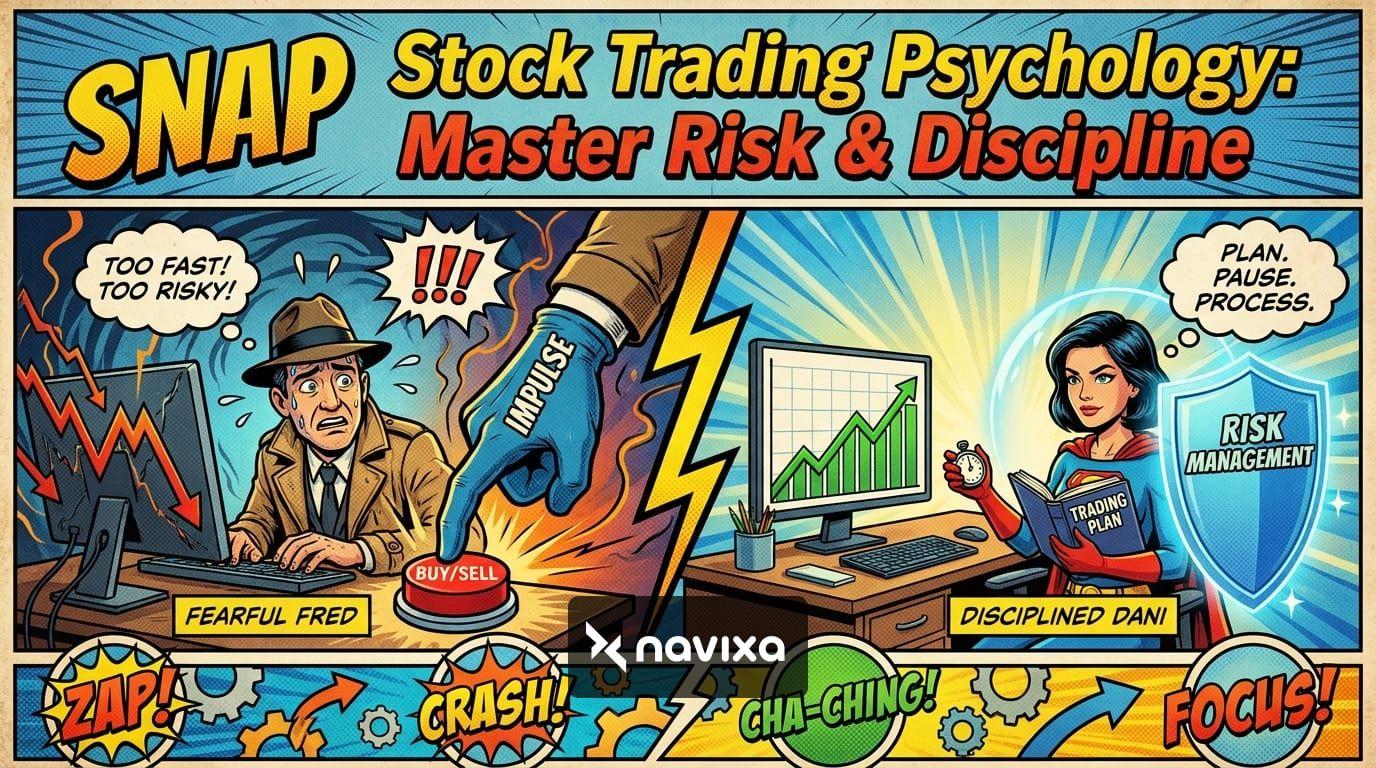
The financial markets are a battlefield, and your mind is the ultimate weapon. When dealing with high-beta tech equities, the concept of SNAP stock trading psychology becomes paramount. Snap Inc. has historically been a volatile asset, experiencing massive pandemic-era rallies followed by brutal reality checks and strategic restructurings. For the modern trader, navigating these wild price swings requires far more than just a solid understanding of fundamental or technical analysis—it requires total psychological mastery.
Whether you are a seasoned investor or a cryptocurrency trader transitioning into traditional tech equities, you will find that volatility treats everyone equally. A 7% intraday spike driven by an earnings report or a sudden corporate restructuring can easily trigger intense feelings of greed. Conversely, an unexpected algorithmic sell-off can induce paralyzing fear. Mastering risk and discipline is the only sustainable way to survive and thrive in this environment.
This comprehensive guide explores the core tenets of trading psychology specific to highly volatile tech stocks. By understanding cognitive biases, implementing ironclad risk management protocols, and maintaining emotional detachment, you can transform SNAP stock from a source of anxiety into a calculated vehicle for portfolio growth.
The Mechanics of SNAP Stock Trading Psychology
The Impact of Extreme Volatility
Volatility is the lifeblood of a day trader or swing trader, providing the necessary price movement to generate profits. However, volatility is also a psychological crucible. Snap Inc. is notorious for its dramatic price movements, often reacting violently to sector news, changes in digital advertising trends, or macroeconomic shifts. For instance, when a company announces significant cost-cutting measures—such as a 16% workforce reduction aimed at saving hundreds of millions annually—the market response can be instantaneous and aggressive.
For the unprepared trader, extreme volatility triggers the 'fight or flight' response. When SNAP stock experiences a rapid gap-up, the fear of missing out (FOMO) compels amateurs to buy at the absolute peak. When the stock inevitably retraces to establish support, these same traders panic and sell at a loss. Understanding the mechanics of this volatility is the first step toward immunizing yourself against its emotional toll. Professional traders do not react to the speed of the tape; they react to predefined zones of interest.
Cognitive Biases Affecting Tech Traders
The human brain is not naturally wired for modern financial trading. We are evolutionary programmed to seek comfort and avoid pain, which often leads to poor financial decision-making. Recognizing your cognitive biases is essential for maintaining discipline.
1. Anchoring Bias: This occurs when a trader fixates on a specific past price. Because SNAP once traded at exceptionally high valuations in previous years, many traders anchor their expectations to those all-time highs. They hold onto losing positions, blindly hoping the stock will return to a specific historical number, rather than accepting current market realities.
2. Recency Bias: Traders afflicted by recency bias give disproportionate weight to the most recent price action. If SNAP stock has closed green for three consecutive days, a trader might assume the bullish momentum is permanent, leading them to ignore overbought technical indicators and abandon their risk management protocols.
3. Loss Aversion: Psychological studies suggest that the pain of losing money is twice as intense as the joy of making it. This leads traders to hold onto losing positions in a desperate bid to 'break even,' while prematurely selling winning positions to lock in small gains. Overcoming loss aversion requires trusting the mathematical edge of your trading system.
'The stock market is a device for transferring money from the impatient to the patient.' - Warren Buffett
Mastering Risk Management and Discipline
The 1% Rule and Position Sizing
Trading psychology is deeply intertwined with mathematical risk management. It is impossible to remain emotionally detached if you are risking too much of your capital on a single trade. The gold standard for risk management in both equity and cryptocurrency markets is the 1% Rule.
This rule stipulates that you should never risk more than 1% of your total trading account balance on a single trade. If you have a $10,000 account, your maximum acceptable loss per trade should be $100. This does not mean you only buy $100 worth of SNAP stock. Rather, it means you calculate your position size based on the distance between your entry price and your stop-loss price so that, if the trade goes against you, the total damage is capped at $100.
By strictly adhering to position sizing, you remove the existential dread from trading. A loss becomes a mere business expense rather than a catastrophic event, allowing your mind to remain clear and objective for the next setup.
Stop-Losses and Take-Profits: The Emotionless Execution
A critical component of SNAP stock trading psychology is the pre-planning of exits. Before you execute a buy order, you must know exactly where you will admit defeat (the stop-loss) and where you will collect your reward (the take-profit).
Placing hard stop-losses using your broker's platform is highly recommended for volatile tech stocks. Mental stop-losses—where you tell yourself you will manually sell if the price hits a certain level—frequently fail because traders freeze under pressure or rationalize keeping the trade open. By automating your exits, you force discipline upon yourself and eliminate the emotional burden of decision-making during chaotic market moments. Using tools like TradingView's advanced charting features can help you identify these critical support and resistance levels objectively.
Emotion-Driven vs. Strategy-Driven Trading
To fully grasp the importance of a disciplined mindset, it helps to contrast the behaviors of an amateur, emotion-driven trader with those of a professional, strategy-driven trader.
| Feature | Emotion-Driven Trader | Strategy-Driven Trader |
|---|---|---|
| Primary Focus | Immediate monetary gains and avoiding losses | Long-term positive expectancy and system execution |
| Market Reaction | Panic selling during dips, FOMO buying during rips | Executing pre-planned entries and exits passively |
| Position Sizing | Going all-in based on a 'gut feeling' or hype | Strict adherence to the 1% risk rule and calculated lots |
| Analysis Method | Seeking confirmation bias on social media | Objective technical, fundamental, and volume review |
| Post-Trade Action | Revenge trading after a loss to make the money back | Journaling the trade and stepping away from the screen |
How Fundamental Catalysts Test Your Trading Psychology
Navigating Earnings Reports and Restructurings
Corporate catalysts are the ultimate test of trading discipline. Snap Inc., like many of its tech peers, frequently undergoes strategic pivots—whether it is a heavy integration of Artificial Intelligence to boost user engagement, rolling out premium subscription models like Snapchat+, or executing severe operational cost cuts to improve gross margins.
During earnings season, implied volatility crushes inexperienced traders. A company might report exceptional forward guidance and improved free cash flow, yet the stock might plummet due to algorithmic profit-taking or macroeconomic headwinds. Emotion-driven traders will try to predict the earnings outcome, essentially gambling. Strategy-driven traders recognize that earnings are a coin flip; they either avoid holding highly leveraged positions through the announcement or they wait for the post-earnings dust to settle before looking for high-probability setups.
Correlating Crypto Strategies to Tech Equities
Interestingly, the psychology required to trade SNAP stock shares a lot of DNA with cryptocurrency trading. Both markets are heavily influenced by retail sentiment, short squeezes, and rapid technical breakouts. Traders accustomed to the wild swings of Bitcoin and altcoins often find tech equities familiar territory.
However, the cross-pollination of these strategies requires adjustment. Equity markets have circuit breakers, strict market hours, and SEC oversight. Adapting your risk tolerance from the 24/7 crypto market to the traditional market requires you to respect overnight gaps and pre-market volatility, reinforcing the need for impeccable emotional control.
Actionable Steps to Improve Your Trading Mindset
Knowledge is only potential power; execution is everything. If you want to improve your SNAP stock trading psychology, you must actively train your mind. Here are highly actionable steps to integrate into your daily routine:
1. Maintain a Detailed Trading Journal: Do not just record your entry and exit prices. Document your emotional state. Were you anxious when you placed the trade? Did you exit early out of fear? Recognizing your emotional patterns is the fastest way to correct them.
2. Utilize Demo Accounts for New Strategies: Before applying real capital to a new technical setup, forward-test it in a simulated environment. This builds immense confidence, which naturally reduces anxiety when you transition to live funds.
3. Embrace the 'Set and Forget' Mentality: Once your orders are placed, walk away. Staring at the one-minute chart induces micro-stress and tempts you to meddle with a perfectly good trade plan.
4. Continuous Education: Immerse yourself in the psychological aspects of the market. Resources such as Investopedia's comprehensive guide on Trading Psychology can provide deep insights into the behavioral economics driving market movements.
Practical Takeaways
* Accept the Unpredictable: You cannot control the market; you can only control your reaction to it. Accept that losses are a natural, unavoidable part of trading. * Eliminate FOMO: There will always be another trade. Missing a 10% rally in SNAP stock is far better than buying the top and suffering a 20% drawdown. * System Over Sentiments: Let your technical indicators and risk management parameters make the decisions. If the setup does not meet your criteria, keep your capital in cash. * Protect Your Capital First: The primary goal of a trader is not to make money, but to protect their existing capital. Profits are simply the byproduct of excellent risk management.
Conclusion
Mastering SNAP stock trading psychology is a continuous, lifelong journey. The stock market is an incredibly efficient machine designed to expose emotional vulnerabilities and punish a lack of discipline. By treating your trading as a professional business, adhering strictly to position sizing, and working relentlessly to overcome cognitive biases, you elevate yourself above the noise of retail panic.
Take the time to evaluate your current strategies today. Implement a trading journal, define your risk parameters clearly, and commit to executing your next trade without emotion. The path to consistent profitability is paved with discipline—start building your psychological edge now.
Frequently Asked Questions
Why is SNAP stock considered highly volatile compared to other equities?
Snap Inc. operates in a hyper-competitive sector dominated by massive tech conglomerates. Its revenue is heavily reliant on digital advertising, which fluctuates wildly based on macroeconomic conditions. Additionally, the company's aggressive pivots into new technologies, such as Augmented Reality (AR) and Artificial Intelligence (AI), attract highly speculative trading volume, leading to rapid price expansions and contractions.
How can I avoid FOMO when trading SNAP stock?
Overcoming the Fear of Missing Out requires a fundamental shift in perspective. You must realize that the market is a stream of endless opportunities. To actively combat FOMO, create a strict set of trading rules that must be met before entering a position. If a stock suddenly surges and your entry criteria are not met, you must practice the discipline of walking away. Journaling instances where you successfully avoided FOMO can help reinforce this positive behavior.
Should I hold SNAP as a long-term investment or day trade it?
The decision between long-term investing and active trading depends entirely on your financial goals, risk tolerance, and time horizon. Long-term investors base their decisions on the company's fundamental ability to grow revenues, improve margins, and innovate within its sector. Day traders and swing traders, on the other hand, capitalize on the stock's short-term volatility using technical analysis. Both approaches require strict discipline, but they operate on completely different psychological frameworks.
What role does artificial intelligence play in Snap's current valuation and volatility?
Artificial Intelligence has become a central narrative for Snap Inc., serving as both a fundamental catalyst and a source of speculative interest. The company utilizes AI to optimize ad targeting, enhance user engagement through interactive features, and streamline internal coding and support operations. Announcements regarding AI advancements or cost savings derived from AI efficiency often trigger sudden algorithmic buying, contributing heavily to the stock's intraday volatility.