
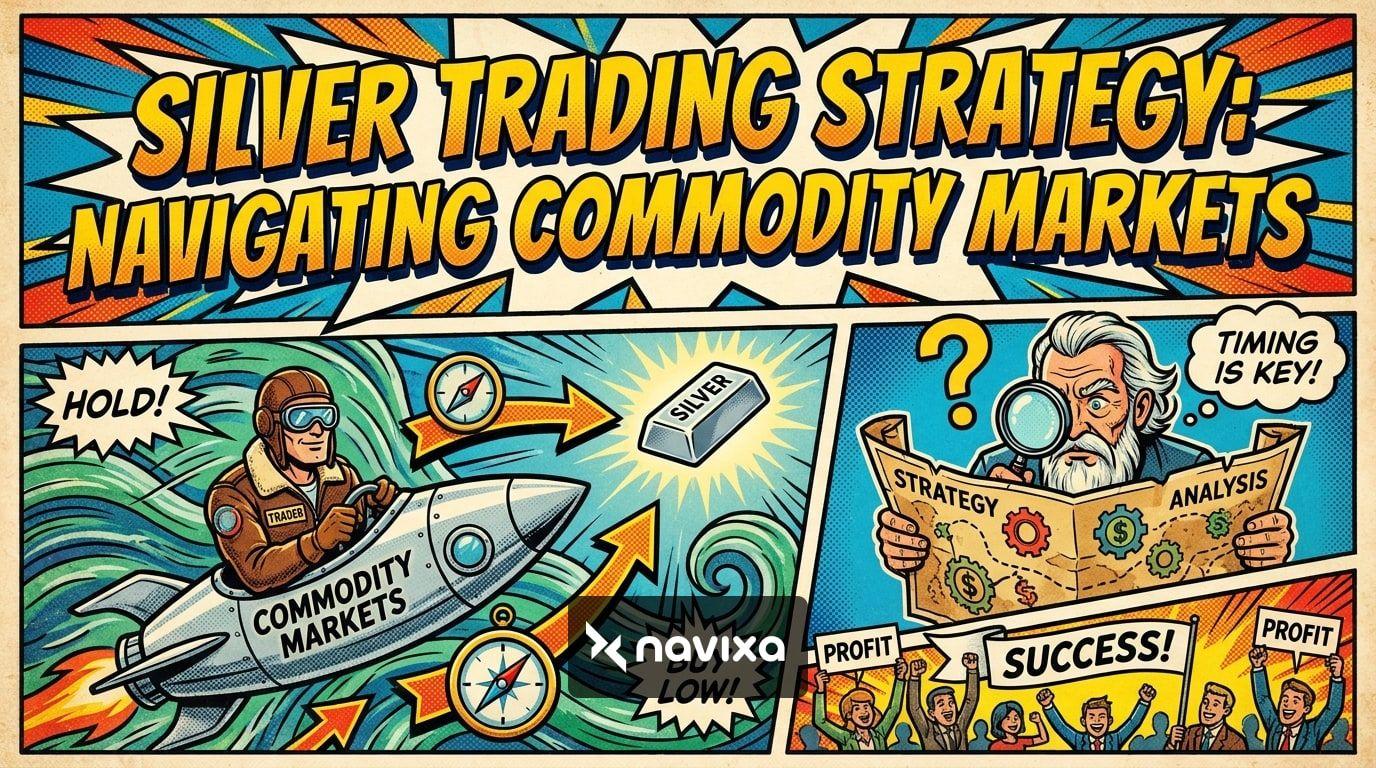
Silver is widely regarded as one of the most dynamic assets in the global commodity markets. Known for its dual role as both a precious monetary metal and an irreplaceable industrial component, silver offers traders a unique blend of fundamental catalysts and aggressive price action. In early 2026, the silver market exhibited its classic high-beta behavior, with prices experiencing massive surges and equally sharp corrections. This historic volatility creates exceptional opportunities for prepared traders but poses severe risks for those operating without a solid plan.
Navigating this complex landscape requires more than just a basic understanding of supply and demand. It demands a comprehensive silver trading strategy that incorporates macroeconomic analysis, technical precision, and ironclad risk management. Whether you are transitioning from traditional equities or applying high-volatility tactics learned in the cryptocurrency markets, mastering silver can significantly diversify and enhance your portfolio.
"Silver is often described as the high-beta version of gold. It moves in the same general direction but with significantly more aggressive momentum, demanding strict discipline from those who trade it."
In this comprehensive guide, we will explore the fundamental drivers of the silver market, outline highly effective trading strategies, and provide actionable steps to help you capitalize on one of the most exciting commodities available today.
Understanding the Fundamentals of the Silver Market
Before looking at a price chart, traders must understand the fundamental forces that dictate silver's value. Unlike gold, which is primarily driven by monetary policy and safe-haven demand, silver is heavily influenced by global industrial consumption.
1. The Industrial Demand Explosion
Silver is the most electrically conductive metal on earth, making it indispensable in modern technology. As of 2026, industrial applications account for the majority of global silver consumption. The rapid expansion of solar photovoltaic (PV) panel manufacturing, electric vehicles (EVs), 5G infrastructure, and advanced AI data centers has created a structural boom in demand. For example, solar energy alone consumes a massive percentage of the world's annual silver supply. When trading silver, keeping a close eye on technological advancements and green energy policies is just as important as monitoring traditional financial news.
2. Structural Supply Deficits
According to research from The Silver Institute, the global silver market has experienced multiple consecutive years of structural supply deficits. Mining output has struggled to keep pace with the surging industrial demand, and recycling efforts have been unable to bridge the gap. This ongoing deficit provides a strong underlying bullish thesis for long-term investors, while also creating the conditions for explosive short-term price squeezes when physical inventories run low.
3. Macroeconomic and Monetary Drivers
Despite its industrial utility, silver remains a precious metal. It is highly sensitive to the strength of the US Dollar (DXY), inflation expectations, and Federal Reserve interest rate policies. A weakening dollar or an environment of persistent inflation typically acts as a tailwind for silver prices. Traders must constantly monitor macroeconomic data releases, such as the Consumer Price Index (CPI) and Non-Farm Payrolls (NFP), as these events can trigger immediate and violent volatility in silver markets.
Core Silver Trading Strategies
A successful silver trading strategy relies on aligning your approach with the market's current structural behavior. Below are three of the most effective strategies utilized by professional commodity traders.
1. The Gold-Silver Ratio Mean Reversion
The Gold-Silver Ratio measures how many ounces of silver it takes to buy one ounce of gold. Historically, this ratio has served as an excellent indicator of silver's relative value. When the ratio stretches to historical extremes (such as the 105:1 level seen during the market panic of 2025), it signals that silver is deeply undervalued compared to gold.
How to trade it: Traders monitor the ratio for exhaustion. If the ratio climbs above 80:1 and begins to roll over, traders will often initiate long positions in silver while potentially shorting gold, betting on the ratio to revert to its modern historical average of around 60:1 to 70:1. Conversely, if the ratio drops below 50:1, it may signal that silver is overextended and due for a correction.
2. Trend-Following with Moving Averages
Because silver tends to trend heavily once a direction is established, trend-following strategies are highly effective. A popular approach involves using the 50-day and 200-day Exponential Moving Averages (EMA).
How to trade it: When the 50-day EMA crosses above the 200-day EMA (a "Golden Cross"), it signals a long-term bullish trend. Traders will then look for pullbacks to the 50-day EMA as low-risk entry points to join the upward momentum. Because silver is prone to false breakouts, waiting for a daily close confirmation above key moving averages is critical to avoid bull traps.
3. Breakout Trading on Industrial Catalysts
Silver frequently consolidates into tight technical patterns (like symmetrical triangles or bull flags) before experiencing massive expansion. Breakout traders wait for these consolidation periods and enter the market exactly when the price breaches a key resistance level accompanied by higher-than-average trading volume. This strategy is particularly powerful when paired with fundamental news, such as a major government subsidy for solar infrastructure or reports of declining global warehouse inventories.
Technical Analysis Tools for Silver
To optimize your entries and exits, you need the right charting tools. Platforms like TradingView provide the necessary indicators to dissect silver's aggressive price action.
Adjusting the RSI for High Volatility
The Relative Strength Index (RSI) is typically set with overbought and oversold boundaries at 70 and 30. However, because silver is a high-beta asset that can remain technically overbought for extended periods during a strong rally, savvy traders adjust their RSI parameters. Shifting the boundaries to 80 and 40 during a bull market helps prevent premature selling. A drop to the 40 level on the RSI often presents a much better "buy the dip" opportunity than waiting for a standard 30 reading that may never come.
Fibonacci Retracements
Silver is notorious for its deep, fast pullbacks even within strong macro uptrends. Fibonacci retracement levels—specifically the 50% and 61.8% levels—are incredibly reliable in the silver market. When a major impulse wave concludes, placing limit orders near the 61.8% retracement level allows traders to capture optimal entries before the primary trend resumes.
Comparison: Silver vs. Gold vs. Digital Assets
For traders diversifying across different asset classes, understanding how silver stacks up against gold and modern digital commodities like Bitcoin is essential.
| Feature | Silver | Gold | Bitcoin |
|---|---|---|---|
| Primary Driver | Industrial Demand & Monetary Policy | Safe-Haven Demand & Central Banks | Network Adoption & Liquidity |
| Volatility (Beta) | High | Low to Moderate | Very High |
| Market Size | Medium | Massive | Medium/Large |
| Best Trading Style | Swing Trading & Breakouts | Trend Following & Hedging | Momentum & Day Trading |
Silver occupies a unique middle ground. It offers the physical tangibility and historical prestige of gold, but with a volatility profile that more closely resembles digital assets, making it a favorite among aggressive swing traders.
Actionable Steps to Implement Your Strategy
Ready to tackle the market? Follow these structured steps to put your silver trading strategy into motion:
1. Select the Right Trading Instrument: Decide how you want to gain exposure. Contracts for Difference (CFDs) and futures offer high leverage for active day traders. Exchange-Traded Funds (ETFs) are excellent for medium-term swing traders. Alternatively, some modern platforms offer tokenized silver, allowing crypto-native traders to gain exposure using blockchain technology. 2. Define Your Entry and Exit Criteria: Never enter a trade based on emotion. Write down the exact technical parameters required for your entry (e.g., "Daily close above $80 resistance with RSI crossing 50"). Establish your profit targets before clicking the buy button. 3. Execute Rigorous Backtesting: Use historical chart data to see how your chosen strategy would have performed over the last three years. Adjust your moving average lengths or Fibonacci zones based on empirical evidence rather than guesswork.
Risk Management: Protecting Your Capital
No silver trading strategy is complete without strict risk management. Silver's tendency to gap up or down on sudden news can wipe out undisciplined traders in a matter of hours.
Master Position Sizing
Never risk more than 1% to 2% of your total account capital on a single silver trade. Because silver requires wider stop-losses due to its inherent volatility, your position size must be reduced proportionally. A smaller position with a wider stop-loss keeps you in the trade during normal market noise while protecting your core capital.
Utilize ATR for Stop-Loss Placement
Avoid placing arbitrary stop-loss orders. Instead, use the Average True Range (ATR) indicator to measure the current daily volatility. Placing your stop-loss at least 1.5 to 2 times the daily ATR below your entry point ensures that you are giving the trade enough room to breathe without exposing yourself to ruin.
Manage Leverage Carefully
Commodity brokers often offer immense leverage on silver futures and CFDs. While this can amplify gains, it is a double-edged sword. In a market capable of swinging 5% to 10% in a single trading session, excessive leverage is a guaranteed path to liquidation. Stick to low leverage until you have proven consistent profitability.
Practical Takeaways for Modern Traders
* Respect the Dual-Nature: Always analyze both industrial demand narratives (tech, solar, EVs) and monetary policy (interest rates, inflation) when trading silver. * Use the Ratio: Keep the Gold-Silver Ratio on your watchlists to identify long-term macroeconomic value shifts. * Widen Your Stops: Account for silver's high beta by using ATR-based stop-losses and smaller position sizes. * Wait for Confirmation: Silver is prone to "fake-outs." Always wait for candlestick closes on higher timeframes (4-hour or Daily) before committing capital to a breakout.
Conclusion
Developing a profitable silver trading strategy requires patience, analytical rigor, and a deep respect for market volatility. By combining fundamental awareness of industrial supply deficits with precise technical tools like adjusted RSIs and Fibonacci retracements, you can successfully navigate the complexities of this unique commodity.
The key to long-term success in the silver market lies not in catching every single price swing, but in executing a consistent, risk-managed plan. Start by applying these concepts in a demo environment, refine your edge, and gradually transition to live capital. Take control of your financial future today by integrating silver into your active trading portfolio!
Frequently Asked Questions
What is the best timeframe for a silver trading strategy?
The optimal timeframe depends on your trading style. Day traders typically focus on the 15-minute and 1-hour charts to capture intraday volatility. However, for most swing traders looking to capitalize on macro trends and industrial demand cycles, the 4-hour and Daily charts provide the most reliable technical signals and help filter out short-term market noise.
How does the gold-silver ratio work in trading?
The gold-silver ratio measures how many ounces of silver it takes to purchase one ounce of gold. Traders use it to determine which metal is relatively undervalued. A high ratio (e.g., above 80:1) suggests silver is cheap compared to gold, often prompting traders to buy silver. A low ratio (e.g., below 50:1) suggests silver is expensive relative to gold.
Is silver more volatile than gold?
Yes, silver is significantly more volatile than gold. Its smaller market capitalization and dual role as both a monetary and industrial metal mean that shifts in supply, demand, or investor sentiment can cause dramatic price swings. This higher volatility (or "high beta") offers greater profit potential but requires much stricter risk management.
How do solar panels and AI impact silver prices?
Silver is highly conductive and is a critical component in the manufacturing of photovoltaic (solar) panels, electric vehicle electronics, and the high-speed processors used in AI data centers. As global infrastructure rapidly shifts toward green energy and advanced computing, the industrial demand for silver has outpaced mine supply, creating structural deficits that support long-term price appreciation.