
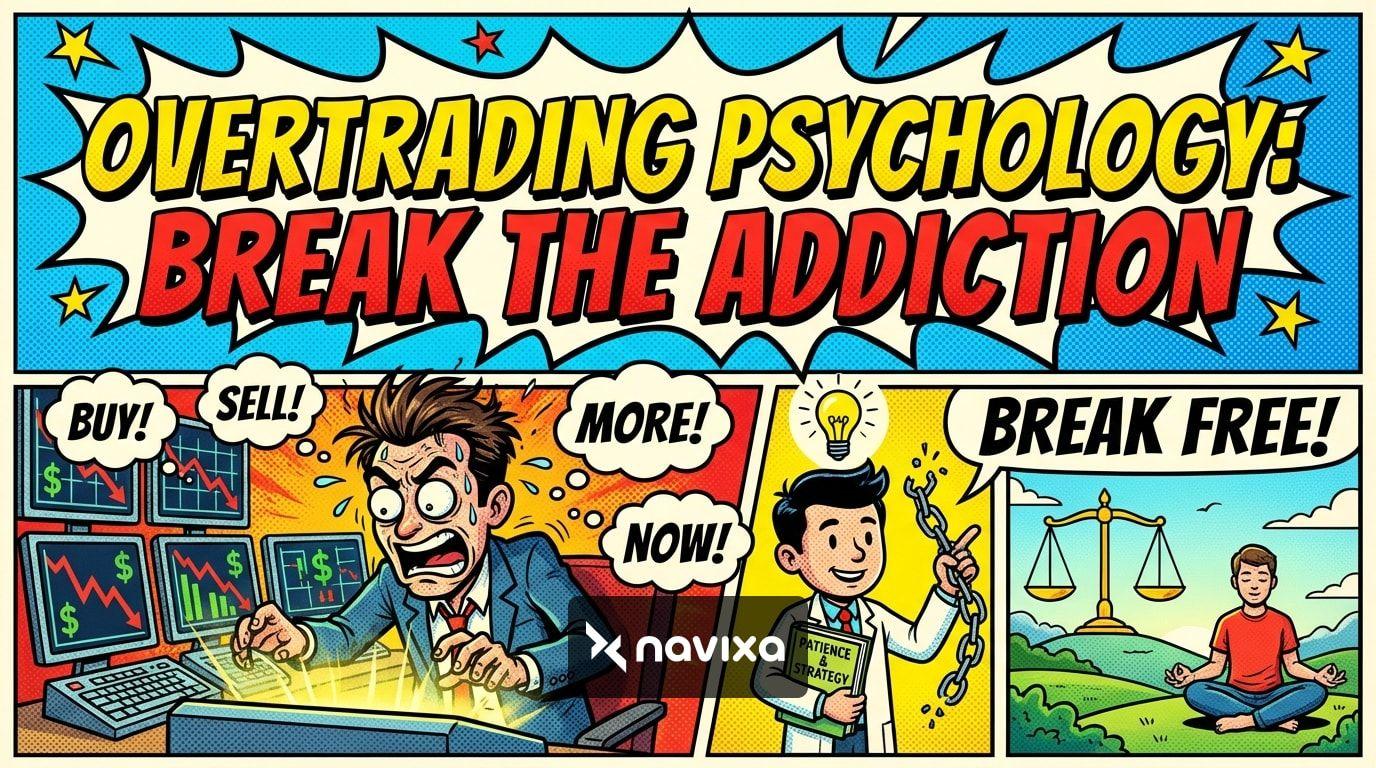
The cryptocurrency market never sleeps. Unlike traditional equity markets that offer traders a reprieve with closing bells and weekend breaks, digital assets trade twenty-four hours a day, seven days a week. While this unrestricted access democratizes finance, it also creates a perfect breeding ground for one of the most destructive habits an investor can develop: overtrading. Understanding overtrading psychology is not just about learning how to read a chart; it is about learning how to read your own mind.
In the fast-paced landscape of current markets, the stakes have never been higher. With assets like Bitcoin frequently experiencing rapid fluctuations driven by institutional spot ETF inflows, algorithmic high-frequency trading, and shifting macroeconomic policies, retail traders are constantly bombarded with market noise. This hyper-connected environment can easily trick you into believing that every minor price tick is a once-in-a-lifetime opportunity.
But confusing activity with productivity is a dangerous game. For many, trading morphs from a calculated financial endeavor into a psychological addiction. In this comprehensive guide, we will dissect the anatomy of overtrading psychology, explore why the brain becomes addicted to the charts, and provide you with actionable, battle-tested strategies to break the cycle and reclaim your edge.
The Anatomy of Overtrading Psychology
To conquer overtrading, you must first understand the neurological mechanisms driving it. At its core, overtrading is rarely about logic or strategy; it is an emotional response dictated by the brain's reward system.
The Dopamine Trap and Variable Rewards
When you enter a trade and it moves in your favor, your brain releases a surge of dopamine—the "feel-good" neurotransmitter. This chemical reward is intensely pleasurable. However, the crypto market operates on what psychologists call a "variable ratio reinforcement schedule." Much like a slot machine, the rewards (winning trades) are unpredictable. You never know exactly when the next win will come, which keeps you glued to the screen, compulsively opening new positions in pursuit of that next dopamine hit. Over time, traders become addicted not necessarily to making money, but to the neurological thrill of being in an active trade.
FOMO and the 24/7 News Cycle
Fear of Missing Out (FOMO) is a primary catalyst for overtrading. In the modern crypto ecosystem, platforms like X and financial news outlets continuously broadcast success stories, massive liquidation alerts, and token breakouts. When you see a digital asset surge by 15% in an hour, the psychological pain of feeling "left behind" overrides rational analysis. This leads to impulsive market orders at local tops, severely compromising your portfolio.
The Cycle of Revenge Trading
Perhaps the most destructive facet of overtrading psychology is "revenge trading." When a trader suffers a painful loss—especially one resulting from a sudden, unexpected market wick—the immediate psychological response is a desire to win the money back instantly. Instead of stepping away to recalibrate, the trader doubles down, often using higher leverage or ignoring their predefined stop-loss rules. This emotional hijacking transforms a professional trader into a gambler, almost guaranteeing further drawdowns.
Data Doesn't Lie: The Real Cost of Overtrading
The financial toll of overtrading is staggering, and recent industry statistics paint a sobering picture for retail participants. According to ongoing data from proprietary trading firms and retail brokerage analyses, an estimated 80% to 90% of retail day traders ultimately lose money. Furthermore, prop firm statistics reveal that a vast majority of traders fail funding challenges, frequently wiping out their accounts within their first 90 days of live trading.
Why is the attrition rate so brutal? The answer lies in the compressed market cycles. In previous years, crypto trends took months to unfold. Today, algorithmic market makers and institutional bots execute trades in milliseconds, repricing risk instantly. When retail traders overtrade in an attempt to outpace these algorithms, they are essentially bringing a knife to a gunfight.
Every time you execute a trade, you pay spread and exchange fees. A trader who opens twenty impulsive positions a day is silently bleeding their capital through transaction costs alone, even if their win rate hovers around break-even. By recognizing that less is often more, you align yourself with the elite minority of consistently profitable traders who treat capital preservation as their primary objective.
Overtrading vs. Strategic Trading
To break the addiction, you must clearly distinguish between impulsive overtrading and methodical, strategic trading. The differences are stark, spanning from emotional state to risk management.
| Feature | Overtrading (Emotional) | Strategic Trading (Disciplined) |
|---|---|---|
| Primary Trigger | FOMO, boredom, or the urge to revenge trade | Pre-defined setups and objective technical analysis |
| Trade Frequency | High (frequently forcing dozens of trades per day) | Low to Moderate (executing only when criteria are met) |
| Risk Management | Ignored, absent, or frequently adjusted mid-trade | Strict adherence to the 1-2% account risk rule |
| Post-Trade Routine | Immediate, frantic search for the next open position | Logging the trade in a detailed journal for later review |
| Emotional State | Anxious, euphoric, or desperate | Calm, detached, and analytically objective |
By transitioning your mindset from the left column to the right, you systematically remove the chaotic emotional variables that lead to catastrophic portfolio ruin.
Actionable Steps to Break the Addiction
Recognizing the symptoms of overtrading psychology is the first step; actively rewiring your behavior is the second. Here are practical, actionable strategies to break the cycle and regain control over your trading terminal.
Implement a Daily Trade Limit and Hard Stop-Loss
One of the most effective ways to combat overtrading is to impose a physical limitation on your activity. Establish a strict rule: you are only allowed a maximum of three trades per day, or a maximum daily drawdown of 3%. Once you hit either limit, you must physically shut down your computer and walk away. This forced pause interrupts the emotional momentum of revenge trading. For deeper insights into managing these emotional thresholds, exploring Investopedia's comprehensive guide on trading psychology can provide valuable foundational knowledge.
Shift to Higher Time Frames
The 1-minute and 5-minute charts are notoriously noisy, filled with fake-outs and algorithm-driven volatility that trigger emotional reactions. If you find yourself overtrading, immediately switch your analysis to the 4-hour or daily charts. Higher time frames filter out the intraday noise and present a much clearer picture of the overarching trend. Waiting for a daily candle to close requires patience, which naturally starves the impulse to overtrade.
Use Strict Technical Analysis to Filter Noise
Technical analysis should be used as an objective filter, not an excuse to take a trade. Rely on established indicators to govern your entries and exits. For instance, if you are trading major assets, you might establish a rule that you will only enter a long position if the price is holding above the 200-period Exponential Moving Average (EMA) and the Relative Strength Index (RSI) has reset from overbought conditions. If the chart does not meet these exact criteria, you do nothing. Tracking live macro conditions via reliable aggregators like CoinMarketCap can help you ensure your technical bias aligns with broader market capitalization trends, keeping your expectations realistic.
Keep a Detailed Trading Journal
A trading journal is the ultimate mirror for your psychological flaws. Documenting every trade—including the setup, the outcome, and critically, your emotional state at the time of entry—forces you to confront your destructive habits. When you review your journal at the end of the week and see that the vast majority of your losses came from trades born out of boredom or FOMO, the financial cost of your psychological lapses becomes impossible to ignore.
Risk Management: Your Psychological Anchor
If technical analysis is the compass, risk management is the anchor. The single greatest cure for the anxiety that causes overtrading is proper position sizing. When you risk too much of your capital on a single trade, every minor fluctuation in price triggers a severe emotional response.
"The goal of a successful trader is to make the best trades. Money is secondary." – Alexander Elder
Professional traders operate by the "1% Rule," meaning they never risk more than 1% to 2% of their total account equity on any single setup. If you have a $10,000 portfolio, your maximum loss on a trade should be capped at $100. By keeping your risk minimal, you completely detach your ego and emotions from the outcome of the trade. A loss becomes a mere statistical probability rather than a devastating blow to your financial well-being. This detachment is the essence of mastering overtrading psychology.
Conclusion
Breaking the addiction to overtrading requires profound self-awareness, rigorous discipline, and a willingness to accept that the market does not owe you daily profits. The cryptocurrency market is an unrelenting ecosystem that transfers wealth from the impatient to the patient. By understanding the dopamine loops that drive impulsive actions, adhering to strict technical criteria, and implementing unbreakable risk management rules, you can elevate yourself above the noise.
Remember, cash is a position. Sometimes, the most profitable trade you can make is deciding not to trade at all. Take control of your mind, protect your capital, and let the market come to you.
Frequently Asked Questions
What is the root cause of overtrading?
The root cause of overtrading is deeply psychological, primarily driven by the brain's dopamine reward system, Fear of Missing Out (FOMO), and the emotional urge to "revenge trade" after sustaining a loss. The 24/7 nature of cryptocurrency markets exacerbates these impulses by providing constant, variable rewards.
How do I know if I am overtrading?
Common red flags include feeling anxious when you are not in an active position, constantly checking charts on your phone, abandoning your predefined trading plan to chase sudden price spikes, and feeling the compulsive need to immediately re-enter the market after a loss to win your money back.
Can technical analysis prevent emotional trading?
Yes, when used strictly as a rulebook. By requiring specific technical conditions to be met—such as moving average crossovers or RSI resets—before entering a trade, you remove subjective emotion from the decision-making process. The challenge lies in having the discipline to strictly obey your own technical rules.
Why is overtrading more common in cryptocurrency?
Unlike traditional stock markets that close on weekends and overnight, the crypto market is open 24/7. This constant accessibility, combined with high historical volatility, algorithmic trading, and viral social media narratives, creates a hyper-stimulating environment that frequently triggers FOMO and addictive behavior among retail traders.