
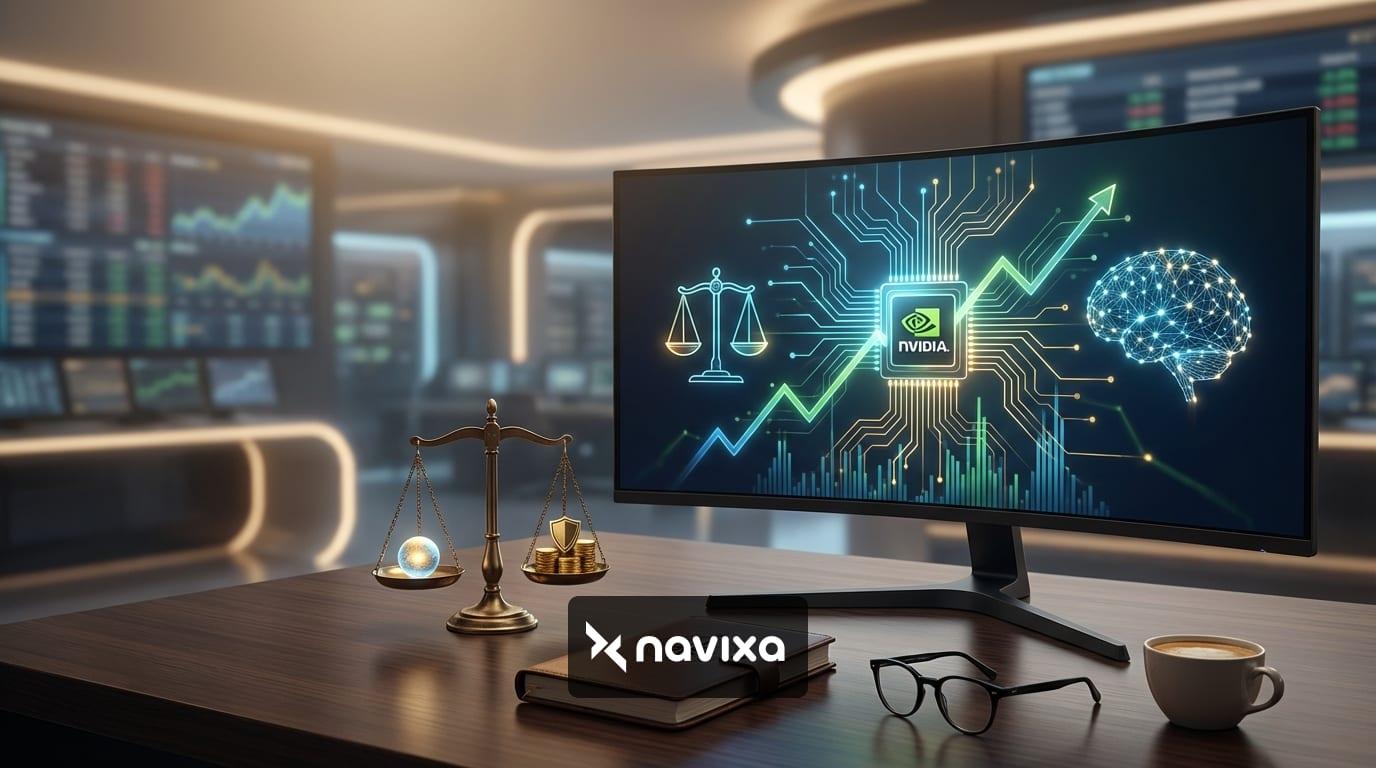
In the modern financial landscape, few events command as much attention as Nvidia earnings. Often described as the "Super Bowl" of the stock market, these quarterly reports have evolved beyond simple corporate updates into massive macroeconomic catalysts. For traders, the volatility surrounding Nvidia (NVDA) is not just an opportunity for profit—it is a supreme test of risk management and trading psychology.
Whether you are a dedicated equity trader or a cryptocurrency enthusiast watching the correlation with AI tokens, understanding how to navigate this event is crucial. The market’s reaction can be violent, irrational, and swift, punishing those who let emotions drive their decisions. This guide explores the mechanics of the Nvidia trade, how to handle the psychological pressure, and actionable strategies to manage risk effectively.
The Psychology of the Binary Event
Trading earnings is inherently risky because it is a binary event: the outcome is either a "beat" or a "miss," but the market reaction is rarely that simple. A company can crush revenue expectations, yet the stock may plummet because guidance was slightly conservative or because the good news was already "priced in."
This creates a psychological trap known as confirmation bias. Traders often convince themselves that "AI is the future" and therefore the stock must go up. When the price moves against this conviction, paralysis sets in. The key to surviving Nvidia earnings is accepting that you have no edge in predicting the number itself. Your edge lies in how you manage your position before and after the release.
FOMO and the Revenge Trade
The Fear of Missing Out (FOMO) hits peak levels just minutes before the closing bell on earnings day. Implied volatility (IV) spikes, making options incredibly expensive. Amateur traders often buy calls or puts at the top of this volatility curve. If the stock doesn't move significantly—or even if it does move in their direction but not enough to offset the drop in volatility (IV Crush)—they lose money.
This leads to revenge trading: aggressively entering a position immediately after the print to "make back" losses, often amidst erratic after-hours liquidity. Maintaining emotional neutrality is the hallmark of a professional strategist during these high-beta events.
Implied Volatility and Expected Moves
Before placing a trade, you must calculate the "expected move." This is derived from the pricing of the at-the-money (ATM) straddle (the cost of buying both a call and a put) for the expiration immediately following the earnings release.
For Nvidia, the market typically prices in a move of roughly 5% to 10%. If the stock trades at $140, a 10% expected move implies the market is prepared for a swing to either $154 or $126. If you buy options expecting a small 2% grind higher, you are statistically fighting the math. The Option Volatility and Pricing strategies used by market makers ensure that premiums are inflated to account for this uncertainty.
The Crypto Connection: AI Tokens as Proxies
One of the most fascinating developments in recent years is the tight correlation between Nvidia's stock price and AI-related cryptocurrencies. Tokens such as Render (RENDER), Fetch.ai (FET), and Near Protocol often act as high-beta proxies for Nvidia. When NVDA rallies on strong guidance, these tokens often see amplified moves to the upside. Conversely, a disappointment from Nvidia can trigger a sharp sell-off in the AI crypto sector.
Traders can use this to their advantage. Unlike the stock market, crypto markets trade 24/7. This allows traders to react to Nvidia's after-hours earnings report immediately using crypto assets, without waiting for the stock market to reopen the next morning. However, this correlation is not 1:1 and carries its own liquidity risks.
Comparing Strategic Approaches
Different traders have different risk profiles. Below is a comparison of three common ways to approach the Nvidia earnings event.
| Strategy Type | Action Plan | Risk Level | Psychological Stress |
|---|---|---|---|
| The Gambler (Directional) | Buy Calls or Puts before close | High (Binary Outcome) | Extreme (All-or-Nothing) |
| The Architect (Neutral) | Iron Condor / Short Straddle | Medium (Defined Risk) | Moderate (Managing Ranges) |
| The Sniper (Reactive) | Wait for Post-Earnings Open | Low (Information Advantage) | Low (Calculated Entry) |
| The Proxy (Crypto) | Trade AI Tokens (FET/RENDER) | High (Volatility Multiplier) | High (Speed Required) |
Actionable Risk Management Rules
To trade Nvidia earnings without blowing up your account, adhere to strict risk management protocols.
1. The 5% Rule
Never allocate more than 1-5% of your total trading capital to a binary event. If you are buying options, assume the premium is 100% at risk. If you are trading the stock or crypto proxies, ensure your position size allows you to withstand a 10-20% gap against you without catastrophic damage.
2. Avoid Market Orders After Hours
Liquidity in the after-hours session is thin. Spreads can widen significantly, meaning you might get filled at a much worse price than the last traded price. Always use limit orders to define your entry or exit price strictly.
3. Watch the Key Levels
Identify major support and resistance zones on the weekly timeframe before the event. Often, an earnings "beat" will spike the price exactly into a heavy resistance block where institutions are waiting to sell. Drawing these levels beforehand keeps you grounded when the chart starts moving vertically.
Conclusion: Discipline Over Prediction
Nvidia earnings offer a spectacle of market efficiency and inefficiency colliding in real-time. For the disciplined trader, it is not about guessing the revenue number or the CEO's guidance tone. It is about understanding implied volatility, managing position size, and checking your emotions at the door.
Whether you choose to engage directly via options, indirectly via AI crypto tokens, or simply sit on your hands and wait for the dust to settle, the goal remains the same: capital preservation followed by capital appreciation. By treating Nvidia earnings as a risk to be managed rather than a lottery ticket to be bought, you separate yourself from the gambling crowd and align yourself with professional consistency. For more insights on market movements, keep an eye on trusted financial news sources that provide real-time data analysis.