
New Year Trading Resolutions: Master Discipline & Consistency
- Jan 1, 2026
- 8 min read
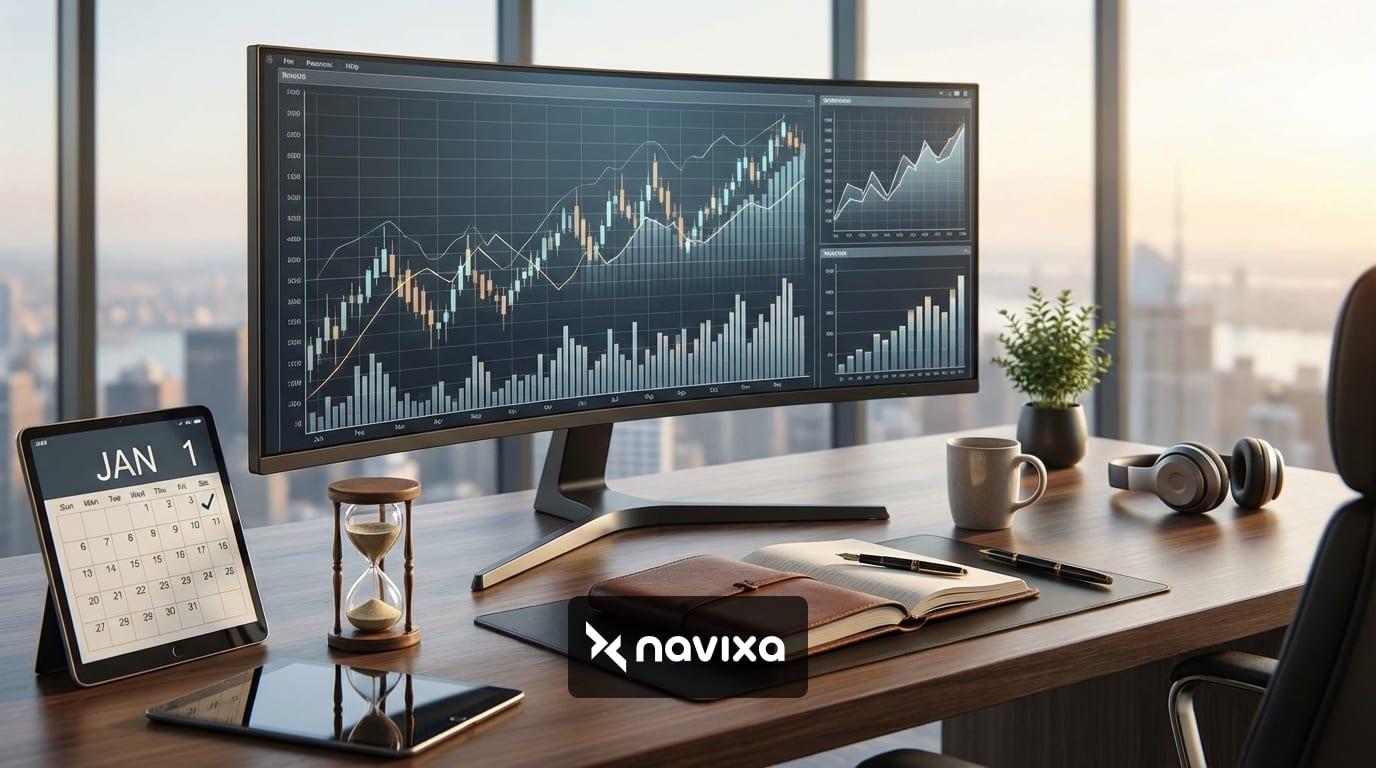
The turning of the calendar represents more than just a change in date; for traders, it signifies a psychological reset—a clean slate to shed the bad habits of the past year and adopt a renewed focus on profitability. As we step into a new year, the cryptocurrency markets continue to evolve with institutional adoption, algorithmic dominance, and 24/7 volatility. However, the fundamental differentiator between the profitable minority and the struggling majority remains unchanged: discipline.
It is enticing to set lofty financial goals, such as "doubling the portfolio" or "making $10,000 a month." Yet, outcome-based goals are often counterproductive because they focus on results rather than the process. This year, your resolutions should center on behavioral changes—mastering the routine, the risk management, and the emotional control that inevitably lead to financial success. Below is a comprehensive guide to the essential trading resolutions that will help you master discipline and consistency in the New Year.
Resolution 1: Build and Honor a Data-Driven Trading Plan
The most common reason for failure in the crypto markets is the lack of a structured plan. Many traders operate on "gut feel" or social media hype, which works in a strong bull market but leads to ruin when the tide turns. Your first resolution is to treat trading as a business, not a hobby.
Defining Your Edge
A trading plan must articulate your "edge"—the specific set of conditions where you have a statistical probability of winning. Whether you trade breakouts, mean reversions, or supply and demand zones, you must write down exactly what a valid setup looks like. If a trade does not meet your criteria, you do not take it. This year, resolve to be a sniper, not a machine gunner. Waiting for the perfect setup requires immense patience, but it preserves your capital for high-probability opportunities.
The Routine Checklist
Consistency in results comes from consistency in action. Establish a daily pre-market routine. This might include checking Bitcoin dominance, analyzing the total market cap, reviewing the economic calendar for macro events (like CPI data or interest rate decisions), and identifying key support/resistance levels. By ritualizing your preparation, you reduce anxiety and prepare your mind for execution.
Resolution 2: Implement Ruthless Risk Management
If strategy is the engine of trading, risk management is the brakes. Without brakes, you will eventually crash. The most critical New Year resolution you can make is to prioritize capital preservation over capital appreciation.
The 1% Rule
Adopt the industry standard of never risking more than 1% to 2% of your total account equity on a single trade. This does not mean you only buy with 1% of your funds; it means if the trade hits your stop-loss, the loss equals 1% of your account. This mathematical safety net ensures that even a streak of ten consecutive losses only draws down your account by roughly 10%, a recoverable amount. In contrast, risking 10% per trade would wipe you out in the same streak.
Stop-Losses are Non-Negotiable
Mental stop-losses are a myth for most traders. In the heat of volatility, emotions take over, and "I'll sell if it drops" turns into "it will bounce back soon." Resolve to set hard stop-losses at the moment of entry. This removes the decision-making burden when the market moves against you. For a deeper understanding of risk mechanics, resources like Investopedia's guide on risk management can provide fundamental definitions and strategies.
Resolution 3: Master the Inner Game (Psychology)
Trading is 20% strategy and 80% psychology. The charts do not move your money; you do. Your emotional state dictates whether you execute your plan flawlessly or sabotage yourself through fear and greed.
Two major psychological enemies to conquer this year are FOMO (Fear Of Missing Out) and Revenge Trading. FOMO drives you to buy a green candle at the top because you see others celebrating on social media. Revenge trading occurs after a loss, where you increase your position size to "win back" the money quickly. Both behaviors are account killers. Resolution: If you feel an emotional spike—euphoria or anger—step away from the screens. Implement a "cooling-off" rule where you do not trade for one hour following a significant win or loss.
| Aspect | The Gambling Mindset | The Professional Mindset |
|---|---|---|
| Risk per Trade | Variable, often 10-50% 'All In' | Fixed, usually 1-2% of Equity |
| Entry Strategy | Based on gut feeling or social hype | Based on pre-defined technical criteria |
| Reaction to Loss | Anger, Revenge Trading, Denial | Acceptance, Analysis, Moving On |
| Goal Setting | "Make $1M fast" | Execute the system perfectly |
| Record Keeping | None (Avoids looking at losses) | Detailed Journaling of every trade |
Resolution 4: The Art of Journaling
You cannot improve what you do not measure. A trading journal is the mirror that reveals your true performance. This year, resolve to log every single trade—not just the entry and exit price, but the "why" and the "how."
Metrics to Track
Beyond Profit and Loss (PnL), track your Maximum Adverse Excursion (MAE) to see how much heat you take before a trade goes profitable. Track your Win Rate versus your Risk/Reward Ratio. Often, traders discover they have a high win rate but still lose money because their losers are three times larger than their winners. Journaling exposes these leaks. Additionally, include a "mental state" tag for each trade (e.g., "Calm," "Anxious," "Rushed"). You will likely find a correlation between your emotional state and your PnL.
Resolution 5: Continuous Education and Adaptation
The crypto market changes rapidly. Strategies that worked in 2024 might be obsolete in 2026. The resolution here is to remain a student of the market. Dedicate time each week to learning—not trading. This could involve studying new indicators, understanding the mechanics of DeFi protocols, or learning about algorithmic trading bots which are becoming increasingly accessible to retail traders. Staying updated with reputable sources like CoinGecko or major exchange academies ensures you aren't left behind by technological shifts.
Furthermore, review your own trade history quarterly. This "self-audit" allows you to adapt your plan. If you notice you consistently lose money on weekends, make a rule: "No trading on weekends." Adaptation is the key to survival.
Action Plan: Your New Year Trading Checklist
To turn these resolutions into reality, print out this checklist and keep it near your trading station:
1. Define My Setup: I will only trade when [Conditions A, B, and C] are met.
2. Calculate Risk: I will calculate my position size so that my stop-loss equals 1% of equity.
3. Set Alerts: I will use price alerts instead of staring at charts all day to reduce fatigue.
4. Journal Immediately: I will record the trade details immediately after execution.
5. Weekly Review: I will spend Sunday evenings reviewing the past week's trades and prepping for the week ahead.
Conclusion
The New Year offers a powerful psychological milestone, but a date on the calendar cannot fix a broken process. Discipline and consistency are not traits you are born with; they are muscles you build through repetition. By committing to a trading plan, enforcing strict risk management, and maintaining a professional mindset, you separate yourself from the gamblers and position yourself among the profitable few. Make this year the year you stop chasing fast money and start building lasting wealth through disciplined execution.