

crypto investment strategies
Healthcare DePIN Crypto: Long-Term Investment Thesis
- May 3, 2026
- 14 min read
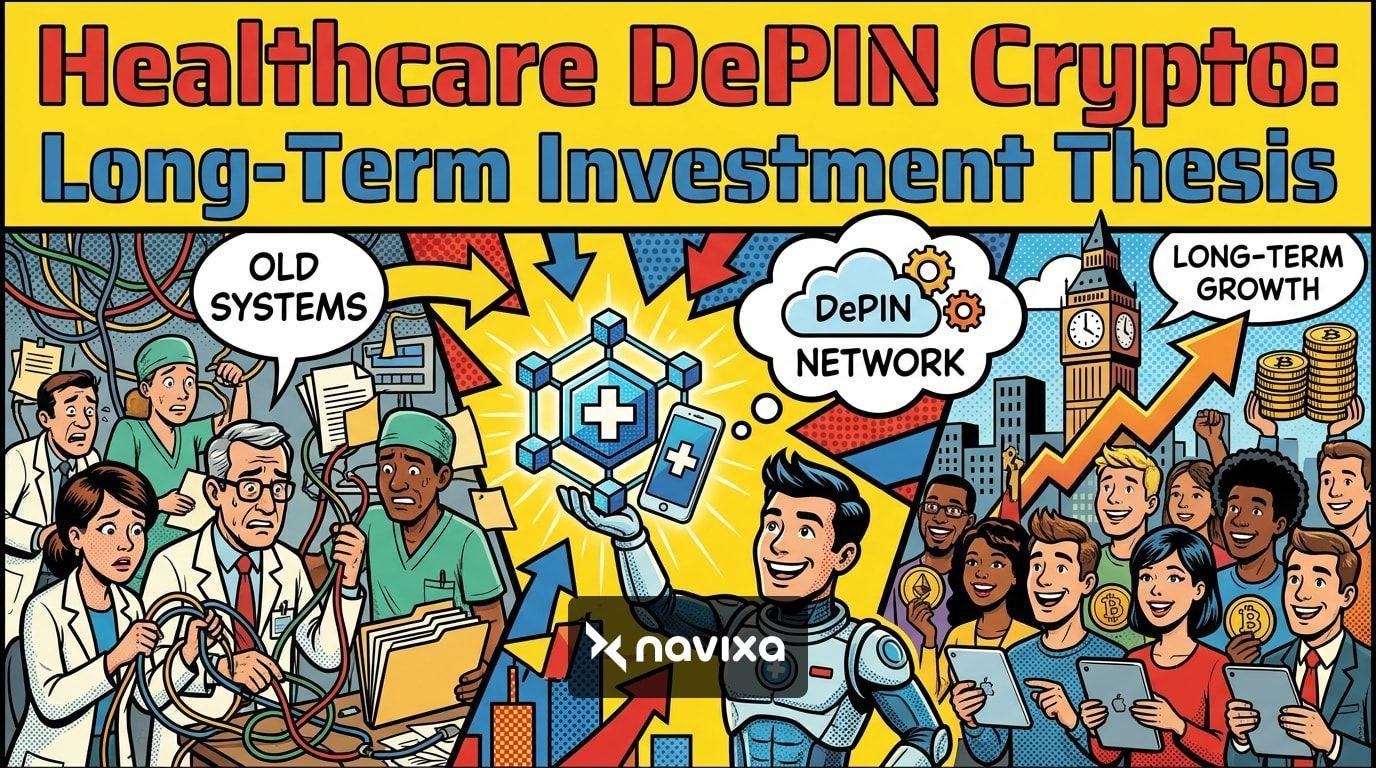
The cryptocurrency landscape is undergoing a monumental shift. As the global crypto market capitalization stabilizes around the $2.68 trillion mark, investors are pivoting away from purely speculative tokens and hunting for tangible, real-world utility. Enter the frontier of decentralized infrastructure. Among the most promising sectors emerging in this space is healthcare DePIN crypto. By blending the immutability of blockchain technology with the physical hardware of the medical industry—such as wearable fitness trackers, diagnostic servers, and telemedicine hubs—healthcare DePINs are poised to disrupt a multi-trillion-dollar industry.
For traders and long-term investors alike, recognizing the structural advantages of this decentralized framework is critical. It offers a paradigm where patients own their medical data, researchers can access vital health metrics transparently, and node operators are rewarded with native cryptocurrency. This article dives deep into the architecture of these networks, outlines a long-term investment thesis, and provides a framework for trading the tokens that power them.
- Healthcare DePIN crypto leverages blockchain to decentralize medical data storage, IoT wearables, and remote diagnostics.
- Tokenized incentives empower patients to monetize their own health metrics securely while retaining absolute data sovereignty.
- The investment thesis relies on the disruption of siloed, centralized medical IT networks and improved global diagnostic access.
- Navigating strict regulatory compliance and long institutional adoption cycles is vital for long-term portfolio risk management.

What is Healthcare DePIN Crypto?
To understand the magnitude of this technological shift, one must first define the overarching concept. Decentralized Physical Infrastructure Networks (DePIN) represent a system where blockchain technology coordinates the deployment and operation of physical hardware. Instead of relying on a single centralized corporate entity to build and maintain servers, cell towers, or energy grids, DePIN incentivizes a globally distributed network of individuals to provide the infrastructure in exchange for cryptocurrency rewards.
When applied to the medical field, healthcare DePIN crypto transforms how patient data is gathered, stored, and utilized. In traditional systems, massive hospital conglomerates and private tech companies control patient records, often leading to fragmented data silos, inefficiencies in clinical research, and a high vulnerability to cyberattacks.
A healthcare DePIN flips this model upside down. It utilizes decentralized nodes—which can range from professional diagnostic imaging servers to personal wearable health trackers—to process medical workloads. When a patient generates biometric data, it is encrypted, fractionalized, and stored across a decentralized network. The patient holds the cryptographic keys, ensuring that they are the sole owners of their medical history.
Healthcare DePIN relies on three core layers: the physical hardware (medical nodes or wearables), the middleware connecting IoT devices to the blockchain, and the smart contracts handling tokenized rewards for data contributors.
The Long-Term Investment Thesis
Building a long-term investment thesis around healthcare infrastructure requires understanding both the massive inefficiencies in the current medical system and the macroeconomic environment supporting decentralized technologies. With Bitcoin dominance currently hovering around 58.45% and institutional capital flowing into Web3, the groundwork for high-utility altcoin sectors has never been stronger. Layer-1 blockchains with high throughput—such as Solana, currently trading in the mid-$80 range—are heavily favored to support these decentralized networks because they can process the vast amounts of micro-transactions generated by IoT health devices.
The investment case for healthcare DePIN crypto is fundamentally rooted in its recurring utility. Unlike meme coins or isolated decentralized finance (DeFi) protocols that rely on speculative volume, healthcare DePINs address a perpetual human need: medical diagnostics and data management. As younger, digitally native demographics become the dominant demographic of investors and patients, their inherent preference for transparent, user-controlled networks aligns seamlessly with Gen Z digital wealth strategies, naturally driving retail capital into sector-specific utility tokens.
Furthermore, understanding the macroeconomic factors at play is essential. Analyzing variables such as inflation, infrastructure spending, and the broader crypto and GDP impact provides insight into how global economic conditions drive alternative funding models. When traditional healthcare spending becomes strained by inflation and inefficient legacy IT, decentralized community-driven funding models offer a highly competitive, cost-effective alternative.

Key Drivers of Growth
1. Data Monetization: Patients are realizing their health data is incredibly valuable to pharmaceutical companies and medical researchers. Tokenized networks allow them to sell anonymized data directly, cutting out middlemen. 2. Reduced Infrastructure Costs: Community-operated decentralized servers significantly reduce the overhead required to host multi-petabyte medical imaging databases. 3. Global Telemedicine: In underserved regions, decentralized diagnostic networks can connect patients with global specialists without relying on costly centralized local infrastructure.
Real-World Use Cases & Projects
The theoretical framework of healthcare DePIN crypto is rapidly becoming a tangible reality. Several specialized niches within the sector are already demonstrating viable tokenomic models.
Wearables and Biometric Tracking: Projects in this space reward users for maintaining healthy habits and continuously tracking their biometrics. By connecting smartwatches or specialized IoT health rings to a decentralized network, users stream encrypted sleep, heart rate, and activity data. In return, they receive utility tokens that can be traded on secondary markets or used to pay for premium health analytics. This creates a continuous loop of engagement where health data fuels the ecosystem's economy.
Decentralized Clinical Trials: One of the most expensive and time-consuming phases of medical research is patient recruitment for clinical trials. Healthcare DePINs solve this by allowing researchers to query decentralized databases of anonymized patient records. If a patient's data matches the criteria for a trial, a smart contract automatically triggers a token payment to the patient for their participation, vastly accelerating medical research and ensuring transparent, immutable data collection.
As mainstream technology sectors become saturated, astute investors are actively searching for the next asymmetric bet. While many focus on comparing the explosive growth of large language models to blockchain utility, evaluating the AI bubble versus crypto highlights how tangible, hardware-backed infrastructure networks provide a grounded, sustainable alternative to pure software speculation.
Market Analysis & Trading Psychology
Successfully investing in healthcare DePINs requires a distinct psychological approach compared to trading large-cap cryptocurrencies. Because the vast majority of tokens in this sub-sector are currently low-to-mid-cap altcoins, they are subject to extreme volatility and sporadic liquidity.
From a technical analysis perspective, trading these assets is often characterized by extended periods of accumulation followed by sharp, explosive markups when enterprise partnerships or regulatory approvals are announced. The "adoption dip" is a common psychological trap for investors in this niche. This occurs when the initial hype of a token fades, but the underlying protocol is slowly, painstakingly integrating with real-world hospitals and legacy IT systems. Traditional healthcare is notoriously slow to adopt new technology. Therefore, holding these assets requires conviction and a multi-year time horizon.
Navigating these extended holding periods and volatile drawdowns demands a comprehensive understanding of wider financial trends. Analyzing the macro outlook for crypto helps investors manage their risk appetite, preventing emotional sell-offs during standard market corrections and ensuring they maintain a strategic position before institutional adoption fully kicks in.

Regulatory compliance is the largest existential risk for healthcare DePINs. If a protocol fails to natively encrypt and anonymize data according to strict privacy frameworks, the project could face immediate regulatory crackdowns, resulting in severe market sell-offs.
Traditional Healthcare IT vs. DePIN Model
To visualize the transformative nature of these decentralized networks, it is helpful to compare the legacy systems currently used by major hospital networks against the emerging Web3 infrastructure.
| Feature | Traditional Healthcare IT | Healthcare DePIN Crypto |
|---|---|---|
| Data Control | Monopolized by Hospital / Tech Corporation | Self-Custody by Patient (Private Keys) |
| Server Architecture | Centralized, Siloed, & Vulnerable | Distributed, Encrypted Node Network |
| Patient Incentives | None (Data is monetized by third parties) | Continuous Tokenized Crypto Rewards |
| System Security | Susceptible to single-point-of-failure breaches | Cryptographically secured across global network |
| Interoperability | Very Poor (Closed ecosystems / Walled gardens) | Extremely High (Open-source blockchain standards) |
Building a Healthcare DePIN Crypto Portfolio
For investors ready to allocate capital to this burgeoning sector, a systematic approach to risk management and asset selection is essential. Due to the nascent stage of the technology, purely speculative investments can lead to rapid capital depreciation.
1. Prioritize Compliance and Security: Always verify if the underlying protocol is built to comply with international medical privacy laws, such as the Health Insurance Portability and Accountability Act (HIPAA) in the United States or GDPR in Europe. Protocols that proactively address regulatory concerns are far more likely to secure long-term institutional enterprise partnerships.
2. Evaluate Token Utility: Review the project's whitepaper to ensure the native token actually serves a fundamental purpose. In a well-designed healthcare DePIN crypto ecosystem, the token should act as the primary medium of exchange between data buyers (researchers) and data providers (patients), while also incentivizing node operators to provide server space. Avoid tokens that merely exist as governance proxies without an underlying economic flywheel.
3. Dollar-Cost Averaging (DCA): Given the high beta associated with infrastructure altcoins, deploying your entire capital block at a single price point exposes you to unnecessary risk. Utilize a dollar-cost averaging strategy to scale into positions over months or quarters, absorbing the natural volatility of the crypto market.

Conclusion
The intersection of physical medical infrastructure, the Internet of Things, and blockchain technology represents one of the most compelling asymmetrical investment opportunities of the decade. Healthcare DePIN crypto is not just another decentralized finance experiment; it is a structural overhaul of how human health data is stored, shared, and valued. By placing the power of data ownership back into the hands of patients and establishing transparent, community-driven diagnostic networks, DePIN solves legacy bottlenecks that have plagued the medical industry for years.
While the path to mainstream integration is fraught with regulatory hurdles and high market volatility, the underlying thesis remains incredibly strong. Investors willing to endure the extended adoption curves of the medical sector, execute rigorous due diligence, and implement strict risk management strategies will position themselves at the forefront of the next great wave of Web3 utility. Start your journey by analyzing top-tier decentralized infrastructure blockchains, tracking the deployment of medical nodes, and gradually scaling into protocols that demonstrate undeniable real-world utility.
Frequently Asked Questions
What exactly is a healthcare DePIN crypto token?
A healthcare DePIN crypto token is a digital asset used to power a decentralized physical infrastructure network tailored for the medical industry. These tokens are typically used to reward patients for sharing biometric data, incentivize node operators for storing medical records securely, and allow researchers to pay for access to anonymized clinical data.
Are healthcare DePIN networks compliant with privacy laws like HIPAA?
The top-tier protocols are specifically engineered with privacy compliance in mind. They utilize advanced cryptographic techniques, such as zero-knowledge proofs and secure data fractionalization, to ensure that personal health information remains private and unreadable to anyone without the patient's explicit cryptographic permission, adhering to standards like HIPAA and GDPR.
How can a patient earn cryptocurrency for their health data?
Patients can earn cryptocurrency by connecting supported IoT medical devices or smart wearables to a decentralized network protocol. Once connected, their anonymized daily health metrics (such as heart rate, sleep patterns, or exercise levels) are continuously fed into the network, triggering smart contracts that automatically deposit the native utility token into their digital wallet.
What are the primary risks associated with investing in DePIN altcoins?
The main risks include regulatory uncertainty, as healthcare is a heavily regulated sector. Additionally, DePIN altcoins typically suffer from low liquidity and high price volatility during their early stages. There is also the risk of technological execution; integrating cutting-edge blockchain solutions with legacy hospital IT systems requires significant time, capital, and enterprise-level coordination.