
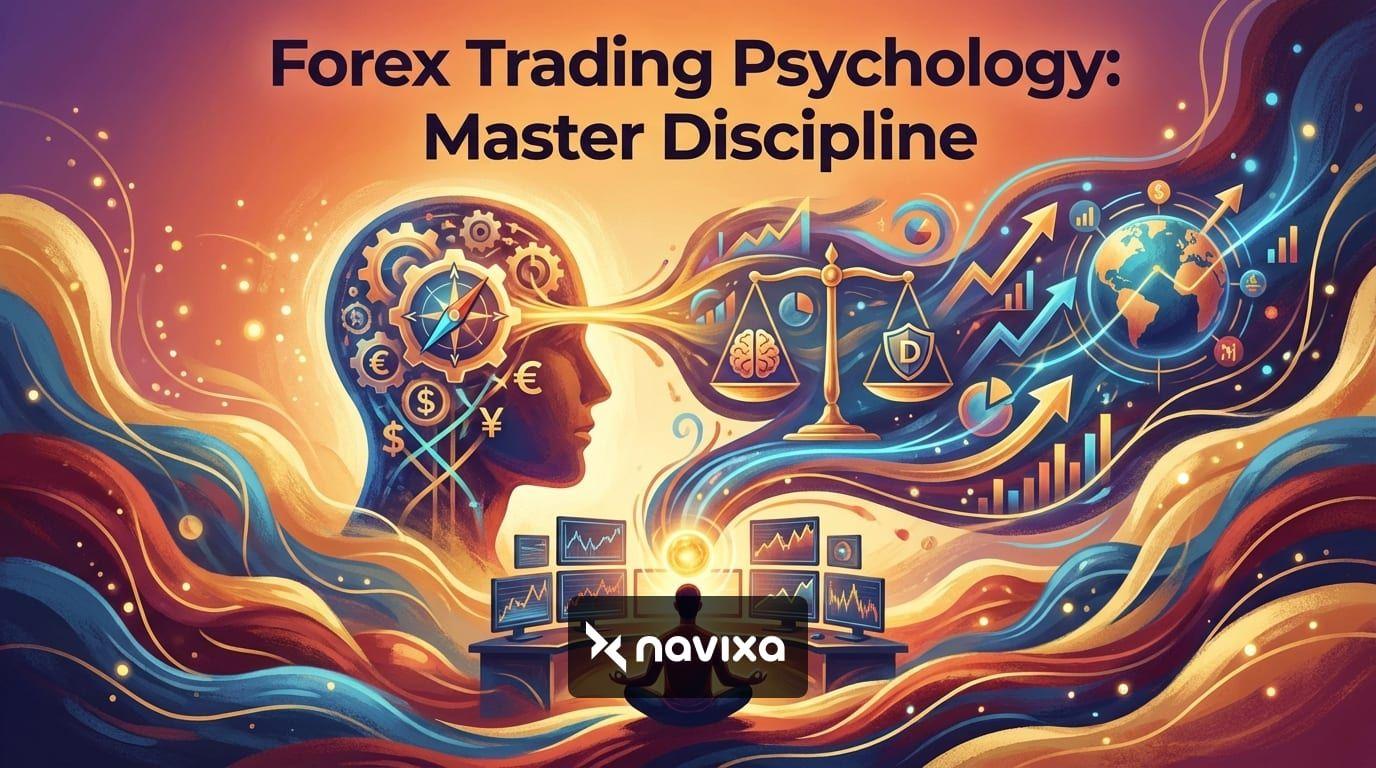
The currency market is a highly dynamic and volatile environment where fortunes can be made or lost in the blink of an eye. While many beginners spend countless hours searching for the perfect technical indicator, the ultimate secret to long-term profitability lies within the mind. Mastering forex trading psychology is the single most critical factor that separates consistently profitable traders from the vast majority who ultimately blow their accounts.
Without emotional discipline, even the most sophisticated trading strategy will fail. When real money is on the line, human nature takes over. Fear, greed, hope, and despair cloud judgment, leading to impulsive decisions that defy logic and risk management. In this comprehensive guide, we will explore the intricate landscape of forex trading psychology, identify the cognitive biases that sabotage success, and provide actionable steps to build an unshakeable, professional trading mindset.
What is Forex Trading Psychology?
Forex trading psychology refers to the mental state, emotional control, and behavioral tendencies of a trader when interacting with the foreign exchange market. It dictates how you react to a string of losses, how you handle a winning streak, and whether you can stick to your trading plan when the market moves aggressively against your position.
To truly understand trading psychology, we must first examine the core emotions that drive market behavior and individual decision-making.
Greed and Overleveraging
Greed is the desire for excessive financial gain. In the forex market, where high leverage is easily accessible, greed often manifests as overleveraging or holding onto winning positions for too long without securing profits. A greedy trader might risk 10% of their account on a single trade, hoping to double their money overnight. This aggressive approach inevitably leads to catastrophic drawdowns when the market inevitably reverses.
Fear and Hesitation
Fear is a primal survival mechanism, but in trading, it is a paralyzing force. It typically presents itself in two ways: the fear of losing money and the fear of missing out (FOMO). The fear of losing causes traders to prematurely exit winning positions or hesitate to take a perfectly valid setup. Conversely, FOMO drives traders to jump into a market rally late, buying at the absolute peak right before a sharp correction.
Revenge Trading
Revenge trading is one of the most destructive psychological traps. After suffering a painful loss, a trader may feel a sudden urge to 'get back' at the market. Instead of stepping away to analyze the failure objectively, they immediately execute another trade—often with increased lot sizes—based on pure emotion rather than technical validity.
The Impact of Cognitive Biases on Trading
Beyond raw emotions, the human brain is hardwired with cognitive biases that can severely distort a trader's perception of market reality. Recognizing these psychological blind spots is the first step toward overcoming them. For a deeper dive into how the mind handles financial decisions, you can explore Investopedia's guide on behavioral finance.
Confirmation Bias
Confirmation bias occurs when a trader actively seeks out information that supports their existing market view while completely ignoring data that contradicts it. For example, if you believe the EUR/USD is going to rise, you might only focus on bullish technical indicators and dovish US economic news, blinding yourself to obvious bearish price action forming on the chart.
Recency Bias
Recency bias is the tendency to place disproportionate weight on recent events. If a trader has won their last five trades, they might feel invincible, leading them to abandon their risk management rules. Conversely, a recent string of losses might convince a trader that their entire strategy is broken, causing them to abandon a statistically profitable system just before it enters a winning cycle.
Loss Aversion
In psychology, loss aversion is the phenomenon where the pain of losing is psychologically twice as powerful as the pleasure of gaining. In forex trading, this causes traders to hold onto losing positions far longer than they should, hoping the market will turn around so they don't have to realize the loss. As the legendary market wizards say:
"Cut your losses short and let your winners run."
Loss aversion forces amateurs to do the exact opposite: they cut their winners short out of fear and let their losses run out of hope.
Aligning Technical Analysis with Emotional Discipline
Many traders mistakenly believe that technical analysis and trading psychology are two entirely separate disciplines. In reality, they are deeply intertwined. Your technical analysis is only as effective as your ability to execute it without emotional interference.
When a trader plots key support and resistance zones, identifies Fibonacci retracement levels, or spots a head-and-shoulders pattern, they are creating an objective framework for market behavior. However, the moment the trade is executed, subjectivity tries to creep back in.
A disciplined trader uses their technical analysis as a psychological anchor. If your trading plan dictates that a daily candle must close below a specific moving average before you enter a short position, emotional discipline is what stops you from entering the trade four hours early just because the market 'looks' bearish.
To solidify this mindset, you can study comprehensive resources like BabyPips on Trading Psychology, which emphasizes building a mechanical approach to chart reading.
Risk Management: The Foundation of Trading Psychology
It is impossible to maintain emotional control if your risk parameters are out of control. Effective risk management is the bedrock upon which strong trading psychology is built. If you are risking a small, predefined percentage of your account on any given trade, the outcome of that specific trade loses its emotional power.
The 1% Rule
Professional traders rarely risk more than 1% to 2% of their total account equity on a single setup. By strictly adhering to this rule, you mathematically ensure that a string of five or even ten consecutive losses will not destroy your account. Knowing that your capital is protected drastically reduces the anxiety and fear associated with executing trades.
Proper Position Sizing and Stop Losses
Position sizing should never be arbitrary. It must be calculated based on the distance between your entry price and your invalidation level (the stop loss). Setting a hard stop loss the moment you enter a trade removes the psychological burden of having to manually close a losing position when panic sets in. It effectively automates your discipline.
Comparison: Amateur vs. Professional Trader Mindset
Understanding the contrast between a failing mindset and a successful one can help you identify areas for personal improvement. Below is a breakdown of how amateurs and professionals differ in their psychological approach to the forex market.
| Feature | Amateur Trader Mindset | Professional Trader Mindset |
|---|---|---|
| Market Perspective | Views the market as an opponent to beat. | Views the market as an environment of probabilities. |
| Handling Losses | Takes losses personally; engages in revenge trading. | Accepts losses as a standard business expense. |
| Risk Approach | Focuses on how much money can be made. | Focuses on how much capital can be lost. |
| Strategy Execution | Constantly jumps between different indicators. | Sticks to a tested edge over a large sample size. |
| Emotional State | Euphoric during wins, depressed during losses. | Remains emotionally detached regardless of the outcome. |
Actionable Steps to Master Forex Trading Psychology
Reading about trading psychology is easy, but implementing it in live market conditions requires deliberate practice and structured routines. Here are several actionable steps you can take to build your emotional discipline.
Develop a Comprehensive Trading Plan
A trading plan is a physical document that outlines every aspect of your trading business. It should explicitly define your edge, including the specific currency pairs you trade, the exact timeframes you monitor, your criteria for entry and exit, and your maximum daily drawdown limits. When you feel confused or emotional during a live session, your trading plan serves as your objective rulebook.
Keep a Detailed Trading Journal
Journaling is arguably the most powerful tool for improving forex trading psychology. A good trading journal goes beyond recording entry prices, exit prices, and pip counts. It should document your emotional state before, during, and after a trade.
Ask yourself: Was I feeling anxious? Did I break my rules out of boredom? By tracking your emotional triggers alongside your financial metrics, you can identify destructive behavioral patterns and work to eliminate them.
Implement Mindfulness and Stress Management
Trading is inherently stressful. Sitting in front of flickering charts for hours can cause significant mental fatigue, which leads to poor decision-making. Professional traders incorporate mindfulness practices, such as meditation, regular exercise, and enforced screen breaks, into their daily routines. Stepping away from the desk after a series of wins or losses helps reset your cognitive baseline, preventing emotionally driven trading.
Navigating Modern Market Pressures
In today's retail forex landscape, the rise of proprietary (prop) trading firms has introduced a new layer of psychological complexity. These firms offer massive capital funding to traders who can pass strict evaluation phases. However, they impose rigid rules, such as tight daily drawdown limits and stringent risk parameters.
This creates a high-pressure environment where traders often succumb to anxiety. The pressure to pass an evaluation or secure a payout can cause even skilled analysts to abandon their strategies. Mastering forex trading psychology is the only way to survive the modern prop firm ecosystem. You must trade the process, not the payout.
Practical Takeaways for Consistent Profitability
To summarize the journey toward mastering your trading mindset, keep these fundamental takeaways at the forefront of your daily operations:
1. Acknowledge Your Emotions: Do not try to become a robot. Instead, recognize when fear or greed is surfacing and actively choose to follow your plan anyway. 2. Think in Probabilities: No single trade matters. Your success is determined by the outcome of your next 100 trades based on your statistical edge. 3. Protect Your Capital First: Making money is secondary to keeping the money you already have. Strict risk management is non-negotiable. 4. Embrace Boredom: Good trading is supposed to be boring. If you are seeking excitement or an adrenaline rush, you are gambling, not trading.
Frequently Asked Questions
How long does it take to master forex trading psychology?
There is no definitive timeline, as emotional development varies from person to person. While a trader might learn technical analysis in a few months, mastering the psychological aspects often takes years of live market experience, self-reflection, and overcoming periods of significant drawdown.
Can algorithmic trading completely remove emotions?
Algorithmic or automated trading can execute entries and exits without hesitation, effectively removing the immediate emotions of fear and greed during trade execution. However, psychology still plays a role; a human must have the discipline to let the algorithm run during unavoidable losing streaks without manually interfering or turning the system off out of panic.
What is revenge trading and how can I stop it?
Revenge trading is the act of immediately entering a new position after a loss, usually with a larger position size, to instantly recoup the lost capital. To stop this destructive habit, implement a strict 'time-out' rule in your trading plan. For example, mandate a 24-hour break from the charts if you suffer two consecutive losses in a single day.
How does risk management affect my emotional state?
Risk management is directly tied to your emotions. If you risk an amount of money that you are truly comfortable losing—such as 1% of your account—you will not feel panic when the trade moves into drawdown. Conversely, overleveraging triggers immediate anxiety, causing you to make irrational decisions like moving stop losses or exiting prematurely.
Conclusion
Mastering forex trading psychology is a lifelong pursuit, but it is undoubtedly the most rewarding investment you can make in your trading career. By understanding your cognitive biases, managing risk with absolute strictness, and maintaining a professional, probability-based mindset, you can elevate yourself above the chaotic emotions that plague amateur traders.
Stop searching for the holy grail of technical indicators. The edge you are looking for is already inside your head. Start treating your trading as a disciplined business today, strictly enforce your rules, and watch your consistency—and your profitability—grow over time.