
Crypto Trading Psychology: Mastering Discipline & Consistency
- Dec 4, 2025
- 8 min read
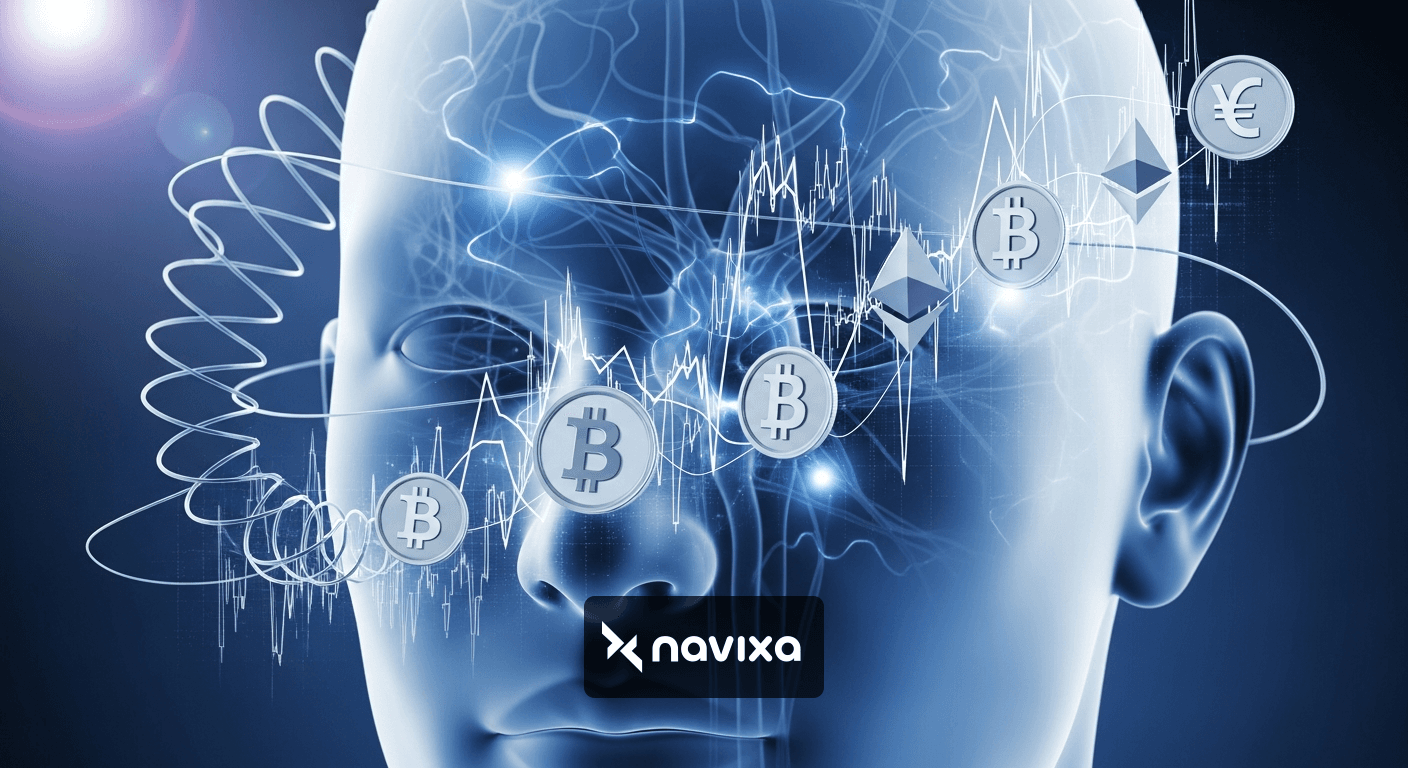
It is an uncomfortable truth in the cryptocurrency world: you can have the best technical analysis strategy, the fastest execution tools, and deep insider knowledge, yet still lose your entire portfolio in a single month. Why? Because the biggest risk to your capital isn’t a rug pull, a flash crash, or a regulatory ban. It is your own mind.
With Bitcoin and major altcoins seeing unprecedented volatility in late 2025, the market has become a high-stakes arena where fortunes are made and lost in hours. Yet, statistics show that over 90% of retail traders consistently lose money. The differentiator between the profitable minority and the losing majority is rarely technical skill—it is crypto trading psychology.
In this guide, we will dismantle the emotional traps that sabotage traders—from FOMO to revenge trading—and provide actionable frameworks to build the discipline required for long-term consistency.
The 80/20 Rule of Trading Success
Veteran traders often cite a golden rule: Trading is 20% strategy and 80% psychology. A strategy provides the signals, but psychology dictates whether you follow them. In the 24/7 crypto markets, where assets can pump 50% or dump 30% while you sleep, the psychological pressure is amplified significantly compared to traditional stock markets.
Recent surveys from 2024 and 2025 highlight this struggle. A report by Kraken indicated that nearly 84% of crypto traders admit to making decisions based on FOMO (Fear Of Missing Out), while another study found that young traders (aged 18–30) frequently experience anxiety and decision paralysis following a significant loss. This emotional turbulence leads to a vicious cycle of impulsive entries and panic exits, eroding capital regardless of the market's direction.
The Four Horsemen of Trading Psychology
To master your mind, you must first identify the enemies lurking within it. These are the four most common psychological pitfalls that drain crypto portfolios.
1. FOMO (The Green Candle Trap)
FOMO occurs when you see a coin skyrocketing—perhaps a new meme coin or a Layer-2 token—and you feel a visceral panic that you are being left behind. You abandon your trading plan and buy the top, only to watch the price correct immediately. This is driven by herd mentality and the social proof of seeing others post gains on X (Twitter).
2. FUD (The Panic Button)
Fear, Uncertainty, and Doubt (FUD) is the inverse of FOMO. It happens when negative news—real or manufactured—causes you to sell a solid position at the bottom. In the crypto market, rumors spread faster than facts. Traders who succumb to FUD often sell at a loss right before a rebound, driven by the biological instinct to avoid pain.
3. Revenge Trading (The Gambler’s Fallacy)
After a significant loss, the brain’s fight-or-flight response kicks in. Instead of analyzing why the trade failed, you immediately open a new, larger position to "win back" the money. This is arguably the most destructive behavior. The market does not owe you a refund. Revenge trading almost always leads to leverage mismanagement and liquidation.
4. Confirmation Bias
Once in a trade, the human mind seeks information that supports its decision and ignores red flags. If you are long on Ethereum, you will unconsciously scroll past bearish charts and only read bullish predictions. This blinds you to changing market conditions until it is too late.
Scientific Basis: Why We Are Wired to Lose
Trading psychology isn't just about "willpower"; it is rooted in behavioral finance. A key concept is Prospect Theory, developed by Nobel laureates Kahneman and Tversky. Their research proved that humans feel the pain of a loss twice as intensely as the joy of an equivalent gain.
In crypto, this manifests as holding losing positions for too long (hoping they will recover to avoid the pain of realizing a loss) and selling winning positions too early (fearing the profit will disappear). To succeed, you must actively rewire this biological default.
| Scenario | Amateur Mindset (Emotional) | Pro Mindset (Disciplined) |
|---|---|---|
| Price Pumps Rapidly | Buys immediately (FOMO). FEAR: Missing out. | Waits for a pullback or setup. LOGIC: Chasing entries is high risk. |
| Price Drops Suddenly | Panic sells or freezes. FEAR: Losing everything. | Checks invalidation level. LOGIC: Is the thesis still valid? |
| Losing Streak | Increases leverage to recover fast. EMOTION: Anger/Revenge. | Reduces size or takes a break. LOGIC: Capital preservation first. |
| Winning Streak | Feels like a genius, increases risk. EMOTION: Euphoria. | Sticks to the plan, expects variance. LOGIC: Market beta vs. Skill. |
| Execution | Watches PnL (Profit & Loss) frantically. | Executes based on chart levels, ignores PnL fluctuations. |
Actionable Steps to Master Your Mindset
Understanding the problem is half the battle. The other half is implementing systems that protect you from yourself. Here are four actionable strategies to enforce discipline.
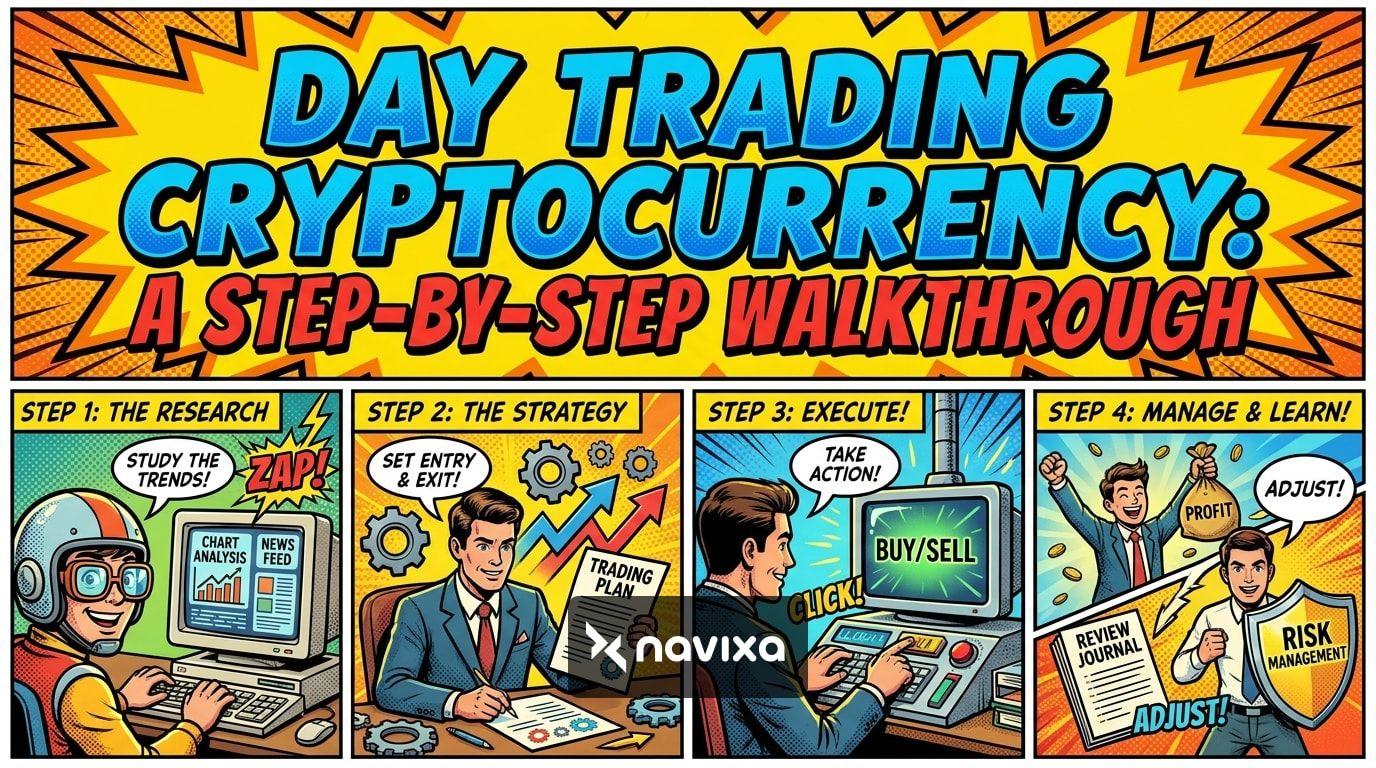
1. The Trading Plan is Law
You should never enter a trade without a written plan. Before clicking "Buy," you must define:
• Entry Trigger: What exact condition must be met?
• Invalidation (Stop Loss): At what price is your thesis wrong?
• Take Profit Targets: Where will you sell?
If you don't know your exit before you enter, you are not trading; you are gambling. A pre-defined plan removes the need to make emotional decisions in the heat of the moment.
2. Automate Your Risk Management
Willpower is a finite resource. Do not rely on it. Use technology to enforce discipline. Always set a hard stop-loss order at the moment of entry. This ensures that a single bad trade cannot wipe out your account. Additionally, consider using OCO (One-Cancels-the-Other) orders to automatically take profits while protecting your downside.
3. The Psychological Trading Journal
Most traders only track entry and exit prices. A psychological journal goes deeper. For every trade, record:
• Your emotional state before entering (e.g., "Anxious," "Bored," "Confident").
• Why you took the trade (e.g., "Followed plan," "Saw a tweet," "Revenge").
• Your emotional state during the trade (e.g., "Checked price every 2 minutes").
Reviewing this journal weekly will reveal patterns. You might discover that you lose 80% of trades made when you are "bored," or that you exit winning trades too early due to anxiety.
4. Embrace the "Walk Away" Rule
After three consecutive losses, stop trading for 24 hours. This is a standard rule in many proprietary trading firms. It prevents the "tilt" state where rationality shuts down and gambling instincts take over. Similarly, after a massive win, take a break. Euphoria is just as dangerous as panic because it leads to overconfidence and sloppy risk management.
Managing Volatility in the 2025 Market
The crypto market of 2025 is more mature than in previous cycles, with institutional ETFs providing a floor for major assets like Bitcoin and Ethereum. However, the altcoin market remains the "Wild West." Flash crashes—like the hypothetical liquidity cascades seen in leveraged derivatives markets—are still common.
To handle this, use position sizing as your emotional anchor. If a 10% drop in price causes you to sweat or lose sleep, your position size is too big. A general rule of thumb is to risk no more than 1-2% of your total portfolio on a single trade. When the risk is small, the emotion is manageable, allowing you to make logical decisions.
Conclusion: Consistency is a Choice
Mastering crypto trading psychology is a journey, not a destination. The market is designed to trigger your deepest insecurities and greeds. By acknowledging these triggers and building a rigid framework of rules, risk management, and self-reflection, you move from the gambling majority to the profitable minority.
Remember, the goal is not to eliminate emotions—that is impossible. The goal is to prevent those emotions from clicking the mouse. As you navigate the charts, keep this CoinDesk market analysis in mind: volatility is the price of admission, but discipline is the key to the exit.
Start today by writing down your trading rules. Your future portfolio will thank you.