
The convergence of traditional finance (TradFi) and digital assets has forever changed how cryptocurrency markets operate. Gone are the days when Bitcoin and altcoins moved solely on retail sentiment and technical patterns. Today, institutional capital dominates, meaning digital assets are hyper-sensitive to both macroeconomic indicators and blockchain-specific milestones. Navigating this complex landscape requires a robust crypto economic calendar.
If you want to move from reactive guessing to proactive positioning, mastering a crypto economic calendar is non-negotiable. This step-by-step trading guide will explain what these calendars are, which events carry the most weight, and how to execute a profitable strategy around them.
What is a Crypto Economic Calendar?
A crypto economic calendar is a specialized tracking tool that combines traditional macroeconomic data releases with crypto-native events. While foreign exchange (forex) or equities traders use standard calendars to track the Consumer Price Index (CPI) or the Federal Open Market Committee (FOMC), cryptocurrency traders need a hybrid approach.
"In the modern digital asset market, a trader must be as fluent in inflation reports as they are in tokenomics and blockchain upgrades."
A standard crypto calendar will alert you to: 1. Macroeconomic Data: Inflation reports (CPI, PPI), employment data (Non-Farm Payrolls), and central bank interest rate decisions. 2. Token Unlocks: Dates when early investors, founders, or treasuries are permitted to sell previously locked tokens. 3. Network Upgrades: Hard forks, mainnet launches, and major protocol implementations. 4. Regulatory and Legal Events: ETF approvals, SEC lawsuit deadlines, or parliamentary votes on crypto regulation.
By tracking these developments, traders can anticipate liquidity shifts, forecast volatility, and manage their risk accordingly. For excellent overviews, many traders rely on tools like CoinMarketCap's Event Calendar or dedicated analytics platforms like Tokenomist.ai to stay ahead of the curve.
Key Events to Track on Your Calendar
To effectively trade using a crypto economic calendar, you must first understand the primary catalysts that move the market. These can be broadly categorized into macroeconomic indicators and crypto-native supply shocks.
High-Impact Macroeconomic Indicators
Bitcoin is widely considered a gauge for global liquidity. When liquidity expands, crypto thrives; when liquidity contracts, crypto suffers. Therefore, tracking United States economic data is crucial.
* Consumer Price Index (CPI): The CPI measures inflation. When inflation is sticky or runs hotter than the Federal Reserve's 2% target (often hovering around the 2.4% to 2.7% range in recent times), the Fed is forced to keep interest rates "higher for longer." This typically drives the US Dollar up and pushes Bitcoin down. Conversely, a lower-than-expected CPI usually triggers a crypto rally. * FOMC Meetings & Interest Rate Decisions: The Federal Reserve sets the baseline interest rate for the global economy. Rate cuts make borrowing cheaper, injecting liquidity into risk assets like crypto. More importantly, the FOMC press conference featuring the Fed Chair often causes massive intraday volatility as traders dissect every word for hawkish or dovish signals. * Non-Farm Payrolls (NFP): Released on the first Friday of every month, this employment report shows the strength of the US labor market. A surprisingly strong NFP suggests the economy can withstand higher interest rates, which is often interpreted as bearish for crypto.
Crypto-Native Events and Supply Dynamics
While macro events affect the broader market, crypto-native events dictate the performance of individual altcoins.
* Token Unlocks: Token unlocks represent new circulating supply entering the market. They come in two forms: *cliff unlocks* (a massive chunk released on a specific date) and *linear unlocks* (a slow, daily emission). For instance, massive weekly emissions from highly traded tokens like Hyperliquid ($HYPE) or early-month ecosystem unlocks from projects like SUI create predictable liquidity redistributions. Traders track these events to short potential sell pressure or buy the dip once the supply is fully absorbed. * Protocol Upgrades & Hard Forks: Blockchain networks constantly evolve. A major scaling upgrade, such as Solana deploying network speed enhancements or Ethereum undergoing a hard fork, often results in a "buy the rumor, sell the news" price action. * Treasury Votes & Ecosystem Funds: DAOs and foundations frequently vote on massive treasury deployments. A vote to unlock tens of millions of dollars (such as the Cardano treasury funding ecosystem startups) can alter the circulating supply and trader sentiment simultaneously.
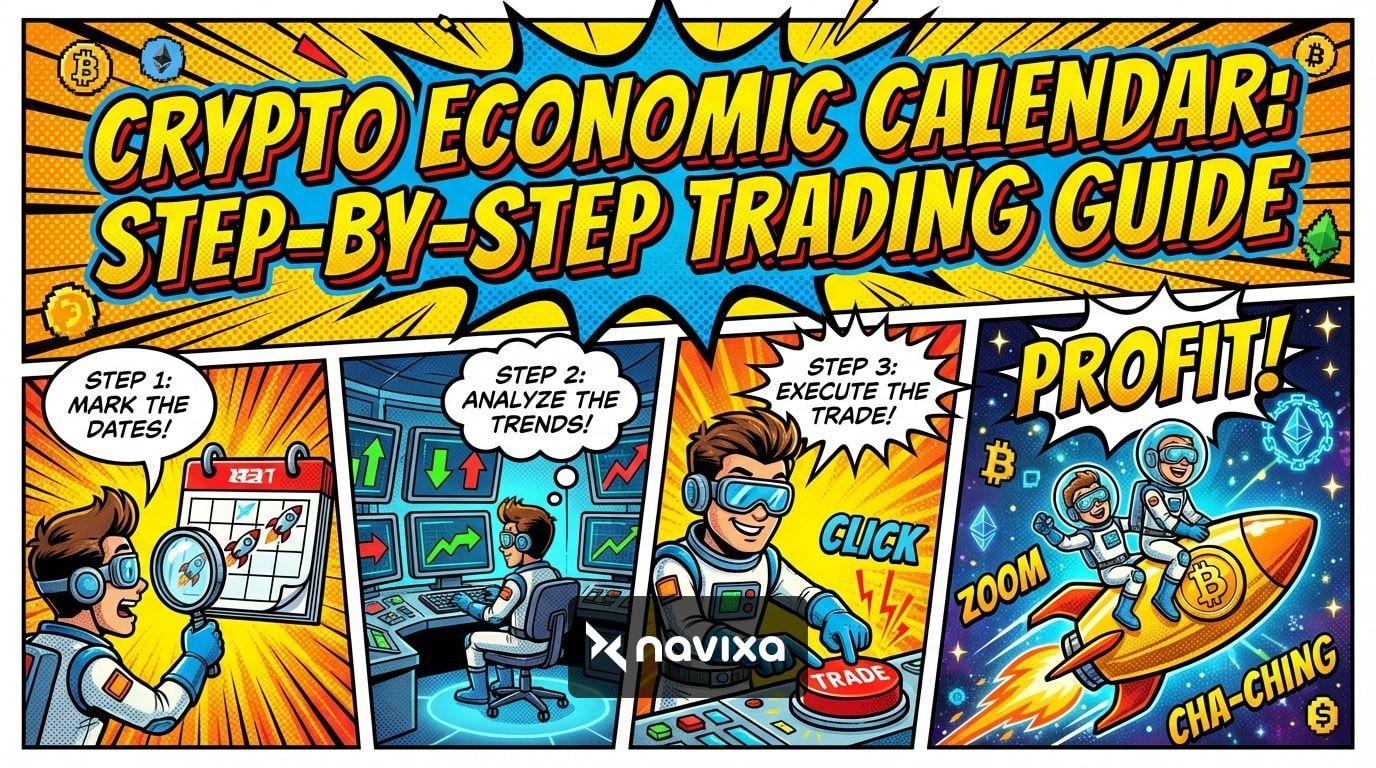
Step-by-Step Strategy: Trading the Crypto Economic Calendar
Trading around high-impact calendar events is not about gambling on the outcome; it is about risk management and exploiting the volatility that the event creates. Follow this step-by-step strategy to trade calendar events safely.
Step 1: Weekly Calendar Auditing
Every Sunday evening, pull up your preferred crypto economic calendar. Filter the events by "High Impact." Write down the exact dates and times (adjusted to your local time zone) of the upcoming CPI print, FOMC meeting, and any major token unlocks for coins you currently hold or actively trade.
Step 2: Establish Technical Baselines
Before the news drops, the charts will often consolidate. Identify the key support and resistance levels on higher timeframes (4-hour and Daily charts). Mark the "liquidity pools"—areas just above recent highs or below recent lows where retail traders place their stop losses. Market makers often push the price into these pools during the chaos of a news release.
Step 3: De-Risking Pre-Event
Professional traders rarely hold highly leveraged positions *into* a major news event. The spread widens, and "slippage" (the difference between your expected price and the actual execution price) becomes severe.
If you are a day trader, consider flattening your book (closing your open positions) 30 minutes before a CPI release or an FOMC decision. If you are holding long-term spot positions, ensure your portfolio is hedged or simply ride out the volatility without micromanaging.
Step 4: Trading the Sweep (Execution)
When a major economic data point is released, you will often witness a "Darth Maul" candle. This is a massive candlestick with long wicks on both the top and bottom, designed to trigger stop losses for both buyers and sellers.
The Strategy: Wait for the initial 15-minute or 1-hour candle to close *after* the news is released. Do not trade the initial algorithmic spike. Once the dust settles and the candle closes, the market will reveal its true directional bias. If the price sweeps the lows, grabs liquidity, and aggressively reclaims support, you have a high-probability setup to enter a long position.
Step 5: Post-Event Risk Management
Once you are in a trade following a calendar event, momentum can shift quickly. Use trailing stop losses to lock in profits. For example, if a token unlock causes an expected 10% dump, and you successfully shorted the asset, secure at least 50% of your profits at the first major support level. Markets often front-run bad news, meaning the asset might bottom out on the exact day the tokens are unlocked.
Traditional vs. Crypto Economic Calendars
Understanding the nuanced differences between traditional and digital asset calendars will give you a significant edge over stock market traders attempting to transition into crypto.
| Feature | Traditional Economic Calendar | Crypto Economic Calendar |
|---|---|---|
| Primary Focus | Fiat currencies, equities, bonds, commodities | Cryptocurrencies, DeFi tokens, NFTs, stablecoins |
| Key Indicators | GDP, CPI, NFP, Interest Rates, PMI | Token Unlocks, Hard Forks, Halvings, Macro Data |
| Operating Hours | Monday-Friday, standard market hours | 24/7/365, non-stop execution |
| Volatility Windows | Scheduled press releases (e.g., 8:30 AM EST) | Continuous, but peaks at unlock times and macro drops |
| Source of Data | Government agencies, Central Banks | Blockchain data, Foundations, SEC filings, The Fed |
Practical Takeaways for Traders
* Do Not Front-Run News: Predicting an inflation print is a coin toss. Let the data come out, let the algorithmic bots overreact, and trade the subsequent trend. * Understand Tokenomics: A token unlock only matters if it represents a large percentage of the *circulating* supply. A 1% unlock is background noise; a 15% cliff unlock is a tradable macro event. * Merge Technicals with Fundamentals: A bullish technical chart pattern is easily invalidated by a hawkish FOMC rate hike. Always use the economic calendar as a filter for your technical setups. * Watch the Dollar: The US Dollar Index (DXY) moves inversely to crypto. If the economic calendar points to a strengthening dollar, crypto will likely face heavy headwinds.
Conclusion
A crypto economic calendar is the ultimate bridge between macroeconomics and blockchain fundamentals. By meticulously tracking CPI data, Federal Reserve commentary, and massive token unlock schedules, you transition from a reactive gambler to a proactive strategist.
The digital asset market will only become more sophisticated as institutional adoption grows. If you want to survive and thrive, make the calendar your anchor. Start this week: audit the upcoming events, map out your technical levels, and let the volatility work for you, rather than against you.
***
Frequently Asked Questions
How do token unlocks affect cryptocurrency prices?
Token unlocks increase the circulating supply of an asset. If the demand does not rise to meet this new supply, the price will naturally drop due to sell pressure. However, the market often "prices in" this dump beforehand. In many cases, traders short the asset leading up to the unlock date, which can result in a "short squeeze" and a temporary price rally on the actual day the tokens are released.
Why does macroeconomic data like CPI impact Bitcoin?
Bitcoin is highly sensitive to global liquidity. The Consumer Price Index (CPI) measures inflation. If inflation is high, central banks raise interest rates to cool the economy, making cash and bonds more attractive while making risk assets like Bitcoin less appealing. When inflation drops, rate cuts are expected, which historically drives immense capital into the cryptocurrency market.
Where can I find a reliable crypto economic calendar?
There are several reputable sources for tracking crypto-specific events. CoinMarketCap and CoinGecko offer excellent event trackers. For deep dives into tokenomics and vesting schedules, platforms like Tokenomist.ai and TokenUnlocks are industry standards. For tracking macroeconomic data, traditional sites like Investing.com or ForexFactory remain the best choices.
Should I trade during high-impact news events?
If you are a beginner or lack strict risk management rules, you should avoid holding active day-trading positions during high-impact news releases like FOMC or CPI. The volatility can trigger severe slippage, causing your stop loss to execute at a much worse price than intended. Experienced traders prefer to wait 15 to 30 minutes after the release to trade the established trend.