
Trading Strategies
Bluesky Outages Prove Decentralized Social Media Is the Future
- Apr 17, 2026
- 14 min read
The Catalyst: Analyzing the Bluesky Outages
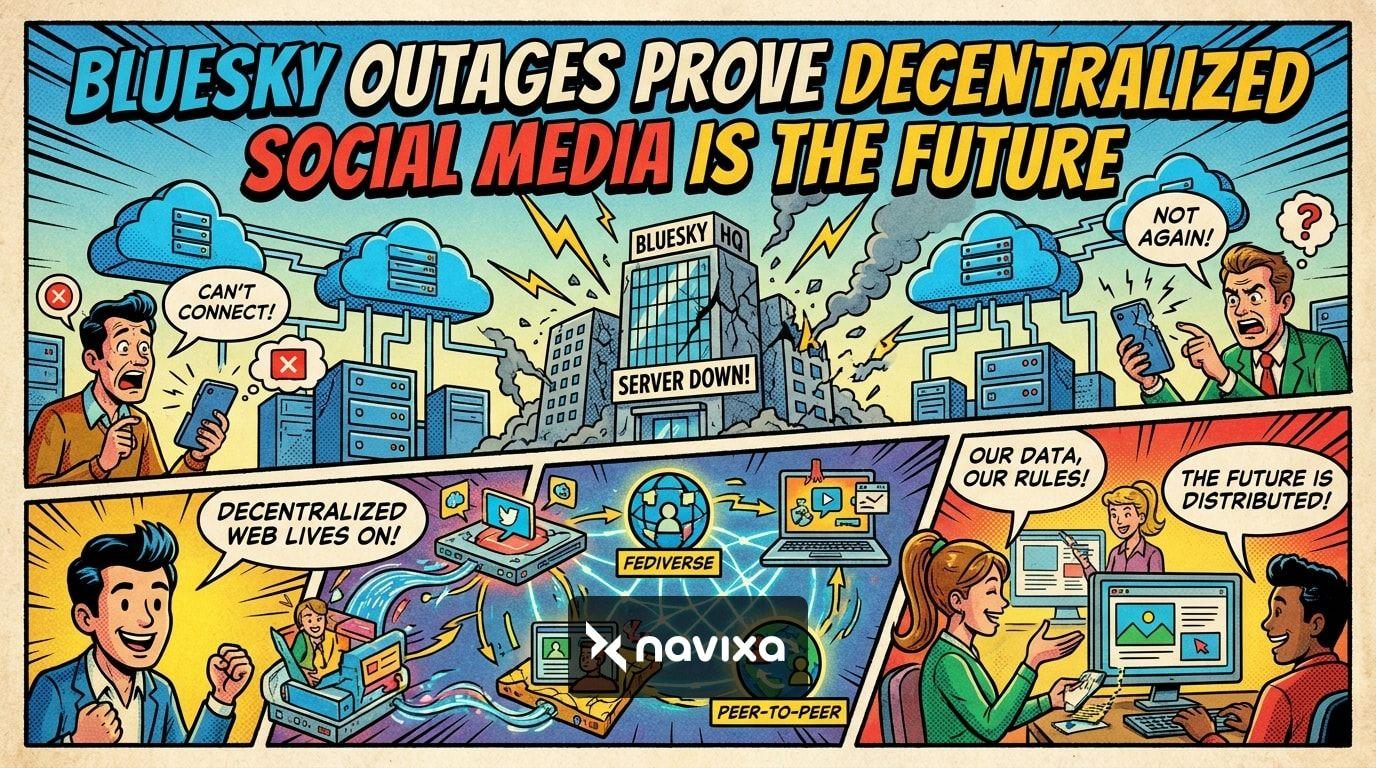
The digital landscape experienced a stark reality check when Bluesky, a heavily touted alternative to legacy networking platforms, suffered significant service disruptions. For users seeking refuge from algorithmic echo chambers and corporate data silos, the downtime was a frustrating reminder of how fragile digital infrastructure can be. However, for investors, developers, and cryptocurrency traders, this event serves as a powerful catalyst. The recent network hurdles do not signal the failure of alternative platforms; rather, they make an ironclad case for the mass adoption of decentralized social media.
In a world increasingly driven by data sovereignty and digital ownership, the pivot from centralized servers to decentralized protocols is inevitable. Web3 technologies, blockchain integrations, and decentralized identifiers (DIDs) are actively redefining how value and information flow across the internet. By examining the structural bottlenecks that led to recent service disruptions, traders and tech enthusiasts can identify lucrative opportunities within the emerging "SocialFi" (Social Finance) sector.
This article dives deep into the mechanics of decentralized networks, the overlap with cryptocurrency trading, and the strategic takeaways for investors looking to capitalize on the next evolution of the digital public square.
Anatomy of a Disruption: What Happened to Bluesky?
To understand the case for true decentralization, we must first analyze the architecture that faltered. Bluesky was built upon the AT Protocol (Authenticated Transfer Protocol), a federated network model designed to give users account portability and algorithmic choice. While the underlying data structure emphasizes decentralization, the practical user experience still relies heavily on interconnected microservices.
Recent outage reports, heavily documented on tracking sites like Downdetector, revealed that thousands of users faced blank feeds, infinite loading loops, and application timeouts. The root cause was not a failure of the decentralized user data repositories, but rather a bottleneck in upstream service providers responsible for routing and fetching posts in real-time. Additionally, denial-of-service (DDoS) vectors strained specific nodes within the network.
"A protocol is only as resilient as its most centralized dependency. True decentralization requires not just distributed data, but robust, trustless infrastructure at the routing and frontend layers."
This architectural reality exposes the growing pains of scaling federated networks. While users technically own their cryptographic identities, the delivery mechanisms still mimic Web2 vulnerabilities. For the blockchain and crypto community, this is a massive signal. It highlights the urgent need for decentralized social media platforms that utilize fully distributed consensus mechanisms, trustless data availability layers, and token-incentivized infrastructure to prevent single points of failure.
The Evolution of Decentralized Social Media
The concept of decentralized social media is not entirely new, but its technological foundations are rapidly maturing. At its core, this paradigm shifts control away from monolithic corporate entities and places it directly into the hands of the users. Instead of being locked into a single application, users interact with a base-layer protocol.
There are currently two primary avenues of innovation in this space:
Federated Protocols
Protocols like the AT Protocol and ActivityPub operate on a federated model. Independent operators run their own servers (instances), which communicate with one another. While this prevents a single corporation from monopolizing the network, it still requires server operators to bear the costs of hosting and moderation. As seen with recent network issues, if a major routing server goes down, the user experience degrades.
Blockchain-Native Social Graphs (Web3)
This is where the cryptocurrency ecosystem steps in. Web3 social protocols, such as Farcaster and Lens Protocol, leverage blockchain technology to store social graphs securely and transparently. In these systems, a user's identity is tied to a cryptographic wallet, and their connections (followers, posts) are recorded on decentralized ledgers or specialized data availability layers. By utilizing networks like Ethereum Layer-2s (Base, Optimism) or Polygon, these platforms ensure that no single upstream provider can censor or disrupt the core social graph.
For traders, the distinction is critical. Federated protocols rarely have native financialization. Blockchain-native decentralized social media, on the other hand, inherently integrates with the broader cryptocurrency market, giving rise to SocialFi. This allows creators to monetize directly via microtransactions, and allows traders to speculate on the infrastructure and utility tokens powering the ecosystem.
Comparing the Frameworks: Web2 vs. Web3 Social
To fully grasp the investment thesis, it is essential to map out the differences between traditional platforms, federated models, and fully blockchain-integrated social protocols.
| Feature | Centralized Platforms (Web2) | Federated Networks (e.g., AT Protocol) | Blockchain-Native Social (Web3) |
|---|---|---|---|
| Architecture | Single point of failure | Distributed servers / Instances | Distributed ledgers / Smart Contracts |
| Data Ownership | Corporate-owned | User-controlled (via DIDs) | Wallet-secured (Cryptographic keys) |
| Portability | Locked to platform | High (Move to any client) | Absolute (Interoperable across dApps) |
| Monetization | Ad-revenue for corporation | Limited / Third-party dependent | Native tokenization (SocialFi) |
| Identity | Tied to email/phone | Decentralized Identifiers | Ethereum Name Service (ENS) / NFTs |
The SocialFi Narrative: A New Frontier for Crypto Traders
The structural vulnerabilities exposed by recent network outages emphasize why financial incentives are necessary for robust infrastructure. When a network is secured by cryptographic tokens rather than goodwill, the infrastructure scales more efficiently. This convergence of social networking and decentralized finance is known as SocialFi.
For cryptocurrency traders, decentralized social media is rapidly evolving into a high-growth narrative. Similar to how Decentralized Finance (DeFi) disrupted traditional banking, SocialFi aims to disrupt the multi-billion-dollar attention economy. When evaluating opportunities within this sector, traders should look beyond the applications themselves and analyze the underlying infrastructure.
Infrastructure and Layer-2 Plays
Blockchain-native social platforms require immense throughput and low transaction fees to process millions of likes, follows, and posts. Consequently, protocols like Farcaster have driven massive usage to Ethereum Layer-2 scaling solutions. Traders can gain exposure to the growth of decentralized social media by analyzing and investing in the native tokens of these underlying blockchains. As daily active user (DAU) counts rise on social dApps, the base networks capture the transaction fees, providing a fundamental catalyst for token appreciation.
Social Graph Tokens
Projects that build the core social graph—such as Lens Protocol or CyberConnect—often feature native governance or utility tokens. These assets allow holders to participate in network governance, fund ecosystem grants, or pay for transaction fees within the social network. Identifying accumulation patterns in these assets before retail adoption surges is a classic strategy for forward-thinking crypto investors.
Actionable Trading Strategies for the Web3 Social Boom
Capitalizing on the shift toward decentralized social media requires a blend of fundamental on-chain analysis and traditional technical analysis. Here are specific strategies for trading the SocialFi narrative:
1. Monitor On-Chain User Metrics
Unlike Web2 companies that release user data quarterly, Web3 social protocols have transparent, real-time data. Traders should utilize on-chain analytics platforms to monitor daily active users (DAUs), daily transaction volume, and smart contract interactions. A sustained breakout in active wallets interacting with a social smart contract often precedes a token price rally. Look for divergence: if a platform's user base is growing exponentially but the associated infrastructure token is consolidating, it may present a strong entry point.
2. Follow the Developer Activity
The success of any decentralized protocol relies heavily on the applications built on top of it. You can track developer engagement by monitoring GitHub commits and hackathon participation. A surge in developers building third-party clients (AppViews) on a specific protocol indicates strong fundamental health and long-term viability.
3. Trade the Attention Economy
SocialFi platforms often give rise to highly volatile community tokens or "memecoins" that serve as internal tipping currencies. While highly speculative, these assets capture the immediate attention of the user base. Traders can apply momentum trading strategies to these micro-cap assets, utilizing tight stop-losses and trailing take-profits to ride the waves of viral social trends. For deeper technical insights, consult the AT Protocol official documentation to understand how developers are actively building out the infrastructure that will host these economies.
Risk Management in Emerging Tech Narratives
While the upside of decentralized social media and SocialFi is substantial, the sector carries immense risk. The technology is still in its infancy, and architectural failures—as evidenced by the Bluesky disruptions—are to be expected.
Smart Contract Vulnerabilities: Blockchain-based social protocols rely on complex smart contracts. A bug or exploit in the code can lead to a loss of user funds or a compromise of the social graph. Always verify if a protocol has undergone rigorous security audits before deploying heavy capital into its associated tokens.
Liquidity Risks: Many SocialFi tokens suffer from thin liquidity on decentralized exchanges. This means that large buy or sell orders can cause massive price slippage. Traders should ensure they are sizing their positions appropriately and avoiding tokens where a small handful of wallets hold the majority of the circulating supply.
Narrative Rotation: Cryptocurrency markets are heavily driven by rotating narratives. While SocialFi may capture the spotlight, capital can quickly shift to other sectors like Artificial Intelligence or Real World Assets (RWAs). Maintain a diversified portfolio to protect against sector-specific downturns.
Conclusion
The digital landscape is undergoing a necessary evolution. The service interruptions experienced by platforms attempting to scale federated networks serve as a critical wake-up call. They highlight that true digital autonomy requires more than just self-authenticating data; it requires robust, financially incentivized, and decentralized infrastructure.
For the modern investor and tech enthusiast, decentralized social media is no longer just a theoretical concept—it is an actionable asset class. By understanding the technological shifts from centralized silos to Web3 social graphs, traders can strategically position themselves ahead of the curve. As developers continue to patch the vulnerabilities of today, the decentralized networks of tomorrow will rise to capture the global attention economy.
Embrace the transition, monitor the on-chain metrics, and deploy sound risk management to thrive in the SocialFi revolution.
Frequently Asked Questions
What exactly is decentralized social media?
Decentralized social media refers to networks that operate on distributed infrastructure rather than centralized servers owned by a single corporation. Users maintain ownership of their data and identity through cryptographic keys, allowing them to move seamlessly between different applications built on the same underlying protocol.
How did the Bluesky outage highlight the need for Web3?
The Bluesky outage demonstrated that federated models still rely heavily on centralized upstream service providers for feed delivery and routing. Web3 social protocols address this by utilizing blockchain technology and decentralized data availability layers, significantly reducing the risk of a single point of failure disrupting the user experience.
How can cryptocurrency traders profit from SocialFi?
Traders can capitalize on SocialFi by investing in the underlying Layer-2 blockchain networks that host these platforms, trading the native governance tokens of social protocols, or speculating on community tipping tokens. Success requires monitoring on-chain data like daily active users and developer activity.
Are decentralized social networks completely censorship-resistant?
While the base-layer protocols in Web3 are generally immutable and censorship-resistant, individual frontend applications (clients) can still choose to filter or moderate content. However, because the user owns their data, they can simply plug their identity into a different, less restrictive client if they feel unfairly censored.